
How Often Should You Run Your Pool Pump Each Day?

The steady drone of the pool equipment humming across the yard often leaves a homeowner wondering how much money is spinning through that timer box. Most standard single-speed pumps only need to run for 8 to 12 hours each day to filter the water completely. Setting a variable-speed motor (a pump that runs quietly on lower power) for 12 to 24 hours at low speed cleans just as well while saving energy.
That ideal run time shifts depending on a few everyday conditions. Blazing summer heat and direct sunlight break down chlorine fast, requiring extra water circulation to prevent algae growth. Crowded weekend swim days and windy storms that dump leaves into the water also demand longer cycles. Finding the right balance comes down to understanding what your water needs without letting your electric meter run wild.
How Many Hours Should Your Pump Run Every Day?
Every pool needs its water circulated and filtered daily to stay safe, clear, and sanitary. For most residential pools with a standard single-speed pump, running the motor between 8 and 12 hours every day is the sweet spot. A single-speed pump runs at one fixed speed all day long, pulling water through the skimmer (the wall suction drain with a basket) and pushing it through the filter tank at full power.
If you have a variable-speed pump (a pump with a motor that allows you to adjust speeds), your daily schedule looks completely different. These modern units can run between 12 and 24 hours a day, but they do it at very low, quiet speeds that use only a fraction of the electricity. Running water slowly through a filter for longer hours actually cleans better than blasting it through quickly, because dirt and fine particles get trapped more easily in the filter media.
Two-speed pumps offer a balance between the two. With a two-speed setup, pool owners usually run the high speed for 2 to 3 hours to pull leaves off the surface, and then drop the pump down to low speed for 6 to 8 hours to finish filtering the water quietly and cheaply.
Your pump exists to do two simple jobs: filter out physical debris and circulate sanitizing chemicals like chlorine throughout the entire pool. Stagnant water is where algae, bacteria, and mosquito larvae flourish. When water stops moving, chlorine settles into dead zones where water flow is weak, leaving the rest of the pool open to algae blooms. Keeping the water moving for at least 8 hours guarantees that sanitized water reaches every corner, step, and bench.
Is It Better to Run the Pump at Night?
Many homeowners wonder whether they should run their pump while they sleep or during the brightest part of the afternoon. The choice comes down to a trade-off between lower electricity rates and keeping your pool water protected against the sun.
Running your pump at night saves money if your local power utility uses time-of-use pricing. Power companies often charge significantly higher rates during peak hours, which typically fall between 1:00 PM and 7:00 PM on hot summer afternoons. Running your pump between 9:00 PM and 7:00 AM allows you to circulate water when electrical rates are at their lowest point of the day.
Running exclusively at night carries a real downside for pool water health. Sunlight and high heat are the two biggest enemies of pool sanitizers. Ultraviolet rays from the sun quickly degrade free chlorine, especially in pools without stabilizer. At the exact same time, daytime heat accelerates algae growth. If your pump sits completely dormant from sunrise to sunset, the water stays warm and still while chlorine levels drop, creating perfect conditions for an algae bloom.
For most pools, the ideal schedule is a split routine. You can run the pump for 4 to 5 hours in the morning to distribute chlorine during peak sun hours, and run it for another 4 to 5 hours at night to take advantage of lower utility rates. Setting up an automated timer makes managing this split schedule effortless. If you want to learn more about how mechanical and digital switches automate these cycles, take a look at how pool timers work to control your pump without needing daily manual adjustments.
How Do You Calculate Your Exact Daily Run Time?
Rather than guessing on your pump schedule, you can calculate the exact number of hours your pool needs based on its turnover rate (the time it takes to push every gallon of pool water through the filter once). Finding this number takes just a few simple math steps.
- Find your pool volume in gallons. If you do not know your pool capacity, calculate it based on its shape. For a rectangular pool, multiply length times width times average depth times 7.5. For example, a 16-by-32-foot pool with an average depth of 5 feet holds roughly 19,200 gallons. For a round pool, multiply diameter times diameter times average depth times 5.9.
- Find your pump flow rate. Check the manufacturer label on your pump motor or consult the owner manual to find its rated GPM (gallons pumped per minute). Most standard residential pool pumps produce between 40 and 80 GPM depending on the motor horsepower and pipe resistance. A typical 1.5-horsepower pump moves around 60 GPM under average conditions.
- Calculate gallons pumped per hour. Take your GPM and multiply it by 60 minutes. If your pump moves 60 GPM, it processes 3,600 gallons of water per hour (60 times 60).
- Divide pool volume by hourly flow rate. Divide your total pool gallons by the gallons your pump moves in one hour. Using our 19,200-gallon pool example: 19,200 divided by 3,600 equals approximately 5.3 hours. This number is your single turnover time.
- Set your final daily run time. In cool weather with light use, one complete turnover (around 6 hours in our example) is often enough to keep the water clear. During the warm summer swimming season, pool water stays much healthier with 1.5 to 2 turnovers per day. Multiplying that 5.3-hour turnover by 1.5 gives you about 8 hours of daily runtime.
Keep in mind that dirty filters slow down water flow significantly. As dirt collects inside a sand, cartridge, or diatomaceous earth filter, pressure builds up and your pump pushes fewer gallons per minute. Always check your filter pressure gauge once a week. When pressure rises 8 to 10 pounds above your clean starting level, backwash or clean your filter to restore full flow rate.
When Do You Need to Run Your Pump Longer?
Your calculated turnover time provides a solid baseline for normal days, but real-world pool conditions change constantly. Several common events require you to temporarily increase your pump runtime to keep the pool clean and prevent water problems.
- High summer heat waves: When water temperatures rise above 80 degrees Fahrenheit, chemical consumption speeds up and algae can multiply rapidly. For every 10 degrees the water rises above 70 degrees, add 1 to 2 hours of daily runtime to keep water moving and chlorine circulating.
- After heavy pool parties or swimmer crowds: Swimmers introduce sweat, sunscreen, skin oils, and cosmetics to the pool. When you host a gathering, run your pump continuously during the party and leave it running for an extra 4 to 8 hours afterward to filter out organic waste and maintain clarity. You can read our advice on how often to check pool chemicals to ensure chlorine and pH stay balanced after heavy use.
- Severe storms, wind, and heavy rainfall: Storms dump rainwater that dilutes chemicals and lowers pH. Strong winds blow fine dirt, lawn fertilizer, and plant spores directly into the water. Run your pump for 12 to 24 hours continuously after a major storm until all storm debris is filtered out and the water returns to normal balance.
- Cloudy or hazy water: If your water starts losing its sparkle, catch the problem immediately. Increasing your pump runtime to 16 to 24 hours a day helps clear suspended particles before they turn into full algae blooms. Our guide on how to get your pool water sparkling blue covers additional steps for restoring clarity when basic filtration needs help.
- Treating active algae or adding pool shock: Whenever you add large doses of pool shock or algaecide, run your pump non-stop for 24 to 48 hours. Continuous water movement ensures the shock reaches every spore and allows the filter to trap dead algae as it drops out of suspension.
Do Automatic Pool Cleaners Change Your Daily Run Time?
Adding an automatic pool cleaner to your maintenance routine can alter how long your circulation pump needs to run, depending entirely on which style of cleaner you choose to use.
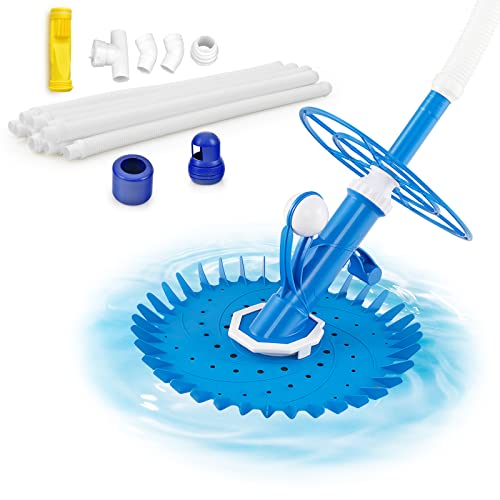
Suction-side cleaners connect directly to your skimmer or a dedicated wall suction line, using your circulation pump to move, scrub, and vacuum up debris. Because a suction cleaner depends entirely on pump power, you must run the pump whenever you want the cleaner to work. If you have a single-speed pump running 8 hours a day, the suction cleaner runs for those entire 8 hours, which provides plenty of floor vacuuming. However, suction cleaners require good water velocity. If you use a variable-speed pump, the lowest, quietest speeds might not generate enough suction to push the cleaner up walls or across the floor. You will need to program your pump to run at medium or high speed for 2 to 3 hours each day so the cleaner has enough power to navigate the pool.
Other cleaner styles operate independently of your main pump. Robotic pool cleaners run on their own electric motor and plug into an outdoor GFCI outlet (a protected ground-fault outlet with a weatherproof cover). Because robotic cleaners capture dirt in their own internal collection canisters, they do not require extra run time on your main pool pump. Pressure-side cleaners run off return water jets, often with a separate booster pump motor, catching leaves in their own attached sweep bags.
When selecting pool cleaners and maintenance accessories to keep your run times efficient, check a few important details before buying:
- Pool surface matching: Make sure the cleaner base matches your surface. Smooth fiberglass and vinyl liner pools need soft climbing rings or gentle discs that maintain grip without tearing liners, while rough plaster or pebble aggregate pools require heavy-duty rubber skirts that resist abrasion.
- Hose length and reach: Measure your pool from the suction connection point to the farthest corner, adding at least three feet of extra hose length to prevent the cleaner from getting stuck in one end.
- Skimmer protection: Extended pump cycles pull fine debris, dog hair, and pollen into the pump basket. Using elastic skimmer socks (fine nylon mesh nets that stretch over skimmer baskets) traps tiny particles before they enter pump impellers or clog filter cartridges.
- Basic equipment safety: Always turn off the circulation pump before connecting or disconnecting suction hoses to prevent hand injuries or suction entrapment. Keep cleaner power supplies at least 10 feet back from the pool edge, and never permit anyone to swim while pool cleaners, hoses, or cords remain in the water.
- VC Score9.2
BCP Score is a ranking system developed by bestcleanerproducts.com. BCP Score has no relationship or impact from any manufacturers or sales agent websites. Learn more
- BrandGoplus

- VC Score9.2
BCP Score is a ranking system developed by bestcleanerproducts.com. BCP Score has no relationship or impact from any manufacturers or sales agent websites. Learn more
- BrandPumpFuse

- VC Score9.2
BCP Score is a ranking system developed by bestcleanerproducts.com. BCP Score has no relationship or impact from any manufacturers or sales agent websites. Learn more
- BrandHM Digital
- VC Score9.2
BCP Score is a ranking system developed by bestcleanerproducts.com. BCP Score has no relationship or impact from any manufacturers or sales agent websites. Learn more
- BrandOh Yuk

- VC Score9.0
BCP Score is a ranking system developed by bestcleanerproducts.com. BCP Score has no relationship or impact from any manufacturers or sales agent websites. Learn more
- BrandIMPRESA

- VC Score8.4
BCP Score is a ranking system developed by bestcleanerproducts.com. BCP Score has no relationship or impact from any manufacturers or sales agent websites. Learn more
- BrandRainbow Chalk Markers Limited

- VC Score8.4
BCP Score is a ranking system developed by bestcleanerproducts.com. BCP Score has no relationship or impact from any manufacturers or sales agent websites. Learn more
- BrandRainbow Chalk Markers Limited

- VC Score8.2
BCP Score is a ranking system developed by bestcleanerproducts.com. BCP Score has no relationship or impact from any manufacturers or sales agent websites. Learn more
- BrandRainbow Chalk Markers Limited

- VC Score8.0
BCP Score is a ranking system developed by bestcleanerproducts.com. BCP Score has no relationship or impact from any manufacturers or sales agent websites. Learn more
- Brandbriidea

- VC Score7.8
BCP Score is a ranking system developed by bestcleanerproducts.com. BCP Score has no relationship or impact from any manufacturers or sales agent websites. Learn more
- BrandDoheny's

- VC Score7.0
BCP Score is a ranking system developed by bestcleanerproducts.com. BCP Score has no relationship or impact from any manufacturers or sales agent websites. Learn more
- BrandiMeshbean
Last update on 2026-10-08 / Affiliate links / Images, Product Titles, and Product Highlights from Amazon Product Advertising API
FAQs
Can you split your pool pump run time into shifts?
Yes, splitting your pump run time into two separate shifts is actually beneficial for your water. Running your pump for 4 hours in the morning and 4 hours in the late afternoon keeps chlorine well distributed throughout the day while preventing debris from settling on the bottom. It also allows you to avoid running the motor during peak afternoon electrical hours when utility rates are highest.
What happens if you run your pool pump too little?
Running your pump too little leads quickly to cloudy water, chemical imbalances, and slippery green algae blooms. When water sits stationary, floating leaves and insects sink to the floor instead of getting pulled into the skimmer. Without steady circulation, chlorine cannot sanitize dead zones, allowing bacteria to multiply and turning simple water maintenance into an expensive chemical recovery project.
Does running a pool pump constantly hurt the motor?
Continuous operation will not damage a pool pump motor as long as water flows steadily through the system to keep the wet end cool. Pool pump motors are built for continuous outdoor duty, but running a single-speed pump non-stop wastes significant electricity and wears out motor bearings faster. Variable-speed pumps, on the other hand, are engineered specifically to run continuously at low, gentle speeds without excessive wear or high utility costs.
Is it safe to run your pool pump while people are swimming?
Running your circulation pump while swimming is completely safe and helps skim sunscreen, body oils, and floating bugs while the water is in use. Modern pools feature anti-entrapment drain covers that protect swimmers from drain suction forces. Just make sure to remove automatic suction vacuum hoses and cleaner cords from the pool before anyone enters the water to eliminate tripping and entanglement hazards.


How to Refinish a Fiberglass Pool

How Do You Keep Raccoons Out of Your Pool?

How to Fix Cyanuric Acid in Your Pool

How to Shape a Pool Cue Tip to Stop Miscues

12 Best Automatic Vacuum For Intex Above Ground Pool of 2026 To Keep Vinyl Floors Spotless

10 Best Automatic Pool Vacuum For Above Ground Pool of 2026 To End Manual Scrubbing

How Much Pool Clarifier Should You Use for Your Pool Size?

How Much Does a Pebble Tec Pool Cost to Build or Resurface?








