
How Often Should You Check Pool Chemicals?

A quick glance across the backyard on a warm Saturday shows water that looks slightly dull instead of crystal clear. During swim season, measuring active sanitizer and acidity balance two to three times a week keeps the water clear and comfortable. The other levels, like mineral hardness and sun shield protection, only need a quick check once a month. That simple split prevents burning eyes and stops green algae before it ever takes hold.
A few regular events will shift that timing. Heavy rainstorms wash away chemical balance in an afternoon, while hot sunshine and a crowded pool party drain sanitizer quickly. During cold winter months, closed water barely moves, so checking levels once every few weeks is plenty. Learning when to grab a quick reading helps maintain a clean, worry-free pool all season long.
Weekly Routine: Measuring Sanitizer and Acidity Twice a Week
Your pool water changes every day because sun, heat, and swimmers constantly consume your chemicals. During the warm swim season, checking your active sanitizer (free chlorine) and acidity balance (pH) two to three times every week is the best habit you can build. These two numbers move faster than any other chemical level in your water. If you let them wander for more than a few days, you invite cloudy water, burning eyes, and slick green algae on your steps.
Active sanitizer is the chemical workhorse that neutralizes bacteria and stops algae spores from blooming. When direct sunlight hits your pool, ultraviolet rays eat away at that sanitizer. At the same time, every person who swims introduces sweat, sunscreen, and skin oils that use up even more sanitizer molecules. Acidity balance dictates how strong that sanitizer actually is. If the acidity balance climbs too high, your chlorine becomes sluggish and takes much longer to sanitize the water. If the acidity balance drops too low, the water turns corrosive, which irritates skin and strips metal parts inside your heater and pump.
Setting up a predictable schedule takes the guesswork out of pool ownership. Many owners get great results by picking two set days, such as Tuesday and Friday afternoons. Checking on Friday ensures your water is balanced and safe before family and friends jump in for the weekend. Checking again on Tuesday lets you see what the weekend swim sessions used up, giving you plenty of time to correct low levels. If you notice that your sanitizer dipped below normal, knowing how much chlorine you need to add prevents you from pouring in too much and locking yourself out of the pool.
- Dip your reading tool into calm water at elbow depth, roughly eighteen inches down, well away from return jets.
- Check the active sanitizer first, aiming to keep free chlorine between one and three parts per million.
- Check the acidity balance second, keeping the reading between 7.2 and 7.8 for comfortable swimming.
- Add small chemical adjustments in the evening so sunlight does not break them down before they mix.
Always give your pool pump time to circulate the water before you make adjustments. Running the circulation pump for at least one hour before gathering a sample ensures the water is thoroughly blended. Pouring chemicals into stagnant water creates hot spots that skew your numbers and can bleach vinyl liners.
Monthly Deep Checks: Buffer, Minerals, and Sun Shield
You do not need to measure every single parameter multiple times a week. Three essential background levels shift very slowly: your pH buffer (total alkalinity), your dissolved mineral level (calcium hardness), and your chlorine sun shield (cyanuric acid). Measuring these three numbers once a month gives you full control over your water stability without wasting time or supplies.
Your pH buffer serves as a protective cushion for your acidity balance. It absorbs acidic rainfall, swimmer waste, and chemical treatments so your acidity balance does not bounce wildly from one day to the next. When your pH buffer sits in its ideal range of 80 to 120 parts per million, your acidity reading remains steady and predictable. If the buffer sinks too low, your acidity balance will drop sharply every time it rains. If the buffer climbs too high, pulling your acidity balance back down becomes difficult, often causing cloudy water and scaling on tile borders.
The dissolved mineral level represents how much calcium is suspended in the water. Pool water naturally seeks balance, and if it lacks dissolved minerals, it becomes hungry. That hungry water pulls calcium straight out of plaster, grout lines, and pebble aggregate finishes, leaving rough pitted patches that snag swimsuits. On the other hand, water packed with too much calcium will shed that excess, leaving white crust along the waterline and inside pump plumbing. Fiberglass and vinyl liner pools do not contain plaster, but they still require a baseline mineral level to protect metal ladders, light faceplates, and heater elements from corrosion.
Your chlorine sun shield acts like sunscreen for your active sanitizer. Without this protective compound, intense summer sun can burn off almost all of your free chlorine in just two hours. The sun shield holds onto the sanitizer and releases it slowly as needed. Because the sun shield never evaporates, it leaves your pool only when water splashes out, drains, or backwashes through the filter. Checking it once a month prevents it from creeping too high, which can cause chlorine lock, a condition where sanitizer is present in the water but unable to kill algae.
Surprise Triggers: Storms, Heatwaves, and Swimmer Spikes
A set calendar works well for normal weeks, but sudden weather changes and heavy pool use require off-schedule checks. Stepping out to check your water after unusual events stops small chemical imbalances from turning into expensive water problems. Rainstorms, extreme summer heat, and large gatherings are the three most common triggers that drain your sanitizing chemicals.
Heavy rainstorms disrupt pool balance in two distinct ways. Rainwater is naturally acidic, which pulls down your acidity balance and eats away at your pH buffer. Heavy downpours also introduce airborne algae spores, lawn dust, and organic debris washed off pool decks. A single severe thunderstorm can dump enough water to dilute your chemical levels and drop your active sanitizer to zero in a matter of hours. As soon as the storm clears and lightning risk passes, take a fresh reading. Verify that your sanitizer and acidity balance are still in safe ranges before algae gets a chance to take root.
Prolonged heatwaves also put extreme pressure on your chemicals. When water temperatures rise above 85 degrees Fahrenheit, organic matter breaks down faster and bacteria multiply at accelerated speeds. Direct sun combined with high heat bakes sanitizer out of the water much faster than mild spring weather. During weeks with continuous ninety-degree days, checking your active sanitizer daily helps you catch sudden drops before the water turns hazy.
Large pool parties create an immediate chemical demand. Ten or twelve people swimming for an afternoon bring sweat, deodorant, cosmetic products, and suntan lotions into the water. These contaminants consume active sanitizer instantly. Checking your water before guests arrive ensures the pool is safe, while checking again after the party reveals how much sanitizer you need to restore balance. When heavy swimmer loads leave an oily film on the surface, taking steps to get body oils out of your pool keeps your skimmer baskets and filters from clogging up.
Off-Season Rhythm: What Changes When the Water Gets Cold
When autumn arrives and water temperatures drop below 60 degrees Fahrenheit, chemical activity slows to a crawl. Cold water prevents algae and bacteria from reproducing quickly, and lower sun angles reduce chemical breakdown from ultraviolet light. Your check frequency should shift to match these calmer seasonal conditions.
If you live in a mild climate where the pool stays open and uncovered all year, you can reduce your routine from twice a week to once every one or two weeks. You still need active sanitizer circulating through the system, and your circulation pump should run during freezing nights to protect plumbing lines. But because nobody is swimming and the sun is weak, chemical levels stay stable for much longer stretches. A quick check twice a month is usually plenty to keep the pool clean and ready for spring.
If you live in a cold climate and close your pool for the winter, your routine changes completely. Before installing your winter cover, balance all five main chemical levels: active sanitizer, acidity balance, pH buffer, dissolved minerals, and sun shield. Once the winter cover is fastened down, check the water under one corner of the cover once a month until the pool freezes solid. If you use a mesh safety cover that lets rain and melting snow seep into the pool, checking that water periodically ensures winter precipitation has not diluted your sanitizer or dropped your pH buffer.
Skipping checks for two weeks in winter rarely causes harm, but skipping two weeks in July can ruin your water. In summer heat, missing checks allows sanitizer to disappear entirely. Within ten days, clear water can transform into an opaque green swamp full of algae blooms. Clearing that green water requires multiple jugs of shock, clarifier, and hours of filter cleaning, which costs far more than the two minutes it takes to check the pool twice a week.
Choosing the Right Water Reading Gear
Following a steady chemical schedule requires reading gear that fits your routine and comfort level. You do not need commercial laboratory tools to get reliable readings at home. Three primary styles of water monitors and reading kits help residential pool owners maintain accurate water balance without frustration.
Dip strips are the simplest and fastest option for regular weekly checks. These plastic strips feature individual chemical pads that change color when dipped into pool water. You submerge the strip for a second or two, hold it flat for a brief moment, and compare the pads against the color chart on the bottle. High-quality dip strips measure sanitizer, acidity balance, pH buffer, mineral hardness, and sun shield all on a single strip. They deliver clear readings in under thirty seconds, making them perfect for busy owners. To keep dip strips accurate, always store the container tightly sealed in a cool, dry cupboard, because moisture in the air will degrade the indicator pads.
Liquid drop kits provide exceptional visual clarity for pool owners who want distinct color shifts. These kits use clear plastic sample vials and small dropper bottles filled with liquid reagents. You fill the vial with pool water from elbow depth, add a set number of drops, swirl gently, and read the resulting shade against built-in color standards. While counting drops takes a minute longer than dipping a strip, drop kits make it very easy to distinguish between slight shifts in acidity balance and sanitizer levels. Many owners use dip strips for their quick mid-week checks and keep a liquid drop kit on hand for their monthly deep checks.
Digital water monitors and electronic analyzers eliminate color matching entirely. Some units are handheld digital scanners that read the color pads on dip strips and display exact numerical values on a screen. Other advanced options float continuously in the pool, measuring water chemistry automatically and sending updates directly to your smartphone. When shopping for reading gear, look for kits that include both sanitizer and acidity balance at a minimum, and confirm that replacement strips or reagents are easy to purchase when your original supply runs out.
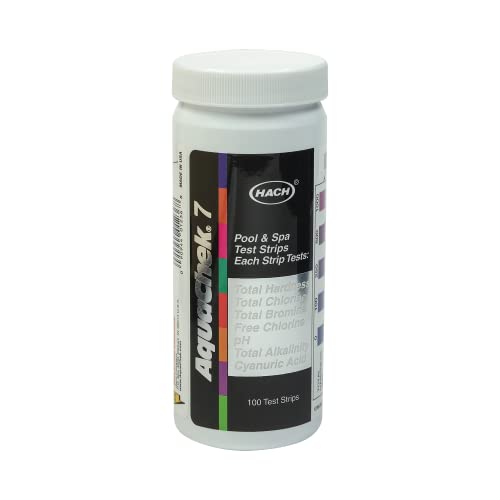
- VC Score9.4
BCP Score is a ranking system developed by bestcleanerproducts.com. BCP Score has no relationship or impact from any manufacturers or sales agent websites. Learn more
- BrandAquaChek

- VC Score9.0
BCP Score is a ranking system developed by bestcleanerproducts.com. BCP Score has no relationship or impact from any manufacturers or sales agent websites. Learn more
- BrandJNW Direct

- VC Score9.0
BCP Score is a ranking system developed by bestcleanerproducts.com. BCP Score has no relationship or impact from any manufacturers or sales agent websites. Learn more
- BrandHealth Metric
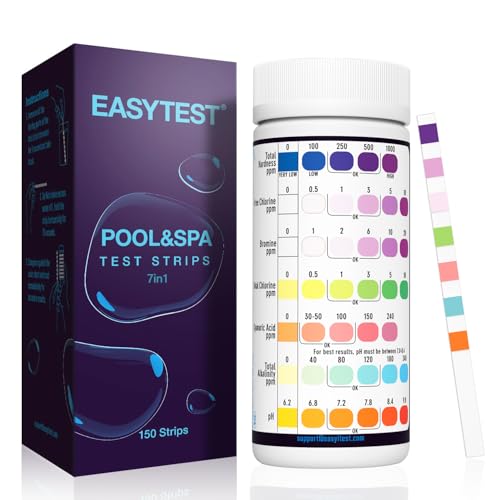
- VC Score8.8
BCP Score is a ranking system developed by bestcleanerproducts.com. BCP Score has no relationship or impact from any manufacturers or sales agent websites. Learn more
- BrandEASYTEST
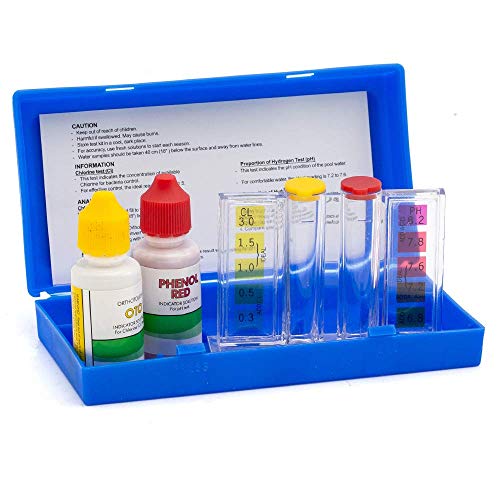
- VC Score8.8
BCP Score is a ranking system developed by bestcleanerproducts.com. BCP Score has no relationship or impact from any manufacturers or sales agent websites. Learn more
- BrandWWD POOL
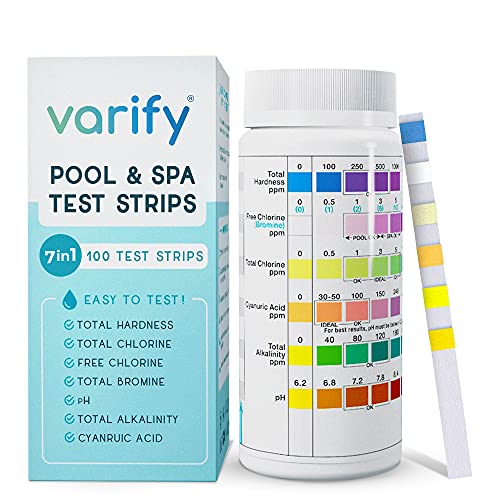
- VC Score8.8
BCP Score is a ranking system developed by bestcleanerproducts.com. BCP Score has no relationship or impact from any manufacturers or sales agent websites. Learn more
- BrandVARIFY
- VC Score8.8
BCP Score is a ranking system developed by bestcleanerproducts.com. BCP Score has no relationship or impact from any manufacturers or sales agent websites. Learn more
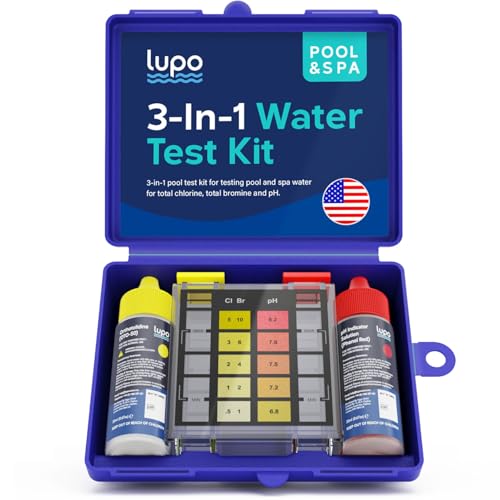
- BrandLupo Global

- VC Score7.6
BCP Score is a ranking system developed by bestcleanerproducts.com. BCP Score has no relationship or impact from any manufacturers or sales agent websites. Learn more
- BrandAquaChek

- VC Score5.8
BCP Score is a ranking system developed by bestcleanerproducts.com. BCP Score has no relationship or impact from any manufacturers or sales agent websites. Learn more
- BrandSutro

- VC Score-
BCP Score is a ranking system developed by bestcleanerproducts.com. BCP Score has no relationship or impact from any manufacturers or sales agent websites. Learn more
- BrandWINDOW WORLD WATER
Last update on 2026-10-08 / Affiliate links / Images, Product Titles, and Product Highlights from Amazon Product Advertising API
FAQs
How often should I check chlorine and pH during the summer?
Check both active sanitizer and acidity balance two to three times each week during warm summer months. High water temperatures and direct sun burn through chemicals quickly, so frequent checks keep bacteria and green algae from taking hold. Picking consistent days, like Tuesday and Friday, keeps your water safe and ready for weekend swimming.
Can I check pool water right after adding chemicals?
Wait two to four hours with the pool pump running before gathering a new water sample. This circulation time allows added chemicals to mix completely throughout the pool so you get a true reading. If you added a heavy dose of shock, wait 12 to 24 hours before checking the sanitizer level to ensure it has settled into a safe swimming range.
Where in the pool should I collect a water sample?
Collect your sample from the deep end or mid-pool, away from the skimmer mouth and return jets. Reach down elbow-deep, roughly eighteen inches beneath the surface, to draw water that represents the entire pool. Gathering water from the top two inches gives distorted readings because surface heat and direct sunlight alter chemical levels right at the waterline.


How to Refinish a Fiberglass Pool

How Do You Keep Raccoons Out of Your Pool?

How to Fix Cyanuric Acid in Your Pool

How to Shape a Pool Cue Tip to Stop Miscues

12 Best Automatic Vacuum For Intex Above Ground Pool of 2026 To Keep Vinyl Floors Spotless

10 Best Automatic Pool Vacuum For Above Ground Pool of 2026 To End Manual Scrubbing

How Much Pool Clarifier Should You Use for Your Pool Size?

How Much Does a Pebble Tec Pool Cost to Build or Resurface?


