
How to Remove Phosphates From a Pool Without Cloudy Water

Most pool owners assume that high phosphates are a toxic emergency that ruins water overnight. That is rarely the case, as phosphates are simply harmless algae food that you can eliminate by clearing active algae first and adding a liquid phosphate remover. The chemical binds the food particles together so your filter can grab them, but adding it without a plan can quickly turn your pool milky white.
Your exact treatment depends on water volume, how high the phosphate reading climbed, and the type of filter on your equipment pad. Sand, cartridge, and grid systems trap the chalky fallout differently, and each one needs monitoring so water flow does not drop. Wiping out any living green growth before you begin also prevents stubborn haze. Here is how to balance the water cleanly without choking your filter.
High Phosphates Only Cause Trouble When Chlorine Drops
Phosphates sound like harsh industrial chemicals, but they are just natural compounds containing phosphorus. They blow into your pool through windblown dirt, tree pollen, dead leaves, bird droppings, and even normal tap water. Lawn fertilizers are another common source, especially if an oscillating sprinkler accidentally sprays across your pool deck.
On their own, phosphates do not turn water green, irritate your eyes, or damage your pool liner. They are completely harmless to swimmers at common backyard levels. Instead, phosphates serve as an all-you-can-eat buffet for algae spores. When plenty of food sits in the water, tiny microscopic plants multiply rapidly the moment conditions turn in their favor.
If your free chlorine stays at a healthy balance and your water looks crystal clear, an elevated phosphate reading is not an immediate emergency. You do not need to rush out in a panic to fix it that afternoon. Chlorine sanitizes the water and kills spores before they have a chance to feed. The trouble begins when chlorine drops during a scorching summer heatwave or after an afternoon pool party.
Once your chlorine level dips, those stored phosphates let algae multiply at record speed. You might notice your pool burning through chlorine twice as fast as usual, or you might find yourself fighting stubborn yellow or green dust on the pool steps every single weekend. Removing the phosphates takes away that food supply. Without nutrients to feed on, stray algae spores struggle to survive even when your sanitizer levels fluctuate.

Kill Any Visible Algae Before You Treat Phosphates
Never pour a phosphate remover (a chemical that binds algae food so your filter can catch it) into a green or hazy pool that currently has live algae growing in it. Phosphate remover is not a sanitizer, and it will not kill living plant cells. Its only job is to bind dissolved mineral compounds so your filter can catch them.
If you add this chemical to water full of living algae, the product binds with the plant matter and creates a thick, gummy sludge. This sticky fallout coats your filter media, suffocates water flow, and leaves behind an oily, grayish haze that can take weeks to clear. You must eliminate the living bloom first, restore sanitation, and then tackle the residual food supply.
Follow this quick preparation checklist before opening any chemical bottle:
- Shock the water thoroughly: Add liquid chlorine or granular shock after sundown to destroy all active algae blooms. Keep the free chlorine elevated until the pool turns clear or a milky pale blue.
- Brush the pool surfaces completely: Use an appropriate wall brush to scrub the walls, floor, and steps. Plaster and concrete pools need stiff bristles, while a vinyl liner or fiberglass shell needs soft nylon bristles to avoid surface scratches.
- Balance your water chemistry: Verify that your pH reads between 7.2 and 7.6, with total alkalinity between 80 and 120 parts per million. Phosphate removers work best in balanced water.
- Empty your baskets and skim the top: Empty the skimmer basket and pump strainer basket to ensure strong water circulation.
- Record your clean filter pressure: Look at your filter pressure gauge (the small round dial on the filter tank showing clogs). Note the starting baseline number so you know when the filter is getting dirty later.
Add Phosphate Remover Slowly With the Pump Running
Once the water is completely free of green algae and your chlorine reading is steady, you are ready to treat the phosphates. Treating the water is a straightforward process, but taking it step by step prevents cloudy over-saturation and protects your equipment.
Follow this step-by-step procedure to add the treatment:
- Calculate the correct dosage: Check the chemical label on your product bottle. Match your pool volume in gallons against your measured phosphate reading to find the exact amount you need. Adding too much chemical at once creates unnecessary cloudiness without speeding up the process.
- Shake the bottle thoroughly: Concentrated formulas often settle during shipping and storage. Give the bottle a good shake for thirty seconds so the active ingredients mix together properly.
- Turn on the circulation pump: Ensure your pump is running on high speed to keep water flowing through every return line. If you notice weak return flow before you start, you can inspect your lines or learn how to adjust pool skimmer suction safely to restore balanced intake flow.
- Pour the dose into the pool: Walk slowly around the deep end of the pool and pour the liquid directly above the water return jets. This allows the outgoing water stream to disperse the chemical across the entire pool basin. Some maintenance products instruct you to pour directly into the skimmer so the chemical works inside the filter tank, so always confirm what the manufacturer directions say.
- Run the filter continuously: Leave your pool pump running 24 hours a day for at least two days. The chemical needs continuous movement to contact the dissolved phosphates and guide the bound particles into your filter tank.
- Keep swimmers out during initial mixing: Let the chemical circulate and settle for several hours before allowing anyone back into the water.
Clean Your Filter When the Water Turns Milky White
Do not be alarmed when your sparkling pool suddenly looks like a giant bowl of skim milk a few hours after treatment. That cloudy white haze is completely normal. In fact, it is visual proof that the chemical is doing its job.
Phosphate remover binds with dissolved phosphates on contact, turning microscopic dissolved food into solid, visible particles. Because these newly formed particles drift through the water before reaching the filter, the pool water scatters sunlight and looks chalky. This haze typically lasts anywhere from twelve hours to three days, depending on your pool size, pump flow rate, and filter style.
As your filter catches this chalky fallout, debris piles up inside the tank. You must monitor your equipment closely to avoid water restriction:
- Sand filters: The fine particles settle into the sand bed. Watch the filter pressure gauge carefully. When the needle climbs 8 to 10 pounds per square inch above your starting clean baseline, backwash (running water backward to flush trapped debris out of the filter) for two to three minutes, rinse, and return to normal filtration.
- Cartridge filters: The pleated paper traps the chalky dust on its outer folds. When pressure climbs, turn off the pump, remove the cartridge core, and spray it down thoroughly with a high-pressure garden hose nozzle.
- Diatomaceous earth filters: Diatomaceous earth filters grab fine particles exceptionally fast, which means pressure can spike within hours. Backwash the tank as soon as pressure climbs, and recharge the system with fresh powder through the skimmer.
If your filter is older or struggles to clear the finest lingering mist, you can add a pool clarifier. Clarifiers act like magnets, grouping microscopic chalk dust into larger clumps that your filter catches easily. If heavy fallout settles along the pool floor instead of reaching the filter, you can review how to use flocculant in a pool to clear cloudy water so you can vacuum the settled debris directly out through the waste line. Also, if heavy debris ever causes your pump basket to stop moving water entirely, knowing how to unclog a pool pump and restore water flow will keep your system safe from motor strain.
Keep Garden Runoff and Organic Leaves Out of the Pool
Removing phosphates is only half the battle. If you do not stop external nutrients from entering the water, your phosphate levels will climb right back up within a few weeks. Managing the surrounding yard makes pool maintenance significantly easier throughout 2026.
Take these preventative steps around your yard and patio:
- Redirect lawn fertilizer: Never let commercial lawn food or granular weed treatments blow onto the pool deck or into the coping. Always turn fertilizer spreaders away from the water edge, and leave a three-foot buffer zone around the pool perimeter.
- Manage yard sprinklers: Check your lawn irrigation heads to confirm they do not spray water directly into the pool. Tap and well water often carry dissolved phosphates that replenish the pool supply.
- Trim back overhanging trees: Cut back branches that drop flowers, acorns, oak tassels, or seed pods into the water. Rotting plant matter releases phosphorus as it breaks down.
- Skim organic debris promptly: Scoop out floating leaves, twigs, and insects every morning. The longer organic material sits in the warm water, the more nutrients leach into your pool balance.
- Rinse bathing suits: Ask regular swimmers to rinse their suits in fresh water rather than washing them with heavy laundry detergents, which frequently contain phosphates.
Choose the Right Chemicals and Cleaners for Debris Control
Maintaining low phosphate levels requires a combination of liquid maintenance products and effective pool cleaners. While chemicals neutralize dissolved nutrients, physical cleaners prevent organic leaves and soil from decaying into food for algae in the first place.
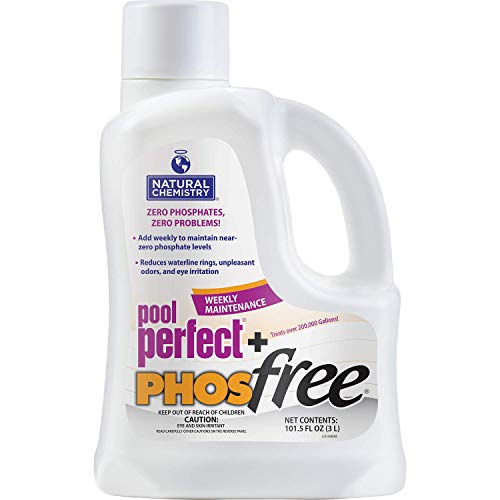
When selecting a maintenance chemical, look for either a high-potency concentrate designed for seasonal cleanups or an enzyme-blend maintenance product designed for weekly additions. Concentrated formulas work rapidly to bring down high numbers, while weekly maintenance blends break down skin oils and waterline scum while maintaining near-zero phosphate levels.
Pairing chemical care with an automatic pool cleaner keeps your pool floor and walls clear of decaying organic debris. A robotic cleaner (a self-powered unit with its own internal debris basket) operates independently from your pool filter, catching leaves and dirt before they reach the skimmer. If you prefer to use your existing equipment, a suction-side cleaner (attaches to your pool skimmer or dedicated vacuum port and uses your pool pump's suction) or a pressure-side cleaner (connects to the water return jet, often using an extra booster pump, and catches debris in its own sweep bag) can keep your pool floor spotless.
Before purchasing equipment or chemicals, verify the practical details for your specific setup. Match the cleaner brushes to your pool surface, whether you have a smooth vinyl liner, fiberglass, slick tile, concrete, or rough pebble aggregate. For electric robotic cleaners, always verify that your deck has an outdoor GFCI outlet (a protected ground-fault outlet with a weatherproof cover) located at least 10 feet back from the water edge. Always turn off your circulation pump before adjusting hoses or servicing cleaner baskets to protect your hands and keep pool maintenance safe.

- VC Score9.6
BCP Score is a ranking system developed by bestcleanerproducts.com. BCP Score has no relationship or impact from any manufacturers or sales agent websites. Learn more
- BrandOrenda Technologies

- VC Score9.4
BCP Score is a ranking system developed by bestcleanerproducts.com. BCP Score has no relationship or impact from any manufacturers or sales agent websites. Learn more
- BrandORENDA TECHNOLOGIES
- VC Score9.4
BCP Score is a ranking system developed by bestcleanerproducts.com. BCP Score has no relationship or impact from any manufacturers or sales agent websites. Learn more
- BrandNatural Chemistry

- VC Score9.2
BCP Score is a ranking system developed by bestcleanerproducts.com. BCP Score has no relationship or impact from any manufacturers or sales agent websites. Learn more
- BrandMAV AquaDoc

- VC Score9.2
BCP Score is a ranking system developed by bestcleanerproducts.com. BCP Score has no relationship or impact from any manufacturers or sales agent websites. Learn more
- BrandNatural Chemistry

- VC Score9.2
BCP Score is a ranking system developed by bestcleanerproducts.com. BCP Score has no relationship or impact from any manufacturers or sales agent websites. Learn more
- BrandGLB

- VC Score9.2
BCP Score is a ranking system developed by bestcleanerproducts.com. BCP Score has no relationship or impact from any manufacturers or sales agent websites. Learn more
- BrandNatural Chemistry

- VC Score8.6
BCP Score is a ranking system developed by bestcleanerproducts.com. BCP Score has no relationship or impact from any manufacturers or sales agent websites. Learn more
- BrandControlOMatic
Last update on 2026-10-08 / Affiliate links / Images, Product Titles, and Product Highlights from Amazon Product Advertising API


How to Refinish a Fiberglass Pool

How Do You Keep Raccoons Out of Your Pool?

How to Fix Cyanuric Acid in Your Pool

How to Shape a Pool Cue Tip to Stop Miscues

12 Best Automatic Vacuum For Intex Above Ground Pool of 2026 To Keep Vinyl Floors Spotless

10 Best Automatic Pool Vacuum For Above Ground Pool of 2026 To End Manual Scrubbing

How Much Pool Clarifier Should You Use for Your Pool Size?

How Much Does a Pebble Tec Pool Cost to Build or Resurface?


