
How to Pump Up an Inflatable Pool Without Popping Seams

A low-pressure electric pump works best. Garage compressors and tire inflators pack too much force and can burst vinyl seams in seconds. A gentle air blower fills the walls quickly without straining the material. The key is to match your nozzle tightly to the valve, then stop pumping while the vinyl still yields to thumb pressure so warm sun will not overinflate the pool later.
The right method depends on your setup. Wide screw caps fill in two minutes, while tiny squeeze plugs require a tapered nozzle to hold the inner flap open. Power access matters too, whether that means a patio outlet, a car plug, or a manual foot pump on the grass. Pools with multiple stacked rings also need filling from the bottom chamber upward. Here is how to tackle each valve and inflate the pool safely.
The Short Version
- Use a high-volume blower instead of high-pressure tools: High-volume electric air pumps push large amounts of gentle air quickly, while garage compressors and tire inflators blast concentrated air that tears vinyl seams apart.
- Match your nozzle to the valve style: Insert a tapered cone nozzle deeply into a narrow pinch valve to separate the internal flap, or use a wide funnel adapter locked into a screw-on Boston valve.
- Inflate from the bottom chamber upward: Fill the floor or bottom ring first to create a stable base, then fill upper rings progressively so the structure supports itself evenly.
- Leave room for afternoon heat: Stop pumping when the vinyl walls feel firm but still yield half an inch to thumb pressure, because direct sunlight expands trapped air and stretches welded seams.
Choosing the Right Pump: Why High Volume Beats High Pressure
Inflating a backyard pool is all about moving a massive amount of air into an empty space, not forcing air through a pinhole. Understanding the difference between air push strength (measured in PSI, or pounds per square inch) and air volume will save your pool from bursting on day one.
Garage air compressors, shop pneumatic tools, and bicycle tire pumps are built for high pressure. A bike pump or car compressor pushes air at 30 to over 100 PSI. That intense, narrow stream of concentrated air acts like a blunt punch against thin vinyl. Because vinyl walls cannot stretch fast enough to handle that localized blast, the welded seams tear open long before the entire ring fills with air.
A high-volume pump (a blower that moves a lot of gentle air) works on the opposite principle. These units push hundreds of liters of air every minute at a gentle pressure, usually under 1 PSI. That gentle breeze fills large rings in three to five minutes without putting sharp stress on seam joints. If you do not have electricity near your yard, a double-action manual hand pump or a wide bellows foot pump provides this same high-volume, low-pressure airflow safely.
Matching Nozzles: How to Fit Pinch Valves and Wide Caps Securely
Most inflatable pools use two valve styles across their chambers. Using the wrong pump adapter leads to loose connections where air leaks out into your yard faster than it goes into the pool wall.
- Pinch valves (narrow soft plugs you squeeze to open): These small clear or colored rubber valves sit flush against the pool wall. Inside the neck, two tiny flaps of plastic touch together to keep air from rushing backward. To fill these, select the narrow tapered cone nozzle. Push the nozzle deep enough into the valve stem to separate those two internal plastic flaps. If the nozzle sits only at the surface, the air hits the shut flap and blows back in your face.
- Boston valves (wide two-part screw caps with a built-in flap): These wider black or gray fittings screw directly into the vinyl wall. They feature two threaded sections. The bottom ring stays attached to the pool, the middle ring contains a one-way rubber flapper for inflation, and the top solid cap seals everything shut. Use the medium or large flared nozzle. Push it firmly into the center opening of the middle ring so the pump pressure blows the rubber flapper open automatically.
- Check for stuck vinyl on new pools: Fresh out of the box, the internal flaps inside pinch valves often stick together from warehouse heat. Squeeze the base of the valve firmly between your thumb and forefinger before inserting your nozzle to break that seal.
- Support the valve base while filling: Never let the weight of a hanging pump pull sideways against the vinyl stem. Hold the valve base with one hand while holding the nozzle in place with the other to prevent tearing the connection weld.
Step-by-Step Inflation: How to Fill Bottom-Up Without Straining Seams
Taking ten minutes to prep your ground and inflate each chamber in the correct sequence ensures the pool holds its shape once you turn on the garden hose.
- Clear the site and spread a protective ground tarp: Carry the folded pool to a flat, level patch of grass or patio. Walk the area carefully to kick away small rocks, acorns, and dried twigs. Lay down a heavy ground cloth or tarp before unrolling the pool. If an accidental snag happens on a hidden stick during setup, learning how to fix a pool liner with a waterproof patch can rescue your weekend before water ever touches the plastic.
- Connect to a safe power source: Plug your electric air pump into an outdoor GFCI outlet (a protected ground-fault outlet with a weatherproof cover). Keep extension cords elevated away from damp lawn patches and at least ten feet back from where you will eventually spray water.
- Inflate the bottom chamber or air floor first: If your pool features an inflatable padded bottom, fill that chamber before touching the outer walls. If your pool has stacked outer rings, begin with the bottom ring resting on the grass. Filling the base first creates an even, flat footprint that anchors the structure to the ground.
- Work your way up through the middle and top rings: Move your pump nozzle to the middle ring, fill it until firm, and finish with the top ring. Inflating from bottom to top keeps the structural weight balanced. If you fill the top ring first, its heavy, swollen vinyl folds over and pinches the empty bottom chambers, making them harder to fill evenly.
- Cap valves immediately upon nozzle removal: For pinch valves, pull the nozzle straight back with one quick motion and immediately press the soft rubber stopper into the neck with your thumb. Push the entire valve down so it sits flat and flush against the pool wall. For Boston valves, pull the nozzle away and quickly thread the solid outer cap clockwise until finger-tight to form a lock against air loss.
The Firmness Check: Knowing When to Stop Before Heat Pops the Vinyl
Over-inflation ruins more backyard pools than punctures. Knowing exactly what properly filled vinyl feels like will keep your seams intact all summer.
Use the thumb test on the thickest part of each ring. Press your thumb firmly into the side wall. The vinyl should give inward roughly half an inch, offering smooth, springy resistance like pressing the side of a ripe melon. If the wall feels as hard as a pumped basketball with zero give, it is dangerously overfilled. Open the valve and release air for three to five seconds.
Do not chase every wrinkle. Many pool owners continue pumping because they see small puckers and folds near the welded seams. Those slight creases are normal manufacturing marks where circular shapes meet flat sheets. Trying to pump enough air to erase every tiny wrinkle stretches the seam stitches past their limit, leading to catastrophic seam separation.
Always factor in sun exposure and water weight. Cold air inside a pool expands rapidly under midday sun. If you pump your pool to maximum firmness in the cool shade of morning, the afternoon heat will expand that air volume, creating extreme internal pressure against the walls. Furthermore, filling the pool with several hundred gallons of water creates heavy lateral pressure that pushes out against the lower walls. Leaving a slight give in the vinyl gives the air room to expand safely under both heat and water weight.
Household Workarounds: Using a Vacuum or Hair Dryer in a Pinch
If you are standing in the yard without a dedicated air pump, common household items can fill large pool chambers when used with caution.
- The shop vacuum exhaust method: Most wet-dry utility vacuums have an exhaust port that blows air outward instead of sucking it in. First, detach the vacuum hose and run clean water through it to rinse out old drywall dust and dirt. Let it dry, then click the hose into the blowing port. Cut the top off a standard plastic water bottle to create a funnel adapter. Tape the wide bottle opening to the vacuum hose using duct tape, insert the narrow bottle neck into your pool valve, and run the vacuum until the chambers fill.
- The hair dryer method (strictly no heat): A hair dryer moves a large volume of air, but heat destroys pool vinyl instantly. Check your hair dryer controls and verify it has a dedicated "cool" switch or lockable cold air setting. Never use warm or hot air, which melts the valve neck in seconds. Fit a plastic bottle cone over the hair dryer nozzle, hold it against the pool valve, and fill the rings using cold air only.
- The contractor trash bag technique: When no electricity exists, grab a thick 30-gallon plastic trash bag. Open the mouth of the bag wide, swing it through the yard to trap a pocket of air, and twist the opening shut like a balloon. Hold the twisted opening tightly around your pool valve and sit or press down gently on the bag to force the trapped air inside. It takes a dozen scoops per ring, but it fills chambers without straining your lungs.
What to Look for in a Pool Air Pump
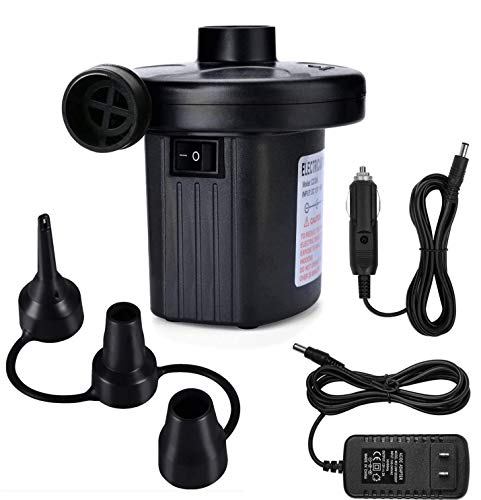
When picking out a dedicated pump for inflatable pools and floats, focus on tools designed specifically for low pressure and rapid air movement. Look for a compact electric blower that comes standard with multiple nozzle sizes connected directly to each other on a short tether, which keeps you from losing small attachments in the grass.
Dual power capability provides the greatest flexibility for yard setups. Units that include both a standard household wall plug and a 12-volt car auxiliary adapter let you inflate pools out on the lawn near your vehicle without dragging heavy extension cords across wet areas. Finally, make sure the unit features a dual-port design with both an inflation port and a deflation port. Being able to connect your hose to the intake side allows the motor to vacuum every pocket of air out of the chambers at the end of the season, letting you fold the vinyl completely flat for winter storage.

- VC Score10.0
BCP Score is a ranking system developed by bestcleanerproducts.com. BCP Score has no relationship or impact from any manufacturers or sales agent websites. Learn more
- BrandSKAILING
- VC Score8.8
BCP Score is a ranking system developed by bestcleanerproducts.com. BCP Score has no relationship or impact from any manufacturers or sales agent websites. Learn more
- BrandYoocylii

- VC Score8.8
BCP Score is a ranking system developed by bestcleanerproducts.com. BCP Score has no relationship or impact from any manufacturers or sales agent websites. Learn more
- BrandBROODAY

- VC Score8.8
BCP Score is a ranking system developed by bestcleanerproducts.com. BCP Score has no relationship or impact from any manufacturers or sales agent websites. Learn more
- BrandCODFLIC

- VC Score8.8
BCP Score is a ranking system developed by bestcleanerproducts.com. BCP Score has no relationship or impact from any manufacturers or sales agent websites. Learn more
- BrandONG NAMO

- VC Score8.4
BCP Score is a ranking system developed by bestcleanerproducts.com. BCP Score has no relationship or impact from any manufacturers or sales agent websites. Learn more
- BrandONG NAMO

- VC Score8.4
BCP Score is a ranking system developed by bestcleanerproducts.com. BCP Score has no relationship or impact from any manufacturers or sales agent websites. Learn more
- BrandSmerk

- VC Score8.2
BCP Score is a ranking system developed by bestcleanerproducts.com. BCP Score has no relationship or impact from any manufacturers or sales agent websites. Learn more
- Brandpoccen
Last update on 2026-10-08 / Affiliate links / Images, Product Titles, and Product Highlights from Amazon Product Advertising API
FAQs
Can I use a bicycle pump to blow up an inflatable pool?
You can, but it is exhausting and impractical. Bicycle pumps push tiny bursts of high-pressure air designed for small tire tubes, requiring thousands of manual strokes to fill a medium pool ring. A high-volume electric blower or a wide bellows foot pump will finish the same job in a few minutes without wearing out your arms.
Why does my pool feel soft after I fill it with garden hose water?
Garden hose water coming from underground pipes is usually much colder than the warm summer air inside your pool chambers. When that cold water fills the pool, it chills the air trapped in the bottom rings, causing that air to contract and become denser. The pool did not leak air; the internal air simply shrank, and giving each chamber a quick top-up puff will restore firmness.
How do I stop air from rushing out when removing the pump nozzle?
Keep your thumb positioned right next to the valve opening while holding the pump nozzle in place. Pull the nozzle straight out in one fast movement while instantly pinching the base of the valve neck with your other hand. This pinch closes the internal check flap, giving you plenty of time to push the stopper cap securely into place.
What is the best way to keep outdoor debris and pollen out of the pool once it is inflated?
Keep an elastic solar cover or light pool tarp draped over the top ring whenever nobody is swimming. For fine surface dust that lands on the water during afternoon use, knowing how to get pollen out of your pool with a fine mesh skimmer net or a skimmer sock will keep your shallow water clear without forcing you to drain and refill.


How to Refinish a Fiberglass Pool

How Do You Keep Raccoons Out of Your Pool?

How to Fix Cyanuric Acid in Your Pool

How to Shape a Pool Cue Tip to Stop Miscues

12 Best Automatic Vacuum For Intex Above Ground Pool of 2026 To Keep Vinyl Floors Spotless

10 Best Automatic Pool Vacuum For Above Ground Pool of 2026 To End Manual Scrubbing

How Much Pool Clarifier Should You Use for Your Pool Size?

How Much Does a Pebble Tec Pool Cost to Build or Resurface?


