
How Much Chlorine Should You Add to Your Pool?

Getting the chlorine balance right is not something to stress over once the basic numbers are clear. For normal weekly upkeep, aim to keep your water reading between 1 and 4 parts per million, which comes down to one 3-inch tablet for every 10,000 gallons of water each week. When the pool turns cloudy or algae starts creeping in, one pound of shock powder per 10,000 gallons will reset the water and knock out bacteria without ruining the pool liner.
A few daily conditions change that baseline dosage. The actual gallon size of the pool matters most, but blazing afternoon sun can burn through sanitizing power fast without enough stabilizer to shield it. The specific type of chemical makes a difference too, since liquid chlorine acts right away while solid pucks dissolve over several days. The simple breakdown below walks through the exact measurements for your setup so nobody ends up with stinging red eyes.
Match your chlorine dose to your pool volume and sanitizing method
Every pool needs a steady amount of sanitizer to stay clean, clear, and safe for swimming. Your goal is to keep your free chlorine, which is the active working chlorine fighting germs, sitting between 1 and 4 parts per million (ppm). A reading of 2 to 3 ppm is the sweet spot for most residential pools. If the reading drops below 1 ppm, algae and bacteria can bloom within hours. If it spikes above 5 ppm, the water can irritate skin and red eyes.
The exact amount of chemical you add depends on whether you use solid tablets, liquid chlorine, or granular shock powder. Each type delivers sanitizer at a different rate and concentration, so matching the dose to your pool size prevents costly waste.
Three-inch chlorinating tablets: These thick pucks dissolve slowly over several days to provide routine upkeep. Use one 3-inch tablet for every 10,000 gallons of pool water each week. A standard 20,000-gallon backyard pool requires two tablets per week inside a floating dispenser or in-line feeder. Smaller pools or spas often do better with 1-inch tablets, where you add two to four mini tabs per week depending on the water volume.
Liquid chlorine: Liquid sanitizer (often sold as sodium hypochlorite at 10% to 12.5% strength) works immediately because it is already dissolved. As a general rule for routine daily or every-other-day maintenance, adding roughly 10 to 16 fluid ounces of 12.5% liquid chlorine per 10,000 gallons raises your water chlorine reading by about 1 ppm. If your pool has zero chlorine after a hot weekend, you will need roughly half a gallon to one full gallon per 10,000 gallons to bring it back to a safe baseline.
Granular shock powder: Shocking means adding an extra-strength chlorine dose to clear algae, burn off body oils, and reset cloudy water. Standard granular shock (often formulated with calcium hypochlorite) requires 1 pound of powder for every 10,000 gallons of water. If you are battling active green algae or opening the pool for the season, you may need a double or triple shock dose, meaning 2 to 3 pounds per 10,000 gallons.
If you have an above-ground pool, the exact shape and wall height change the dosage math slightly. You can review specific dosage guidelines for calculating chlorine for an 18-foot pool to see how round setups differ from large rectangular backyard basins.
Calculate your total pool gallons before measuring chemicals
You cannot dose pool water accurately without knowing how many gallons your pool holds. Guessing leads to two major headaches: under-dosing lets green algae take over, while over-dosing can bleach a vinyl liner and waste expensive chemicals. Grab a tape measure and follow these simple steps to find your pool volume.
- Find your average depth: Measure the shallow end depth in feet and the deep end depth in feet. Add those two numbers together and divide by two. For instance, if your shallow end is 3 feet deep and your deep end is 7 feet deep, your average depth is 5 feet (3 + 7 = 10, and 10 divided by 2 = 5).
- Measure your surface area: For a rectangular pool, multiply the length in feet by the width in feet. For example, a 16-foot by 32-foot pool has a surface area of 512 square feet. For a round pool, measure the diameter across the middle, then multiply the diameter by itself.
- Apply the volume multiplier: Water volume calculations rely on standard multipliers based on shape. Multiply your surface area by your average depth, and then multiply by the shape multiplier below:
- Rectangular pools: Length x Width x Average Depth x 7.5. (Example: 16 x 32 x 5 x 7.5 = 19,200 gallons).
- Round pools: Diameter x Diameter x Average Depth x 5.9. (Example: An 18-foot round pool with 4 feet of water: 18 x 18 x 4 x 5.9 = 7,646 gallons).
- Oval pools: Length x Width x Average Depth x 6.7. (Example: 15 x 30 x 4.5 x 6.7 = 13,567 gallons).
- Record your final volume: Write this final number down on a card and tape it inside your chemical storage bin. You will use this exact volume number every single time you calculate how much shock, stabilizer, or weekly chlorine tablets to add.
Keep in mind that soft-sided setups can hold slightly less water if you fill them below the top seam. Reviewing how long vinyl above-ground pools hold up can also help you understand why maintaining proper chemical balances prevents brittle liners and premature seam leaks.
Add your chlorine using the correct method for each form
How you add chlorine to your pool is just as important as how much you pour. Dumping raw chemicals into the water the wrong way can ruin pool finishes, corrode metal components, and create chemical fumes that burn your eyes or lungs. Follow these practical steps for each type of chlorine.
- Using 3-inch tablets safely:
- Never toss loose tablets straight onto the bottom of the pool. A concentrated tablet resting on a vinyl liner or fiberglass shell will bleach the color and make the material brittle within 48 hours. On concrete or gunite, it can leave a permanent white ring.
- Place the tablets into a floating dispenser or an off-line chemical feeder. Adjust the bottom vent ring so water flows across the tablets at a steady rate.
- Avoid loading chlorine tablets directly into your pool skimmer (the suction basket by the pool edge). When the pool pump turns off at night, the tablets continue dissolving inside that enclosed skimmer housing. This creates a dense, highly acidic pocket of chlorine that can degrade rubber seals, crack plastic fittings, and lead to an unexpected cost to replace a pool skimmer.
- Adding liquid chlorine without splashing:
- Always add liquid chlorine at dusk or after sunset. Sunlight breaks down unstabilized chlorine rapidly, so evening dosing allows the sanitizer to clean the water all night without interference.
- Turn on your pool pump so the water circulates actively.
- Hold the jug close to the water surface at the deep end of the pool, right in front of a return jet. Pour slowly and smoothly. Keeping the spout close to the water prevents wind from blowing chemical droplets onto your clothes, deck, or bare skin.
- Distributing granular shock powder:
- Wear safety glasses and protective gloves whenever you open a bag of shock powder. Even a mild gust of wind can carry fine powder toward your face.
- Check the product package label to see if pre-dissolving is required. Many standard calcium hypochlorite formulas dissolve best when stirred into a clean 5-gallon bucket of pool water first. Always pour the water into the bucket first, then slowly add the powder. Never pour water onto dry powder, as that can cause a dangerous chemical flare-up.
- Walk slowly around the perimeter of the deep end and broadcast the solution across the surface with the filter pump running. Leave the pump on for at least 8 to 12 hours after shocking to circulate the sanitizer completely.
Avoid these common mistakes that ruin water balance
Pool owners often find themselves buying bag after bag of shock because their chlorine levels keep disappearing. In most cases, simple application errors or unbalanced water chemistry are eating the sanitizer before it has a chance to work. Check this list to make sure your pool is not burning through chemicals unnecessarily.
- Ignoring your stabilizer level: Stabilizer (also called cyanuric acid) acts as an invisible sun shield for chlorine. Without stabilizer, direct midday sunlight can destroy up to 90 percent of your pool free chlorine in just two hours. Keep your stabilizer level between 30 and 50 ppm. If your pool water has zero stabilizer, your chlorine will vanish almost instantly every sunny afternoon.
- Allowing stabilizer to climb too high: While some stabilizer is necessary, too much causes a condition known as chlorine lock. Three-inch tablets contain built-in stabilizer. Over time, continuous tablet use causes stabilizer levels to rise above 100 ppm. When this happens, the stabilizer binds to the chlorine molecules and prevents them from sanitizing. Your test strip will show plenty of total chlorine, but the water turns green anyway. The only reliable fix for high stabilizer is draining a portion of the pool and refilling it with fresh tap water.
- Shocking while the pH is out of range: Chlorine efficiency drops dramatically when water pH is too high. If your pool pH is sitting at 8.0, your chlorine is only about 20 percent effective. Before adding any shock powder or liquid chlorine, test your pH and adjust it between 7.2 and 7.6. At that balanced level, your chlorine can work at full strength.
- Adding shock during the middle of the day: Bright UV rays break down unshielded shock quickly. Shocking at noon wastes half of your chemical dose before it kills any bacteria. Always wait until the sun drops below the tree line before shocking.
- Letting organic debris sit on the pool floor: Chlorine cannot tell the difference between dangerous bacteria and a pile of rotting oak leaves. If your pool bottom is coated with dirt, pollen, and leaves, your chlorine will spend all its power attacking that plant matter instead of sanitizing the water. Skim the surface and vacuum the pool floor before adding your chemicals.
Check water balance and verify safety before anyone swims
Once you add chemicals to your pool, safety is the top priority. Swimming in water with excessive chlorine levels can cause red eyes, itchy skin rashes, and breathing discomfort, while swimming in under-chlorinated water exposes everyone to bacteria. Use a reliable liquid drop kit or fresh test strips to check your numbers before anyone jumps in.
- Confirm your free chlorine reading: Make sure your free chlorine sits between 1.0 and 4.0 ppm. If the reading is above 5.0 ppm, wait for the sun and circulation pump to bring the level down naturally before swimming.
- Observe the required waiting period: If you add liquid chlorine or replace tablets in a floating dispenser, wait at least 2 to 4 hours with the pump running before swimming. This allows the sanitizer to mix evenly through the water so you do not hit concentrated pockets. If you add heavy shock powder, wait 12 to 24 hours, and always test the water to confirm chlorine has dropped back below 4.0 ppm before swimming.
- Understand the pool smell test: Many people believe that a strong, pungent chlorine smell means there is too much chlorine in the pool. In reality, that sharp smell comes from chloramines. Chloramines form when active chlorine binds with sweat, body oils, and urine. A strong smell actually means your active sanitizer has been used up, and the pool needs an extra shock dose to clear those spent compounds out of the water.
- Check water clarity: Never allow anyone into a pool if the main drain at the deepest point is not clearly visible. Cloudy water indicates either poor filtration or struggling chemical sanitation, both of which pose a swimming safety hazard.
Choose the right dispensers and cleaning equipment for consistent chlorine distribution
Maintaining stable chlorine levels is much easier when you use dependable tools to deliver chemicals and remove organic debris. Instead of constantly measuring and pouring chemicals by hand every day, standard floating dispensers provide a steady trickle of sanitizer that protects your water around the clock.
When selecting a floating chlorine dispenser, look for thick, heavy-duty ABS plastic designed to withstand harsh direct sunlight. Cheap, thin plastic can become brittle, crack, and sink to the pool bottom within a single summer, spilling concentrated chemical tablets directly onto your liner or plaster. A secure twist-lock lid is another practical detail to check, as it keeps curious pets or children from opening the chemical chamber. Make sure the unit includes an adjustable vent ring at the base, which lets you dial in the exact water flow needed for your pool size.
Chemical dispensers work hand in hand with your pool cleaning equipment. When dirt, algae, and windblown leaves settle across the pool floor, they consume your free chlorine at a rapid pace. Pairing your chemical routine with an automatic cleaner, such as a robotic cleaner with an internal collection canister or a suction-side cleaner attached to your pool skimmer, removes solid waste before it eats up your sanitizer. Keeping the pool floor spotless ensures that every tablet and gallon of chlorine you add goes toward keeping the water sparkling clean.

- VC Score10.0
BCP Score is a ranking system developed by bestcleanerproducts.com. BCP Score has no relationship or impact from any manufacturers or sales agent websites. Learn more
- BrandHot6sl
- VC Score10.0
BCP Score is a ranking system developed by bestcleanerproducts.com. BCP Score has no relationship or impact from any manufacturers or sales agent websites. Learn more
- BrandGeneric
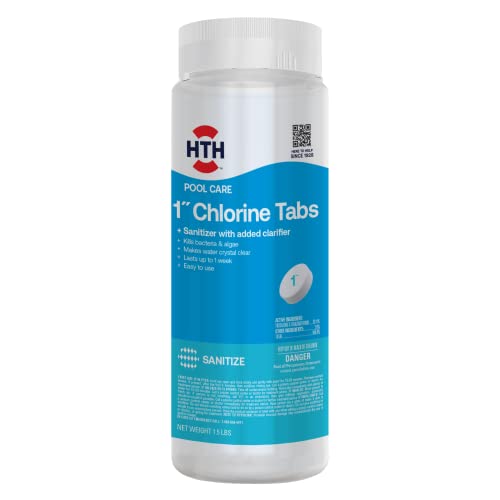
- VC Score9.4
BCP Score is a ranking system developed by bestcleanerproducts.com. BCP Score has no relationship or impact from any manufacturers or sales agent websites. Learn more
- BrandHTH

- VC Score9.4
BCP Score is a ranking system developed by bestcleanerproducts.com. BCP Score has no relationship or impact from any manufacturers or sales agent websites. Learn more
- BrandHTH
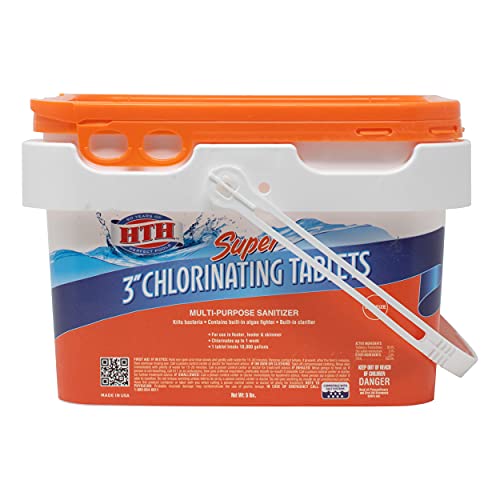
- VC Score9.0
BCP Score is a ranking system developed by bestcleanerproducts.com. BCP Score has no relationship or impact from any manufacturers or sales agent websites. Learn more
- BrandHTH

- VC Score9.0
BCP Score is a ranking system developed by bestcleanerproducts.com. BCP Score has no relationship or impact from any manufacturers or sales agent websites. Learn more
- BrandMerkia

- VC Score9.0
BCP Score is a ranking system developed by bestcleanerproducts.com. BCP Score has no relationship or impact from any manufacturers or sales agent websites. Learn more
- BrandCPDI

- VC Score8.8
BCP Score is a ranking system developed by bestcleanerproducts.com. BCP Score has no relationship or impact from any manufacturers or sales agent websites. Learn more
- BrandSwimline

- VC Score-
BCP Score is a ranking system developed by bestcleanerproducts.com. BCP Score has no relationship or impact from any manufacturers or sales agent websites. Learn more
- BrandAnuirheiH

- VC Score-
BCP Score is a ranking system developed by bestcleanerproducts.com. BCP Score has no relationship or impact from any manufacturers or sales agent websites. Learn more
- BrandAnuirheiH
Last update on 2026-10-08 / Affiliate links / Images, Product Titles, and Product Highlights from Amazon Product Advertising API
FAQs
How long should I run my pool pump after adding chlorine?
Run your circulation pump for at least 8 to 12 hours after adding liquid chlorine or shock powder. Continuous water movement spreads the sanitizer evenly across the shallow and deep ends, preventing heavy chemical pockets from settling near the bottom. Running the pump also pushes the treated water through your filter to trap dead algae and debris.
Can I add shock powder and chlorine tablets at the exact same time?
You can keep maintenance tablets in your floating dispenser while adding shock to the pool water, but you should never mix the two dry chemicals together in the same bucket or container. Combining different chlorine types in a confined space can spark a violent chemical reaction or release toxic gas. Always dissolve and add each chemical separately into the pool.
Why is my pool cloudy even though my chlorine reading is high?
Cloudy water with high chlorine usually points to either a dirty filter or an excessively high stabilizer level. If your stabilizer has climbed past 100 ppm, it causes chlorine lock, preventing the sanitizer from clearing the water. Check your filter pressure gauge, rinse or backwash the filter, and test both your stabilizer and pH levels to pinpoint the issue.
How does heavy rain affect how much chlorine I need to add?
Rainwater does not just dilute your pool water; it also washes airborne dust, algae spores, and organic debris straight into the pool. This sudden influx of contaminants rapidly consumes your active free chlorine. After a heavy storm, test your water balance immediately, as you will often need to add an extra dose of liquid chlorine or a pound of shock to keep the water clear.


How to Refinish a Fiberglass Pool

How Do You Keep Raccoons Out of Your Pool?

How to Fix Cyanuric Acid in Your Pool

How to Shape a Pool Cue Tip to Stop Miscues

12 Best Automatic Vacuum For Intex Above Ground Pool of 2026 To Keep Vinyl Floors Spotless

10 Best Automatic Pool Vacuum For Above Ground Pool of 2026 To End Manual Scrubbing

How Much Pool Clarifier Should You Use for Your Pool Size?

How Much Does a Pebble Tec Pool Cost to Build or Resurface?


