
How Do Solar Pool Heaters Work to Warm Your Pool?

Sunlight heats pool water inside dark mats. The regular pool filter pump pushes water through narrow black channels laid out in the sun. As the water travels across this heated surface, it absorbs free solar warmth and flows straight back into the pool through the return jets. It works just like water warming inside a garden hose left on a sunny driveway, scaled up for a swimming pool.
Real temperature gains depend on your backyard conditions. Panels require hours of unshaded sunlight and enough total surface area to match your pool size. Your pump must also have enough pressure to circulate water through the extra pipes, while using a pool cover at night prevents that fresh heat from evaporating into cool air. Here is how the entire system circulates water, what parts it requires, and what to expect during a sunny week.
The Short Version
- Your pool pump routes filtered water through black heating panels or tube mats set up in direct sunlight before sending it back through the return jets.
- The dark panels soak up thermal energy from the sun and transfer that warmth directly into the pool water as it flows through tiny channels.
- A bypass handle controls the water path, letting you send water through the heating collectors on sunny afternoons or bypass them entirely on chilly days.
- You can expect a realistic temperature gain of 5 to 15 degrees Fahrenheit, provided you have enough panel surface area and cover the pool at night.
The Circulation Cycle: How Water Warms Up and Returns
A solar pool heater does not generate heat on its own. Instead, it relies on your existing filtration equipment to move water through dark collectors that capture energy straight from the sun. The process begins at your pool skimmer and main drain. The pool pump pulls cool water from the pool and pushes it through your filter to remove dirt, hair, and fine debris. Keeping the water clean before it enters the heating setup prevents clogs inside the narrow channels of the panels.
Once the water leaves the filter, it reaches a diverter valve (a bypass handle that routes water to panels or straight to pool). If the sun is shining and you want warmer water, the valve directs the flow toward the solar heating array. The water travels through PVC pipes or heavy-duty flexible hoses to the base of the heating panels. It enters a distribution pipe that splits the water evenly across dozens of riser tubes (narrow water channels running through the panel).
Think about what happens when you leave a dark garden hose out on a concrete driveway on a hot summer afternoon. When you turn the spigot on, the water that comes out of the nozzle feels hot enough for a bath. A solar pool heater works on that exact same principle, but it does it on a continuous loop. As water flows through the black material, it absorbs the stored heat. The warm water collects in a header pipe at the top of the array and travels back down to the pool through your standard return jets.
This process only works efficiently when the pump runs during peak daylight hours. Setting your pump to run when the sun is highest ensures you capture maximum heat. Learning how pool timers work to control your pump helps you schedule daily runtimes to match the brightest hours of the afternoon without wasting electricity overnight.
Essential Parts of a Solar Pool Heating System
Solar heating setups do not require complex machinery or high-voltage wiring. They consist of a few straightforward plumbing parts that work alongside your standard pool gear. Here are the main parts that keep the system running smoothly:
- Solar collector panels or tube mats: These are the dark, flat pads or coiled domes placed where sunlight is strongest. Made from heavy-duty plastic or rubber compounds that resist sun exposure, they contain narrow internal tubes where cool water absorbs heat.
- The diverter valve: This bypass handle sits between your pool filter and the solar panels. It lets you choose whether water travels up to the solar array or flows straight back into the pool. You can adjust this manually or pair it with an automatic motor that switches paths based on roof temperature.
- A one-way check valve: Placed in the plumbing line before the panels, this valve allows water to flow forward but prevents it from rushing backward. This stops water resting on a roof from draining back into your filter tank when the pump shuts down.
- A vacuum relief valve: Installed at the highest point of the solar panel setup, this small air valve lets air into the pipes when the pump turns off. That allows water to drain naturally out of the panels so suction does not crush the collectors.
- Plumbing lines and connection hoses: Rigid PVC pipe or flexible, ribbed pool hoses connect your equipment pad to the solar panels, carrying cool water up and heated water back down.
Realistic Temperature Gains in Full Sunlight
Solar pool heaters work gradually. Unlike a gas heater that acts like a furnace and blasts high heat on demand, solar panels act like a steady thermal sponge. You should not expect cold pool water to become hot tub water in two hours. Instead, a properly sized solar setup raises water temperature slowly over several consecutive sunny days.
In full sunlight, a system with adequate panel coverage typically raises pool water by 5 to 10 degrees Fahrenheit compared to an unheated pool. In hot, sunny climates with long summer days, that gain can reach 12 to 15 degrees. Water moving through the return jets often feels only 2 to 5 degrees warmer than the pool itself. That slight boost makes a huge difference because thousands of gallons circulate through that gentle heating cycle all day long.
Several weather factors impact how much warmth your pool actually gains:
- Daily sunlight hours: Panels need at least four to six hours of unshaded, direct sun each day to provide noticeable warmth.
- Wind speeds: Breezy days pull heat away from both the panel surfaces and the open water, slowing down your overall temperature gains.
- Air temperature: If the outdoor air is cold, panels lose part of their absorbed heat to the surrounding atmosphere before the water can carry it away.
- Pool surface size: A large pool with a small solar mat will see almost no change because the volume of water simply overwhelms the heat output.
Warmer pool water also changes how your pool operates. Heat accelerates chemical consumption and creates an environment where algae can multiply quickly. Understanding how often you should check pool chemicals ensures your sanitizer stays balanced as your water temperature climbs into the comfortable eighties.
Where to Place Solar Panels: Roof, Ground Rack, or Lawn
Where you put your solar panels directly affects both heating performance and how hard your pool pump has to work. You need a location that receives clear, uninterrupted sunlight for the majority of the day, free from tree branches, tall fences, or roof gables.
A house, garage, or shed roof is the most common spot for in-ground pool systems. Roofs keep large collector panels out of foot traffic and away from pets or lawnmowers. A roof plane facing south receives the most intense sunlight throughout the day, while a west-facing roof captures strong afternoon heat. But placing panels on a roof means your pump must push water vertically against gravity. You must verify that your pump horsepower can handle that vertical lift without dropping the flow rate (the speed of water moving through the pipes) below what your filter requires.
Ground racks and lawn layouts are popular choices for above-ground pools or yards with heavily shaded roofs. Building a low wooden or metal rack near the pool allows you to angle the panels toward the sun without climbing onto a roof. Setting panels flat on the grass or on a nearby deck is the easiest DIY setup, but it takes up yard space and leaves panels vulnerable to foot traffic. The major benefit of ground-level placement is zero elevation strain on your pump. Even modest, low-horsepower pumps can push water through ground mats without breaking a sweat.
Before securing panels anywhere, walk your yard at 9:00 AM, 1:00 PM, and 5:00 PM. Note where tree shadows fall. Putting panels in a spot that gets shaded during the middle of the day will cut heating efficiency in half.
Stopping Nighttime Heat Loss and Chilly Mornings
Heating pool water during the day is only half the battle. If you do not protect that warmth, you will lose almost all of it overnight. Evaporation is responsible for roughly 70 percent of a swimming pool's heat loss. When dry, cool night air sweeps across the pool surface, water evaporates rapidly, pulling stored warmth out with it.
Leaving your solar system running after sunset can also reverse your gains. When the sun goes down, collector panels cool off rapidly. If your pump pushes warm pool water through cold panels on a dark roof, the panels act like a giant car radiator in reverse. They will radiate your pool's warmth out into the night sky and return chilly water back into the pool. You must always shut off the flow to the panels using the bypass handle or turn the pump off before dusk.
To lock in the heat your panels collect, pair your solar system with a solar blanket or floating thermal rings. Covering the pool surface at night creates a physical barrier that stops evaporation in its tracks. A covered pool typically loses only 1 to 3 degrees overnight, whereas an uncovered pool can drop 5 to 8 degrees by morning. Using a cover means your solar panels start each sunny morning maintaining warm water rather than reheating freezing water from scratch.
What to Look for in Solar Heating Equipment
When shopping for solar pool heating equipment, the most critical factor is total surface area. As a general benchmark, your solar collectors should equal at least 50 percent of your pool's total surface area for moderate climates, and up to 100 percent if you live in a cooler region or want to swim early in the spring. If your pool is 300 square feet, you want at least 150 square feet of collector space to see real, satisfying temperature gains.
You will encounter three primary equipment styles for residential pools:
- Large flat-panel mats: These long black panels roll out across roofs or ground racks. They offer the highest surface area and are the standard choice for in-ground pools and permanent installations.
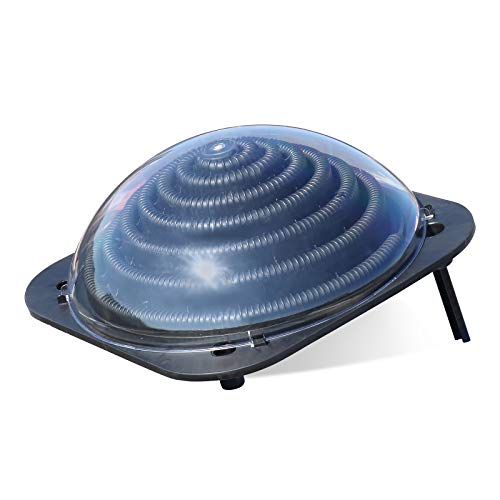
- Compact dome heaters: These units coil long black hoses inside a clear plastic bubble. The bubble traps heat like a miniature greenhouse. They take up very little ground space and connect easily to above-ground pools, though you often need to daisy-chain several domes together for larger water volumes.
- Flexible roll-out mats: Designed mainly for temporary seasonal setups, these lightweight mats connect directly to standard flexible pool hoses and lay flat on the lawn or deck.
Look closely at material construction. Solar panels endure intense UV rays, chlorinated water, and high summer heat. Durable plastics such as stabilized polyolefins withstand outdoor conditions for years without becoming brittle. Check your pool pump specifications before buying as well. Confirm that your pump flow rate falls within the recommended limits of the collector panels. If water moves too fast, it will create high backpressure; if it moves too slow, it will not carry warmth into the pool efficiently.
Finally, consider repairability. Solar panels can occasionally develop pinhole leaks from falling tree branches or animal claws. Look for systems that support simple rubber repair plugs. These plugs allow you to seal off an individual leaking tube in minutes without having to replace the entire collector panel.

- VC Score9.0
BCP Score is a ranking system developed by bestcleanerproducts.com. BCP Score has no relationship or impact from any manufacturers or sales agent websites. Learn more
- BrandPool Ruler

- VC Score8.8
BCP Score is a ranking system developed by bestcleanerproducts.com. BCP Score has no relationship or impact from any manufacturers or sales agent websites. Learn more
- BrandSolarPoolSupply

- VC Score7.8
BCP Score is a ranking system developed by bestcleanerproducts.com. BCP Score has no relationship or impact from any manufacturers or sales agent websites. Learn more
- BrandFafco

- VC Score7.0
BCP Score is a ranking system developed by bestcleanerproducts.com. BCP Score has no relationship or impact from any manufacturers or sales agent websites. Learn more
- BrandSunHeater

- VC Score7.0
BCP Score is a ranking system developed by bestcleanerproducts.com. BCP Score has no relationship or impact from any manufacturers or sales agent websites. Learn more
- BrandYiViKPE

- VC Score6.8
BCP Score is a ranking system developed by bestcleanerproducts.com. BCP Score has no relationship or impact from any manufacturers or sales agent websites. Learn more
- BrandIntex

- VC Score6.8
BCP Score is a ranking system developed by bestcleanerproducts.com. BCP Score has no relationship or impact from any manufacturers or sales agent websites. Learn more
- BrandSolar Sun Rings

- VC Score6.6
BCP Score is a ranking system developed by bestcleanerproducts.com. BCP Score has no relationship or impact from any manufacturers or sales agent websites. Learn more
- BrandYiViKPE
- VC Score6.4
BCP Score is a ranking system developed by bestcleanerproducts.com. BCP Score has no relationship or impact from any manufacturers or sales agent websites. Learn more
- BrandVINGLI
- VC Score6.4
BCP Score is a ranking system developed by bestcleanerproducts.com. BCP Score has no relationship or impact from any manufacturers or sales agent websites. Learn more
- BrandBeluga Pool Solutions

- VC Score6.0
BCP Score is a ranking system developed by bestcleanerproducts.com. BCP Score has no relationship or impact from any manufacturers or sales agent websites. Learn more
- BrandYiViKPE
Last update on 2026-10-08 / Affiliate links / Images, Product Titles, and Product Highlights from Amazon Product Advertising API
FAQs
Does a solar pool heater plug into an electrical wall outlet?
Standard solar pool heaters do not require any electrical power or wall outlets to heat your water. They rely entirely on your existing pool pump to circulate water through the dark heating panels and use pure sunlight for warmth. The only optional part that might use electricity is an automatic motorized diverter valve, which plugs into an outdoor GFCI outlet to turn the bypass handle automatically based on sunlight sensors.
Can my existing pool pump push water through solar panels?
Most standard pool pumps can easily handle solar panels mounted at ground level or on a low patio roof. If you plan to install panels on a two-story home, you must verify your pump horsepower and system pressure. A pump that is too small may struggle to lift water up two stories, which reduces water circulation and strains the motor. In contrast, ground-mounted panels add minimal resistance and work well with small pumps.
What happens to a solar pool heater on cloudy or rainy days?
Solar pool heaters do not generate noticeable heat on heavily overcast or rainy days because they need direct sunlight to warm the collector material. If heavy clouds roll in, you should turn your bypass handle to send water straight back to the pool rather than through the panels. Circulating water through cool panels on a dark, rainy day will actually chill your pool water instead of warming it.
How do I know if my solar pool heater is working properly?
The simplest way to verify operation is to touch the panels and the water return jets while the system runs in bright sunlight. When water circulates correctly, the panels on your roof or lawn should actually feel relatively cool to the touch because the moving water constantly strips the heat away. At the same time, the water flowing out of your pool return jets should feel noticeably warmer than the rest of the pool.


How to Refinish a Fiberglass Pool

How Do You Keep Raccoons Out of Your Pool?

How to Fix Cyanuric Acid in Your Pool

How to Shape a Pool Cue Tip to Stop Miscues

12 Best Automatic Vacuum For Intex Above Ground Pool of 2026 To Keep Vinyl Floors Spotless

10 Best Automatic Pool Vacuum For Above Ground Pool of 2026 To End Manual Scrubbing

How Much Pool Clarifier Should You Use for Your Pool Size?

How Much Does a Pebble Tec Pool Cost to Build or Resurface?


