
How to Vacuum a Coleman Pool Without Losing Suction

Dirt gathering at the bottom of the pool looks frustrating, but clearing it out is completely straightforward once you understand how the water flows. The easiest method involves hooking a vacuum to the wall intake, which works reliably as long as you focus on filling the hose with water first so the motor never runs dry.
The right approach depends mainly on the strength of your pump and what kind of mess has settled on the floor. Smaller factory pumps can struggle with heavy leaves or long hoses, which might mean switching to an independent sweeper instead. Fitting sizes on the pool wall also change which adapter you need for a snug connection. Following a few careful steps will keep the water circulating and leave the vinyl floor spotless.
Gather the Right Adapters Before You Touch the Pool
Vacuuming a soft-sided Coleman pool requires parts that match its flexible vinyl liner and smaller plastic wall ports. Most Coleman pools use 1.25-inch push-on wall fittings, while larger frame models use 1.5-inch threaded connections. Grabbing parts meant for permanent concrete pools can damage your pool walls or fail to seal properly.
- A vacuum head with soft bristles: Always choose a brush head made specifically for vinyl liners. Standard inground vacuum heads often have hard plastic wheels or sharp corners that can catch, pinch, or tear the thin vinyl floor under suction.
- A telescopic pole: This adjustable aluminum pole clicks into your vacuum head and lets you steer the cleaner smoothly from outside the pool without leaning over the frame.
- A flexible vacuum hose: You need a spiral-wound hose long enough to reach from your wall intake port to the farthest corner of the pool floor, plus about three extra feet of slack. Ensure the cuff matches your wall connection, usually 1.25 inches for stock Coleman setups.
- A hose adapter or vacuum plate: Coleman wall ports use protective blue or gray plastic strainer screens. You need a dedicated vacuum adapter cone that fits snugly over this screen, or you must unscrew the screen to attach a hose cuff directly.
- A rubber wall plug: If your pool features dual suction outlets on the wall, you need a rubber stopper to close one off while you clean.
Connect the Vacuum to Your Pump in Clear Steps
Connecting a vacuum to a low-pressure above-ground pool pump requires a careful sequence. If you hook things up out of order, the pump will gulp air, drop its water flow, and refuse to pick up dirt.
- Rinse your filter cartridge first: Clean water flow is essential. Turn off the pump, remove the paper cartridge from the filter tank, rinse away trapped debris with a garden hose, and replace it. A dirty cartridge restricts water movement before you even start.
- Plug the secondary wall intake: Many Coleman pools use two suction ports (the plastic wall openings that pull water into the filter) joined by a T-shaped hose on the outside. If both ports remain open, the pump takes the path of least resistance and pulls water from the open port instead of your vacuum hose. Insert a rubber stopper into the secondary suction port so all suction channels through a single wall fitting.
- Assemble your pole and vacuum head: Snap the vacuum head onto your telescopic pole. Connect the swivel end of the vacuum hose to the top collar of the vacuum head. Lower the head into the pool until it rests flat on the vinyl liner floor.
- Fill the hose completely with water: Keep the vacuum head resting on the bottom while you purge all air out of the hose length. Do not plug the open end of the hose into the wall until solid water streams out of the cuff.
- Attach the hose to the wall port under water: Keep the open hose cuff submerged below the waterline. Slide the hose cuff firmly onto your wall adapter or suction port. Work quickly so the hose does not swallow air from the surface.
- Vacuum the floor with slow, overlapping strokes: Walk slowly around the outside of the pool, pushing the pole in straight, measured lines. Overlap each pass by two inches. Moving too quickly creates water currents that stir settled dirt into the water column before the vacuum can swallow it.
Push All Trapped Air Out of the Hose to Save Your Pump
Air trapped inside your vacuum hose is the number one reason cleaning fails on a Coleman pool. Above-ground pool pumps are built to push water, not air. When a large pocket of air reaches the pump chamber, it creates an airlock (trapped air that stops water from moving through the pump). The motor will whine loudly, water stops circulating, and suction vanishes instantly.
Filling the hose with water before connecting it is called priming. The easiest way to prime your hose is using the pool return jet (the wall fitting that shoots clean water back into the pool). Turn your pump on, take the free end of the vacuum hose, and hold it firmly against the return jet under the water.
The returning water pressure will rush through the hose, driving air out through the vacuum head resting on the pool floor. You will see large air bubbles churn up to the surface around the vacuum head. Keep holding the hose against the return jet until the bubbles stop completely and water flows smoothly. Once all air escapes, keep the hose cuff under water as you move it over to the suction port.
If your pool return stream is too weak to push the air out, feed the hose into the pool hand over hand. Start at the vacuum head and push the hose straight down into the water, one foot at a time. The surrounding water pressure forces the air upward and out through the top cuff. Reviewing how to draw pool water through your pump helps you spot and fix suction leaks if your pump still struggles to move water after priming.
Try Independent Cleaners if Your Stock Pump Lacks Suction
Standard Coleman cartridge pumps that come in the box often move between 330 and 1,000 gallons per hour. While this flow rate keeps water moving through a filter cartridge, it is often too weak to draw heavy suction through twenty feet of narrow vacuum hose. If your pump hums but cannot lift sand or dead algae off the floor, switching to an independent cleaner solves the problem without straining your equipment.
A venturi vac (a cleaner powered by water pressure from a garden hose) is an affordable alternative for light debris. You snap the cleaner head onto your telescopic pole and hook a standard garden hose to its base. Water shooting through the vacuum base creates an upward draft that lifts leaves, insects, and coarse dirt into a small mesh bag attached to the cleaner. Because it runs on household tap pressure, your pool pump stays off, completely avoiding pump airlocks and clogged filter cartridges.
Rechargeable handheld pool vacuums offer another great option for small dirt patches. These battery-powered wands feature an internal motor and a reusable filter screen. You submerge the wand on the end of your pole, turn on the switch, and steer it across the vinyl floor. They pick up fine sand and dead algae without any hoses, wall adapters, or pump hookups.
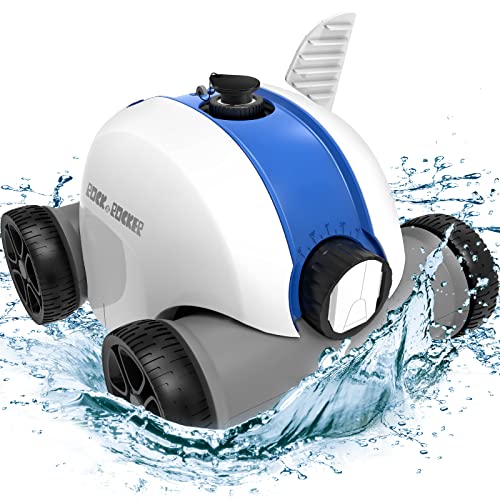
For hands-off cleaning, a cordless robotic cleaner drives itself along the pool floor on rechargeable battery power. It navigates the vinyl liner independently, collects dirt in a built-in basket, and requires no connection to your pool plumbing. If you prefer using standard suction hoses, replacing your stock cartridge pump with an upgraded sand filter system provides the strong, continuous draw needed for deep vacuuming. Checking how long pool pumps last can help you decide whether your aging stock pump is worth upgrading.
Avoid These Common Habits That Tear Liners and Burn Out Motors
Above-ground pools demand gentle care. Thin vinyl walls and small plastic fittings are easily damaged by rough handling or improper pump operation.
- Never let the pump run dry: If your vacuum hose slips above the waterline and pulls air into the system, turn the pump off immediately. Running a pool pump without water can overheat the internal motor seal, warp the plastic housing, and cause permanent motor burnout within minutes.
- Never pull the vacuum by its hose: Always guide the vacuum head using your aluminum pole. Yanking on the hose pulls directly against the thin vinyl wall and plastic intake port. This puts intense strain on the liner seams around the port hole, leading to tears and leaks that are difficult to patch.
- Never use vacuum heads with rigid wheels: Vacuum heads built for concrete pools feature hard plastic wheels that leave heavy indentation marks on soft vinyl. If a wheel snags a wrinkle in the pool floor, the suction can pull the liner tight and slice through it. Use rounded heads equipped with soft nylon bristles.
- Never vacuum thick algae directly into a clean cartridge: Vacuuming heavy green or mustard algae straight into a tiny paper filter will choke the pleats within two minutes, killing your suction. If your pool has an upgraded sand filter with a multi-port valve, set the valve to waste so dirty water bypasses the filter media entirely and drains out of the pool. If you use a basic cartridge pump, scoop out heavy clumps with a leaf net before vacuuming.
- Always use an outdoor GFCI outlet: Plug your pump and any corded accessories into an outdoor GFCI outlet (a protected ground-fault outlet with a weatherproof cover) set back safely from the pool edge. Always turn off the circulation pump before connecting or disconnecting suction hoses to protect your hands from strong suction entrapment.
Choose the Right Pool Cleaner to Bypass Pump Headaches
When shopping for a pool cleaner for a Coleman above-ground pool, the most important step is checking how the unit collects debris. Suction-side cleaners rely entirely on your pool pump for movement and suction power. If your pool still runs on its original small cartridge pump, a suction cleaner will likely stall. In that situation, choosing a self-powered robotic cleaner or a handheld battery vacuum saves hours of troubleshooting because neither option depends on your pool plumbing.
If you choose to use your pool pump for suction, measure your wall connection fittings before ordering any hose or adapter. Check whether your pool uses 1.25-inch slip ports or 1.5-inch threaded ports, and confirm that the vacuum adapter matches your specific wall strainer shape. Look for vacuum heads with flexible bodies, rounded corners, and soft brush bottoms that glide safely across vinyl liner seams without catching on wrinkles.

- VC Score8.8
BCP Score is a ranking system developed by bestcleanerproducts.com. BCP Score has no relationship or impact from any manufacturers or sales agent websites. Learn more
- BrandIDEASURE

- VC Score8.8
BCP Score is a ranking system developed by bestcleanerproducts.com. BCP Score has no relationship or impact from any manufacturers or sales agent websites. Learn more
- Brandownwhim

- VC Score8.4
BCP Score is a ranking system developed by bestcleanerproducts.com. BCP Score has no relationship or impact from any manufacturers or sales agent websites. Learn more
- BrandTonGass

- VC Score7.8
BCP Score is a ranking system developed by bestcleanerproducts.com. BCP Score has no relationship or impact from any manufacturers or sales agent websites. Learn more
- BrandPOOLWHALE
- VC Score7.8
BCP Score is a ranking system developed by bestcleanerproducts.com. BCP Score has no relationship or impact from any manufacturers or sales agent websites. Learn more
- BrandPAXCESS

- VC Score6.8
BCP Score is a ranking system developed by bestcleanerproducts.com. BCP Score has no relationship or impact from any manufacturers or sales agent websites. Learn more
- BrandCirculator

- VC Score6.8
BCP Score is a ranking system developed by bestcleanerproducts.com. BCP Score has no relationship or impact from any manufacturers or sales agent websites. Learn more
- BrandSuck It Spa Vac

- VC Score6.6
BCP Score is a ranking system developed by bestcleanerproducts.com. BCP Score has no relationship or impact from any manufacturers or sales agent websites. Learn more
- BrandEFURDEN
Last update on 2026-10-08 / Affiliate links / Images, Product Titles, and Product Highlights from Amazon Product Advertising API
FAQs
Why does my Coleman pool vacuum lose suction after a few minutes?
Suction loss usually happens because fine silt has clogged your filter cartridge or air leaked into the hose connection. Check your paper filter cartridge and rinse it clean under a hose. Also inspect the hose cuff where it joins the pool wall to confirm it remains fully submerged and sealed tightly.
Can I vacuum a Coleman pool that has two suction ports on the wall?
Yes, but you must seal one of the ports with a rubber stopper before connecting your vacuum hose to the other. If you leave both ports open, the pump draws water from the open port instead of the vacuum hose, dropping suction down to almost nothing. Plugging the second port forces all water draw through your vacuum.
How do I vacuum dead algae without clouding up the water?
Move your vacuum head across the floor very slowly to avoid creating currents that lift fine algae off the vinyl liner. If your filter system includes a waste setting, vacuum the dead algae directly out of the pool so it does not recirculate back through the return jet. For basic cartridge pumps, rinse the paper filter frequently during the process.
Do I need to turn off the pump before disconnecting the vacuum hose?
Yes, always turn off the pump before pulling the hose off the wall port. Disconnecting a hose while the pump is running can pull the hose cuff out of your hands, let a massive burst of air into the system, and create an instant airlock in your pump chamber. Shutting the motor off keeps your system primed and protects your hands.


How to Refinish a Fiberglass Pool

How Do You Keep Raccoons Out of Your Pool?

How to Fix Cyanuric Acid in Your Pool

How to Shape a Pool Cue Tip to Stop Miscues

12 Best Automatic Vacuum For Intex Above Ground Pool of 2026 To Keep Vinyl Floors Spotless

10 Best Automatic Pool Vacuum For Above Ground Pool of 2026 To End Manual Scrubbing

How Much Pool Clarifier Should You Use for Your Pool Size?

How Much Does a Pebble Tec Pool Cost to Build or Resurface?








