
How to Unlock Chlorine in Your Pool

Most people assume a harsh chemical smell means the pool needs more chlorine tablets right away. In truth, adding more pucks usually worsens the freeze. Unlocking the water requires either shocking heavily with unstabilized chlorine to burn off spent waste, or partially draining and refilling when chemical stabilizer builds up too high.
The right fix depends on your exact water numbers. When your cyanuric acid (the stabilizer that shields chlorine from sunlight) climbs over 100 parts per million, shock cannot work and fresh water is the only solution. If that stabilizer level sits within a normal range, your target depends on the gap between your free chlorine and bound-up waste, as well as keeping pH low enough for the shock to activate. Taking a close look at those readings will show you what step to take next.
The Short Version
- Check your stabilizer level first: Measure cyanuric acid (the sunscreen stabilizer for chlorine) using a reliable water check kit. If it sits above 100 parts per million (ppm), you must partially drain and refill your pool because high stabilizer blocks chlorine from sanitizing.
- Shock heavily if stabilizer is normal: If stabilizer reads below 80 ppm but active sanitizer reads zero, your pool has chloramines (used-up chlorine bound to dirt). Add a high dose of unstabilized shock to reach breakpoint chlorination (shocking high enough to burn off waste).
- Balance your pH before shocking: Chlorine loses its strength quickly in water with a pH above 7.8. Bring your pH down between 7.2 and 7.4 so your shock dose works at full power.
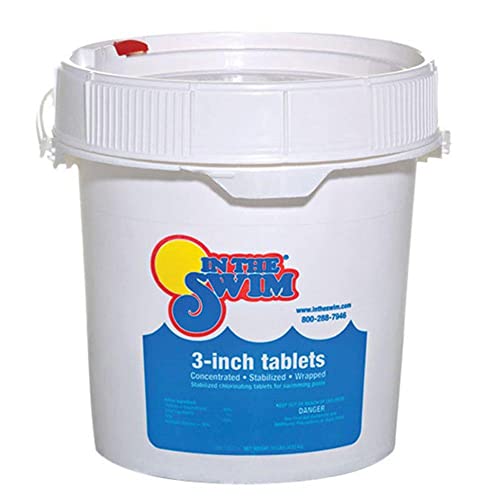
- Pause stabilized chlorine tablets: Standard 3-inch trichlor tablets add more stabilizer every time they dissolve, which slowly locks your water all over again.
What Chlorine Lock Actually Means in Your Pool
You keep adding chlorine tablets to the skimmer or floating dispenser, but the water turns cloudy or green. When you stand near the edge, your eyes sting and you smell a sharp, bleach-like odor. Yet every time you check the water, your sanitizer reading sits stubbornly at zero. This frustrating situation is what pool owners call chlorine lock.
The term chlorine lock actually describes two very different water chemistry problems. Confusing the two causes people to waste money on chemicals that make the situation worse.
The first problem is chloramine buildup. When sanitizing chlorine attacks sweat, swimmer oils, urine, and organic debris, it chemically bonds to those contaminants. This reaction forms chloramines (used-up chlorine bound to dirt). Chloramines cannot sanitize water, but they create that harsh chemical smell and irritate your eyes. In this scenario, your water is full of trapped sanitizer, but it contains zero free chlorine (active chlorine ready to clean).
The second problem is stabilizer overload. Most pool owners use 3-inch trichlor tablets, which contain cyanuric acid (sunscreen stabilizer for chlorine). This stabilizer shields chlorine from ultraviolet sunlight. Chlorine burns away or evaporates, but the stabilizer never leaves the water. Over months of feeding tablets into your pool, the stabilizer climbs past 100 ppm. At that level, the stabilizer binds so tightly to the chlorine molecules that it refuses to release them to kill bacteria or algae. The chlorine is physically present, but it is locked in a chemical handcuffs grip.
Check Your Water Readings to Spot the True Cause
Before you purchase chemicals or drain a single drop of water, you must determine which version of chlorine lock you are fighting. Grab a fresh water check strip or liquid dropper kit and note these four specific readings.
- Free Chlorine: This number reflects the active chlorine ready to clean your water. Healthy swimming water needs 1.0 to 3.0 ppm. If your reading shows zero or close to it, your pool has no working sanitizer.
- Total Chlorine: This measures all chlorine in the water, including both active sanitizer and bound-up waste. Subtract free chlorine from total chlorine to find your combined chlorine level. If combined chlorine is higher than 0.5 ppm, you are dealing with chloramines.
- Cyanuric Acid (CYA): This is your sunscreen stabilizer level. An ideal range is 30 to 50 ppm. If this reading reaches 80 ppm, you are entering the danger zone. If it climbs above 100 ppm, stabilizer overload is locking your water.
- pH Balance: Chlorine effectiveness drops dramatically as pH climbs. In water with an 8.0 pH, more than 75 percent of your chlorine becomes inactive. Check that your pH sits between 7.2 and 7.6 before attempting any chemical fix.
Review the numbers side by side. If your cyanuric acid is below 80 ppm but your combined chlorine is high, use Fix 1 below. If your cyanuric acid is 100 ppm or higher, skip straight to Fix 2.
Fix 1: Shock the Pool to Clear Chloramines
When your stabilizer reading is in a safe range, you unlock the pool by breaking the bonds of used-up chlorine. You do this through breakpoint chlorination (shocking high enough to burn off waste). You must add enough fresh, active sanitizer in one single dose to completely oxidize all the bound contaminants.
The math behind breakpoint chlorination is straightforward. You must bring your free chlorine level up to ten times your combined chlorine reading. For example, if your total chlorine is 2.5 ppm and your free chlorine is 0.5 ppm, your combined chlorine is 2.0 ppm. Multiplying 2.0 by ten gives you 20 ppm. You must raise your pool water to 20 ppm of free chlorine in a single treatment. If you add only half of that amount, you will simply create more chloramines and leave the water cloudier than before.
Always use unstabilized shock for this process. Granular calcium hypochlorite (cal-hypo) or liquid pool chlorine are ideal choices. Never use dichlor shock bags or trichlor tablets to clear chloramines, because they inject extra stabilizer into the pool with every pound you pour.
- Adjust your pH down first: Use a pH reducer to bring your water down between 7.2 and 7.4. Lower pH ensures your shock works at maximum killing power the moment it hits the water.
- Calculate your chemical dose: Check your pool volume in gallons and calculate the amount of cal-hypo or liquid chlorine needed to hit your ten-times target. For standard cal-hypo shock containing 68 percent calcium hypochlorite, roughly one pound per 10,000 gallons raises chlorine by about 8 ppm. Adjust your pounds according to your specific breakpoint goal.
- Add shock at dusk: Pour or broadcast your unstabilized shock after sunset. Sunlight breaks down unstabilized chlorine rapidly, so shocking at night allows the chemical to spend eight solid hours destroying bound chloramines without fighting UV rays. Pre-dissolve granular shock in a clean bucket of pool water if your product instructions recommend it, then pour it slowly around the deep end perimeter.
- Run the circulation pump continuously: Keep your pool pump running on high for 24 to 48 hours. Continuous circulation ensures the concentrated shock mixes into every corner and forces oxidized waste through your filter.
- Check the water after 24 hours: Measure your levels again the following evening. Once free chlorine and total chlorine read within 0.2 ppm of each other, the chloramines are gone and your chlorine is unlocked. Wait until free chlorine drops back below 5.0 ppm before swimming.
Fix 2: Partial Drain for High Stabilizer Levels
If your cyanuric acid measures over 100 ppm, shocking the pool will not solve the issue. In fact, adding more stabilized shock will increase the stabilizer reading and worsen the lock. There are no reliable chemical additives that make stabilizer vanish from pool water. The only dependable, permanent way to reduce cyanuric acid is to remove a portion of the saturated water and replace it with fresh tap water.
Determine how much water to swap based on your current reading. If your stabilizer sits at 120 ppm and you want to reach 40 ppm, you must replace roughly two-thirds of your water. However, you should never drain a pool completely in one shot. Ground water pressure can float or crack a concrete pool shell, pop a fiberglass pool out of the earth, or cause a vinyl liner to shrink, wrinkle, and tear. Swapping one-third of your water volume at a time is the safest method for residential pools.
Before releasing thousands of gallons of pool water, check our guide on how to dispose of pool water safely and legally to avoid fines or damage to local storm drains and landscapes.
- Shut off your equipment: Turn off the pump, any mechanical timers, and automatic cleaners. Running a pump dry while water drops below the skimmer line will melt pump seals and ruin the motor.
- Lower the water level safely: Use a submersible utility pump placed in the deep end, or switch your sand or DE filter multiport valve to the waste setting. Drain roughly 30 to 35 percent of the water. Never drop the water level below the shallow end floor on vinyl or fiberglass pools.
- Refill with fresh water: Place garden hoses into the pool and refill the water back to the middle of the skimmer opening.
- Circulate the fresh water: Turn the filtration pump back on and let it run for at least 12 hours so the fresh water blends completely with the remaining water.
- Measure your stabilizer level again: Check your cyanuric acid level. If it still reads above 60 ppm, repeat another partial drain of 20 to 30 percent. Once your reading sits comfortably between 30 and 50 ppm, learn how to balance a newly filled pool in the right order so your active sanitizer stays working.
Everyday Habits to Stop Chlorine from Locking Again
Once you break chlorine lock, simple maintenance adjustments will prevent the problem from returning. Stabilizer builds up slowly over many weeks, which makes it easy to overlook until water clarity collapses.
- Alternate your sanitizers: Slow-dissolving 3-inch tablets are convenient for everyday chlorination, but trichlor contains nearly 50 percent cyanuric acid by weight. Switch to liquid pool chlorine or unstabilized granular cal-hypo every few weeks, especially during peak summer months when tablets dissolve quickly.
- Measure stabilizer on a monthly schedule: Active chlorine needs frequent checking, but you should verify cyanuric acid once a month. As soon as your reading creeps past 60 ppm, stop using stabilized pucks immediately and switch entirely to liquid chlorine.
- Maintain total alkalinity to protect pH: Keep your total alkalinity between 80 and 120 ppm using sodium bicarbonate (alkalinity increaser). Proper alkalinity acts as a buffer, stopping your pH from bouncing wildly. When pH spikes above 7.8, your chlorine loses over half of its sanitizing strength. If your pH drops too low, use 100 percent sodium carbonate (soda ash) to lift it back into the safe zone.
- Shock after heavy pool use or storms: Do not wait for chloramines to take over your water. Add a routine maintenance dose of unstabilized cal-hypo shock after large pool parties, heavy rainstorms, or heat waves to destroy organic contaminants before they turn into bound chloramines.
How Pool Cleaners Help Clear Water After Unlocking
Breaking a chlorine lock leaves your pool with a heavy layer of dead algae, oxidized organic matter, and cloudy residue sitting on the floor. While chemicals kill the contamination, you must physically remove that dead debris from the water so it does not decompose and consume your fresh sanitizer reserves. Automatic pool cleaners take the physical labor out of clearing this leftover sediment.
A robotic cleaner (a self-powered unit with its own internal debris basket) works particularly well after unlocking your water. Because it operates independently from your pool filtration system, its fine mesh filter basket traps dead algae dust without loading up your sand or cartridge filter. If your pool uses a smooth vinyl liner or slick fiberglass, check that your robotic unit features soft foam rollers or grippy rubber tracks to climb walls effectively without slipping.
Suction-side cleaners (which attach to your pool skimmer or dedicated vacuum port and use your pool pump's suction) are also effective for clearing floors, though you will need to backwash your main filter frequently as it collects the dead waste. Pressure-side cleaners (which connect to a return jet and collect debris inside an attached sweep bag) handle larger leaves and heavier grit, protecting your skimmer basket from clogging.
Always connect electric pool equipment to an outdoor GFCI outlet (a protected ground-fault outlet with a weatherproof cover) placed at least 10 feet back from the pool edge. Remove all cleaners and cables from the water before letting family members swim, and switch off your circulation pump before disconnecting any vacuum hoses.

- VC Score9.4
BCP Score is a ranking system developed by bestcleanerproducts.com. BCP Score has no relationship or impact from any manufacturers or sales agent websites. Learn more
- BrandIn The Swim

- VC Score9.4
BCP Score is a ranking system developed by bestcleanerproducts.com. BCP Score has no relationship or impact from any manufacturers or sales agent websites. Learn more
- BrandIn The Swim
- VC Score9.2
BCP Score is a ranking system developed by bestcleanerproducts.com. BCP Score has no relationship or impact from any manufacturers or sales agent websites. Learn more
- BrandIn The Swim

- VC Score9.2
BCP Score is a ranking system developed by bestcleanerproducts.com. BCP Score has no relationship or impact from any manufacturers or sales agent websites. Learn more
- BrandIn The Swim

- VC Score9.2
BCP Score is a ranking system developed by bestcleanerproducts.com. BCP Score has no relationship or impact from any manufacturers or sales agent websites. Learn more
- BrandIn The Swim

- VC Score9.2
BCP Score is a ranking system developed by bestcleanerproducts.com. BCP Score has no relationship or impact from any manufacturers or sales agent websites. Learn more
- BrandIn The Swim

- VC Score8.2
BCP Score is a ranking system developed by bestcleanerproducts.com. BCP Score has no relationship or impact from any manufacturers or sales agent websites. Learn more
- BrandIn The Swim
Last update on 2026-10-08 / Affiliate links / Images, Product Titles, and Product Highlights from Amazon Product Advertising API
FAQs
Why does my pool smell strongly of chlorine if the reading is zero?
That strong chemical smell comes from chloramines, not clean chlorine. When active chlorine attaches to sweat, skin oils, and bacteria, it transforms into bound chemical waste that smells offensive and irritates eyes. The active sanitizer reading is zero because all available chlorine has bonded to dirt and cannot clean the water.
How much shock do I need to break chlorine lock?
You need ten times the amount of your combined chlorine reading to reach breakpoint chlorination. If your combined chlorine measures 1.5 ppm, you must raise free chlorine to 15 ppm in a single evening dose. Using unstabilized shock like calcium hypochlorite prevents cyanuric acid from rising during the process.
Can I use chemical clarifiers to unlock my pool chlorine?
Clarifiers cannot break a chemical chlorine lock. Clarifiers simply clump tiny particles together so your filter can catch them, but they do nothing to destroy bound chloramines or lower excess stabilizer levels. You must use unstabilized shock for chloramines or a partial water drain for high stabilizer.
How long after shocking to unlock the pool can I swim?
You should stay out of the pool until your free chlorine level drops back into the safe range between 1.0 and 5.0 ppm. High shock levels can bleach swimsuits and irritate skin and eyes. Keep the pool cover open and the pump running until water checks confirm the sanitizer has returned to normal.


How to Refinish a Fiberglass Pool

How Do You Keep Raccoons Out of Your Pool?

How to Fix Cyanuric Acid in Your Pool

How to Shape a Pool Cue Tip to Stop Miscues

12 Best Automatic Vacuum For Intex Above Ground Pool of 2026 To Keep Vinyl Floors Spotless

10 Best Automatic Pool Vacuum For Above Ground Pool of 2026 To End Manual Scrubbing

How Much Pool Clarifier Should You Use for Your Pool Size?

How Much Does a Pebble Tec Pool Cost to Build or Resurface?


