
How to Turn On Pool Jets and Start Water Flow?

Silent pool wall nozzles are nothing to panic over. Standard pool jets do not have their own separate switch; they start running automatically whenever the main filter pump turns on. These wall openings simply act as return exits where clean water pushes back into the basin after filtration. Once the pump pulls water through the system and drives it forward, strong streams immediately flow out through those wall fittings.
The exact way to start that circulation depends on your equipment setup. Some systems rely on a basic toggle switch or a mechanical timer clock, while modern setups use a digital panel or mobile app. Pool and spa combinations also rely on diverter valves (movable pipe handles) that must point the right way so returning water is not blocked. Here is how to start the pump, set your valves properly, and keep water moving smoothly.
Stop Looking for a Dedicated Jet Button and Focus on Your Main Pump
If you are walking around your pool deck searching for an on-off switch labeled "jets," you can stop looking. Standalone hot tubs and swim spas have dedicated buttons on the acrylic rim that fire up high-pressure massage streams, but a standard swimming pool works differently. In a backyard swimming pool, what most people call jets are actually return jets: the small wall nozzles where clean, filtered water pushes back into the pool. These wall nozzles do not have their own internal motors, and they do not have a separate switch on the wall.
Water moves through your pool in a continuous loop. Your main pool pump pulls water out of the swimming area through the surface skimmer and the main drain at the deep end. That water travels through underground plumbing pipes, passes through your filter tank to trap dirt, moves past your heater or chemical feeder if you have them, and then gets pushed right back into the pool through those wall openings. The wall nozzles are simply the open ends of the return pipes.
Because these wall nozzles depend entirely on the filtration cycle, they turn on automatically whenever your main pool pump is running. If your pump motor is humming and water is moving through the equipment pad, water is already pumping through those wall fittings. If your pump is turned off, the wall nozzles will sit completely still. The only common exception is a pool-spa combination, where an automated valve system or an auxiliary booster pump diverts extra water flow into spa seating. For the main body of the pool, turning on your wall nozzles simply means starting your pool filter pump and making sure the water pipes are open.
Start Your Pump Using the Correct Power Switch
To get water moving through your wall nozzles, you need to send electrical power to the main filtration pump. How you do that depends on the control setup installed at your equipment pad or inside your home. Follow these clear steps to start the water flow safely.
- Check your pool water level first. Before you flip any electrical switch, look at your pool skimmer opening on the pool wall. The water level must sit halfway up the skimmer mouth. If the water level is too low, the pump will pull air instead of water, which stops water from reaching the wall nozzles and can overheat the motor.
- Inspect the equipment pad. Walk over to your pool equipment pad where your pump, filter, and pipes sit. Verify that the clear plastic lid on the front of the pump is screwed down tight and that the pump basket contains water. Also make sure the surrounding concrete is clear of standing puddles near electrical junction boxes. For safety, pool pumps should connect through an outdoor GFCI outlet (a protected ground-fault outlet with a weatherproof cover) or a dedicated subpanel breaker.
- Locate your pump control switch. Depending on your pool design, find your primary switch among these three common types:
- Manual toggle switch: This looks like a standard light switch, usually housed inside a metal weatherproof box mounted on a post or wall near the equipment pad. Flip this switch up to the "On" position.
- Mechanical timer clock: Many pool setups use a large metal timer box (often gray) with a yellow or silver circular 24-hour dial inside. Look at the bottom center of the dial for a small silver lever. Push this lever to the left or right until you hear a mechanical click that starts the motor.
- Digital automation panel or mobile app: If your pool uses modern digital controls, walk up to the control panel screen, switch the mode from "Service" to "Auto" (or "Timeout"), and press the "Filter Pump" button. If your system syncs with a phone app, open the app dashboard and slide the main pump toggle to "On" or set your variable-speed pump to a standard run speed.
- Listen to the pump motor. Once you turn on the power, listen closely to the pump. The motor should spin up into a steady, quiet purr within 15 to 30 seconds. If the motor hums loudly without spinning, or if it trips the electrical breaker immediately, switch the power off right away. If your equipment is older and suffers from motor failure, learning how to remove a pool pump motor without cutting pipes can help you address mechanical issues safely without ruining your plumbing layout.
- Confirm water flow at the pool edge. Walk back to the edge of the pool. Look down at the wall nozzles. Within one to two minutes of starting the pump, you should see ripples pushing across the water surface, and placing your hand in front of the nozzle should reveal a firm, steady push of water.
Open the Return Line Pipe Handles Before Running the Motor
Even when your pump is running at full power, water cannot push out of the wall nozzles if the plumbing pipes are shut. Pool plumbing uses valves to send water in different directions. If a handle is turned the wrong way, it blocks the water inside the pipe, which builds up dangerous pressure inside your filter tank and prevents water from reaching the pool.
Before you run your pump, check every valve handle between your pool filter and the pool walls using this quick checklist:
- Identify the return pipe line: Stand next to your pool filter tank. Look for the pipe that leaves the multi-port valve or filter outlet and heads back down into the ground or toward the pool wall. This is your return line. Follow this pipe with your eyes toward the pool.
- Check diverter valve handles on in-ground pools: A diverter valve is a pipe handle (a lever that directs water flow) with an internal gate. Look at the handle on top of the valve body. Most diverter handles have a wide flat tab labeled "OFF." That "OFF" tab points directly at the pipe that is currently blocked. Make sure the "OFF" tab is pointing toward an unused line (like an off-season water feature or cleaner line) and NOT toward your main pool return line. The handle pointer should align with the pipe heading to your pool wall nozzles.
- Check plunger valves on above-ground pools: If you have an above-ground pool with flexible hoses, look at the connections where the hoses meet the pool wall. These setups usually use hose plunger valves. The round handle on top of the valve must be turned or pulled up into the open position. If the plunger handle is pushed all the way down, the internal gate is closed, completely blocking the water from entering the pool.
- Check multi-port filter valves: If your pool filter has a large dial handle on top or on the side with settings like "Filter," "Waste," "Backwash," and "Closed," make sure the handle points securely to "Filter." Never run the pump with this handle set to "Closed." Always turn off the pump motor before changing the position of this multi-port handle.
- Bleed trapped air from the filter tank: When valves open and water starts moving, air gets pushed into the filter tank. Locate the small relief valve knob on top of your filter pressure gauge. Twist this knob open counter-clockwise until you hear hissing air. Once a solid stream of water squirts out, twist the knob shut. This releases back-pressure so water flows freely to your wall nozzles.
Troubleshoot Weak Flow or Empty Jets Step by Step
If your pump is humming loudly but nothing is coming out of your pool wall nozzles, you have an interruption in your water cycle. Do not let the pump run dry for more than two or three minutes, as running without water will warp the pump seals and melt the plastic plumbing fittings. Work through these common causes to find out why your water flow has stopped.
The most common issue is a pump that has lost its prime. Priming simply means filling the pump basket with water so the internal impeller can create suction. Unlike the pump in your home basement, a pool pump cannot push air effectively; it needs liquid water to generate pull. If the clear pump lid is full of air instead of water, turn off the motor. Unscrew the clear lid, pour a bucket of water directly into the pump strainer basket until it overflows, inspect the rubber lid gasket for cracks, tighten the lid back down securely, and restart the motor. Watch through the clear lid; water should swirl and fill the chamber within 60 to 90 seconds.
The second most frequent problem is a clogged filter. As your pool filter traps dirt, pollen, and algae, it becomes harder for water to squeeze through the filter media. This causes water pressure inside the filter tank to rise, while the flow coming out of your wall nozzles slows to a weak trickle. Look at the pressure gauge on top of your filter tank. If the gauge needle sits 10 pounds per square inch (PSI) higher than your normal clean baseline reading, your filter is clogged. Turn off the pump, backwash your sand or diatomaceous earth filter, or pull out and spray down your filter cartridge elements. Keeping pool surfaces clean also reduces how fast fine debris clogs your media; if you have a plaster finish, knowing how to clean pool plaster without damaging the surface keeps abrasive grit and mineral dust out of your circulation system.
Finally, check for blockages on the suction side of the system. Empty the plastic skimmer baskets on your pool deck and the strainer basket inside the pump housing. If wet leaves plaster the sides of these baskets, water cannot enter the pump, meaning no water can exit through the wall nozzles. If your baskets are clean and the pump is full of water, check the pool nozzles themselves for air bubbles. Large streams of bubbles mean air is getting sucked into the pipes before the pump, usually through a loose pump lid O-ring or a cracked pipe fitting. Tightening these fittings restores a solid, uninterrupted water stream.
Aim Your Directional Nozzles to Create a Smooth Circular Current
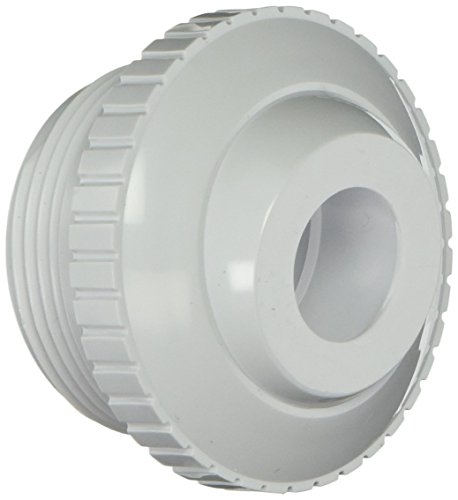
Once water is actively pushing through your wall nozzles, you need to set where that water goes. Standard pool return openings use an eyeball fitting: a directional nozzle inside the wall opening held in place by a threaded outer locking ring. Leaving these nozzles pointed straight out or angled up at the sky creates dead zones where algae can grow unchecked.
To adjust your wall nozzles, loosen the outer ring by turning it counter-clockwise with your hand while the pump is running. Move the inner eyeball nozzle so it points downward at roughly a 45-degree angle toward the pool floor, and point it sideways in a consistent direction around the pool perimeter. For instance, if you have three return nozzles, angle all three of them slightly to the right to create a gentle, continuous clockwise current around the pool walls.
Aiming the nozzles downward forces treated water down to the pool floor, where cold water and settling debris normally gather. This eliminates temperature layering and mixes sanitizing chemicals evenly through the entire deep end. At the same time, the circular current pushes floating leaves and surface dirt in a steady loop past your skimmer door, allowing the skimmer to pull debris out of the pool before it sinks to the bottom. Never point your wall nozzles straight up at the water surface. While splashing water looks nice, breaking the surface tension causes your chlorine to degrade faster under sunlight and keeps filtered water from reaching the bottom of the pool.
Choose the Right Replacement Nozzles and Plunger Valves for Steady Circulation
If your pool pump is running smoothly and your valves are wide open, but your water circulation still feels uneven, your return fittings might need an update. Over time, plastic pool fittings suffer from constant chemical exposure and sun damage. Outer locking rings can crack, eyeball nozzles can seize up, and flexible hose valves on above-ground setups can develop stiff internal gates that restrict water flow.
When selecting replacement directional wall nozzles, check the connection type inside your pool wall fitting. Standard in-ground pools typically use 1.5-inch threaded openings, where the new nozzle screws directly into the wall pipe. Other setups require slip fittings that slide smoothly into smooth PVC pipe. You should also check the opening size of the directional eyeball itself. Nozzles with a 3/4-inch opening provide a balanced blend of water volume and velocity, while smaller 1/2-inch openings create a faster, higher-pressure jet stream that reaches further into the center of larger pools.
For above-ground pools using external flexible hoses, replacing worn shut-off hardware with sturdy two-in-one split plunger valves makes managing water flow much simpler. When shopping for plunger valves, verify whether your pool hoses measure 1.25 inches or 1.5 inches in diameter so you get a tight, leak-free seal. High-grade replacement valves allow you to split hose lines, regulate suction during manual vacuuming, and completely shut off water flow at the pool wall whenever you need to clean your filter cartridge, keeping water where it belongs while keeping your circulation system strong.

- VC Score9.2
BCP Score is a ranking system developed by bestcleanerproducts.com. BCP Score has no relationship or impact from any manufacturers or sales agent websites. Learn more
- BrandMAKHOON
- VC Score9.0
BCP Score is a ranking system developed by bestcleanerproducts.com. BCP Score has no relationship or impact from any manufacturers or sales agent websites. Learn more
- BrandHayward

- VC Score9.0
BCP Score is a ranking system developed by bestcleanerproducts.com. BCP Score has no relationship or impact from any manufacturers or sales agent websites. Learn more
- BrandSUMMERBUDDY

- VC Score9.0
BCP Score is a ranking system developed by bestcleanerproducts.com. BCP Score has no relationship or impact from any manufacturers or sales agent websites. Learn more
- BrandHonoson

- VC Score9.0
BCP Score is a ranking system developed by bestcleanerproducts.com. BCP Score has no relationship or impact from any manufacturers or sales agent websites. Learn more
- BrandATIE

- VC Score8.6
BCP Score is a ranking system developed by bestcleanerproducts.com. BCP Score has no relationship or impact from any manufacturers or sales agent websites. Learn more
- BrandThinp

- VC Score8.6
BCP Score is a ranking system developed by bestcleanerproducts.com. BCP Score has no relationship or impact from any manufacturers or sales agent websites. Learn more
- BrandSET SUNSOLAR ENERGY TECHNOLOGIES

- VC Score7.8
BCP Score is a ranking system developed by bestcleanerproducts.com. BCP Score has no relationship or impact from any manufacturers or sales agent websites. Learn more
- BrandPool Supply Town

- VC Score6.6
BCP Score is a ranking system developed by bestcleanerproducts.com. BCP Score has no relationship or impact from any manufacturers or sales agent websites. Learn more
- BrandCirculator
Last update on 2026-10-08 / Affiliate links / Images, Product Titles, and Product Highlights from Amazon Product Advertising API
FAQs
Can I turn on pool wall nozzles without turning on the filter pump?
No, standard pool wall nozzles cannot run without the filter pump. These nozzles do not contain their own motors; they simply act as open exit points for the water that your main pump pushes through the filter. To get water flowing out of the nozzles, your filtration pump must be powered on and running.
Why are air bubbles blowing out of my pool wall nozzles?
Air bubbles coming from your wall nozzles mean air is entering the plumbing lines before the pump. This suction leak commonly happens if the water level in your pool drops below the skimmer mouth, if the pump lid O-ring is dry or cracked, or if a pipe fitting on the front of the pump is loose. Raising the water level and lubricating the pump lid gasket usually stops the bubbles.
How many hours a day should my pool pump run to keep water flowing?
Most residential swimming pools need the pump to run between 8 and 12 hours every day during the swimming season. This run time ensures that all the water in the pool passes through the filter at least once or twice, keeping chemicals properly mixed and preventing stagnant dead spots where algae can form. If you use a variable-speed pump, you can run it for longer periods at a lower, quieter speed to save electricity.
What should I do if my pool return jet fitting is stuck and will not turn?
If the outer locking ring on your wall nozzle is stuck, mineral scale and pool chemicals have likely locked the plastic threads together. Turn off the pump motor to release internal water pressure, grip the outer ring with a rubber strap wrench to avoid cracking the plastic, and turn it counter-clockwise. If the fitting remains seized or the plastic feels brittle, unscrew the entire assembly and replace it with a fresh directional nozzle.


How to Refinish a Fiberglass Pool

How Do You Keep Raccoons Out of Your Pool?

How to Fix Cyanuric Acid in Your Pool

How to Shape a Pool Cue Tip to Stop Miscues

12 Best Automatic Vacuum For Intex Above Ground Pool of 2026 To Keep Vinyl Floors Spotless

10 Best Automatic Pool Vacuum For Above Ground Pool of 2026 To End Manual Scrubbing

How Much Pool Clarifier Should You Use for Your Pool Size?

How Much Does a Pebble Tec Pool Cost to Build or Resurface?








