
How to Clean Pool Plaster Without Damaging the Surface

Cleaning pool plaster starts with brushing the walls thoroughly and balancing the water so normal chlorine does the heavy lifting. The right way to scrub away leftover discoloration changes completely based on what caused the mark in the first place. Simple dirt often wipes away quickly, but rushing in with harsh metal scrapers or raw acid can permanently pit and ruin the smooth finish.
Organic stains from wet leaves or algae fade with basic water care, while dark metal spots and rough white mineral crusts demand targeted spot treatments. Dealing with a full pool also requires a gentler touch than scrubbing a drained basin. Older, worn plaster needs extra care so you do not rub down to the rough concrete beneath. Here is how to identify each kind of stain and remove it safely.
What is causing those spots on your pool plaster?
Before you scrub your pool walls or pour any chemicals into the water, you need to know what kind of mark you are dealing with. Pool plaster, often called marcite (standard white pool plaster), is a mixture of white cement and crushed marble. It is naturally porous, meaning debris and dissolved minerals can easily sink into the surface pores. Treating the wrong stain with the wrong method can lock the discoloration into the plaster or strip away the smooth top layer entirely.
Plaster stains fall into three main categories: organic debris, mineral deposits, and calcium scaling. Each behaves differently, and each requires a different tool to remove:
- Organic stains: Caused by decaying leaves, acorns, dead algae spores, worms, or dirt left on the floor. These marks appear as yellow, tan, dark brown, or green patches. They sit right on the surface of the plaster and typically lift when exposed to chlorine.
- Metal stains: Caused by well water, corroded copper heater parts, low-quality pool salt, or iron hardware dropped into the pool. Iron creates reddish-brown or rusty spots. Copper leaves teal, bright green, or dark blackish-blue discoloration. Manganese leaves deep purple or black splotches. These marks do not fade when you shock the pool.
- Calcium scaling (rough white mineral crust): Caused by high pH, elevated water hardness, or rapid evaporation. Scale looks like chalky white or light gray film, and it feels like rough sandpaper under your fingers. Over time, metal stains can get trapped beneath this mineral layer, turning gray or brown.
You can identify the problem with a simple check. Rub a chlorine tablet directly on the mark for thirty seconds. If the stain fades or turns white, it is organic. If the spot looks completely unchanged, press a vitamin C tablet against the blemish for thirty seconds. If the mark lightens or vanishes under the vitamin C, you are dealing with iron or copper.
How do you clean plaster while the pool is full?
Draining a pool brings severe structural risks, so your first line of defense should always be cleaning the plaster while the pool remains completely full of water. You can lift almost all organic stains and light mineral discoloration without lowering the water line by following these four steps.
- Measure and balance your water chemistry: Check your water readings before scrubbing. Keep your pH between 7.4 and 7.6 and your total alkalinity between 80 and 120 parts per million. If your pH climbs too high, minerals fall out of solution and settle on your plaster. If your pH drops below 7.2, the acidic water causes etching (rough pitted surface damage), which leaves permanent hollows in your plaster finish.
- Brush the pool walls and floor: Attach a wall brush to your telescopic pole and scrub the entire plaster surface. For cured white marcite, use a brush that blends nylon and stainless steel wire bristles. The metal bristles provide the stiffness needed to scrape away surface grime without gouging the plaster. Start in the shallow end and push debris down toward the main drain, brushing the floor and walls every single day until the grime lifts.
- Shock the pool water: If your spots are organic, raise your free chlorine levels to burn away the tannins and algae. Add liquid chlorine or granular shock at dusk with the pump running on high speed. Allow the water to circulate overnight to break down leaf stains resting on the bottom.
- Spot-treat stubborn marks directly: If deep-end organic stains remain after brushing and shocking, place a solid trichlor chlorine tablet inside a clean white athletic sock. Tie the sock securely to the end of your telescopic pole. Lower the sock onto the stain and let it rest on the plaster for three to five minutes. The concentrated chlorine will bleach the leaf or algae stain away without dispersing through the rest of the pool.
How do you safely scrub off tough mineral scale?
Metal marks and calcium scaling will not disappear with chlorine alone. Because these marks bond tightly to the plaster, you need mechanical friction or targeted acids to lift them. The goal is to remove the hard crust without taking a layer of the delicate plaster with it.
- Add a sequestering agent: Before you begin scrubbing metal stains, pour a sequestering agent (liquid mineral neutralizer) into the water. This liquid binds to loose iron, copper, and calcium floating in the pool so the minerals do not settle back onto your clean plaster walls once you brush them loose.
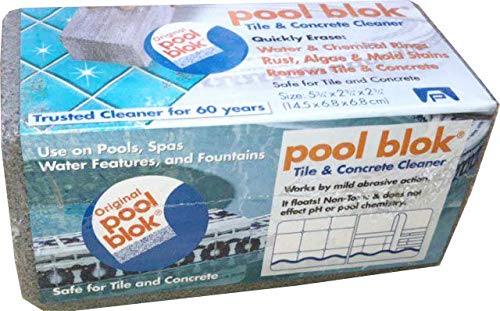
- Submerge and lubricate a pool pumice stone: For isolated rust spots or rough white calcium lines, a natural volcanic pumice stone works where standard brushes fail. Always submerge both the pumice stone and the plaster surface in water before you start. The water acts as a lubricant. If you scrub dry plaster with a dry stone, you will scratch deep grooves into the marcite.
- Scrub using light, flat strokes: Hold the pumice stone completely flat against the plaster. Rub gently in small circles. The stone will slowly grind down into a soft paste as it breaks through the mineral scale, acting as an abrasive polish. Never use the pointed corner of the pumice stone, because a sharp edge will gouge into the plaster wall.
- Apply localized citrus or ascorbic acid: For widespread rust stains or metal discoloration on the floor, apply granular ascorbic acid or a citrus-based stain remover. Pour the granules into a cloth pouch and place it directly over the rust spot for a few minutes. The acid reduces the oxidized metal, breaking its bond with the plaster so your pool filter can pull it out of the water.
- Lower your water hardness index temporarily: If you have widespread calcium scale covering entire walls, lower your pool pH to around 7.2 for two weeks. Keep your circulation pump running and brush the walls daily. The slightly lower pH will slowly soften the hard calcium crust, allowing your brush bristles to sweep the mineral buildup away.
When does your pool actually need an acid wash?
An acid wash is an aggressive deep-cleaning procedure that requires draining the pool completely. It should never be your first choice. Draining an inground concrete pool carries significant risks. If the water table around your home is high, empty pools can float or crack from underground pressure. Furthermore, leaving white marcite exposed to direct sunlight and summer heat can cause the plaster to shrink, crack, or peel away from the concrete shell.
Reserve an acid wash for extreme situations where the pool has been sitting neglected for years, turned completely black from heavy algae blooms, or covered in thick, dark metal stains that chemical treatments cannot lift. Acid washing works by literally dissolving the thin, dirty outermost layer of plaster using a blend of water and muriatic acid (strong liquid pool acid). Once the top microscopic layer burns away, fresh, bright white plaster is revealed underneath.
Because an acid wash intentionally strips away plaster, it leaves mild etching (rough pitted surface damage) in its wake. A pool can only survive three to four acid washes across its entire lifespan before the plaster becomes too thin and rough to save. If your plaster is already peeling, flaking, or thin enough to show the dark gunite concrete underneath, an acid wash will ruin it completely. In that scenario, the pool must be replastered, or you must review how to seal and waterproof a concrete pool to repair structural cracks and protect the shell.
If you decide an acid wash is unavoidable, follow these strict safety precautions:
- Check local groundwater levels before opening the hydrostatic relief valve and draining the pool.
- Wear thick rubber boots, chemical-resistant gloves, full eye protection, and a dual-cartridge vapor respirator rated for acid fumes. Muriatic acid creates choking, hazardous fumes instantly upon contact with air.
- Keep a garden hose running at all times to keep the plaster soaking wet before the acid mixture touches it. Acid applied to dry plaster causes severe chemical burns and deep craters.
- Always mix acid into water, never water into acid. A common mixture is one part muriatic acid to two parts clean water in a plastic watering can.
- Work in small sections from the deep end to the shallow end, scrubbing the solution with an acid brush for no more than thirty seconds before rinsing thoroughly with clean water.
- Neutralize the acid puddle at the bottom of the pool using soda ash before pumping the rinse water out through a submersible pump. Pumping unneutralized acid out will destroy your pump motor and burn your lawn or storm drain.
What tools and chemicals will ruin pool plaster?
White pool plaster is much softer than tile, stone, or pool decking. It is essentially a layer of smooth cement. When pool owners try to rush the cleaning process, they often grab aggressive tools that permanently destroy the finish. Avoid these common mistakes to keep your plaster smooth and intact:
- High-powered pressure washers with pinpoint tips: Never use a pressure washer tip narrower than 25 degrees, and never bring the wand closer than twelve inches to the plaster surface. Blasting plaster with tight, high-pressure water streams cuts deep grooves, gouges craters, and blows off the smooth troweled finish. Unlike hard composite materials, which you can read about in our guide on how to clean a fiberglass pool without scratching the shell, plaster is porous and tears apart under direct water pressure.
- Wire wheels and power tool attachments: Never put a metal wire cup brush, sanding disc, or steel wheel on a cordless drill to grind away stains. Power tools will leave dark metallic burn marks and grind flat spots directly into the wall.
- Dry acid dumped directly on the pool floor: Pouring dry granular acid (sodium bisulfate) straight into the deep end allows concentrated acid crystals to sit directly on the floor. As the granules slowly dissolve, they burn white rings and deep pitted scars into the plaster. Always pre-dissolve granular chemicals in a bucket of pool water before adding them.
- Stainless steel brushes on brand-new plaster: While a wire-blend brush works well on mature, hard marcite, you should never use wire bristles on plaster that is less than one year old. New plaster takes months to cure fully. Wire bristles on soft, young plaster will leave gray scrape marks and scratch the delicate finish. Stick to stiff nylon bristles during the first season.
- Undiluted muriatic acid poured down dry walls: Pouring straight liquid acid down the walls without water lubrication creates permanent vertical run marks. These deep streaks strip the marble dust out of the plaster, leaving rough channels that trap dirt forever.
What specialty products help remove stubborn plaster stains?
When daily brushing and chlorine adjustments are not enough to clear stubborn marks, several targeted tools and chemical treatments make the job easier. You do not need an entire shelf of specialty chemicals, but having the right product for your specific stain saves hours of heavy scrubbing.
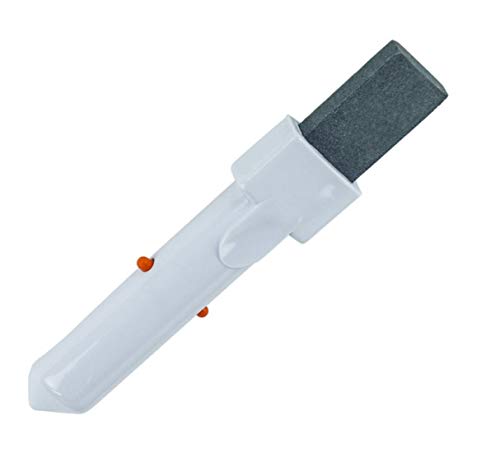
For isolated rust marks and hard mineral rings along steps, pole-mounted pumice stones are exceptionally helpful. Look for stones molded with standard 1-1/4 inch snap-in pole clips. These clips lock onto your standard telescopic pool pole, allowing you to rub down rust spots on the floor of the deep end without putting on goggles and diving to the bottom. Choose stones that are dense enough not to shatter under moderate pressure, but soft enough to wear down naturally against calcium.
For pool-wide metal stains, liquid sequestering agents and granular ascorbic acid stain removers provide safe, non-abrasive results. Look for sequestering formulas that explicitly target iron, copper, and manganese. These products lift the discoloration into the water column without requiring you to scrape the walls.
If you determine that an empty-pool acid wash is necessary, look for specialized acid wash thickeners. These additives thicken the muriatic acid solution into a gel-like consistency. The thicker liquid clings to vertical pool walls instead of running instantly down to the floor, giving the acid enough contact time to lift heavy discoloration evenly without needing multiple harsh applications.

- VC Score9.0
BCP Score is a ranking system developed by bestcleanerproducts.com. BCP Score has no relationship or impact from any manufacturers or sales agent websites. Learn more
- BrandKelly Technical

- VC Score8.6
BCP Score is a ranking system developed by bestcleanerproducts.com. BCP Score has no relationship or impact from any manufacturers or sales agent websites. Learn more
- BrandBio-Dex

- VC Score8.2
BCP Score is a ranking system developed by bestcleanerproducts.com. BCP Score has no relationship or impact from any manufacturers or sales agent websites. Learn more
- BrandU.S. Pool Supply
- VC Score8.2
BCP Score is a ranking system developed by bestcleanerproducts.com. BCP Score has no relationship or impact from any manufacturers or sales agent websites. Learn more
- BrandPool Blok

- VC Score8.2
BCP Score is a ranking system developed by bestcleanerproducts.com. BCP Score has no relationship or impact from any manufacturers or sales agent websites. Learn more
- BrandIn The Swim
- VC Score8.0
BCP Score is a ranking system developed by bestcleanerproducts.com. BCP Score has no relationship or impact from any manufacturers or sales agent websites. Learn more
- BrandPool Supply Town

- VC Score8.0
BCP Score is a ranking system developed by bestcleanerproducts.com. BCP Score has no relationship or impact from any manufacturers or sales agent websites. Learn more
- BrandBosh Chemical

- VC Score7.4
BCP Score is a ranking system developed by bestcleanerproducts.com. BCP Score has no relationship or impact from any manufacturers or sales agent websites. Learn more
- BrandIMPRESA
Last update on 2026-10-08 / Affiliate links / Images, Product Titles, and Product Highlights from Amazon Product Advertising API
FAQs
Can you use a stainless steel wire brush on marcite plaster?
You can use a stainless steel wire brush on fully cured white marcite plaster that is at least one year old. The metal bristles provide the stiffness needed to scrape away tough algae and dirt without harming the cured surface. However, you should never use wire brushes on colored plaster, quartz blends, or pebble finishes, as the metal bristles can scratch the surface or leave gray metal streaks.
Does muriatic acid eat away your pool plaster?
Yes, muriatic acid actively dissolves the calcium carbonate inside pool plaster. When used in an acid wash, it burns away a microscopic layer of the plaster to expose fresh material underneath. If your pool water pH stays too low for extended periods, the acidic water will constantly dissolve the surface, creating etching (rough pitted surface damage) that feels like coarse sandpaper.
How long should you wait before swimming after cleaning plaster?
If you scrubbed the plaster with a pumice stone or a pool brush, you can swim immediately because no chemicals were introduced into the water. If you used high levels of chlorine shock or added metal-lifting acids, keep everyone out of the pool until the circulation system runs for at least four to eight hours. Check your water chemistry and confirm that the pH is between 7.4 and 7.6 and free chlorine is between 1 and 4 parts per million before swimming.
Can you clean plaster stains without draining your pool?
Yes, the vast majority of plaster stains can be eliminated while the pool remains completely full of water. Organic stains from leaves and algae disappear with proper water balance, regular brushing, and chlorine shock. Stubborn rust marks and rough calcium scaling can be erased safely from the pool deck using a pole-mounted pumice stone or granular stain treatments placed in a cloth sock.


How to Refinish a Fiberglass Pool

How Do You Keep Raccoons Out of Your Pool?

How to Fix Cyanuric Acid in Your Pool

How to Shape a Pool Cue Tip to Stop Miscues

12 Best Automatic Vacuum For Intex Above Ground Pool of 2026 To Keep Vinyl Floors Spotless

10 Best Automatic Pool Vacuum For Above Ground Pool of 2026 To End Manual Scrubbing

How Much Pool Clarifier Should You Use for Your Pool Size?

How Much Does a Pebble Tec Pool Cost to Build or Resurface?


