
How to Repair a Pool Cover and Patch Small Tears

Small holes and tears under a few inches can be fixed at home by patching both sides of the fabric with waterproof glue or self-adhesive mesh. That fix only holds up if the tear is small and sits away from the heavy reinforcement straps. Long tears or ripped seams put too much tension on the material and require professional sewing or a full replacement.
The right method also depends on the fabric and what it protects. A solid vinyl cover requires flexible waterproof glue, while a woven mesh cover needs porous patches that let rain drain through. Most importantly, safety covers must stay strong enough to support weight. When a rip compromises that protection, choosing safety over a quick patch is essential. Here is how to inspect the damage, pick the right kit, and seal the fabric properly.
Evaluating the Damage: What You Can Fix at Home
Before you pull out patches and glue, take a close look at the size, shape, and position of the rip. Not all pool cover damage is the same, and your safety depends on knowing the difference between a simple surface puncture and a dangerous structural failure.
Small holes under three inches across are the easiest to mend. These usually come from falling tree branches, sharp garden tools, or animals scurrying across the top. As long as the puncture sits in the open field of the cover and away from the heavy reinforcement straps, you can patch it yourself with reliable results.
Tears between three and six inches require extra care. You can still mend these at home if the fabric around the rip feels pliable and strong. If the fabric has become brittle, stiff, or flaky from years of baking in the sun, a patch will not stick properly. In that case, the tension from the cover springs will simply tear the fabric open again right along the edge of the patch.
Rips longer than six inches or tears that sit directly against a load-bearing seam are too risky for a simple home patch. Pool safety covers are engineered to support the weight of children, pets, or fallen branches to prevent drowning. A large tear compromises the structural tension across the entire pool surface, creating an entrapment hazard where someone could slip between the torn sections and become trapped underwater.
Step-by-Step Guide to Patching a Mesh Pool Cover
Woven safety covers made from polypropylene (strong woven plastic mesh) need patches that let water drain through while holding tight under tension. Use this sequence to seal small rips properly.
- Relieve the tension on the damaged panel. Use your cover installation rod to disconnect the springs from the deck anchors (metal screws in the patio that hold cover straps) near the rip. Reason: Removing the pull on the fabric stops the tear from widening while you work and allows the torn edges to meet naturally without puckering.
- Slide a clean, flat board under the damaged area. Position a piece of plywood, a plastic cutting board, or an overturned storage bin lid directly beneath the hole. Reason: Having a firm, solid backing gives you the hard counter-pressure needed to seat the adhesive into the rough texture of the mesh.
- Wash the damaged fabric on both sides. Scrub the top and underside of the cover around the rip using clean water, a soft nylon brush, and a small splash of mild dish soap. Reason: Algae, chemical residues, pollen, and fine dust coat pool covers during winter, which prevents adhesive patches from making a permanent mechanical grip.
- Dry the area completely with a lint-free towel. Wipe down the wet mesh and let the midday sun evaporate every trace of hidden moisture inside the weave. Reason: Trapped water will create a barrier between the sticky patch backing and the woven plastic strands, causing the corners to peel off after the first freeze.
- Trim all loose threads and jagged corners. Use sharp scissors to snip away frayed strings, torn loops, and frayed plastic hairs along the edges of the split. Reason: Frayed threads act like wicks that pull dirt and moisture under your patch, eventually prying the adhesive away from the material.
- Cut two identical patches with rounded corners. Cut two pieces of woven adhesive mesh so each patch extends at least one and a half to two inches beyond the hole in every direction, rounding off all four corners with shears. Reason: Sharp 90-degree corners catch easily on pool broom bristles, vacuum poles, and shoes, while rounded edges stay pressed tight against the fabric.
- Stick the first patch to the underside of the cover. Peel away the protective backing sheet and smooth the patch firmly against the bottom of the mesh panel, pressing outward from the center. Reason: Starting from the underside seals the bottom opening first and provides a sticky backing that catches the torn fibers before you seal the top.
- Sandwich the repair with the second patch on the top side. Position the second patch directly over the first one on the top face of the cover, aligning the edges as closely as possible. Reason: Sandwiching the damaged mesh between two adhesive patches locks the torn threads in place and doubles the hold against winter snow loads.
- Roll the patch flat with firm, heavy pressure. Press down hard across both sides using a wallpaper seam roller, a wooden rolling pin, or the back of a large spoon. Reason: High pressure forces the adhesive deep into the valleys of the plastic weave, creating a bond that resists water and wind.
- Let the adhesive bond rest before restoring tension. Wait at least two to four hours in warm weather before pulling the cover straps back over the deck anchors. Reason: Allowing the glue to set without stress prevents the dynamic pull of the springs from shifting the patch while the bond cures.
How to Patch a Solid Vinyl Pool Cover
Solid vinyl covers and heavy winter tarps require a different technique than woven mesh. These covers keep out all sunlight and fine silt, but sharp winter debris can poke clean holes through the vinyl membrane. Learning how long vinyl pools and liners last shows that vinyl relies on plasticizers to remain supple, and sun exposure gradually hardens the material.
For solid vinyl, you must use a waterproof vinyl repair kit containing vinyl adhesive (flexible waterproof glue) and smooth vinyl patch material. Self-adhesive mesh stickers will not work here because they do not form a watertight seal.
Start by cleaning the surface around the puncture with isopropyl alcohol on a clean microfiber cloth. Alcohol strips away road film, body oils, and chemical residue without softening or dissolving the vinyl coating. Let the alcohol flash off until the fabric is completely dry to the touch.
Cut two rounded patches from your vinyl patch material, making sure each patch overlaps the tear by at least two inches. Apply an even layer of vinyl adhesive to the rough side of the patch and directly onto the damaged area of the cover. Let the glue sit for thirty to sixty seconds until it turns slightly tacky rather than runny.
Press the patch firmly onto the vinyl, working out any trapped air bubbles from the center toward the outside perimeter. Place a smooth piece of scrap wood over the patch and weight it down with a clean brick or a heavy bucket of water. Allow the adhesive to cure for twenty-four hours before subjecting the cover to standing rainwater or heavy wind. Unlike mesh, standard vinyl winter covers are different from summer bubble blankets. Understanding how solar pool covers work highlights that thin bubble plastic degrades rapidly, but heavy winter vinyl can hold an adhesive patch for multiple seasons if the bond cures undisturbed.
Fixing Broken Straps and Webbing
Safety covers use thick black bands called webbing (heavy reinforcement straps) that run in a grid across the cover to anchor it into the patio. These straps absorb thousands of pounds of pull from snow, ice, and wind. If one of these straps snaps, frays through, or pulls loose from the cover, you must never try to fix it with glue, tape, or stick-on patches.
No consumer adhesive can handle the lateral shear stress placed on a cover strap. Deck anchors (metal screws in the patio that hold cover straps) transfer strong tension directly through these straps. If a glued strap lets go during a heavy snowstorm, the sudden release will cause the surrounding straps to pull unevenly, ripping the rest of the cover open.
A torn strap requires heavy-duty industrial stitching. If a strap has come unstitched from the border hem, you can fix it by taking the cover to a local marine canvas shop, an awning repair business, or an automotive upholstery shop. These professionals have heavy commercial sewing machines capable of stitching through multiple layers of heavy woven webbing.
Make sure whoever stitches the strap uses bonded polyester or outdoor nylon thread treated for ultraviolet resistance. Regular cotton or light household polyester thread will rot after a single season of exposure to pool chlorine and direct sun, causing the seam to fail without warning.
When to Replace Your Pool Cover Instead of Repairing It
Patching a pool cover saves money, but patching a cover that has reached the end of its useful life creates a false sense of security. Check for these warning signs that indicate your cover needs full replacement rather than another patch:
- Brittle or powdery fabric: Rub your thumb firmly across the fabric near the center of the cover. If the fibers flake away, crack, or leave a chalky film on your skin, ultraviolet radiation has broken down the plastic. New patches will tear out because the surrounding cloth has lost its tensile strength.
- Rips longer than eight inches: A tear that spans across multiple grid sections weakens the balance of the cover. Even if you bridge the gap with a large patch, the cover will sag unevenly, collecting deep pockets of stagnant water that invite algae.
- Multiple separated seams: If thread is unraveling along five or six different strap junctions, the structural thread has reached the end of its life. Restitching the entire grid often costs nearly as much as ordering a replacement cover.
- Torn perimeter anchor springs: When the fabric around the perimeter edge tears away from the brass springs and anchor grommets, the cover can no longer maintain safe surface tension.
- Loss of safety ratings: If you rely on your cover to protect toddlers, non-swimmers, or heavy pets, a heavily patched cover can no longer be trusted to meet standard safety load ratings. When human or pet safety is on the line, replacement is the only responsible path.
Choosing the Right Pool Cover Repair Supplies
Finding the right repair kit comes down to matching the repair material directly to your cover type. Always verify the composition of your cover before purchasing supplies so you do not waste time attempting to bond incompatible materials.
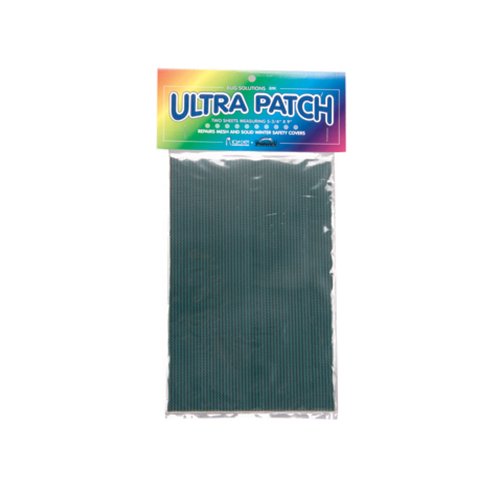
For green, blue, or tan woven mesh covers, look for self-adhesive mesh patch kits made of woven polypropylene material. These kits feature peel-and-stick backing designed to grab rough, porous textures. Check that the kit includes patches large enough to provide at least two inches of border clearance around your specific tear size. Buying multipacks with different sheet dimensions lets you cut custom shapes to match odd-angled rips.
For solid vinyl pool covers, choose a vinyl repair kit that pairs flexible vinyl fabric with a dedicated waterproof vinyl adhesive. The glue should specify that it remains flexible when dry. Rigid household glues like cyanoacrylate or basic epoxy will crack and chip away as the pool cover billows in the wind. Verify that your repair supplies are rated for cold outdoor temperatures so the patch does not turn brittle when winter freezing sets in.

- VC Score9.2
BCP Score is a ranking system developed by bestcleanerproducts.com. BCP Score has no relationship or impact from any manufacturers or sales agent websites. Learn more
- BrandPool Above

- VC Score8.8
BCP Score is a ranking system developed by bestcleanerproducts.com. BCP Score has no relationship or impact from any manufacturers or sales agent websites. Learn more
- BrandXuniea

- VC Score8.8
BCP Score is a ranking system developed by bestcleanerproducts.com. BCP Score has no relationship or impact from any manufacturers or sales agent websites. Learn more
- BrandARDILA VEELA

- VC Score8.8
BCP Score is a ranking system developed by bestcleanerproducts.com. BCP Score has no relationship or impact from any manufacturers or sales agent websites. Learn more
- BrandARDILA VEELA

- VC Score8.8
BCP Score is a ranking system developed by bestcleanerproducts.com. BCP Score has no relationship or impact from any manufacturers or sales agent websites. Learn more
- BrandHonoson

- VC Score8.6
BCP Score is a ranking system developed by bestcleanerproducts.com. BCP Score has no relationship or impact from any manufacturers or sales agent websites. Learn more
- BrandTreela
- VC Score8.6
BCP Score is a ranking system developed by bestcleanerproducts.com. BCP Score has no relationship or impact from any manufacturers or sales agent websites. Learn more
- BrandRola-Chem

- VC Score8.4
BCP Score is a ranking system developed by bestcleanerproducts.com. BCP Score has no relationship or impact from any manufacturers or sales agent websites. Learn more
- BrandAmylove

- VC Score7.6
BCP Score is a ranking system developed by bestcleanerproducts.com. BCP Score has no relationship or impact from any manufacturers or sales agent websites. Learn more
- BrandRola-Chem

- VC Score7.4
BCP Score is a ranking system developed by bestcleanerproducts.com. BCP Score has no relationship or impact from any manufacturers or sales agent websites. Learn more
- BrandShenzhen LangTao Bang International Trade Co., Ltd.
Last update on 2026-10-08 / Affiliate links / Images, Product Titles, and Product Highlights from Amazon Product Advertising API
FAQs
Can I use duct tape to patch a pool cover?
No, you should never use duct tape or household cloth tape to fix a pool cover. Duct tape uses a rubber-based glue that softens under summer heat and turns brittle in winter freezes, leaving behind a gummy mess that prevents proper patches from sticking. Duct tape also has zero tensile strength across woven fabric, so it will peel off the moment winter winds pull on the cover.
Can I patch a safety cover while it is still on the pool?
You can patch small pinholes on the top surface while the cover is installed, but you will not get a lasting repair. A proper patch requires sandwiching the hole from both the top and underside against a hard, flat surface. For anything larger than a pencil tip, disconnect the nearby anchor springs, pull the damaged section onto the pool deck, and apply matching patches to both sides.
How long will a DIY pool cover patch hold up?
A properly applied double-sided patch on clean, sun-stable mesh typically lasts two to four seasons. Its lifespan depends mainly on weather exposure, winter snow load, and how well you cleaned the fabric before sticking the patch down. Inspect your patches each spring and autumn before putting the cover away or pulling it tight for winter.
Will a patched mesh safety cover still support a pet or a person?
A small patch over a minor puncture does not significantly weaken a cover that is otherwise in good structural shape. However, if a tear was longer than a few inches or if the damage sits anywhere near the weight-bearing straps, you should assume the cover cannot safely support the weight of a person or pet. Always keep children and animals off a patched cover until you have verified the integrity of the surrounding fabric.


How to Refinish a Fiberglass Pool

How Do You Keep Raccoons Out of Your Pool?

How to Fix Cyanuric Acid in Your Pool

How to Shape a Pool Cue Tip to Stop Miscues

12 Best Automatic Vacuum For Intex Above Ground Pool of 2026 To Keep Vinyl Floors Spotless

10 Best Automatic Pool Vacuum For Above Ground Pool of 2026 To End Manual Scrubbing

How Much Pool Clarifier Should You Use for Your Pool Size?

How Much Does a Pebble Tec Pool Cost to Build or Resurface?








