
How to Pick the Right Pool Liner

Replacing a damaged swimming pool liner feels stressful, but getting the right replacement is completely manageable. Success comes down to matching the attachment style first, because the way the vinyl hooks or clips to the pool wall matters far more than the pattern or color. Once that attachment method is clear, measuring the exact wall height and pool width ensures a snug, wrinkle-free fit.
A few specific details will shape the final choice. An above ground frame with a flat base needs a completely different cut than an inground structure with a deep hopper (the sloped floor in a deep end). Vinyl thickness also plays a role, with heavier sheets offering extra defense against rough pool toys. Here is how to measure properly and choose the right material with confidence.
Comparing Liner Attachment Styles: Overlap, Beaded, and Unibead
Every replacement vinyl sheet attaches to a pool wall in one specific way. Choosing the wrong attachment method means the vinyl will not fit your pool frame, leaving you with an unusable, non-returnable product. Look closely at your pool rim before ordering to see how your current liner connects.
An overlap liner drapes directly over the top of the pool wall. You pull the excess vinyl over the steel rim, clamp it down with a coping strip (a plastic clip holding overlap vinyl to the wall), and then screw the metal top rails over it. Extra vinyl hangs down on the outside of your pool frame. Overlap liners are common on older or entry-level above-ground pools because they are forgiving to install. If your measurements are off by an inch, you simply pull more or less vinyl over the edge. But, seeing the excess vinyl skirt flapping on the exterior wall can look messy unless you trim it away after the pool is full.
A beaded liner uses a bead (a thick edge strip that snaps into a metal track) welded along the entire upper rim of the sheet. This track sits permanently below the pool ledge. You snap the heavy vinyl edge into the groove by hand, working your way around the pool wall. Beaded liners give your pool a clean, level appearance with an unbroken tile pattern at the waterline. They require exact wall height measurements because the vinyl cannot be pulled higher or dropped lower. They also rely on liner lock (a plastic wedge strip that keeps beaded vinyl in place) pressed into the receiver track above the bead to prevent the vinyl from slipping out during cold weather or heavy splashing.
A unibead liner, often sold as a J-hook or multi-bead liner, combines both concepts into a versatile design. It features an integrated, curved plastic hook shaped like an upside-down letter J along the top edge. You hang this hook directly over the raw rim of the corrugated steel wall panel before snapping your stabilizer rails into place. Unibead liners give you the tidy, straight waterline of a beaded liner without requiring an existing track. Many unibead liners also feature a groove below the hook. If your pool already has a bead receiver track mounted under the coping, you can slice off the top hook portion with a utility knife to convert the unibead edge into a standard bead.
How to Measure Pool Dimensions and Wall Height Step by Step
Never trust the pool size listed on an old receipt or estimated from memory. Liners are custom-welded sheets that cannot stretch to cover missing inches without tearing at the seams. Grab a long fiberglass tape measure and follow these checks carefully before ordering your replacement.
-
Measure the exterior wall height from the bottom track to the top rail.
Run your tape measure down the outside of the steel pool wall panel, measuring from the bottom rim to the underside of the top ledge. A short wall measures 48 inches, while taller models measure 52 or 54 inches. Taking this measurement on the outside gives you the true structural wall height, whereas interior measurements can trick you if thick layers of sand or foam cushions sit on the pool floor.
-
Measure the interior wall height from the base seam to the bead channel.
Step inside your empty or shallow pool and measure straight up from the bottom corner where the wall meets the floor up to the liner receiver track. Doing this confirms your exterior measurement and helps you identify if the previous installer built an extra-tall sand cove at the base that reduced interior wall space.
-
Measure the pool diameter at three separate points across the center.
Stretch your tape measure across the widest center point of a round pool, then repeat the process at two other angles to form a triangle pattern. Above-ground pools shift over time from soil movement and water weight, which can push round pools slightly out of round. Using the average of three center measurements ensures you do not buy a liner that pulls tight on one side and bunches on the other.
-
Measure length and width at multiple positions on oval or rectangular pools.
Measure the straight side walls at both ends and directly across the middle, then check the total end-to-end length in two places. Oval pools rely on straight support buttresses that can bow inward or outward under pressure. Measuring multiple points verifies that your side walls remain parallel before you purchase a factory-shaped rectangle or oval sheet.
-
Measure the hopper dimensions for in-ground pools.
Record the shallow-end depth, the length of the shallow flat floor, the angle of the main slope, and the depth of the hopper (the deep-end floor slope of an inground pool). In-ground vinyl requires exact depth and slope transitions so the vinyl drapes into the deep basin without pulling away from the slope corners. A miscalculated hopper slope leaves giant air pockets underneath the vinyl that will pop seams as the pool fills.
-
Check the corner shape and step cutouts.
Look at how the corners meet on rectangular pools to see if they are sharp 90-degree squares, 6-inch diagonal cuts, or rounded radius curves. Forcing a square-cornered liner into a pool with rounded 2-foot radius corners causes heavy wrinkles and tears, while forcing a rounded liner into a square frame stretches the seam until it splits.
Understanding Vinyl Thickness: Gauge Versus Mil
Shopping for replacement vinyl brings you face to face with two different thickness ratings: gauge and mil. Understanding the difference between these terms keeps you from paying premium prices for standard material.
A mil represents a true, legal unit of measurement equal to one one-thousandth of an inch. A 20-mil sheet measures exactly 0.020 inches thick, and a 25-mil sheet measures 0.025 inches thick. Manufacturers who label their vinyl in mil adhere to an exact industrial thickness standard. On the other hand, gauge is a flexible marketing term with no official legal definition in the pool industry. A seller might label a sheet as 25 gauge, yet the actual vinyl might only measure 20 or 22 mil thick. Always look for the true mil rating on the product specification sheet to know exactly what you are buying.
Standard thickness for above-ground vinyl ranges between 20 mil and 25 mil, while in-ground pools typically use 27 mil or 30 mil vinyl. A standard 20-mil liner offers great flexibility and installs easily on a sunny afternoon. The lighter vinyl stretches smoothly into place, making it simple to work out minor folds before filling the pool. But, standard thickness offers less defense against punctures from dog claws, dropped equipment, or sharp tree branches.
Thicker vinyl, such as 25 mil or 28 mil, provides much greater puncture resistance and holds up better against general wear. It works best for active families with kids and pets who play hard in the pool. But, heavier vinyl is stiff and difficult to lift. It requires warm, direct sunlight above 70 degrees Fahrenheit during installation to soften the material so it stretches properly. If you install heavy vinyl on a chilly or overcast day, it will resist stretching and form stubborn floor creases. If minor folds do appear while setting up your pool floor, you can learn how to get wrinkles out of a pool liner without draining it before water weight locks the vinyl permanently against the ground.
Picking Pattern Color, Tile Borders, and Sunlight Protection
Liner color transforms how your pool water looks, but pattern choice also affects water temperature and how the vinyl weathers over time. Consider how sunlight and chemicals interact with different vinyl prints before making a selection.
Dark blue patterns give water a rich, deep appearance and help absorb a modest amount of heat from direct sunshine. This solar absorption can make the top layer of water feel slightly warmer on sunny days. But, dark blue pigments show chemical fading much faster than light patterns. If chlorine granules fall directly onto dark vinyl or if pool shock settles at the bottom, it can leave bright bleached spots on the floor. Dark floors also make it difficult to spot fine debris, leaves, or cracks when vacuuming the bottom.
Light blue, tan, and soft aqua liners give your pool a bright, tropical feel and reflect sunlight. Light colors show much less color fading over years of chemical treatments and intense summer sun. They also make it very easy to spot dirt, insects, and debris on the bottom. But, light liners reveal dirt streaks, mineral scale, and windblown dust immediately, requiring more frequent skimming and vacuuming to keep the pool looking spotless.
Tile patterns along the top perimeter serve a practical purpose beyond decoration. A printed tile band at the waterline breaks up the visual line between the steel wall and the water. It also helps conceal the scum ring created by body oils, suntan lotions, and windblown pollen that naturally builds up at the water surface. If you ever develop small pinhole leaks or wear marks along these high-friction waterline areas down the road, you can learn how to fix a pool liner without draining the pool using simple underwater patching methods.
Checklist of Under-Liner Pads and Replacement Hardware
Replacing a liner gives you a rare opportunity to inspect and protect the hidden parts of your pool structure. Skipping basic prep items or reusing old, brittle plastic parts can ruin your new vinyl within weeks. Check off these essential under-liner items before dropping your new sheet into place:
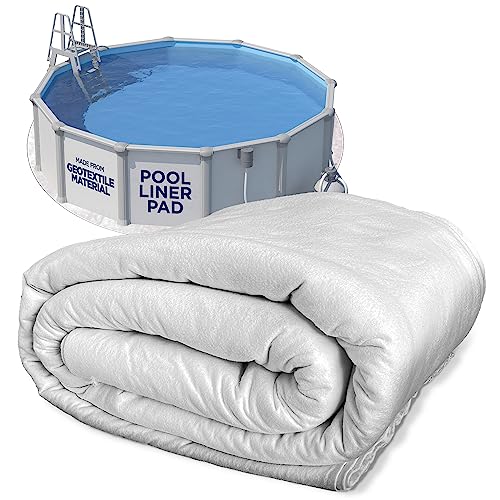
- Geotextile pool liner pad: A 1/8-inch thick polyester geotextile material laid directly on the bare dirt or sand base before the liner goes down. This durable under-layer prevents sharp rocks, glass, roots, and invasive nut grass from puncturing the underside of your new vinyl sheet.
- Pre-formed pool cove: A dense foam wedge or packed earth curve installed along the bottom perimeter where the wall meets the floor. A proper cove prevents the heavy water-filled vinyl from slipping under the bottom metal track and blowing out the side of the pool.
- Wall foam and spray adhesive: Thin foam padding glued over steel pool walls to create a protective barrier. It cushions the vinyl against rough metal seams and stops rust flakes on older steel panels from wearing holes into the back of the liner.
- Fresh plastic coping strips: Replace these clips on overlap installations without hesitation. Old plastic coping clips turn brittle after years of baking in the sun and snap easily, causing the vinyl to slip loose as the pool fills with water.
- Liner lock wedge rolls: Flexible plastic strips tapped into the bead track directly above a beaded liner. Liner lock prevents the vinyl bead from popping out of its receiver channel when swimmers create heavy waves.
- New skimmer and return gaskets: Always replace the rubber or cork gaskets on your skimmer and return faceplates. Reusing old, compressed gaskets leads to hidden water leaks behind the vinyl that corrode your steel wall panels.
Choosing the Right Cleaning Equipment for a New Vinyl Liner
A newly installed vinyl liner remains tender and prone to scuffing during its first few weeks in the water. Selecting the proper pool cleaner helps you maintain crystal-clear water without snagging welded seams or damaging printed patterns.
Look for automatic or robotic pool cleaners built specifically for vinyl pool surfaces. Cleaners meant for rough plaster or concrete often feature aggressive scrubbing brushes and hard plastic wheels that can scratch or wear down delicate vinyl prints. For a vinyl pool, pick a cleaner equipped with soft rubber tracks or smooth drive wheels and gentle PVA or rubber brushes. These materials provide plenty of grip to climb walls without pinching the liner or stressing the seams.
Suction-side cleaners designed for vinyl should feature wide, flexible bumper skirts and rounded wings. These smooth edges glide easily over floor seams and shallow coves without catching or lifting the vinyl. Check that the cleaner has a gentle turning radius so it does not grind in place on the bottom of the pool. Always connect electric robotic cleaners to an outdoor GFCI outlet (a protected ground-fault outlet with a weatherproof cover) kept at least 10 feet back from the pool edge. Disconnect suction hoses only after shutting off the circulation pump to protect your hands and prevent line entrapment.

- VC Score9.2
BCP Score is a ranking system developed by bestcleanerproducts.com. BCP Score has no relationship or impact from any manufacturers or sales agent websites. Learn more
- BrandSuperDi

- VC Score9.0
BCP Score is a ranking system developed by bestcleanerproducts.com. BCP Score has no relationship or impact from any manufacturers or sales agent websites. Learn more
- BrandSmartline

- VC Score9.0
BCP Score is a ranking system developed by bestcleanerproducts.com. BCP Score has no relationship or impact from any manufacturers or sales agent websites. Learn more
- BrandGeneric
- VC Score8.2
BCP Score is a ranking system developed by bestcleanerproducts.com. BCP Score has no relationship or impact from any manufacturers or sales agent websites. Learn more
- BrandShop Square

- VC Score8.2
BCP Score is a ranking system developed by bestcleanerproducts.com. BCP Score has no relationship or impact from any manufacturers or sales agent websites. Learn more
- BrandHTH

- VC Score7.8
BCP Score is a ranking system developed by bestcleanerproducts.com. BCP Score has no relationship or impact from any manufacturers or sales agent websites. Learn more
- BrandQuality Pool Products
- VC Score7.8
BCP Score is a ranking system developed by bestcleanerproducts.com. BCP Score has no relationship or impact from any manufacturers or sales agent websites. Learn more
- BrandIntex Recreation

- VC Score4.0
BCP Score is a ranking system developed by bestcleanerproducts.com. BCP Score has no relationship or impact from any manufacturers or sales agent websites. Learn more
- BrandWoanger
Last update on 2026-10-08 / Affiliate links / Images, Product Titles, and Product Highlights from Amazon Product Advertising API
FAQs
How do you know if an existing liner is overlap or beaded without draining the pool?
Look directly under the top ledge on the outside and inside of your pool wall. If excess vinyl hangs down on the outside of the steel wall panel underneath the top rail, you have an overlap liner held by plastic coping strips. If the outside wall is clean and you see the vinyl edge snapped into a horizontal track just below the top ledge on the inside, you have a beaded liner.
Can a 52-inch liner fit an above-ground pool with 48-inch walls?
An overlap liner rated for 48 to 52 inches will fit a 48-inch pool because you simply pull the extra four inches of vinyl over the outside of the wall panel. But, a 52-inch beaded or unibead liner cannot be used on a 48-inch pool. The bead hooks at a fixed height, leaving four inches of loose, wrinkled vinyl on the floor that water pressure cannot smooth out.
Does a thicker pool liner last longer than a standard liner?
A thicker liner resists punctures from sharp objects, dog claws, and dropped pool poles much better than standard material. But, thickness does not prevent chemical fading, sun damage, or water balance issues. A standard 20-mil liner maintained with balanced water chemistry will outlast a heavy 28-mil liner that is subjected to poor water balance and severe chemical shock.
Why do new pool liners feel loose or wrinkled when first installed?
Vinyl liners are manufactured slightly smaller than the pool dimensions so they stretch tight against the walls under the weight of water. The material will look loose and bunch up until you add a few inches of warm water and gently kick the floor wrinkles toward the outer walls. Direct sunlight during installation warms the vinyl, helping it expand and smooth out completely against the sand base.


How to Refinish a Fiberglass Pool

How Do You Keep Raccoons Out of Your Pool?

How to Fix Cyanuric Acid in Your Pool

How to Shape a Pool Cue Tip to Stop Miscues

12 Best Automatic Vacuum For Intex Above Ground Pool of 2026 To Keep Vinyl Floors Spotless

10 Best Automatic Pool Vacuum For Above Ground Pool of 2026 To End Manual Scrubbing

How Much Pool Clarifier Should You Use for Your Pool Size?

How Much Does a Pebble Tec Pool Cost to Build or Resurface?








