
How to Get Leaves Out of a Pool Without Clogging Pipes

Scoop floating leaves before they sink. The quickest way to handle the mess is lifting leaves out directly with a deep mesh bag instead of pulling them through your pool plumbing. Forcing piles of heavy, wet debris down into underground pipes quickly chokes the water flow, which can starve the pump motor and burn it out. Grabbing the mess straight from the water keeps everything running smoothly.
The right approach depends on where the debris sits and how thick the pile has grown. A thin scatter on a hard plaster floor scoops up in minutes, but thick, rotting layers resting on a vinyl liner need gentle handling to avoid tearing the bottom. Deep ends also call for simple tools that capture debris independently without overloading your filtration system. Here is how to clear every layer safely and get your clean water back.
Why Clearing Floating Leaves Right Away Saves Hours of Floor Work
Every dry leaf that lands on your pool starts with natural air pockets inside its veins and texture. Because of those tiny air pockets, leaves can float on the surface for anywhere from 12 hours to two or three days. While they float, clearing them is fast and effortless. A basic leaf skimmer net glides through the top inch of water with very little drag, letting you scoop up dozens of leaves in a single sweep before they absorb water and sink.
When leaves stay on the surface too long, water slowly seeps into their fibers. Once leaves become waterlogged, they sink straight to the pool floor. A light breeze can turn into an all-day chore if you let an entire blanket of autumn leaves drift down to the plaster or vinyl. On the bottom, leaves mat together into a heavy, soggy layer. They trap dirt, block circulation around the main floor drains, and begin to break down into organic sludge.
Letting leaves sink also forces your pool chemicals to work overtime. Wet, decomposing leaves consume free chlorine at a rapid pace. As your sanitizer burns through the rotting plant matter, pool water loses its algae defense, turning dull and hazy within days. On top of that, wet leaves release natural plant dyes called tannins. These tannins act like tea leaves steeping in warm water, creating stubborn yellowish-brown stains on your pool floor that take brushing and chemical shocks to erase.
Wind patterns usually push floating leaves into specific corners of your pool. If you walk out during a breeze, you will often find eighty percent of the debris packed against one wall near the skimmer opening. Grabbing them while they are huddled together takes five minutes. If heavy storms regularly dump yard debris into your water, you can also learn how to keep a pool cover on in high winds to stop the mess before it starts. Skimming the surface immediately saves your back, protects your chlorine levels, and keeps heavy debris out of your floor equipment.
Step-by-Step: Clearing Sunken Leaves Without Choking Your Pipes
-
Turn off the pool circulation pump at the equipment pad.
Shutting down the pump stops water suction at the bottom drain and skimmer boxes, preventing moving water currents from sucking heavy leaf piles into your underground pipes while you work. -
Skim every floating leaf off the surface first.
Clearing the water surface before touching the bottom ensures that your pole movements do not drag floating leaves downward, which keeps your water clear so you can see the floor clearly. -
Use a nylon wall brush to herd the floor leaves into two or three tight piles.
Pushing scattered leaves into central piles in the deep end makes scooping five times faster than chasing random leaves all over the shallow and deep ends. -
Scoop the large piles slowly using a deep mesh leaf rake.
A deep mesh rake holds several pounds of wet leaves in its bag and lifts them completely out of the pool without routing a single stem through your underground plumbing. -
Flip the net forward with a gentle wrist twist before lifting it out of the water.
Twisting the frame traps the scooped leaves inside the bag pocket, preventing water resistance from washing the debris back across the pool floor as you raise the pole. -
Hook up a garden-hose pressure bag vacuum to catch remaining loose leaves.
A garden-hose leaf vacuum uses household tap pressure to shoot leaves directly into an attached mesh bag, lifting stubborn floor debris without putting any load on your pool filter. -
Empty your skimmer baskets and the pump strainer pot by hand.
Cleaning the baskets removes any rogue stems or pine needles that drifted in while you were working, keeping water paths clear before you turn the equipment back on. -
Turn the circulation pump back on and verify normal filter pressure.
Starting the pump allows you to check the pressure gauge on your filter tank to confirm that water is flowing smoothly and no hidden debris restricted the plumbing lines.
Why Standard Suction Vacuums Fail on Heavy Leaf Blankets
When pool owners see a thick carpet of leaves on the bottom of their pool, their first instinct is often to hook up a manual vacuum hose to the skimmer. This is one of the most expensive mistakes you can make in pool care. A standard suction-side cleaner, which attaches to your pool skimmer or dedicated vacuum port and uses your pool pump's suction, is designed for fine dirt, silt, sand, and small stray bugs. It is not built to swallow handfuls of wet, fibrous leaves.
The vacuum head opening is usually only an inch or two wide. Wet leaves clump together like damp paper towels. The moment your vacuum head rolls over a thick pile, the throat jams instantly. If debris squeezes past the vacuum head, it travels into your pool hose and enters the underground plumbing lines. These pipes run beneath concrete decks and dirt yards, measuring only 1.5 to 2 inches across. When wet leaves hit an elbow joint underground, they pack tightly and create an impenetrable plug.
When underground pipes clog, water stops reaching your pump. This triggers a destructive condition known as cavitation. Cavitation happens when a clogged pipe starves the pump of water, causing the motor to spin dry while trapped air bubbles hammer against the plastic impeller. Pool pumps depend on steady water flow to stay cool. Without water, the pump housing heats up rapidly, warping the plastic seal plate, melting pipe connections, and eventually burning out the electric motor.
Standard suction vacuums also pose a threat to pool liners. When a vacuum head clogs while connected to full pump suction, the vacuum head seals itself against the pool floor like a heavy suction cup. If you have an above-ground pool or an in-ground pool with a vinyl liner, dragging a locked vacuum head can stretch, wrinkle, or tear the vinyl liner. Clearing heavy piles with dedicated mesh bags keeps your plumbing open and protects your liner from costly tears.
How to Lift Brown Leaf Stains from the Pool Floor
Even after you scoop out every visible leaf, you might find dark brown, yellow, or black patches on your plaster or vinyl floor. These marks happen when wet leaves sit in one spot for several days and leach natural tannins into the surface material. Follow this checklist to remove these organic stains safely:
- Verify that all organic solids are gone: Remove every leftover leaf fragment, acorn cap, and pine needle from the stained area. Stains will not lift if rotting debris continues to bleed fresh tannins into the water.
- Check and balance your water chemistry: Use your test kit to confirm your pH sits between 7.4 and 7.6, and your total alkalinity stays between 80 and 120 parts per million. Chlorine works at peak strength only when your water balance is in this proper window.
- Shock the pool water with chlorine: Raise your free chlorine level by adding liquid pool chlorine or granular shock. Organic tannin stains are made of natural plant compounds that chlorine oxidizes and breaks down rapidly.
- Brush the spots vigorously with the right bristles: Scrub the brown spots daily. Use a stiff nylon brush on vinyl liners and fiberglass pools to prevent scratching. If you have a rough concrete or gunite pool, a brush with mixed stainless steel and nylon bristles works well to work the chlorine deep into plaster pores.
- Check for metal interactions if stains remain: If high chlorine and brushing do not lighten the mark after 48 hours, you may be dealing with metal minerals or an algae bloom mixed with tannins. You can read our guide on how to clean a brown pool without staining it to tell the difference between plant stains, metal discoloration, and stubborn water problems.
Leaf-Catching Tools That Protect Your Equipment
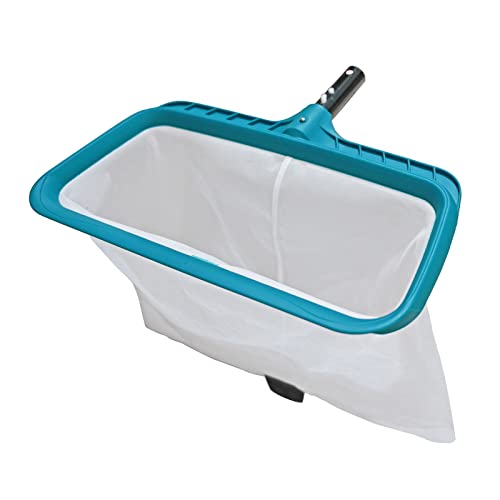
Keeping your plumbing safe during fall cleanups comes down to using tools that isolate debris before it ever reaches your skimmer throat. The simplest and most reliable tool is a deep-bag leaf rake. Unlike a flat skimming net that holds only a handful of leaves, a leaf rake features a wide plastic frame with a bag that hangs 12 to 18 inches deep. When choosing a leaf rake, look for a model with a beveled leading edge. This angled plastic lip acts like a dustpan, sliding easily under piles of wet leaves without scraping your concrete or snagging a soft vinyl liner.
Another excellent option for heavy floor cleanups is a pressure-side leaf vacuum, commonly called a leaf gulper or leaf bagger. This device does not plug into your pool filtration system at all. Instead, it snaps onto your standard telescopic pole and hooks directly up to your everyday garden hose. When you turn on your outdoor water spigot, water shoots through small high-pressure jets inside the vacuum head. This creates a natural water vortex that lifts leaves off the floor and deposits them into a large, reusable mesh bag tied to the top of the unit. Because the leaves go straight into the net, zero debris enters your underground pipes.
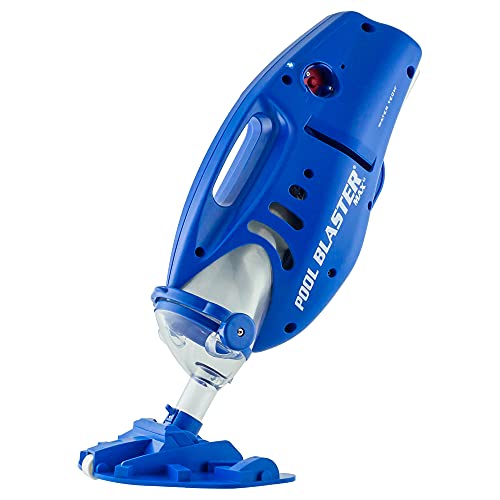
If you prefer an all-in-one handheld option, rechargeable battery pool vacuums designed with oversized debris chambers work well for moderate leaf falls. These cleaners run on an internal battery motor and suck debris into an internal filter bag or collection canister. Before selecting a battery cleaner or bag vacuum, verify that the debris opening is wide enough to take full-sized oak or maple leaves without jamming, and check that the wheels or brushes are soft enough for your specific pool surface material.

- VC Score9.2
BCP Score is a ranking system developed by bestcleanerproducts.com. BCP Score has no relationship or impact from any manufacturers or sales agent websites. Learn more
- BrandSwimline
- VC Score9.0
BCP Score is a ranking system developed by bestcleanerproducts.com. BCP Score has no relationship or impact from any manufacturers or sales agent websites. Learn more
- BrandPOOLWHALE
- VC Score8.6
BCP Score is a ranking system developed by bestcleanerproducts.com. BCP Score has no relationship or impact from any manufacturers or sales agent websites. Learn more
- BrandPOOL BLASTER

- VC Score8.4
BCP Score is a ranking system developed by bestcleanerproducts.com. BCP Score has no relationship or impact from any manufacturers or sales agent websites. Learn more
- BrandSunnyglade

- VC Score8.4
BCP Score is a ranking system developed by bestcleanerproducts.com. BCP Score has no relationship or impact from any manufacturers or sales agent websites. Learn more
- BrandKokido

- VC Score8.4
BCP Score is a ranking system developed by bestcleanerproducts.com. BCP Score has no relationship or impact from any manufacturers or sales agent websites. Learn more
- BrandU.S. Pool Supply

- VC Score8.4
BCP Score is a ranking system developed by bestcleanerproducts.com. BCP Score has no relationship or impact from any manufacturers or sales agent websites. Learn more
- BrandU.S. Pool Supply

- VC Score8.2
BCP Score is a ranking system developed by bestcleanerproducts.com. BCP Score has no relationship or impact from any manufacturers or sales agent websites. Learn more
- BrandPoolmaster

- VC Score8.2
BCP Score is a ranking system developed by bestcleanerproducts.com. BCP Score has no relationship or impact from any manufacturers or sales agent websites. Learn more
- BrandEFURDEN

- VC Score7.8
BCP Score is a ranking system developed by bestcleanerproducts.com. BCP Score has no relationship or impact from any manufacturers or sales agent websites. Learn more
- BrandPolog

- VC Score7.2
BCP Score is a ranking system developed by bestcleanerproducts.com. BCP Score has no relationship or impact from any manufacturers or sales agent websites. Learn more
- BrandKokido

- VC Score7.0
BCP Score is a ranking system developed by bestcleanerproducts.com. BCP Score has no relationship or impact from any manufacturers or sales agent websites. Learn more
- BrandSkimmer Vortex
Last update on 2026-10-08 / Affiliate links / Images, Product Titles, and Product Highlights from Amazon Product Advertising API
FAQs
Should I clear the surface or the bottom of the pool first?
Always clear the surface of the pool first. If you try to scoop the bottom while leaves are still floating on top, your pole movements and water currents will pull the floating leaves down, while floating debris blocks your view of the floor. Skimming the top first keeps the water clear so you can easily see and scoop the sunken leaf piles below.
Can leaves at the bottom of the pool damage the pump if I do nothing?
Yes, leaves left on the floor can easily damage your pump. As leaves drift over the bottom main drain, the pump suction pulls them into the narrow underground suction lines where they can create dense clogs. When an underground pipe is blocked, the pump runs out of water, causing the motor to overheat and melt its internal seals.
How do I scoop leaves off the deep end without stirring them up?
Move your telescopic pole in slow, deliberate strokes along the pool floor. Push the deep-bag leaf rake forward smoothly, keeping the beveled plastic edge flat against the floor so leaves glide into the mesh pocket. Avoid quick jerking motions, yanking the net, or sweeping rapidly side to side, because fast water movement creates an underwater current that scatters the leaves across the deep end.
Can I use a robotic pool cleaner to pick up heavy leaf piles?
A robotic cleaner works well for light, scattered leaves, but you should not drop one into a thick blanket of wet autumn leaves. Heavy piles will fill the internal debris basket or collection canister within five minutes, causing the tracks to spin and slip without moving. Scoop out the bulk of the thick piles by hand with a deep mesh leaf rake first, then let the robotic cleaner pick up the remaining stray bits.


How to Refinish a Fiberglass Pool

How Do You Keep Raccoons Out of Your Pool?

How to Fix Cyanuric Acid in Your Pool

How to Shape a Pool Cue Tip to Stop Miscues

12 Best Automatic Vacuum For Intex Above Ground Pool of 2026 To Keep Vinyl Floors Spotless

10 Best Automatic Pool Vacuum For Above Ground Pool of 2026 To End Manual Scrubbing

How Much Pool Clarifier Should You Use for Your Pool Size?

How Much Does a Pebble Tec Pool Cost to Build or Resurface?


