
How to Clean Pool Stairs and Remove Tough Stains

Slippery or stained pool steps are nothing to worry about, even if your automatic cleaner skips them completely. The best routine is to brush the steps from top to bottom, sweeping loose debris toward the deep end so the main drain can pull it into the filter. A quick scrub with an angled hand brush will loosen any slick green spots before they spread.
The exact approach depends on your pool surface and the kind of mess on the treads. Vinyl and fiberglass require soft nylon bristles to prevent surface damage, while concrete plaster can handle stiffer scrubbing. Light dirt sweeps away in seconds, but slippery algae or rusty mineral spots need targeted treatments. Weak water circulation around the shallow end also allows dirt to settle faster. Here is how to scrub, vacuum, and clear every tread without damaging your pool.
Why Pool Stairs Collect Dirt, Silt, and Slick Algae
Pool stairs act like dust shelves inside your swimming pool. Most return jets are angled to push water along the outer perimeter walls to create a steady circular flow. Because steps sit in shallow alcoves or stick out from the wall, that circulating current glides right past them. This turns the entire staircase into a low-flow dead zone where windblown sand, sunken pollen, and dead skin cells settle quietly out of the water.
Automatic cleaners rarely solve this problem on their own. A robotic cleaner (a self-powered unit with its own internal debris basket) relies on flat expanses and predictable grip to steer across floors and climb walls. Stair treads are typically only 10 to 12 inches deep, which does not give the cleaner enough room to balance its drive wheels or rubber tracks. When a robotic cleaner attempts to climb a step, it hits the shallow water near the surface, takes in air, flips over backwards, or slides off the edge.
A suction-side cleaner (which attaches to your skimmer or dedicated vacuum port and uses your pool pump suction) and a pressure-side cleaner (which connects to a return jet and catches debris in its own sweep bag) run into the exact same barrier. Their wide bodies bump into the vertical step faces, get stuck in tight 90-degree corners, or pull hoses into tangles.
Shallow water also creates an ideal breeding ground for algae. Because stair treads sit close to the surface, direct sunlight warms the water around them much faster than the deep end. Warm water consumes chlorine quickly, leaving the steps under-sanitized. When dirt sits undisturbed in warm water, a slippery algae bloom (a sudden rapid growth of green slime) can take hold in a couple of days, turning steps into dangerous slipping hazards.
Step-by-Step Routine to Clean Pool Stairs
Cleaning stairs takes a systematic approach so you do not scatter settled silt across the entire swimming pool. Follow these steps in order to clear your steps without clouding your water.
- Skim floating leaves and heavy surface litter with a fine-mesh leaf net.
Removing bulky leaves before you start brushing keeps wet organic matter from tearing a vinyl liner or grinding into fiberglass treads while you scrub. - Attach a dedicated corner or step brush to your telescopic pole (an extendable cleaning handle).
An extendable pole gives you firm mechanical leverage from the deck so you can press down on the treads without leaning out over the water and losing your balance. - Scrub the top step and the waterline tile border first.
Dirt flows downward with gravity, so starting at the very top prevents dirty water from washing over steps you have already scrubbed clean. - Scrub the vertical risers using short, overlapping sideways strokes.
The vertical face of each step catches slick biofilm and oils just like the flat tread, and side-to-side scrubbing lifts this film without splashing water onto the pool deck. - Sweep the flat tread from the back corner outward to the edge.
Moving from the back wall toward the front edge forces trapped sand and dirt out of the corner seams where algae spores like to hide. - Repeat the process down each step until you reach the pool floor.
Working downward step by step keeps the dirt moving ahead of your brush instead of scattering it into the upper layers of water. - Herd the accumulated debris cloud toward the main drain in the deep end.
Pushing the settled pile out into the open pool floor allows the main drain to suck the waste directly into your filter system. - Run your pool circulation pump on high speed for at least four to eight hours.
Active filtration catches any fine silt suspended in the water column before it can settle back down onto the steps overnight.
Matching Your Brush to Your Pool Surface Material
Using the wrong brush on pool steps can cause expensive, permanent surface damage in just a few minutes. Stair materials vary widely, and each surface requires specific bristle stiffness.
Vinyl liner pools require soft nylon bristles. Vinyl is flexible and easily scratched or punctured by stiff materials. Never use a stainless steel wire brush on a vinyl liner. Even firm poly bristles can leave scuff marks on printed vinyl patterns if you press down too hard. Stick to soft, rounded nylon brushes that bend easily when pressed against the vinyl seams.
Fiberglass pools and drop-in acrylic stairs also demand soft nylon bristles. Fiberglass has a glossy gelcoat finish that keeps water out and prevents staining. Wire bristles or stiff metal tools will gouge this smooth gelcoat, creating microscopic scratches. Once that smooth outer layer is scratched, algae anchors into the grooves and becomes nearly impossible to brush away.
Plaster, concrete, and gunite stairs can handle much stiffer brushes. Traditional white plaster is hard enough for a brush that blends nylon and stainless steel bristles. These wire blends help scrape off stubborn black algae spots that embed themselves into the porous plaster. If your concrete pool features built-in white acrylic or thermoplastic drop-in steps, treat those specific steps like fiberglass and switch back to pure nylon.
Pebble aggregate finishes (such as Pebble Tec) require dense, stiff poly bristles. Wire bristles can snap off individual decorative pebbles from the cement bed. A firm nylon or poly bristle has enough give to contour around the bumpy surface and clean between the stones without dislodging them.
Clearing Slick Algae and Stubborn Step Stains
If your steps still feel slick or show dark discoloration after a basic scrub, you are dealing with attached algae or embedded mineral stains rather than loose dirt.
Slick steps usually point to algae that has formed a protective biofilm. Normal water currents slide right over this film, and chlorine cannot penetrate it until you break it open. Use a compact scrub brush with firm nylon bristles to scour the treads with moderate pressure. Once the film is broken, balance your water chemistry and raise your sanitizer level to clear the free-floating spores. Following standard practices for how to get pool water crystal clear will keep that slick coating from returning later in the week.
Yellow, brown, or rust-colored stains on white plastic steps usually come from dissolved metals or settled organic tannins. Iron in your fill water creates rusty orange or yellow discoloration, while copper produces blue-green or dark brown marks. Because plastic steps are slightly porous, metals bond to them quickly when pool pH rises above balanced levels.
To lift metal stains without draining the pool, use a targeted surface stain remover formulated with ascorbic acid or citrus-based acids. You can place the powder inside a clean cotton sock, attach it to your extendable handle, and hold it directly against the discolored tread for a couple of minutes. The acid lifts the metal bond from the step surface without scratching the material.
Whenever you lift metal stains off your stairs, add a sequestering agent (a chemical that locks up dissolved metals to stop stains) to the pool water right away. If you skip this chemical, the loosened metals will remain dissolved in the water and settle right back onto your clean steps within a few days.
How to Vacuum Stair Treads Without Losing Pump Suction
Vacuuming stairs with a standard 14-inch pool vacuum head is frustrating. Wide vacuum heads balance poorly on narrow steps, tip on their sides, and suck air into the hose. When air enters the vacuum line, your pool pump loses prime, which can run the motor dry and disrupt filtration.
The solution is to use a compact triangular vacuum head or a specialized corner vacuum brush designed for steps. These heads measure only a few inches across, allowing them to sit flat against narrow treads and get deep into 90-degree corners.
Start by filling your vacuum hose with water completely before attaching it to the skimmer suction port. Hold the open hose cuff against a return jet while the pump runs until all air bubbles stop rising to the surface. Once the hose is flooded, keep the cuff submerged and slip it directly onto your skimmer vacuum plate. This protects your pump prime from breaking.
When vacuuming steps, keep the vacuum head submerged at all times. Move the vacuum head across the tread at a slow crawl. If you push the head too fast, the water turbulence will kick the dirt off the step before the suction port can grab it. If your vacuum head seals too tightly against a vinyl liner tread and will not slide, open the adjustable relief valve ring on the vacuum head or crack open your main drain valve slightly at the equipment pad to dial back the suction force.
After vacuuming up heavy silt or algae, inspect your filter pressure gauge. If pressure rises more than 8 to 10 pounds above your normal clean baseline, backwash your filter or rinse your cartridges. If your equipment struggle to move water even after thorough cleanings, it may be time to evaluate how to replace a pool filter to restore proper flow through your pool system.
What to Look for in Dedicated Step Cleaning Tools
Standard pool maintenance tools are designed for wide, flat floors and tall vertical walls. Equipping yourself with a couple of dedicated step tools makes stair maintenance take minutes rather than hours.
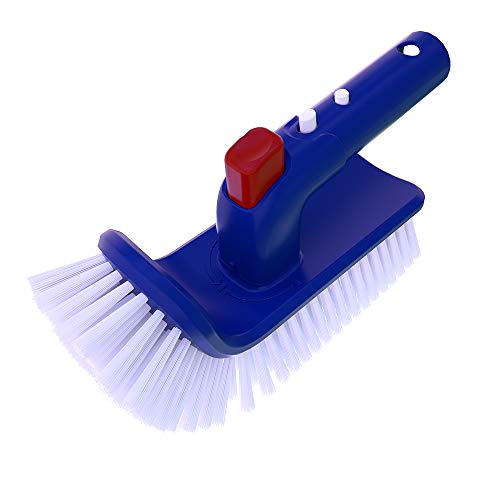
Look for compact hand brushes with swiveling handles. A brush handle that rotates 90 or 180 degrees at the push of a button lets you change your cleaning angle instantly. This allows you to stand comfortably on the dry pool deck while keeping the brush flat against both the horizontal tread and the vertical riser.
Check the bristle layout and brush shape. Brushes with pointed or triangular tips reach the deep corner seams where standard curved wall brushes cannot fit. For vinyl and fiberglass steps, verify that the tool uses soft nylon bristles and rounded plastic edges with no exposed metal screws that could scratch your surfaces.
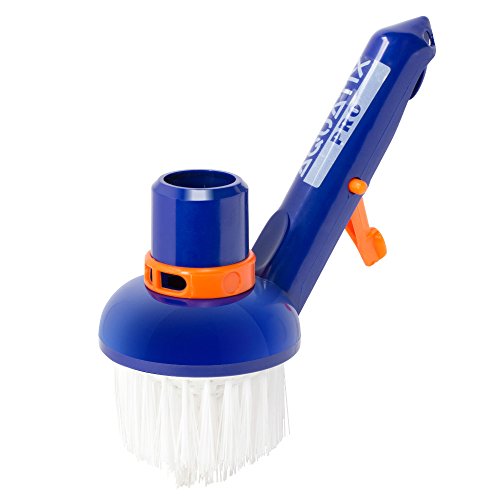
For vacuuming, choose a dedicated step and corner vacuum head that includes an adjustable suction relief ring. This ring lets you adjust water bypass right at the brush head, preventing the tool from locking onto smooth vinyl steps. Ensure the attachment fits standard 1-1/4 inch poles and connects smoothly to typical 1-1/2 inch vacuum hoses.

- VC Score9.0
BCP Score is a ranking system developed by bestcleanerproducts.com. BCP Score has no relationship or impact from any manufacturers or sales agent websites. Learn more
- BrandSepetrel
- VC Score8.8
BCP Score is a ranking system developed by bestcleanerproducts.com. BCP Score has no relationship or impact from any manufacturers or sales agent websites. Learn more
- BrandPOOLWHALE

- VC Score8.4
BCP Score is a ranking system developed by bestcleanerproducts.com. BCP Score has no relationship or impact from any manufacturers or sales agent websites. Learn more
- BrandJack's Magic

- VC Score8.4
BCP Score is a ranking system developed by bestcleanerproducts.com. BCP Score has no relationship or impact from any manufacturers or sales agent websites. Learn more
- BrandSunnyglade

- VC Score8.2
BCP Score is a ranking system developed by bestcleanerproducts.com. BCP Score has no relationship or impact from any manufacturers or sales agent websites. Learn more
- BrandU.S. Pool Supply

- VC Score8.2
BCP Score is a ranking system developed by bestcleanerproducts.com. BCP Score has no relationship or impact from any manufacturers or sales agent websites. Learn more
- BrandIn The Swim

- VC Score8.0
BCP Score is a ranking system developed by bestcleanerproducts.com. BCP Score has no relationship or impact from any manufacturers or sales agent websites. Learn more
- BrandBosh Chemical
- VC Score7.8
BCP Score is a ranking system developed by bestcleanerproducts.com. BCP Score has no relationship or impact from any manufacturers or sales agent websites. Learn more
- BrandAquatix Pro

- VC Score7.8
BCP Score is a ranking system developed by bestcleanerproducts.com. BCP Score has no relationship or impact from any manufacturers or sales agent websites. Learn more
- BrandPool Supply Town
Last update on 2026-10-08 / Affiliate links / Images, Product Titles, and Product Highlights from Amazon Product Advertising API
Frequently Asked Questions
Why does my automatic pool cleaner always ignore the stairs?
Most automatic cleaners need broad, flat spaces to navigate and maintain grip. Stair treads are too narrow for standard cleaner tracks or wheels, causing the machine to get stuck or tumble backwards. In addition, climbing steps brings the cleaner into shallow water where it can breach the surface and suck in air, which stops its cycle.
How do I stop brushed stair dirt from clouding the entire pool?
Brush your steps slowly using short, deliberate strokes that push dirt downward rather than lifting it into the water column. Sweep the debris straight toward the deep end floor and the main drain instead of flicking it upward. Brushing an hour before your scheduled pump run cycle ensures that the filter pulls in the loosened silt before it scatters.
Can I scrub pool stairs with a household scouring pad?
Never use household scouring pads or abrasive kitchen sponges on pool stairs. Green scouring pads contain hard abrasive minerals that will permanently scratch fiberglass gelcoat and tear thin vinyl liners. Stick exclusively to nylon pool brushes or pool-rated melamine foam pads designed specifically for pool surfaces.
How often should pool steps be brushed?
Pool steps should be brushed at least once a week during your regular maintenance routine. Because stairs sit in low-circulation dead zones with warm water and strong sunlight, brushing weekly breaks up invisible biofilms before they turn into slippery algae blooms. If your pool gets heavy weekend use, a quick brush before and after swimming keeps sand from settling into the tread textures.


How to Refinish a Fiberglass Pool

How Do You Keep Raccoons Out of Your Pool?

How to Fix Cyanuric Acid in Your Pool

How to Shape a Pool Cue Tip to Stop Miscues

12 Best Automatic Vacuum For Intex Above Ground Pool of 2026 To Keep Vinyl Floors Spotless

10 Best Automatic Pool Vacuum For Above Ground Pool of 2026 To End Manual Scrubbing

How Much Pool Clarifier Should You Use for Your Pool Size?

How Much Does a Pebble Tec Pool Cost to Build or Resurface?








