
How to Add DE Powder to Your Pool Safely

The backwash hose finally sputters dry, the pool pump hums back to life, and an open bag of white dust sits on the patio. To recharge the system without choking the plumbing, always mix the powder with water in a bucket and pour the watery slurry slowly into the skimmer while the pump runs on standard filter mode. Dumping dry scoops straight into the pool bypasses the filtration system and leaves a chalky mess across the floor.
The exact amount of powder needed depends on the size of the filter tank and how it was just cleaned. A routine backwash leaves behind coated residue, so the unit only takes about eighty percent of its standard dose. A complete teardown and hose rinse strips the fabric frames bare, calling for a full scoop count. Checking the square footage on the tank label ensures the right balance, and the steps below walk through the entire process safely.
How do you mix and add the powder?
Adding fine mineral filter powder (often called DE powder) to your pool requires a simple, careful routine. You must never dump dry powder straight into your skimmer or onto the surface of the pool. Dry powder will float, drift across the yard, or clog your underground plumbing lines.
Before you begin, gather a clean five-gallon bucket, a stirring stick or paint paddle, a standard measuring scoop, and a dust mask. The powder is harmless once it mixes with water, but the dry dust can easily irritate your throat and lungs. Putting on a mask keeps the process comfortable and safe.
Follow these numbered steps to add the powder safely:
- Put your protective gear on. Slip on your dust mask and safety glasses. Open the container slowly so the breeze does not kick the fine dust into the air.
- Verify the pump is running. Check your equipment pad to make sure the circulation pump is running on standard filter mode. Never add powder while the pump is turned off or set to recirculate, backwash, or waste.
- Fill your bucket with pool water. Dip your five-gallon bucket into the pool until it is about halfway full. Always put the water into the bucket first before adding any dry powder.
- Measure your powder. Use your measuring scoop to place the exact amount of powder you need for your system into the bucket of water. If your filter needs several scoops, mix them in two separate batches so the liquid stays easy to stir.
- Mix a smooth slurry. Stir the water and powder together with your stick until the dry clumps completely dissolve. This watery bucket mix should have a smooth, thin consistency that looks like whole milk.
- Open the skimmer lid. Walk over to the pool skimmer located closest to your pump equipment. Take off the outer lid. You can leave the skimmer basket in place as long as it is completely free of leaves and large debris.
- Pour the mix slowly. Pour the watery bucket mix directly into the skimmer opening in a steady, slow stream. Take about sixty seconds to empty the entire bucket so the pump draws the mix smoothly down the suction line.
- Rinse the bucket. Dip the bucket back into the pool to collect a little clean water, swirl it around to grab any leftover settled powder, and pour that into the skimmer as well.
- Check the filter pressure. Walk over to your equipment pad and check the pressure gauge on top of the filter tank. Note this starting number, because it represents your clean baseline pressure for the weeks ahead.
Keep your pump running for at least thirty to sixty minutes after you finish pouring. Continuous water flow gives the fine powder enough time to enter the tank, spread evenly across the fabric frames inside the tank (the filter grids), and form a protective coat that traps fine dirt particles.
How much powder does your filter actually need?
The exact amount of powder your system requires depends entirely on the surface area of your filter. Every filter tank has an information label on the outer shell that lists its size in square feet. Common residential sizes include 24, 36, 48, 60, and 72 square feet.
In the pool world, powder is measured with a specialized one-pound scoop. This scoop measures the powder by volume rather than true weight, because the dry mineral dust is very light and fluffy. One level scoop equals one pound of powder. If you do not have a pool scoop, a clean one-pound metal coffee can holds nearly the exact same volume.
Use this reference checklist to find the standard dose for your tank size when starting with completely clean grids:
- 24 square foot filter: 2.5 to 3 scoops (about 2.5 to 3 pounds).
- 36 square foot filter: 3.5 to 4 scoops (about 3.5 to 4 pounds).
- 48 square foot filter: 5 scoops (about 5 pounds).
- 60 square foot filter: 6 scoops (about 6 pounds).
- 72 square foot filter: 7 to 7.5 scoops (about 7 to 7.5 pounds).
Always verify the exact recommendation printed on your tank label. While one pound of powder for every ten square feet of filter surface is the common rule of thumb, some manufacturers call for slightly more or less. Following the label keeps your system operating at peak flow.
Why do you add less powder after backwashing?
Backwashing is the process of flushing dirt in reverse out of the filter tank and through your waste line. It is a quick way to lower high water pressure without taking the heavy tank apart. However, flushing the water backward does not remove all of the old powder from the fabric frames inside the tank.
Around twenty percent of the old powder remains stubbornly stuck to the fabric even after a thorough backwash cycle. Because some powder stays behind, adding a full dose will overload your tank. Overloading creates a thick, gummy cake that bridges the narrow spaces between the fabric frames, which chokes water flow and causes your pressure to spike.
To avoid this problem, use the eighty percent rule every time you backwash. Multiply your filter's full starting dose by 0.8 to find your post-backwash amount. For example, if your 48-square-foot tank takes 5 scoops after a full manual teardown, you only add 4 scoops after a backwash cycle.
You only add a one hundred percent dose when you physically open the filter tank, remove the internal assembly, and hose every fabric grid clean. Doing a full teardown leaves the fabric completely bare, meaning the system needs a full fresh coat to protect the material from incoming oils and fine dirt.
What common mistakes can ruin your pool filter?
Taking shortcuts when adding mineral powder can damage your plumbing, ruin expensive filter components, or create health hazards. Avoiding a few common slip-ups will keep your pool water crystal clear and your equipment running smoothly.
- Dumping dry powder into the skimmer: Pouring dry powder straight down the skimmer throat allows it to collect into sticky lumps. These clumps can plug underground suction pipes or wedge inside the pump impeller, which requires taking the pump apart to clear.
- Skipping your dust mask: The raw mineral dust is light enough to hang in the air for several minutes. Breathing in these fine particles irritates delicate lung tissue. An inexpensive mask protects your airways while you measure and stir.
- Adding powder with the pump turned off: If the pump is not pulling water, the powder slurry will drop straight to the bottom of the skimmer pipe and settle like wet cement. Always turn the pump on first so the suction pulls the slurry instantly toward the tank.
- Running the pump on bare grids: Running your pool circulation system without any powder ruins the fabric frames. Dirt, sunscreen, and body oils will embed deep inside the fabric pores, clogging the grids permanently and forcing you to buy costly replacements.
- Forgetting to bleed trapped air: Air builds up inside the top of the filter tank during cleaning and recharging. Always open the manual air relief valve on top of the tank until a solid stream of water squirts out, then close it securely.
If you recently did major seasonal maintenance, such as when you open an inground pool in the spring, checking your equipment lines for air leaks before adding powder will keep the entire filtration cycle balanced and quiet.
Why is white powder blowing into your pool?
If you pour your watery bucket mix into the skimmer and immediately see thick clouds of white powder blasting out of the return jets, turn off your pump right away. Powder should always stay trapped inside the filter tank. When it shoots back into the pool, water is finding an open path past the fabric barrier.
The most common cause is a torn filter grid. Over years of use, the fabric frame inside the tank weakens. Water pressure can cause small splits along the seams or holes near the bottom edges. Even a tear the size of a dime allows powder to slip right through the fabric and travel back out to your pool wall fittings.
Another frequent culprit is a cracked manifold. The manifold is the heavy plastic cap holding the grids together at the top of the assembly. If this plastic cap develops a hairline crack from overtightening or water pressure, powder escapes directly into the central pipe.
You should also inspect the standpipe O-ring. This small rubber ring seals the connection between the manifold and the central pipe that sends clean water back to the pool. If the ring is cracked, pinched, dry, or missing entirely, the seal fails and powder bypasses the filter assembly.
Finally, check your multiport valve if your system has one. The spider gasket inside this valve directs water between filter, rinse, and waste modes. If the rubber gasket is torn or unseated, powder can cross directly into the pool return line before ever coating the grids.
To fix these issues, turn off all power at the breaker, bleed the air from the tank, and open the filter clamp. Pull the internal assembly out, hose away the powder, and inspect the plastic manifold and each fabric grid under bright light. Replace any cracked or torn parts before recharging the filter again.
What should you look for when buying filter powder?
When shopping for replacement filter media, make sure you choose products labeled specifically for swimming pool use. Pool-grade powder undergoes a high-heat treatment process that hardens the microscopic silica particles, allowing them to form a porous, durable barrier that traps debris down to tiny microscopic sizes. Never use garden-grade or food-grade diatomaceous earth in your pool filter, as untreated powders will dissolve into useless mush and ruin your system.
Look for packaging that matches how often you maintain your pool. Sturdy plastic buckets or lined heavy-duty boxes are much easier to handle and store than plain paper bags, which can tear easily or absorb moisture from damp garage floors. If you manage your water chemistry closely, you can add your filter media right before you use liquid chlorine in your pool, ensuring fresh water circulates through clean, freshly coated grids all season long.
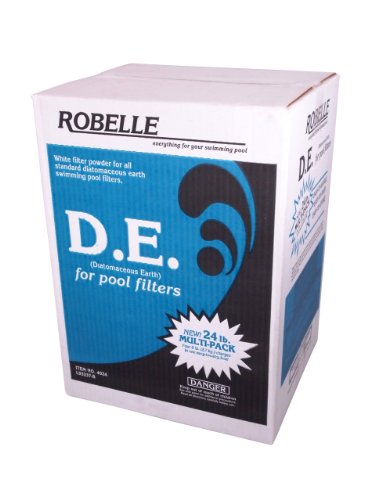
- VC Score9.4
BCP Score is a ranking system developed by bestcleanerproducts.com. BCP Score has no relationship or impact from any manufacturers or sales agent websites. Learn more
- BrandRobelle

- VC Score9.2
BCP Score is a ranking system developed by bestcleanerproducts.com. BCP Score has no relationship or impact from any manufacturers or sales agent websites. Learn more
- BrandHTH

- VC Score9.2
BCP Score is a ranking system developed by bestcleanerproducts.com. BCP Score has no relationship or impact from any manufacturers or sales agent websites. Learn more
- BrandIn The Swim

- VC Score9.2
BCP Score is a ranking system developed by bestcleanerproducts.com. BCP Score has no relationship or impact from any manufacturers or sales agent websites. Learn more
- BrandRobelle

- VC Score9.2
BCP Score is a ranking system developed by bestcleanerproducts.com. BCP Score has no relationship or impact from any manufacturers or sales agent websites. Learn more
- BrandGLB

- VC Score9.0
BCP Score is a ranking system developed by bestcleanerproducts.com. BCP Score has no relationship or impact from any manufacturers or sales agent websites. Learn more
- BrandMAV AquaDoc

- VC Score8.2
BCP Score is a ranking system developed by bestcleanerproducts.com. BCP Score has no relationship or impact from any manufacturers or sales agent websites. Learn more
- BrandHTH
Last update on 2026-10-08 / Affiliate links / Images, Product Titles, and Product Highlights from Amazon Product Advertising API
FAQs
Can you pour DE powder directly into the pool water?
No, you should never pour powder directly into the main body of the pool. Dumping it into the water causes the powder to settle across the floor like chalky mud, creating cloudy water that is difficult to vacuum. Always mix the powder into a watery slurry in a bucket and pour it slowly into the skimmer so the pump draws it directly onto the internal filter grids.
How long should you run the pump after adding powder?
Run your pool pump continuously for at least thirty to sixty minutes right after adding the powder slurry. This steady flow gives the powder enough time to enter the filter tank and form a uniform, protective coat over every fabric frame. Turning the pump off too early allows loose powder to drop to the bottom of the tank before it can stick to the grids.
Do you need to wear a mask when handling powder?
Yes, wearing an N95 dust mask or simple face covering is strongly recommended whenever you scoop dry mineral powder. The dry powder contains crystalline silica particles that float easily in the breeze and can irritate your lungs and throat. Once the powder is mixed with water in your bucket, it is completely dust-free and safe to handle without a mask.
What happens if you add too much DE powder?
Adding too much powder crowds the narrow gaps between the filter grids inside your tank. This excess powder bridges across the fabric frames, restricting water flow and causing your system pressure gauge to rise rapidly. If the tank is severely overloaded, water circulation drops, putting unnecessary strain on your pool pump motor until you open the tank and rinse away the excess material.


How to Refinish a Fiberglass Pool

How Do You Keep Raccoons Out of Your Pool?

How to Fix Cyanuric Acid in Your Pool

How to Shape a Pool Cue Tip to Stop Miscues

12 Best Automatic Vacuum For Intex Above Ground Pool of 2026 To Keep Vinyl Floors Spotless

10 Best Automatic Pool Vacuum For Above Ground Pool of 2026 To End Manual Scrubbing

How Much Pool Clarifier Should You Use for Your Pool Size?

How Much Does a Pebble Tec Pool Cost to Build or Resurface?


