
How Much Flocculant Should You Put in Your Pool?

Standing on the pool deck, a homeowner watches the afternoon sun disappear into cloudy, milky water while holding a plastic measuring cup. Most standard liquid formulas require 8 fluid ounces per 10,000 gallons of water to bind floating dirt so it sinks to the bottom. That usually means pouring roughly half to a full 32-ounce bottle for an average backyard pool.
The exact measurement depends on your total pool volume and whether the product is a concentrated liquid or dry granules. Your filter setup matters just as much, because this chemical requires equipment that can vacuum straight to waste (pumping dirty water directly out to the drain without passing through the filter). Adding too much creates a sticky residue that keeps the water murky. Here is how to calculate the right dose for your pool size and clear the haze safely.
Quick Dosage Guide for Common Pool Sizes
Pouring the right amount of flocculant turns cloudy, gray water into clear swimming water by pulling floating dirt particles together. Standard liquid pool flocculant typically requires 8 fluid ounces per 10,000 gallons of pool water. That means an average backyard pool holding 20,000 gallons needs 16 fluid ounces, or exactly half of a standard 32-ounce quart bottle. If you have a large pool holding up to 40,000 gallons, one full 32-ounce bottle treats the entire volume.
Some concentrated formulas require far less liquid, often just 1 fluid ounce per 5,000 gallons. Granular formulas, on the other hand, usually require pre-dissolving dry powder in a bucket of warm water before pouring. Always verify the concentration label on the back of your bottle before measuring. Pouring extra chemical does not speed up the clearing process. In fact, adding too much chemical leaves a sticky residue that keeps the water cloudy for days.
Use this quick checklist to find your starting dose for standard liquid flocculant:
- 5,000 gallons: 4 fluid ounces (one-half measuring cup)
- 10,000 gallons: 8 fluid ounces (one full measuring cup)
- 15,000 gallons: 12 fluid ounces (one and a half measuring cups)
- 20,000 gallons: 16 fluid ounces (one pint, or half a standard quart bottle)
- 25,000 gallons: 20 fluid ounces (two and a half measuring cups)
- 30,000 gallons: 24 fluid ounces (three measuring cups)
- 40,000 gallons: 32 fluid ounces (one full quart bottle)
Before adding any drops to your pool, check that your chemical levels sit in a balanced range. Flocculant relies on proper water balance to bind dirt together. Bring your pH between 7.4 and 7.8, and confirm your total alkalinity sits between 80 and 120 parts per million. If your pH sits too low, the chemical will struggle to clump the particles, and you will end up wasting both time and money.
How to Calculate Your Pool Volume in Gallons
Guessing your pool size usually leads to chemical mistakes. Underdosing leaves microscopic dirt suspended in the water, while overdosing creates thick, milky syrup on the floor. Calculating the true water volume takes only a couple of minutes with a tape measure. You need three basic measurements: length, width, and average water depth.
Find your average depth by measuring the shallow end and the deep end in feet, adding those two numbers together, and dividing by two. If your shallow end measures 3 feet deep and your deep end measures 8 feet deep, your average depth is 5.5 feet. Measure down to the waterline (the tile border where water meets the pool wall), not to the top edge of the pool deck.
Once you have your dimensions, apply the standard multiplier for your pool shape:
- Rectangular pools: Multiply length by width by average depth, then multiply by 7.5. For example, a 16 by 32 foot rectangular pool with an average depth of 5.5 feet holds 21,120 gallons (16 x 32 x 5.5 x 7.5). That pool needs roughly 17 fluid ounces of standard flocculant.
- Round pools: Multiply diameter by diameter by average depth, then multiply by 5.9. A round pool measuring 24 feet across with a flat 4-foot depth holds approximately 13,593 gallons (24 x 24 x 4 x 5.9). That pool needs about 11 fluid ounces.
- Oval pools: Multiply long diameter by short diameter by average depth, then multiply by 6.7. An oval pool that measures 15 by 30 feet with a 4.5-foot average depth holds roughly 13,567 gallons (15 x 30 x 4.5 x 6.7).
If you own an above-ground setup like one of the popular Bestway pools, the total capacity is usually printed directly in the user guide or stamped near the liner seam. Owners of Coleman pools can also look up their model number to find factory capacity ratings rather than doing manual math. If you already calculated your capacity when measuring sanitizer or shock, like figuring out bleach for a 6,000-gallon pool, use that exact same gallon figure to measure your flocculant.
Step-by-Step Instructions to Apply Flocculant Safely
Flocculant works through a chemical reaction called coagulation, which means binding small particles into heavy clumps. When those clumps get heavy enough, gravity drags them down to the bottom of the pool. To get this reaction without damaging your pool equipment, follow these steps in exact order.
- Raise the water level above normal: You will lose a noticeable amount of water later when vacuuming dirt out of the pool. Hook up a garden hose and raise the waterline two to three inches above the middle of the skimmer opening.
- Set your filter to recirculate: Turn off the pump motor first. Walk over to your multiport valve and switch the handle to recirculate (running the pump while bypassing the filter tank). Never leave the valve set to filter. Running flocculant through sand, glass, or filter elements clogs the media with gummy sediment.
- Dilute the chemical: Fill a clean five-gallon bucket with pool water. Measure your exact dose of flocculant, pour it into the bucket, and stir it gently with a clean plastic stirrer or wooden stick. Diluting the solution helps it mix across the pool surface without sinking straight down in one concentrated spot.
- Pour the mixture around the pool perimeter: Turn your pump on with the valve set to recirculate. Walk slowly around the edge of the pool, pouring the diluted mixture evenly into the water. Direct the pour near the return jets so the moving water pushes the chemical out into the center.
- Circulate for two hours: Let the pump run on recirculate for one to two hours. This pushes the chemical into every corner of the pool so it contacts all the suspended dirt. Do not let the pump run longer than two hours. Running it too long breaks apart the fragile clumps before they can settle.
- Turn off the pump completely: Shut off the pump at the breaker or timer box. The water must sit completely still for 12 to 24 hours. Keep swimmers and pets out of the pool during this period. As the water rests, the clumps will sink to the floor, forming a thick, gray sediment layer that looks like wet dust or wet cardboard pulp.
If you accidentally add too much flocculant, the chemical cannot find enough free dirt particles to bind with. The excess chemical begins binding to itself instead. This creates a dense, milky fog that stays suspended in the middle of the pool and refuses to settle to the bottom. If this happens, your only fix is patience and fresh water. You will need to drain a portion of the pool water, refill with fresh tap water, and let the remaining residue run through a sand or glass filter while backwashing frequently.
Pay close attention to your filter style before starting. Sand and diatomaceous earth (D.E.) filters have multiport valves with a waste setting, making them compatible with flocculant. Standard cartridge filters do not have a waste setting. If you pump flocculant sludge into a cartridge filter, the sticky slime glues the pleated fabric folds together, ruining the cartridge instantly. If you own a cartridge filter system, you must either remove the internal paper cartridge completely before vacuuming, or plumb a dedicated three-way bypass valve to dump dirty water straight outside.
The Right Cleaners and Tools for Vacuuming Flocculant Sludge
Once flocculant pulls all the floating debris down, your pool floor will be covered in a delicate layer of gray sludge. Cleaning this sludge requires the right approach. Automatic pool cleaners should stay out of the pool during this cleanup process.
A robotic cleaner (a self-powered unit with its own internal debris basket) moves with motorized rubber tracks or drive wheels. Those wheels create strong water currents that kick the settled sediment back up into the water, clouding the pool all over again. The fine dust also clogs the filter basket or collection canister in seconds. Suction-side cleaners and pressure-side cleaners cause the same issue because they move too fast and throw dirt right back into the pool water.
The only reliable way to clear flocculant sludge is with a manual vacuum setup running straight to waste (pumping dirty water directly out of the pool to the drain):
- A manual vacuum head: Use a weighted vacuum head with smooth wheels if you have a concrete, gunite, or pebble aggregate pool surface. The built-in weights keep the head flat on the bottom without scraping. If you have a vinyl liner or smooth fiberglass pool, pick a triangular or rectangular head lined with soft perimeter brushes so the plastic body never gouges the floor.
- A commercial-grade vacuum hose: Choose a hose with a swivel joint on the cuff. The swivel joint lets the hose turn freely as you walk around the pool deck, preventing kinks that kill suction.
- A sturdy telescoping pole: A rigid aluminum or fiberglass pole gives you control over the vacuum head. You must guide the head across the floor at an extremely slow pace, like moving an iron over a shirt. Moving too quickly creates a small wake that scatters the dirt pile before the hose opening can suck it in.
Before vacuuming, make sure your multiport valve points to waste. Fill the vacuum hose with water from a return jet so your pump does not suck air and lose prime. If you need to use an auxiliary utility pump to vacuum directly out of a cartridge pool, always plug the power cord into an outdoor GFCI outlet (a protected ground-fault outlet with a weatherproof cover) placed at least 10 feet back from the pool edge. Never swim while any manual vacuuming gear or power cords are inside the water.

- VC Score9.2
BCP Score is a ranking system developed by bestcleanerproducts.com. BCP Score has no relationship or impact from any manufacturers or sales agent websites. Learn more
- BrandHTH

- VC Score9.2
BCP Score is a ranking system developed by bestcleanerproducts.com. BCP Score has no relationship or impact from any manufacturers or sales agent websites. Learn more
- BrandIn The Swim

- VC Score9.2
BCP Score is a ranking system developed by bestcleanerproducts.com. BCP Score has no relationship or impact from any manufacturers or sales agent websites. Learn more
- BrandGLB

- VC Score9.0
BCP Score is a ranking system developed by bestcleanerproducts.com. BCP Score has no relationship or impact from any manufacturers or sales agent websites. Learn more
- BrandSpaChoice

- VC Score9.0
BCP Score is a ranking system developed by bestcleanerproducts.com. BCP Score has no relationship or impact from any manufacturers or sales agent websites. Learn more
- BrandMAV AquaDoc

- VC Score8.8
BCP Score is a ranking system developed by bestcleanerproducts.com. BCP Score has no relationship or impact from any manufacturers or sales agent websites. Learn more
- BrandBioGuard

- VC Score8.8
BCP Score is a ranking system developed by bestcleanerproducts.com. BCP Score has no relationship or impact from any manufacturers or sales agent websites. Learn more
- BrandRobelle
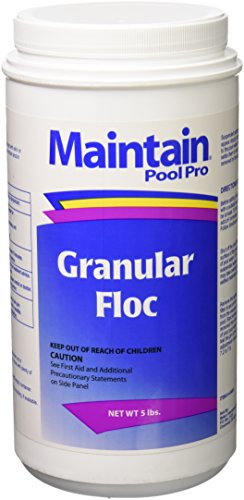
- VC Score8.4
BCP Score is a ranking system developed by bestcleanerproducts.com. BCP Score has no relationship or impact from any manufacturers or sales agent websites. Learn more
- BrandMaintain
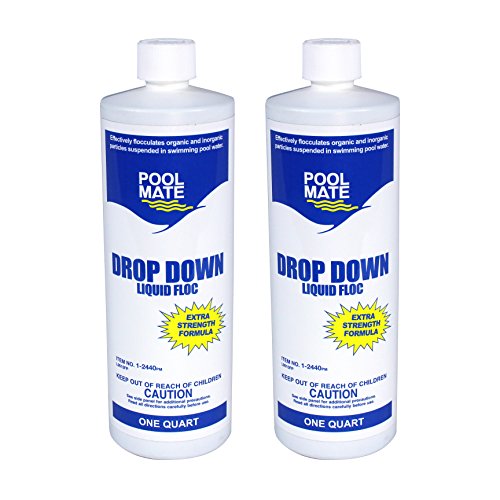
- VC Score8.4
BCP Score is a ranking system developed by bestcleanerproducts.com. BCP Score has no relationship or impact from any manufacturers or sales agent websites. Learn more
- BrandPool Mate

Doheny's Extra-Strength Pool Flocculant | Professional-Grade Pool Flocculent Helps Settle
View on Amazon- VC Score8.4
BCP Score is a ranking system developed by bestcleanerproducts.com. BCP Score has no relationship or impact from any manufacturers or sales agent websites. Learn more
- BrandDoheny's
Last update on 2026-10-08 / Affiliate links / Images, Product Titles, and Product Highlights from Amazon Product Advertising API
Frequently Asked Questions
Can I leave my pool pump running while the flocculant settles the dirt?
No, the pump must be turned off after the initial two-hour circulation period. Flocculant requires completely calm, still water so the bound clumps can drop to the pool floor. If the pump continues running, the returning water jets create currents that keep the particles floating in suspension.
Can I use pool flocculant if I only have a standard cartridge filter?
You should avoid standard flocculant with a cartridge filter unless your plumbing includes a bypass line that vents directly to waste. Running flocculant through a paper cartridge coats the pleated fabric in sticky slime that cannot be washed clean with a hose. If you have no bypass valve, use a gentle pool clarifier instead, which lets the cartridge trap tiny particles slowly without ruining the element.
How long do I have to wait before swimming after using pool flocculant?
Swimmers should stay out of the pool until all the settled debris has been vacuumed out to waste and water chemistry is balanced, which usually takes 24 to 48 hours. Swimming while flocculant rests on the floor stirs the dirt cloud back into the water, undoing all your hard work. Swimming in active flocculant can also irritate eyes and dry out skin.


How to Refinish a Fiberglass Pool

How Do You Keep Raccoons Out of Your Pool?

How to Fix Cyanuric Acid in Your Pool

How to Shape a Pool Cue Tip to Stop Miscues

12 Best Automatic Vacuum For Intex Above Ground Pool of 2026 To Keep Vinyl Floors Spotless

10 Best Automatic Pool Vacuum For Above Ground Pool of 2026 To End Manual Scrubbing

How Much Pool Clarifier Should You Use for Your Pool Size?

How Much Does a Pebble Tec Pool Cost to Build or Resurface?


