
How Long Should You Run Your Pool Vacuum?

A pool owner stands on the patio listening to the steady hum of the pump, watching the hose sweep across the floor and wondering when to shut it off. Most automatic or robotic cleaners need two to three hours per cycle to scrub the surface, while a manual vacuum usually finishes the job in 30 to 45 minutes. Sticking to that window clears out sunken dirt without wasting electricity or stressing pool equipment.
A few everyday details will nudge that timeframe up or down. Larger pools over thirty feet take longer for a cleaner to cover completely, while heavy leaf piles after a thunderstorm demand extra passes and frequent basket emptying. The type of vacuum matters too, since models hooked to the pool pump share runtimes with your filter system while independent robotic units follow their own built-in timers. Matching the clock to your specific setup keeps your water clear all week.
How long should each type of pool vacuum run?
The time you need to vacuum depends directly on the type of cleaner you drop into the water. Different cleaners move at different speeds, use different power sources, and collect dirt in completely different ways. Matching your runtime to the machine prevents wasted power while making sure the pool floor gets clean from edge to edge.
A manual vacuum requires 30 to 45 minutes of steady physical effort for an average backyard pool. Because you control the pole by hand, you move in slow, straight lines across the floor. Rushing kicks dirt up into the water column instead of pulling it into the hose. If you have a larger pool up to 50 feet long, plan for closer to an hour so you can overlap each stroke without clouding the water.
A suction-side cleaner (a vacuum powered by the pool pump that attaches to your skimmer or dedicated vacuum line) usually needs 2 to 3 hours to clean the whole floor. These units move randomly across the bottom, climbing walls and bumping off corners. Because they share flow with your main filtration system, you should check your pump capacity before running them. Many automatic suction sweepers need at least a 1 horsepower pump or roughly 1,600 gallons per hour of flow to move steadily. Balancing this runtime alongside how often to run your pool pump each day keeps your circulation efficient without pushing your electric bill through the roof.
A pressure-side cleaner connects to the water return jet, often using an extra booster pump, and catches debris in its own sweep bag. These cleaners also run best for 2 to 3 hours per session. Because they push debris into their own bag rather than sending dirt into your skimmer, they keep water flowing freely through your filter during the entire clean.
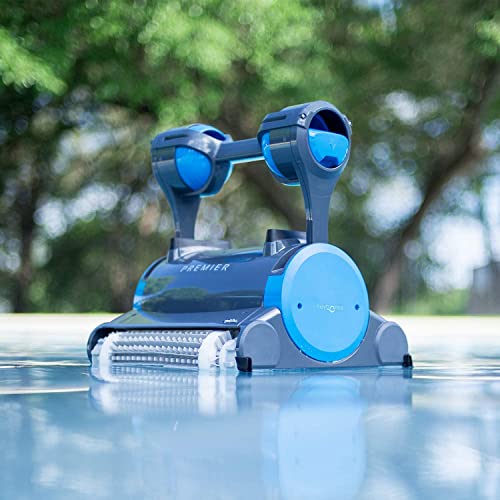
A robotic cleaner (a self-powered unit with its own internal debris basket) operates on set cycles, usually running between 1.5 and 3 hours before shutting down on its own. Corded models plug into a standard outdoor GFCI outlet (a protected ground-fault outlet with a weatherproof cover) and use onboard steering programs to map the pool floor, walls, and waterline. Cordless battery-powered robots run until their charge runs out, which is typically between 50 and 90 minutes, though some larger battery packs run up to 110 minutes on a single charge.
Handheld battery vacuums are built for spot cleaning steps, tanning ledges, and hot tubs rather than the whole pool floor. Most handheld stick models deliver 45 to 60 minutes of continuous run time, with some high-capacity batteries lasting up to 90 minutes. That is plenty of time to lift sand piles from corners without hauling out heavy hoses.
What factors change your pool vacuuming time?
A standard 2-hour window works well for basic upkeep, but real pool conditions change from day to day. Adjusting your run time based on what is happening in and around your water prevents dirty spots and protects your machinery.
Pool dimensions play the biggest role. A round above-ground pool measuring 18 feet across has a small floor area that a random-pattern cleaner can cross multiple times within an hour. An in-ground pool stretching 40 or 50 feet with a deep end, slope, and shallow end requires at least 2.5 to 3 hours for an automatic cleaner to reach every corner. Freeform shapes with tight curves take longer than basic rectangles because cleaners can get temporarily trapped around steps and benches.
The type of debris inside the pool also alters your schedule. Fine pollen, dust, and light sand vacuum up quickly during a routine cycle. Heavy leaves, twigs, and acorns from nearby trees slow things down. When leaves blanket the floor after a storm, vacuum bags and skimmer baskets fill to capacity within 20 or 30 minutes. Once a collection canister is packed solid, water flow drops to a trickle and the vacuum stops picking up dirt, even if the motor is still humming. In those situations, you need to empty the basket every half hour and extend your total cleaning time.
Pool surface materials change cleaning resistance as well. Smooth vinyl liners and slick fiberglass shells let wheeled cleaners glide easily, though slick tile at the waterline can cause wheels to slip if climbing rings are worn. Rough concrete, gunite, or pebble aggregate surfaces create more friction under rubber tracks, which can slightly slow travel speeds while requiring durable brushes to scrub dirt loose from deep plaster pores.
Finally, water balance and algae growth demand a totally different approach. If water turns cloudy or green algae starts coating the walls, normal automated cycles will not solve the issue. Algae particles quickly clog fine mesh filters, meaning you will need manual intervention and targeted runtimes to clear the pool completely.
How often should you vacuum your pool each week?
Running your vacuum constantly wears out moving parts, while waiting too long allows organic matter to decay and feed algae blooms. Setting a predictable weekly routine keeps the floor clean with minimal effort.
- Routine summer maintenance: Run an automatic or robotic cleaner 2 to 3 times per week for 2 hours per cycle. This picks up everyday dirt, insects, and blowing leaves before they break down into fine silt.
- Manual vacuum schedule: Vacuum by hand once a week for 30 to 45 minutes if you do not own an automatic cleaner. Doing this on a Friday afternoon ensures clear, clean water for weekend swimming.
- Post-party cleanup: Run a full 2 to 3 hour cycle the morning after heavy pool use. Swimmers drag in dirt, grass clippings, and sunblock oils that settle along the pool floor overnight.
- After heavy rain or wind: Start a cleaning cycle as soon as the storm passes. Wet leaves left sitting on plaster or vinyl can leave dark organic stains within 48 hours if not lifted promptly.
- Low-use or covered periods: Vacuum once every week or two during cooler months if the pool remains open. With fewer people swimming and slower algae growth, water stays clear with far less vacuuming.
What happens if you run your vacuum too long?
Leaving a pool cleaner running all day might sound like a simple way to get sparkling water, but it creates expensive problems over time. Pool vacuums are designed for targeted cleaning sessions, not continuous 24-hour operation.
Pump burnout is the most dangerous risk when using a suction-side cleaner. As the cleaner pulls leaves and debris off the floor, all that waste collects in your skimmer basket or pump strainer pot. When those baskets choke with debris, water cannot reach the pump impeller. The pump begins drawing in air, running dry, and overheating. This dry running warps plastic pump housings, melts internal shaft seals, and can burn out the pump motor entirely, resulting in hundreds of dollars in repair bills.
Surface damage is another major concern, especially on vinyl liners. Automatic cleaners sometimes get stuck against main drain covers, ladders, or in shallow corners. If a cleaner gets stuck while running on an all-day cycle, its drive wheels, rubber tracks, or rotating scrub brushes will spin in the exact same spot for hours. On a vinyl liner, this localized friction can thin the material or cause tears. On gunite or plaster, it can leave visible wear rings on the floor finish.
Leaving cleaners in the pool all day also wastes electricity. Running a dedicated booster pump or your main pool pump for extra hours just to keep a sweeper moving adds noticeable costs to your monthly electric bill. In addition, keeping robotic cleaners submerged in chlorinated water long after their cleaning cycle finishes degrades their plastic shells, stiffens flexible hoses, and weakens rubber cables. Over time, constant chemical exposure breaks down the watertight seals around electric drive motors.
How do you vacuum heavy debris or algae?
When your pool is covered in thick storm debris or dead algae after a chemical shock treatment, standard 2-hour automatic cycles will fail. The fine dead algae will pass right through coarse mesh bags and blow back into the pool, or it will plug fine filters in minutes. Follow these steps to clear heavy messes properly.
- Rake out large debris first: Use a deep leaf net on a telescoping pole to scoop large leaves and twigs off the pool bottom. Never try to vacuum piles of thick oak leaves or pine needles, as they will choke vacuum hoses and skimmer throats instantly.
- Adjust the filter control lever: Walk over to your pool filter and find the multiport valve (the filter control lever). Push the handle down and turn it to the waste setting (draining dirty water straight out of the pool). This bypasses your sand or diatomaceous earth filter completely, sending dead algae and fine silt directly out through the backwash pipe into your yard or drain.
- Prime your manual vacuum hose: Hook your vacuum head to the pole and snap on the vacuum hose. Submerge the head to the bottom of the pool. Hold the open end of the hose against a return jet while the pump is running to fill the hose with water, driving out all trapped air before plugging it into the skimmer suction port.
- Move in slow, steady passes: Walk slowly along the edge of the pool, moving the vacuum head across the floor. Overlap each pass by a few inches. If you walk too fast, the vacuum head pushes a pressure wave that stirs algae clouds into the water, making it impossible to see the floor.
- Monitor the water level closely: Because the waste setting pumps pool water directly out of the pool, your water level will drop by several inches during the process. Place a garden hose in the pool to add fresh water while you work so the water line does not fall below the skimmer opening.
- Empty baskets and reset equipment: Turn off the pool pump before unplugging the vacuum hose to avoid high-suction hazards. Empty the pump strainer basket, switch the filter control lever back to the normal filter setting, and let the circulation system run to clear any remaining floating haze.
What features help control cleaner runtimes?
Selecting a pool cleaner with the right control features makes managing your cleaning schedule simple and hands-off. Different pool designs and lifestyle habits require different cleaner styles, so checking key capabilities before buying ensures you get the right match for your backyard.
Built-in cycle timers are essential if you want automatic operation. Many robotic models come with power supply units that allow you to choose between standard 1.5-hour quick cleans, 2-hour thorough floor passes, or 3-hour deep cleans that include walls and waterlines. Once the timer completes, the unit powers down automatically, saving electricity and protecting the motor.
Cordless designs remove the hassle of tangled floating cables, especially in pools with irregular shapes, swim-up bars, or deep slopes. When shopping for cordless models, check the battery run time against the square footage of your pool. A 50 to 60-minute battery works well for compact above-ground pools, while larger in-ground pools require 90 to 110 minutes of continuous runtime along with auto-parking features that bring the cleaner to the pool edge when the battery drops low.
Top-loading filter baskets make a major difference in how smoothly your cleaning cycles run. Canisters that lift straight out of the top of the machine allow you to rinse away captured silt, hair, and leaves in seconds without flipping the machine upside down. If your yard gets heavy tree debris, look for generous basket volume so the cleaner can finish its full 2-hour cycle without clogging halfway through.

- VC Score9.0
BCP Score is a ranking system developed by bestcleanerproducts.com. BCP Score has no relationship or impact from any manufacturers or sales agent websites. Learn more
- BrandDolphin
- VC Score8.8
BCP Score is a ranking system developed by bestcleanerproducts.com. BCP Score has no relationship or impact from any manufacturers or sales agent websites. Learn more
- BrandDolphin

- VC Score8.2
BCP Score is a ranking system developed by bestcleanerproducts.com. BCP Score has no relationship or impact from any manufacturers or sales agent websites. Learn more
- BrandEFURDEN

- VC Score8.0
BCP Score is a ranking system developed by bestcleanerproducts.com. BCP Score has no relationship or impact from any manufacturers or sales agent websites. Learn more
- BrandU.S. Pool Supply

XtremepowerUS Premium Automatic Suction Vacuum-generic Climb Wall Pool Cleaner Sweeper
View on Amazon- VC Score7.8
BCP Score is a ranking system developed by bestcleanerproducts.com. BCP Score has no relationship or impact from any manufacturers or sales agent websites. Learn more
- BrandXtremepowerUS

- VC Score7.8
BCP Score is a ranking system developed by bestcleanerproducts.com. BCP Score has no relationship or impact from any manufacturers or sales agent websites. Learn more
- BrandPool Supply Town

- VC Score7.8
BCP Score is a ranking system developed by bestcleanerproducts.com. BCP Score has no relationship or impact from any manufacturers or sales agent websites. Learn more
- BrandPAXCESS

- VC Score7.8
BCP Score is a ranking system developed by bestcleanerproducts.com. BCP Score has no relationship or impact from any manufacturers or sales agent websites. Learn more
- BrandHydrus

- VC Score7.6
BCP Score is a ranking system developed by bestcleanerproducts.com. BCP Score has no relationship or impact from any manufacturers or sales agent websites. Learn more
- BrandRock&Rocker

- VC Score7.4
BCP Score is a ranking system developed by bestcleanerproducts.com. BCP Score has no relationship or impact from any manufacturers or sales agent websites. Learn more
- BrandAIPER

- VC Score7.4
BCP Score is a ranking system developed by bestcleanerproducts.com. BCP Score has no relationship or impact from any manufacturers or sales agent websites. Learn more
- BrandWYBOT
Last update on 2026-10-08 / Affiliate links / Images, Product Titles, and Product Highlights from Amazon Product Advertising API
FAQs
Can I leave my pool vacuum running all day?
No, you should never leave any pool vacuum running all day. Continuous running strains pump motors, drives up electric bills, and can wear thin spots into vinyl liners if the unit gets hung up on a drain cover. Limit automatic cycles to 2 or 3 hours at a time, which provides plenty of floor coverage for an average backyard pool.
Should I vacuum on the filter or waste setting?
Use the normal filter setting for everyday maintenance, light sand, and scattered leaves so you do not lose pool water. Switch your filter control lever to the waste setting when vacuuming dead algae, flocculant, or fine storm silt. The waste setting sends dirty water straight out of the pool, preventing dense debris from clogging your filter media.
Why does my cleaner stop before the pool looks clean?
A cleaner usually stops prematurely because its internal filter basket or the pool skimmer basket is completely full of debris. When baskets pack tight, suction drops and the machine loses the water flow needed to move forward. Cordless cleaners may also stop early if the battery was not fully recharged, or if string, hair, or small stones jammed the drive tracks.
Can I leave a robotic cleaner in the pool after it finishes?
You should remove your robotic cleaner from the pool shortly after its cleaning cycle finishes. Leaving the robot submerged exposes sensitive motor seals, plastics, and electrical cables to continuous chlorine and acidic chemicals. Pulling the machine out, rinsing the filter basket, and storing it in a shaded spot extends its operating life significantly.


How to Refinish a Fiberglass Pool

How Do You Keep Raccoons Out of Your Pool?

How to Fix Cyanuric Acid in Your Pool

How to Shape a Pool Cue Tip to Stop Miscues

12 Best Automatic Vacuum For Intex Above Ground Pool of 2026 To Keep Vinyl Floors Spotless

10 Best Automatic Pool Vacuum For Above Ground Pool of 2026 To End Manual Scrubbing

How Much Pool Clarifier Should You Use for Your Pool Size?

How Much Does a Pebble Tec Pool Cost to Build or Resurface?


