
How to Heat Your Pool Faster and Stop Heat Loss

There is no need to worry if the water feels stubborn and chilly before a swim. The quickest way to speed up the process is to trap surface heat with a cover while you run the heater, then point the wall jets downward so the warm water circulates through the deep end. Most heat simply evaporates into thin air, meaning an uncovered pool loses warmth almost as quickly as equipment can generate it.
How fast the water reaches a comfortable temperature depends on your heat source, the pool size, and the weather. A gas heater warms water much faster than an electric heat pump or natural sunshine, while gusty winds and dry air speed up cooling. Deep water also takes longer simply because there are thousands more gallons to heat. Here is how to keep that warmth in the pool and get it swim-ready faster.
Put on a Surface Cover Immediately to Halt Evaporative Heat Loss
When pool water warms up, individual water molecules gain energy and lift off the surface as vapor, carrying that energy directly into the air. This process, known as evaporation (water drying up into the air and taking warmth with it), causes the vast majority of heat loss in any outdoor swimming pool. Running a gas heater or electric heat pump without covering the pool means heating the open sky. The heater burns fuel or electricity continuously while the thermometer in your skimmer barely budges.
A solar blanket (a bubble cover that floats on top of the water) acts like a lid on a pot of soup on your kitchen stove. If you leave the lid off, steam rolls into the room and the soup takes forever to boil. Put the lid on, and the heat stays trapped inside the pot. Floating a cover across your water surface creates a physical barrier that stops rising vapor from escaping into the cool air. This simple barrier can cut your heating time in half because every bit of warmth your equipment adds remains trapped in the pool.
Many pool owners wonder if it is safe to run a heater while the solar cover is floating in place. The answer is yes, as long as your circulation pump runs normally. The heated water enters the pool through wall fittings below the waterline, so the cover simply holds that warmth underneath. If you have an upcoming party or family swim, keep the pool covered right up until the first swimmer steps onto the ladder.
Use this quick checklist to make sure your surface cover holds heat properly while the water warms up:
- Roll out the bubble cover across the entire pool surface, making sure it reaches every edge.
- Place the textured bubble side facing down against the water, leaving the smooth side facing up toward the sky.
- Trim or tuck the edges flush against the tile waterline or vinyl liner so wind cannot lift the seams.
- Keep your circulation pump running steadily so fresh, heated water moves under the blanket without bunching it up.
- If you use a liquid heat shield instead of a physical cover, pour the specified dose directly in front of a return jet with the pump running to form an even barrier.
Aim Your Return Jets Downward to Eliminate Cold Pockets
The direction of your wall nozzles plays a massive role in how fast your pool warms up. Warm water is lighter and less dense than cold water, so heated water returning from your equipment naturally floats at the surface. If your return jet (the wall nozzle pushing clean water back into the pool) points straight ahead or tilted upward, it creates a shallow layer of warm water across the top while the deep end stays chilly.
Gathering all your heat at the surface also speeds up thermal loss. The greater the temperature gap between the pool surface and the outdoor air, the faster warmth escapes. To warm your entire pool evenly and quickly, you must force heated water all the way to the pool floor.
You can adjust these nozzles by hand in just a few minutes:
- Turn off your circulation pump for a moment so water pressure drops, making the fittings easy to grip and turn.
- Step into the shallow end or reach down from the deck to find the return jet eyeball fittings on the pool walls.
- Loosen the outer threaded locking ring counterclockwise until the center eyeball nozzle swivels freely in its socket.
- Point the nozzle downward at roughly a 45-degree angle toward the pool floor, angling it slightly in one direction to keep water circling smoothly around the pool walls.
- Hand-tighten the outer locking ring clockwise until the nozzle stays firmly in place, then switch the circulation pump back on.
Pointing the jets toward the floor forces the hot water to travel through the coldest layers of your pool. As the warm water hits the bottom, it pushes cooler, denser water upward toward the skimmers and main drains. That cold water gets pulled through your filter and into the heater, creating an active mixing cycle that eliminates cold pockets.
Heating runtimes also depend directly on the total volume of water your equipment needs to process. A heater warming 10,000 gallons will show results much faster than one trying to heat 25,000 gallons. If you need to calculate realistic runtimes, you can measure a swimming pool for total gallons to get an accurate baseline. Knowing your water volume, such as checking how many gallons a 16x32 pool holds by depth, helps you set realistic expectations for how many hours your equipment must run before party guests arrive.
Block Chilling Wind and Avoid Risky Immersion Shortcuts
Wind is one of the biggest enemies of warm pool water. Even on a clear, sunny afternoon, a brisk breeze blowing across your yard strips warmth away through forced evaporation. Think of how quickly a hot drink cools down when you blow across the surface. A constant breeze removes the thin cushion of warm, humid air resting above the pool and replaces it with cold, dry air, pulling heat away rapidly.
If your yard is open to frequent gusts, you can slow down this heat drain by adding simple wind barriers around the deck. Solid privacy fences, dense landscape hedges, or fabric screens attached to chain link fences help deflect incoming wind over the pool rather than across the water. On short notice before a swim, you can even tilt patio umbrellas or set up folding privacy panels along the prevailing wind side of the deck to create a temporary buffer. Cutting wind speed across the surface keeps your solar blanket flat and dramatically cuts heat loss.
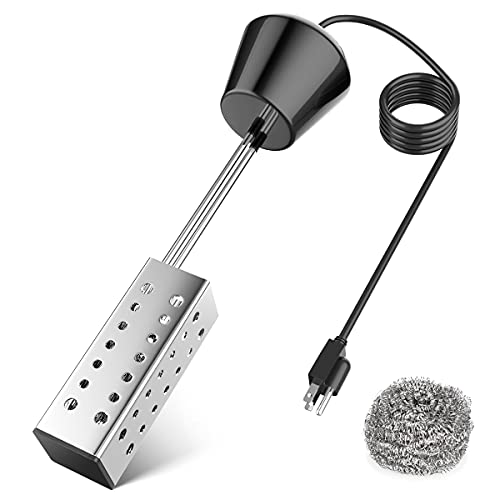
When water takes too long to warm up, some pool owners look for shortcuts and consider small portable bucket immersion heaters. You may see small 1500-watt electric immersion heaters sold online with stainless steel guards, often advertised for heating five gallons of water in a bucket or small basin. It can be tempting to drop one or two of these portable heaters into your pool or spa to help things along, but doing so is both ineffective and hazardous.
Backyard swimming pools hold thousands of gallons of water. A standard 1500-watt heating element puts out roughly 5,100 BTUs of heat per hour. A typical residential pool heater puts out anywhere from 100,000 to 400,000 BTUs. Dropping a 1500-watt bucket heater into a 15,000-gallon pool is like trying to warm your living room with a birthday candle. It will not register on your pool thermometer, yet it introduces severe electrical dangers.
Real swimming pool equipment requires dedicated, sealed electrical lines tied into an outdoor GFCI outlet (a protected ground-fault outlet with a weatherproof cover) and bonded properly to ground. Running extension cords to drop submersible bucket heaters into a swimming pool creates an immediate electrocution hazard for humans and pets. Never place portable immersion heaters into a full pool, and never let anyone enter the water while an electrical cord or plug-in device is submerged. If your permanent pool heater or heat pump stops working, cuts out, or repeatedly trips your breaker, turn off the power at the service panel and call a certified pool professional or licensed electrician to inspect the unit safely.
Choosing Solar Blankets and Surface Covers to Speed Up Heating
If you want to speed up your heating times, adding passive surface gear is the most cost-effective upgrade you can make. These products work alongside your heater or heat pump (an electric heater that pulls warmth from outdoor air) to stop warmth from escaping while collecting free energy from the sun. Before you choose a cover style for your pool, consider your pool layout, who will handle the cover, and how you use your pool day to day.
Traditional bubble solar blankets offer the highest rate of heat retention. They consist of durable, UV-resistant vinyl packed with air bubbles that float flat across the water. Thick blankets retain heat exceptionally well overnight, but they can be heavy to handle without a reel roller. For an irregular freeform pool, trimming a large blanket flush against the tile line prevents gaps where heat escapes.
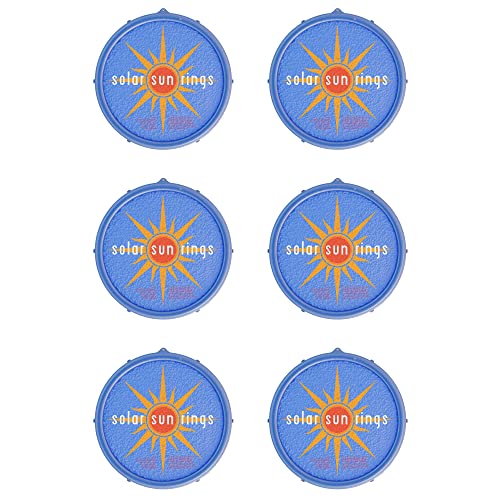
Floating solar rings are a convenient alternative for pool owners who struggle to roll up a full-sized blanket alone. These circular vinyl discs float independently on the surface and connect loosely to one another using small magnets. While they leave small triangular gaps between the curves where some water evaporates, they are lightweight, stack neatly on the deck, and can be removed in just a couple of minutes by one person.
Liquid solar blankets provide a completely hands-free option. These products use an invisible liquid that rises to the top of the pool and forms a microscopic film across the water surface. Swimmers cannot feel it, and it does not affect water balance or pool equipment. While a liquid shield does not trap as much heat as a physical bubble cover, it works around the clock without covering the water, making it a great option if you swim frequently or have high winds that blow physical blankets out of place.
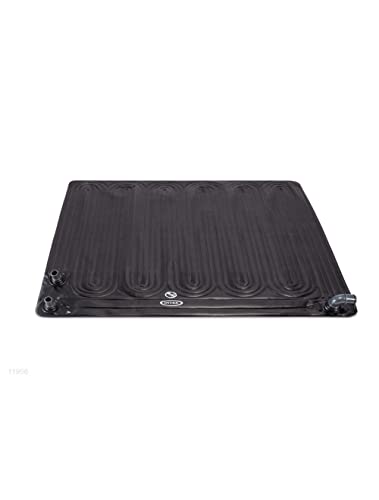
You can also pair surface covers with passive solar heating mats. These flat collector panels connect directly to your pool return lines, absorbing solar warmth and transferring it to the water before it flows back into the pool. Before purchasing a solar mat, verify that its required flow rate matches your pool pump horsepower and filter capacity. A mat that restricts water flow too tightly can cause high filter pressure and reduce skimming performance.

- VC Score8.2
BCP Score is a ranking system developed by bestcleanerproducts.com. BCP Score has no relationship or impact from any manufacturers or sales agent websites. Learn more
- BrandYOUTHTXY

- VC Score7.8
BCP Score is a ranking system developed by bestcleanerproducts.com. BCP Score has no relationship or impact from any manufacturers or sales agent websites. Learn more
- BrandMAV AquaDoc
- VC Score7.2
BCP Score is a ranking system developed by bestcleanerproducts.com. BCP Score has no relationship or impact from any manufacturers or sales agent websites. Learn more
- Brandcreekeley

- VC Score7.0
BCP Score is a ranking system developed by bestcleanerproducts.com. BCP Score has no relationship or impact from any manufacturers or sales agent websites. Learn more
- BrandSunHeater
- VC Score6.8
BCP Score is a ranking system developed by bestcleanerproducts.com. BCP Score has no relationship or impact from any manufacturers or sales agent websites. Learn more
- BrandSolar Sun Rings
- VC Score6.8
BCP Score is a ranking system developed by bestcleanerproducts.com. BCP Score has no relationship or impact from any manufacturers or sales agent websites. Learn more
- BrandIntex

- VC Score6.6
BCP Score is a ranking system developed by bestcleanerproducts.com. BCP Score has no relationship or impact from any manufacturers or sales agent websites. Learn more
- BrandTreela

- VC Score5.8
BCP Score is a ranking system developed by bestcleanerproducts.com. BCP Score has no relationship or impact from any manufacturers or sales agent websites. Learn more
- BrandGoFloats
Last update on 2026-10-08 / Affiliate links / Images, Product Titles, and Product Highlights from Amazon Product Advertising API
FAQs
How long does it usually take to raise pool water temperature?
Heating speed depends on the size of your heater, the total volume of water, outdoor air temperatures, and whether the pool is covered. A properly sized gas heater can raise pool water by 1 to 2 degrees Fahrenheit per hour, meaning an 8-degree boost takes around four to eight hours. An electric heat pump warms water more gradually, typically gaining 3 to 5 degrees over an entire day under warm, sunny conditions.
Can I speed up pool heating if I do not have a gas heater?
Yes, you can warm a pool significantly faster without a gas heater by combining a bubble solar blanket with smart pump timing. Run your filtration pump during the peak heat of the day to push sun-warmed surface water down to the pool floor, and keep the blanket on overnight to prevent the cool night air from stealing that heat back. Adding passive solar heating mats to your return plumbing can also add several degrees of heat without raising your electric bill.
Should the pool pump run on high or low speed while heating?
Your pump should run at a steady, moderate flow rate that satisfies the minimum flow requirements of your heater or heat pump. Running the pump on an extremely low speed might trip the heater's internal water pressure safety switch, causing the heater to shut off automatically. Conversely, running on maximum high speed wastes electricity without speeding up heat transfer. Check your heater manual for the recommended flow rate and set your variable-speed pump to maintain that baseline continuously.


How to Refinish a Fiberglass Pool

How Do You Keep Raccoons Out of Your Pool?

How to Fix Cyanuric Acid in Your Pool

How to Shape a Pool Cue Tip to Stop Miscues

12 Best Automatic Vacuum For Intex Above Ground Pool of 2026 To Keep Vinyl Floors Spotless

10 Best Automatic Pool Vacuum For Above Ground Pool of 2026 To End Manual Scrubbing

How Much Pool Clarifier Should You Use for Your Pool Size?

How Much Does a Pebble Tec Pool Cost to Build or Resurface?








