
How Much Does a Glass Pool Fence Really Cost?

Planning for an open, clear view of the water does not have to feel overwhelming. Glass fencing is a premium safety barrier, and the overall expense usually reflects the clean, modern look it delivers. Choosing free-standing panels supported only from the bottom creates a seamless view, but that setup requires specialized hardware that naturally raises the investment.
A few specific details will shift the final bill up or down. The largest difference comes from the panel style and patio surface. Securing hardware into a solid concrete deck is straightforward, but anchoring into soil or loose pavers requires pouring new concrete footings first. Every self-closing gate, corner turn, and safety latch also adds to the total. Understanding how these pieces work together makes it much easier to plan before talking to contractors.
Frameless Base Clamps Versus Semi-Frameless Posts
The total investment for a glass pool barrier depends first on the style of panels and hardware you choose. Glass pool barriers come in two distinct styles: fully frameless systems and semi-frameless systems. The visual difference is obvious at a glance, but the mechanical differences under the surface affect your material costs, shipping fees, and installation labor.
Frameless designs use free-standing glass panels supported only from the bottom. These panels do not connect to vertical metal posts between the panes. Instead, heavy panels sit inside spigots (metal base clamps bolted to the patio to grip the glass). Because each panel stands alone against backyard wind gusts, the panels must be exceptionally thick. Installers use heavy tempered glass (toughened safety glass that resists impacts and breaks into dull cubes). Thicker glass panels carry substantial weight, which drives up freight costs and requires two people just to carry a single pane safely across your yard. The base clamps must be forged from high-grade stainless steel to resist rust from pool splashes and rain, making the hardware for frameless barriers the most expensive option on the market.
Semi-frameless systems take a different structural approach. These barriers feature glass panels supported by metal posts on each side. The posts bolt into the patio and run the full height of the fence line, holding the glass along its vertical edges. Because the metal posts absorb the wind and structural loads, the glass panels do not need to be as thick as frameless glass. Thinner glass panels lower the raw material cost and make freight delivery easier. The metal posts are usually made of powder-coated aluminum or stainless steel. While semi-frameless barriers cost less than fully frameless designs, they introduce visible vertical lines around your pool. If your main goal is an open, uninterrupted sightline across the water, those metal uprights slightly break up the clean view.
Major Cost Drivers: Deck Materials, Drilling, and Safety Gates
The layout of your backyard and the surface around your water line play a massive role in your final bill. Many homeowners assume the panels make up the bulk of the expense, but site preparation and hardware installation can quickly match the price of the glass itself.
Your patio surface is the single biggest labor variable. Anchoring a glass fence requires core drilling (cutting neat round holes into concrete to anchor fence hardware). If you are building on a thick, level slab after reviewing how much a concrete pool costs to build, the installation is straightforward. A specialized diamond-tipped drill bores round holes directly into the concrete, and the base clamps are anchored firmly with structural grout or anchoring epoxy. The process is clean, predictable, and relatively fast.
Pavers, natural stone, and dirt create extra work that inflates your labor bill. Brick or concrete pavers sit on sand and crushed rock. They have no rigid grip on the earth below them. If you bolt a heavy, tall glass clamp into a loose paver, the weight of the glass or a strong gust of wind will pull the paver loose and tip the panel over. Installers must lift the pavers, dig deep post holes below the frost line, pour solid concrete footings, wait for the concrete to set, and then drill into the newly poured footings. They must also cut each paver to fit back around the newly mounted clamps. This masonry prep work adds substantial labor time to your contractor bid.
Access gates are another major expense. Every pool fence must have a self-closing, self-latching gate to prevent young children from wandering into the water unattended. A glass gate cannot use standard wooden gate latches. It requires precision-machined stainless steel hinges, hydraulic soft-close cylinders, and magnetic latches that close reliably without slamming or shattering the glass. Even when you are budgeting for a cocktail pool with a smaller perimeter, adding multiple entry gates can quickly raise the total hardware bill.
Before you accept any contractor bid, verify whether your yard requires these common cost drivers:
- Underground concrete footings beneath pavers, gravel, or lawn turf.
- Specialized diamond drilling through delicate ceramic tile or natural flagstone.
- Custom-cut glass panels to step down hills, slopes, or patio stairs.
- Upgraded hydraulic self-closing hinges and magnetic pool safety latches.
- Long-distance freight delivery and crate offloading for heavy glass crates.
DIY Modular Glass Kits Versus Hiring Professional Installers
Pre-cut modular glass kits are available for homeowners who want to save on labor by handling the work themselves. These kits include standard rectangular glass panels, base clamps, rubber alignment gaskets, and mounting bolts. While doing the work yourself cuts out contractor labor, glass pool fencing is one of the most demanding backyard projects you can take on.
Tempered glass cannot be cut, drilled, or altered once it leaves the factory. If you order modular panels and find that your pool deck is three inches narrower than your measurements, you cannot trim a panel to fit. Trying to cut tempered glass causes it to pop instantly into small pieces. You must measure every straight run and corner with exact precision before ordering. Handling the panels is also nerve-wracking. While the face of tempered glass can handle stray soccer balls, its corners are fragile. If you set a panel down too hard on a stone patio, the edge can strike the masonry and shatter the entire piece in your hands.
Achieving a clean, straight fence line requires advanced leveling. If a base clamp tilts by even one millimeter at the patio surface, that tilt multiplies across the height of the fence. By the time you reach the top edge, you will have an uneven gap between panels that looks crooked and out of line. Professional crews bring heavy suction cups, laser levels, alignment shims, and high-strength anchoring grout. They know how to secure the hardware so the panels remain perfectly vertical for years.
You also need to think about local safety codes. Most towns require swimming pool barriers to stand at least 48 inches tall from the ground, with tight gaps between panels that do not allow a four-inch sphere to pass through. Gates must swing outward, away from the water, and latch automatically from any open position. If a DIY installation fails a local building inspection, removing and re-drilling anchors into your patio is difficult and expensive. For complicated yard layouts, sloped decks, or loose ground, hiring a professional installer is the safest choice.
Removable Mesh Safety Fences as an Affordable Alternative
If glass fencing quotes exceed your backyard improvement budget, removable mesh pool safety fencing provides a reliable, budget-friendly barrier. Mesh fencing is designed specifically to prevent accidental pool access for children and pets without the structural demands, heavy freight costs, and intensive masonry work that glass requires.
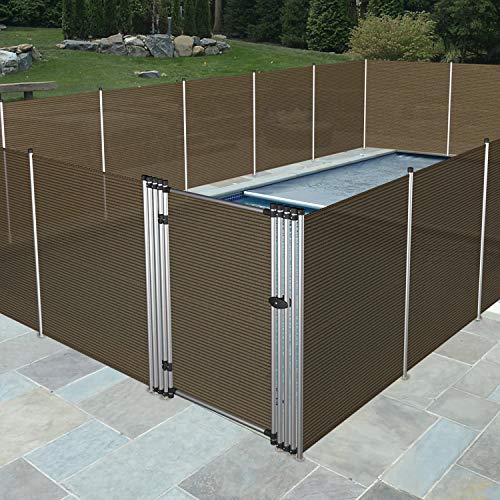
A mesh safety fence uses tightly woven synthetic fabric stretched between lightweight metal poles. The fence arrives in manageable sections that roll up easily. Installation requires drilling small, neat holes into your concrete deck. The installer places plastic or composite sleeves into the holes, and the support poles slide directly into those sleeves. The tension between the panels creates a firm, upright barrier that children cannot climb because the flexible fabric offers no footholds or crossbars to step on.
Flexibility is the biggest practical advantage of a mesh pool fence. When you host a party for adults, you can unlatch the sections, lift the poles out of their deck sleeves, roll up the fence, and store it in your shed or garage in less than fifteen minutes. The only things left visible on your patio are small, flush-mounted sleeve caps that you can walk across safely. When the party ends and children return to the backyard, you slide the poles back into the sleeves and latch the tension hooks in minutes.
When selecting a mesh safety barrier, look for thick-walled aluminum poles that resist bending from wind or physical contact. Ensure the fabric is UV-resistant so it will not degrade under hot summer sun, and look for double-stitched border seams that maintain structural tension over time. Pairing the fence with a self-closing, key-lockable walk-through gate ensures your pool perimeter remains secure without stretching your home improvement budget.
- VC Score9.2
BCP Score is a ranking system developed by bestcleanerproducts.com. BCP Score has no relationship or impact from any manufacturers or sales agent websites. Learn more
- BrandAmgo

- VC Score9.0
BCP Score is a ranking system developed by bestcleanerproducts.com. BCP Score has no relationship or impact from any manufacturers or sales agent websites. Learn more
- BrandEnclo Privacy Screens

- VC Score9.0
BCP Score is a ranking system developed by bestcleanerproducts.com. BCP Score has no relationship or impact from any manufacturers or sales agent websites. Learn more
- BrandCIELO COLORIDO
- VC Score8.4
BCP Score is a ranking system developed by bestcleanerproducts.com. BCP Score has no relationship or impact from any manufacturers or sales agent websites. Learn more
- BrandZippity Outdoor Products

- VC Score8.4
BCP Score is a ranking system developed by bestcleanerproducts.com. BCP Score has no relationship or impact from any manufacturers or sales agent websites. Learn more
- BrandLAGUBCHR

- VC Score8.0
BCP Score is a ranking system developed by bestcleanerproducts.com. BCP Score has no relationship or impact from any manufacturers or sales agent websites. Learn more
- BrandVEVOR

- VC Score7.8
BCP Score is a ranking system developed by bestcleanerproducts.com. BCP Score has no relationship or impact from any manufacturers or sales agent websites. Learn more
- BrandHappybuy

- VC Score7.8
BCP Score is a ranking system developed by bestcleanerproducts.com. BCP Score has no relationship or impact from any manufacturers or sales agent websites. Learn more
- BrandHappybuy

- VC Score7.8
BCP Score is a ranking system developed by bestcleanerproducts.com. BCP Score has no relationship or impact from any manufacturers or sales agent websites. Learn more
- BrandPexFix
- VC Score7.8
BCP Score is a ranking system developed by bestcleanerproducts.com. BCP Score has no relationship or impact from any manufacturers or sales agent websites. Learn more
- BrandWindscreen4less

- VC Score-
BCP Score is a ranking system developed by bestcleanerproducts.com. BCP Score has no relationship or impact from any manufacturers or sales agent websites. Learn more
- BrandElevens
Last update on 2026-10-08 / Affiliate links / Images, Product Titles, and Product Highlights from Amazon Product Advertising API
FAQs
How often does glass pool fencing need to be cleaned?
Glass pool fencing generally needs cleaning every two to four weeks to stay completely clear. Pool splashes leave behind chlorine spots, salt residue, and mineral deposits that bake into the glass under direct sunlight. Washing the panels with warm water, mild liquid soap, and a rubber squeegee keeps the glass clean. Applying a protective glass sealant can also reduce water spots and make routine rinsing faster.
Can tempered glass panels break from strong backyard winds?
Properly installed tempered glass panels rarely break from wind alone because thick architectural glass is designed to handle heavy outdoor gusts. Most panels are engineered to withstand severe weather when they are anchored into solid concrete with correct base clamps. Damage usually occurs only if an unsecured patio umbrella, flying tree branch, or hard lawn object directly strikes the fragile edge or corner of the panel during a storm.
Can a glass pool fence be installed on a wooden deck?
You can install a glass pool fence on a wooden deck, but you cannot bolt the base clamps directly into thin deck boards. The weight of the glass will cause single deck boards to twist, sag, or pull loose over time. Installers must go underneath the deck surface to add solid timber blocking and heavy structural framing directly beneath each clamp location. This added framework transfers the weight of the glass securely into the deck's main support beams.


How to Refinish a Fiberglass Pool

How Do You Keep Raccoons Out of Your Pool?

How to Fix Cyanuric Acid in Your Pool

How to Shape a Pool Cue Tip to Stop Miscues

12 Best Automatic Vacuum For Intex Above Ground Pool of 2026 To Keep Vinyl Floors Spotless

10 Best Automatic Pool Vacuum For Above Ground Pool of 2026 To End Manual Scrubbing

How Much Pool Clarifier Should You Use for Your Pool Size?

How Much Does a Pebble Tec Pool Cost to Build or Resurface?








