
How Much Does a Pool Fence Cost in 2026?

Securing a backyard swimming area does not have to break the household budget or cause endless stress. Setting up a protective border can stay quite affordable, because handling the project yourself with modular mesh sections keeps costs low, while hiring a specialized contractor for custom drilling and labor increases the total considerably. Putting up your own barrier usually takes just a weekend of work and some basic planning, giving you solid peace of mind without a massive financial surprise.
The final bill mostly comes down to the total distance around the water and the ground underneath. Drilling holes into standard concrete needs different hardware than setting anchors into pavers or loose dirt. Choosing a self-closing gate or extra safety latches also nudges the overall expense up or down. A few simple measurements will help you map out the right setup for your yard and avoid unexpected expenses along the way.
Compare DIY Mesh Kits and Professional Crews Before You Pick a Budget
The biggest factor in your total bill comes down to who holds the drill. Removable mesh safety fence kits bought online give you complete control over your spending. When you buy the sections yourself, you pay only for the materials, hardware, and any tools you need to rent for the afternoon. A self-installed barrier lets you protect your pool deck at a fraction of what an outside company charges. For many families, doing the work over a weekend makes child safety accessible right away without waiting weeks for contractor scheduling.
Hiring a specialized fence contractor changes the math completely. A professional crew does not just bring mesh panels. They bring heavy commercial core drills, precision alignment jigs, and years of experience boring perfectly straight holes into cured concrete. Professional pool fence companies usually charge a bundled rate per linear foot that includes the mesh, custom border cuts, aluminum poles, child-proof latches, and dedicated labor fees. If your patio has complex curves, multiple elevation changes, or delicate custom stonework, paying an experienced crew helps prevent expensive damage to your patio slabs.
Labor rates also swing dramatically depending on where you live and the time of year. During the spring rush, pool contractors charge premium rates because their schedules fill up fast. If your pool deck is straightforward flat concrete, tackling the job on your own saves the most money. But if your pool surround has custom brick, steps, or retaining walls, contractor labor can easily double or triple the total project cost compared to buying boxed kits.
Before deciding, think about your comfort level with heavy tools. Drilling dozens of straight holes into hard concrete takes patience and physical effort. If you have the time and basic tool skills, a DIY kit keeps hundreds of dollars in your pocket. If the thought of running a heavy hammer drill makes you nervous, hiring a licensed installer gives you peace of mind that every pole sits tight and plumb.
Measure Your Pool Deck Carefully to Calculate Exact Footage
Underestimating the perimeter of your pool area is the most common budgeting mistake. Ordering too few sections leaves dangerous gaps, while ordering too much wastefully runs up your shipping and material costs. Follow these steps to map out your layout and figure out exactly how many linear feet (the total distance measured around the pool area) you need to purchase.
- Mark your safety perimeter back from the water edge. Never plan a fence directly along the pool coping. You want at least two to three feet of open walking space between the water and the fence line. This walkway gives people room to walk safely, allows room to pull pool covers, and prevents someone from accidentally tumbling into deep water if they trip near the barrier.
- Map the fence line using a long tape measure or garden hose. Lay a flexible garden hose or long rope along the exact line where you want the fence to sit. A hose bends naturally around corners and shows you real-world sightlines. Once you like the path, stretch a long tape measure along that line to record the total distance in feet.
- Identify your gate location and clear swing path. Choose a flat, wide area of the deck for your entryway, preferably where you have a direct sightline from your back patio door. Make sure the gate has ample clearance to swing outward, away from the pool water, without banging into patio furniture, planters, or house walls.
- Divide your total distance by section length and round up. DIY mesh fences commonly come in standard 12-foot or 24-foot sections. Divide your total measured footage by the length of the kits you are buying. If your perimeter measures 68 feet, six 12-foot sections give you 72 feet of fencing. Having a few feet of extra mesh lets you trim custom sections to fit your exact deck layout cleanly.
When you measure your deck, take note of changes in surface materials. If half of your fence line sits on poured concrete and the other half crosses grass or dirt, note those separate distances. Surface transitions change the hardware you need, which directly changes your final material bill.
Account for Tool Rentals, Dirt Sleeves, and Safety Gates Early
The price tag on a box of fence panels rarely covers everything you need to finish the job. Small accessory items and specialized equipment add up quickly if you do not plan for them ahead of time. Use this checklist to budget for the extra gear that makes the installation secure and safe.
- Rotary hammer drill rental: A standard household cordless drill cannot drill dozens of deep holes into hard concrete. You need a heavy-duty rotary hammer drill. Most local hardware stores and equipment rental yards rent these out by the half-day or full-day. Renting one is inexpensive, but it is an extra cost you must include in your DIY budget.
- Masonry drill bit: You need a dedicated masonry bit (a drill bit designed for drilling holes in concrete) sized to match your pole sleeves, typically 5/8-inch or 7/8-inch in diameter. These bits wear down as you bore through tough stone and rebar. Buying one or two fresh bits ensures clean, precise holes without burning out your rental drill.
- Deck sleeves and ground hardware: Fence poles do not slide directly into bare concrete holes. They sit inside a deck sleeve (a plastic insert placed into a drilled hole to hold a fence pole). While standard kits come with sleeves for concrete, installing poles into grass, mulch, or gravel requires specialized 14-inch dirt sleeves that anchor deep into the soil. If your barrier crosses soft ground, these long sleeves will add to your supply bill.
- A dedicated self-closing gate: Many starter kits rely on manual safety hooks between mesh sections to create an opening. However, for true safety and code compliance, a self-closing gate (a gate that swings shut and latches on its own using springs) is an essential upgrade. A self-closing gate includes a rigid metal frame, tension hinges, and a magnetic safety latch that keeps curious toddlers out if someone forgets to close the gate behind them.
- Hole drilling guide template: Keeping your drill perfectly straight matters. If you drill holes at slight angles, the fence poles will lean, causing the mesh fabric to wrinkle and sag. Many manufacturers sell inexpensive plastic or wooden drilling guides that keep your bit at a true 90-degree angle.
Match Your Fence Style to Whether Your Pool Is Inground or Above-Ground
The design of your swimming pool plays a huge role in what type of barrier you need and how much you have to spend. Inground pools require a standalone barrier anchored into the patio or surrounding yard. These fences must support their own tension across long spans, using sturdy aluminum poles and woven mesh fabric to stop children or pets from reaching the edge. Because inground setups require drilling into hard patio decking or securing deep ground spikes, material and tool costs reflect that heavy-duty installation.
Above-ground pools work under completely different structural rules. If your pool has rigid exterior walls that sit four feet above the ground, the pool structure itself acts as part of the safety barrier. In many cases, you do not need to surround the entire perimeter of the yard. Instead, you can install resin safety fence kits that mount directly to the top rails and upright posts of the pool structure. If you are assessing the lifespan and structure of your pool, reviewing how long vinyl pools and liners last can help you decide how much to invest in permanent add-on barriers.
These modular above-ground kits usually come in 24-inch high vinyl sections sold in small packs of two, three, or eight pieces. You simply attach them to the existing vertical pool posts using brackets and screws. This setup eliminates the need for renting rotary hammer drills or boring holes through concrete slabs. As a result, outfitting an above-ground pool often costs considerably less than fencing an inground pool of the same water capacity.
For above-ground pools, your main expense is often securing the entry ladder or deck stairs. A locked safety ladder with an enclosure or a self-closing gate at the deck stairs provides an affordable way to block entry without buying hundreds of feet of fencing. Compare your pool structure to local requirements so you do not buy full-height ground fencing when a simple rail-mounted barrier satisfies the law.
Check Your Local Building Codes Before Purchasing Any Materials
Never order fence panels or start drilling holes until you consult your local municipal building department or homeowners association. Most cities and counties enforce strict residential swimming pool barrier codes designed to prevent accidental drowning. If you put up a fence that fails to meet local regulations, an inspector can fine you and require you to tear the barrier down and start over.
Barrier codes generally govern several specific fence details:
- Minimum fence height: Most jurisdictions require safety fences to stand at least 48 inches (4 feet) tall, measured from the ground outside the pool enclosure. Some regions require 60 inches (5 feet). Buying 4-foot fencing when your local municipality mandates 5-foot fencing is an expensive error.
- Ground clearance: The gap between the bottom of the mesh fabric and the pool deck usually cannot exceed two to four inches. This prevents small children and pets from squeezing underneath the barrier.
- Gate latch requirements: Building codes almost universally require pool access gates to be self-closing and self-latching. The release latch must typically sit at least 54 inches above the ground, out of reach of young children, and the gate must swing outward away from the water.
- Permit and inspection fees: Many towns require a pool safety barrier permit before installation. These permits often carry a nominal application fee and require a brief visit from a city code officer to confirm that your barrier meets local structural rules.
If you have an existing screen enclosure or are budgeting for patio upgrades, reviewing the costs to rescreen a pool cage might give you another way to enclose the pool space securely. Always check your town website or call your local building official first. Spending ten minutes confirming local barrier standards protects your budget and ensures your pool area is completely secure before you spend a single dollar.
Choose the Right Safety Barrier Kit for Your Yard Setup
Selecting the best pool safety barrier comes down to balancing durability, yard layout, and installation convenience. When comparing removable mesh systems, pay close attention to the fabric construction and pole materials. Look for woven mesh built from high-density, weather-resistant materials like vinyl-coated polyester or tight synthetic grid fabric. These fabrics let air pass through freely, which reduces wind load during bad weather while remaining transparent enough so you can see straight through to the water from your patio door.
Pole strength is equally important for stability and long-term tension. Choose kits made with powder-coated aluminum poles reinforced with stainless steel or aluminum foot pins. Solid foot pins resist bending when pulled tight by section latches, and powder coating prevents corrosion from pool chemicals and lawn sprinklers. Ensure the package includes durable plastic deck sleeves and matching ground caps so you can cover the holes neatly whenever you take the fence down for adult gatherings.
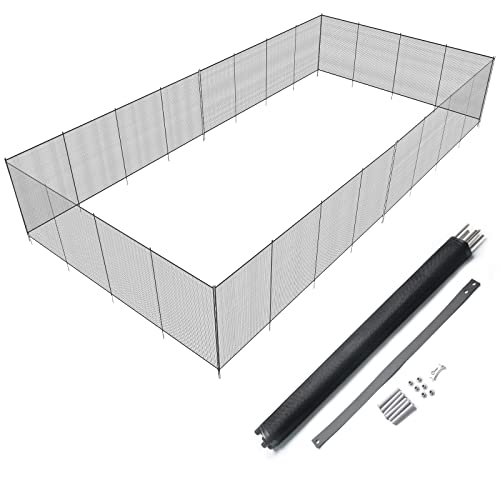
Finally, examine the hardware included in the box. Reliable kits supply sturdy hook-and-eye latches that hold sections together securely under tension, along with clear measuring templates to help you place your drill holes at exact intervals. If your perimeter crosses soft lawns, packed dirt, or loose gravel, make sure the manufacturer offers extended ground sleeves designed specifically for non-concrete installations. Choosing a modular kit with flexible section sizes ensures you can customize the layout to fit your pool deck perfectly.

- VC Score8.6
BCP Score is a ranking system developed by bestcleanerproducts.com. BCP Score has no relationship or impact from any manufacturers or sales agent websites. Learn more
- BrandLAGUBCHR

- VC Score8.6
BCP Score is a ranking system developed by bestcleanerproducts.com. BCP Score has no relationship or impact from any manufacturers or sales agent websites. Learn more
- BrandAqua Select

- VC Score7.8
BCP Score is a ranking system developed by bestcleanerproducts.com. BCP Score has no relationship or impact from any manufacturers or sales agent websites. Learn more
- BrandVEVOR

- VC Score7.8
BCP Score is a ranking system developed by bestcleanerproducts.com. BCP Score has no relationship or impact from any manufacturers or sales agent websites. Learn more
- BrandHappybuy

- VC Score7.6
BCP Score is a ranking system developed by bestcleanerproducts.com. BCP Score has no relationship or impact from any manufacturers or sales agent websites. Learn more
- BrandLife Saver Pool Fence

- VC Score6.8
BCP Score is a ranking system developed by bestcleanerproducts.com. BCP Score has no relationship or impact from any manufacturers or sales agent websites. Learn more
- BrandElevens
- VC Score-
BCP Score is a ranking system developed by bestcleanerproducts.com. BCP Score has no relationship or impact from any manufacturers or sales agent websites. Learn more
- BrandFunmit

- VC Score-
BCP Score is a ranking system developed by bestcleanerproducts.com. BCP Score has no relationship or impact from any manufacturers or sales agent websites. Learn more
- BrandIOKUKI
Last update on 2026-10-08 / Affiliate links / Images, Product Titles, and Product Highlights from Amazon Product Advertising API
FAQs
Can you install a mesh pool fence on pavers without concrete?
Yes, but you cannot simply drill into thin patio pavers resting on loose sand. The tension from the fence poles can crack individual pavers or pull them loose over time. To secure a fence across pavers, you must either drive extra-long 14-inch dirt sleeves through the sand base into the ground beneath, or core-drill through the pavers into concrete footings poured underneath.
How long does it take to install a DIY pool fence?
A typical residential installation around a medium-sized pool takes between four and eight hours of work. Drilling the concrete holes takes up the bulk of that time, especially if your deck contains hard aggregate. Once all the deck sleeves are tapped into place, unrolling the mesh sections and hooking the latches together takes less than an hour.
Can an adult easily remove the fence sections when kids are not around?
Yes, removable mesh fencing is specifically designed for quick removal by an adult. By unhooking the tension latch between two sections and leaning the poles slightly inward to release tension, an adult can slide the poles out of their deck sleeves in minutes. The mesh sections roll up into lightweight bundles for compact storage, and plastic caps snap into the deck holes to keep debris out.
Does installing a pool fence lower homeowner insurance costs?
Having a secure, code-compliant pool fence can help reduce insurance risk and might qualify you for lower liability premiums, depending on your carrier. Many insurance companies require an approved barrier with a self-closing latch before they will even issue coverage for a property with a swimming pool. Contact your insurance agent to see what specific safety credits or requirements apply to your policy.


How to Refinish a Fiberglass Pool

How Do You Keep Raccoons Out of Your Pool?

How to Fix Cyanuric Acid in Your Pool

How to Shape a Pool Cue Tip to Stop Miscues

12 Best Automatic Vacuum For Intex Above Ground Pool of 2026 To Keep Vinyl Floors Spotless

10 Best Automatic Pool Vacuum For Above Ground Pool of 2026 To End Manual Scrubbing

How Much Pool Clarifier Should You Use for Your Pool Size?

How Much Does a Pebble Tec Pool Cost to Build or Resurface?


