
How Much Acid Should You Add to Your Pool?

Check your water balance numbers before opening the bottle. Pouring blindly can quickly crash your water chemistry, which corrodes metal heater parts and ruins vinyl liners. As a safe standard, a 10,000-gallon pool needs roughly one to two cups of liquid muriatic acid to bring high pH down by 0.2 points. Owners using dry acid granules typically need 12 to 16 ounces for that same gentle drop.
That exact amount shifts based on a few key factors: your total pool volume in gallons, how far your reading sits above the ideal 7.2 to 7.6 zone, and your total alkalinity level. Total alkalinity acts as a buffer that resists changes, so high alkalinity means you need slightly more acid to move the needle. The type of acid also matters, since concentrated liquid acts faster than dry granules. Here is how to calculate your exact dose and pour it safely.
Acid Dosage Rules by Pool Volume and Target Drop
Adding acid to your swimming pool brings high pH down into the ideal range between 7.2 and 7.6. When your water drifts above 7.8, chlorine loses its sanitizing power, water turns cloudy, and crusty white mineral buildup (scale) begins to coat your waterline tiles, ladders, and plumbing. Lowering that number requires either liquid muriatic acid (a strong liquid pool acid) or sodium bisulfate (a dry acid powder sold as granular pH decreaser).
As a baseline rule of thumb, a typical 10,000-gallon pool requires about 1 to 2 cups (8 to 16 fluid ounces) of liquid muriatic acid to drop the pH score by roughly 0.2 points. If you prefer working with dry acid granules instead of liquid jugs, you will need approximately 12 to 16 ounces by weight of dry sodium bisulfate to achieve that same 0.2 drop in 10,000 gallons. Never try to drop your pH by more than 0.4 points in a single dose, because dropping it too fast shocks the water balance and risks damaging equipment.
Your exact dosage scales directly with the volume of water inside your pool. Here is how much liquid muriatic acid or dry acid powder you should measure based on common residential pool sizes to lower your reading by 0.2:
- 5,000-gallon pools (small above-ground pools or plunge pools): Add 4 to 8 fluid ounces (one-half to 1 cup) of liquid muriatic acid, or 6 to 8 dry ounces of sodium bisulfate powder.
- 10,000-gallon pools (medium above-ground or compact in-ground pools): Add 8 to 16 fluid ounces (1 to 2 cups) of liquid muriatic acid, or 12 to 16 dry ounces of sodium bisulfate powder.
- 15,000-gallon pools (average in-ground pools): Add 12 to 24 fluid ounces (1.5 to 3 cups) of liquid muriatic acid, or 18 to 24 dry ounces of sodium bisulfate powder.
- 20,000-gallon pools (large in-ground pools): Add 16 to 32 fluid ounces (1 pint to 1 quart) of liquid muriatic acid, or 24 to 32 dry ounces of sodium bisulfate powder.
- 30,000-gallon pools (extra-large residential pools): Add 24 to 48 fluid ounces (1.5 to 3 pints) of liquid muriatic acid, or 36 to 48 dry ounces of sodium bisulfate powder.
The type of acid you choose comes down to ease of handling versus cost. Liquid muriatic acid works immediately and costs less per treatment, but it releases harsh fumes and can burn skin if spilled. Dry acid powder comes in buckets or bags, produces no caustic fumes, and carries a much lower splash risk, though it takes slightly longer to dissolve and costs more per pound. If you run a salt system, keep in mind that salt cells naturally drive pH upward as they operate. You can learn more about this reaction by reviewing how salt pools work to produce chlorine during daily circulation.
Your total alkalinity level (the water buffer that keeps your pH from bouncing wildly) dictates how stubbornly your pool resists changes in pH. If your total alkalinity sits high (above 120 parts per million), the water acts like a stiff spring, absorbing acid without shifting your pH reading very far. If your alkalinity sits low (under 80 parts per million), that protective buffer is weak, meaning even a small splash of acid can cause your pH to plummet into dangerous, corrosive territory. Always measure your alkalinity before picking your acid dose.
How to Measure Your Water and Add Acid Safely
Before you open any chemical container, confirm the exact state of your pool water so you never guess at dosage amounts. Pouring chemicals blindly can ruin your pool finish, corrode metal components, or leave the water unsafe for family members.
- Total pool water volume: Verify your pool capacity in gallons by checking your installation paperwork or multiplying length by width by average depth by 7.5 for rectangular pools.
- Current pH reading: Measure your water balance with fresh reagent drops or dip strips to confirm your exact starting point above 7.6.
- Total alkalinity level: Check that your alkalinity buffer sits between 80 and 120 parts per million so you know whether your water will resist or accelerate the pH drop.
- Chemical shelf life: Confirm that your liquid acid or dry granules have been sealed tightly and stored properly out of extreme heat, following guidelines on how long pool chemicals last in outdoor storage sheds.
- Personal safety equipment: Put on wrap-around safety goggles, heavy chemical-resistant rubber gloves, long pants, and closed-toe shoes before cracking open the container.
Once you verify these numbers and put on your protective gear, follow this step-by-step process to introduce the acid into the pool safely:
- Turn on your circulation pump: Switch your pool pump to high speed. Strong water movement is necessary to draw the acid away from the surface and disperse it evenly across the entire pool volume.
- Clear the pool: Confirm that no people or pets are in the water. Remove any floating thermometers, toys, and automatic pool cleaners so strong chemical pockets do not touch them.
- Dilute liquid acid in a bucket: Fill a clean 5-gallon plastic bucket three-quarters full with pool water. Carefully measure your liquid acid in a plastic measuring cup, then pour the acid into the water. Always add acid to water, never water to acid, because pouring water into raw acid creates a violent thermal reaction that can spit burning acid onto your face.
- Dissolve dry acid granules: If using dry sodium bisulfate, scoop the measured granules into a bucket of pool water. Stir gently with a clean plastic or wooden stick until the granules dissolve completely, leaving no gritty residue at the bottom of the bucket.
- Pour slowly near the deep-end returns: Carry the bucket to the deep end of the pool. Hold the rim low to the water surface to eliminate splashes, and slowly pour the diluted mixture directly into the path of a return jet. Walk along the edge of the deep end as you pour to spread the liquid across several feet of moving water.
- Rinse your bucket: Dip the empty bucket into the pool to rinse away chemical residue, pour that rinse water back into the deep end, and store your equipment in a dry, ventilated area.
Never pour acid into your skimmer basket. Concentrated acid drawn straight into the skimmer passes directly through your pump basket, rubber gaskets, pump impeller, filter, and pool heater before diluting. That high concentration eats metal heater cores and degrades rubber seals in a matter of minutes.
Waiting Times and What to Do If You Add Too Much Acid
After pouring acid, keep your pool pump running continuously for at least 2 to 4 hours. Swimmers must stay out of the pool during this circulation window. Swimming through an unmixed pocket of acid causes severe skin rashes, stinging eyes, and respiratory discomfort.
Wait at least 4 hours before measuring your water chemistry again, though waiting a full 8 to 12 hours gives you the most reliable reading. Measuring the water 15 or 30 minutes after adding acid produces a false reading because the chemical has not yet mixed throughout the entire volume of water. If you measure too soon and panic, you might add another dose of chemicals that sends your water completely out of balance.
If you accidentally pour too much acid and drive your pH below 7.0, you must act promptly to stop corrosion. Water with a pH below 7.0 turns acidic and corrosive. It strips copper from heater heat exchangers, etches plaster finishes, wrinkles vinyl liners, and eats metal screws and ladders.
To fix an acid overdose, you have two reliable options depending on what happened to your total alkalinity:
- Use surface aeration if alkalinity is normal: If your pH crashed but your alkalinity remains above 80 parts per million, point your return eyeball fittings toward the water surface to create rolling ripples, turn on deck jets, or run sheer descent waterfalls. Aeration drives carbon dioxide out of the water, which naturally raises your pH without changing your alkalinity level at all.
- Add sodium carbonate (pH increaser) if pH is severely low: If your pH dropped below 6.8, dissolve sodium carbonate (commonly labeled as soda ash or pH Up) in a bucket of pool water and pour it around the pool perimeter. For every 10,000 gallons of pool water, 6 to 8 ounces of sodium carbonate will raise your pH by roughly 0.2 points while also giving your alkalinity a small upward nudge.
- Use sodium bicarbonate (baking soda) if alkalinity crashed too: If both your pH and your total alkalinity dropped far below target ranges, add sodium bicarbonate. Baking soda primarily rebuilds your alkalinity buffer while gently lifting your pH back toward safe numbers.
After applying a corrective chemical to raise your water balance, let the pump circulate for another 4 hours before checking the water again. Make adjustments in modest increments rather than pouring a giant scoop of chemicals all at once.
Protecting Your Pool Cleaner and Equipment Around Acid
Routine water balance and routine debris cleaning work together to keep a pool inviting, but automated cleaning equipment must be shielded from harsh chemical spikes. When you pour acid into your pool, that chemical is significantly denser than plain pool water. Even with your circulation pump running on high, a concentrated ribbon of acid temporarily sinks toward the floor of the deep end before dispersing fully into the main body of water.
If you leave an automatic pool cleaner submerged while dosing acid, that cleaner can roll straight through that concentrated chemical zone. Concentrated acid degrades soft rubber tracks, drive belts, swivels, and silicone motor seals. Over several weeks, this exposure causes plastic housings to turn brittle and chalky, leading to cracked bodies and failed drive assemblies.
To avoid costly repairs, always pause and remove your automatic pool cleaner before adding liquid or dry acid. Whether you use a robotic cleaner that plugs into an outdoor GFCI outlet, a suction-side cleaner plugged into your skimmer, or a pressure-side cleaner running on a dedicated booster line, lift the machine out of the pool and place it safely on your deck. Leave the unit out of the pool for at least 2 to 4 hours while the pump blends the chemicals evenly.
When selecting a pool cleaner to complement your maintenance routine, focus on models built with chemical-resistant plastics and scrubbing brushes tailored to your interior finish. Concrete and rough plaster pools handle durable rubber skirts and stiff bristle brushes that scrub away mineral scale before it hardens. Smooth vinyl liners and slick fiberglass shells require softer foam rollers or pliable rubber tracks that grip walls without scratching the finish. Keeping your cleaner out of raw chemical clouds ensures those drive tracks and brush rollers remain flexible and functional for many seasons.

- VC Score9.4
BCP Score is a ranking system developed by bestcleanerproducts.com. BCP Score has no relationship or impact from any manufacturers or sales agent websites. Learn more
- BrandClorox

- VC Score9.4
BCP Score is a ranking system developed by bestcleanerproducts.com. BCP Score has no relationship or impact from any manufacturers or sales agent websites. Learn more
- BrandClorox

- VC Score9.2
BCP Score is a ranking system developed by bestcleanerproducts.com. BCP Score has no relationship or impact from any manufacturers or sales agent websites. Learn more
- BrandEcoClean Solutions

- VC Score9.2
BCP Score is a ranking system developed by bestcleanerproducts.com. BCP Score has no relationship or impact from any manufacturers or sales agent websites. Learn more
- BrandPool Mate

- VC Score9.0
BCP Score is a ranking system developed by bestcleanerproducts.com. BCP Score has no relationship or impact from any manufacturers or sales agent websites. Learn more
- BrandCPDI

- VC Score9.0
BCP Score is a ranking system developed by bestcleanerproducts.com. BCP Score has no relationship or impact from any manufacturers or sales agent websites. Learn more
- BrandIn The Swim
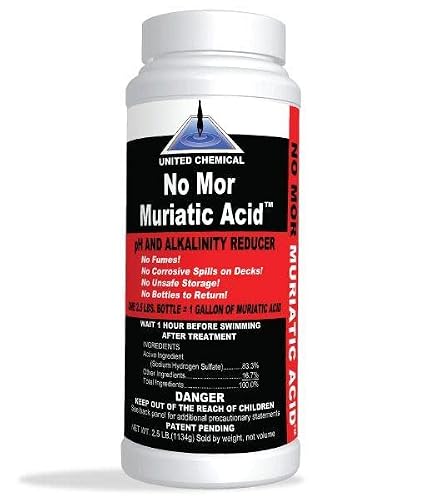
- VC Score8.2
BCP Score is a ranking system developed by bestcleanerproducts.com. BCP Score has no relationship or impact from any manufacturers or sales agent websites. Learn more
- BrandUnited Chemical

- VC Score8.0
BCP Score is a ranking system developed by bestcleanerproducts.com. BCP Score has no relationship or impact from any manufacturers or sales agent websites. Learn more
- BrandLEISURE POOL & SPA SUPPLY INC. LP
Last update on 2026-10-08 / Affiliate links / Images, Product Titles, and Product Highlights from Amazon Product Advertising API
FAQs
Can I pour acid directly into the pool skimmer?
No, you should never pour acid into the skimmer. Adding acid to the skimmer sends pure, concentrated chemical straight into your pump, filter, and heater before it can mix with pool water. That high concentration corrodes metal heater cores, degrades rubber pump gaskets, and damages plastic filter components within minutes.
Does high chlorine affect how much acid I need?
High chlorine levels do not change the physical amount of acid required to shift your pH, but they can trick your water testing kit. Very high chlorine levels bleach out liquid indicator reagents, giving you a false, artificially high pH reading on your color comparator block. Always check and adjust chlorine down to normal levels if your readings appear unnaturally bright purple or pink.
How should I store leftover muriatic or dry acid safely?
Store leftover acid containers in a cool, dry, well-ventilated outdoor shed or deck box away from direct sunlight. Never store muriatic acid near chlorine buckets, metal tools, or pool heaters, because escaping acid fumes will quickly rust nearby metal and can cause dangerous chemical reactions if chlorine vapors mix with acid vapors.


How to Refinish a Fiberglass Pool

How Do You Keep Raccoons Out of Your Pool?

How to Fix Cyanuric Acid in Your Pool

How to Shape a Pool Cue Tip to Stop Miscues

12 Best Automatic Vacuum For Intex Above Ground Pool of 2026 To Keep Vinyl Floors Spotless

10 Best Automatic Pool Vacuum For Above Ground Pool of 2026 To End Manual Scrubbing

How Much Pool Clarifier Should You Use for Your Pool Size?

How Much Does a Pebble Tec Pool Cost to Build or Resurface?


