
A full-size vacuum can feel like overkill when breakfast crumbs, dry soil, and stray debris are scattered across one room. The bissell featherweight powerbrush stick vacuum takes a lighter approach, giving routine cleanup enough brushing action to handle more than loose surface dust. Its slim shape is easier to pull out for a five-minute job, so small messes are less likely to sit around until the next major cleaning day. That convenience matters in tight homes where storage space is already spoken for.
The powered floor brush is the feature that separates this machine from a basic suction-only stick vacuum. Moving bristles help loosen grit, lint, and hair that can cling to low-pile rugs or settle into floor seams. Still, realistic expectations are essential because a compact corded stick vacuum isn’t built to replace a heavy upright on thick carpet, deep fibers, or a large multi-floor house. Its sweet spot is quick, frequent maintenance rather than marathon cleaning.
Hard floors often reveal every crumb, yet hauling a bulky cleaner from a closet can turn a tiny chore into a production. This model keeps things simpler with a lightweight body that’s easier to steer around dining chairs, plant stands, and narrow hallways. The cord removes battery anxiety, too, although it also means switching outlets as the job moves from room to room. That tradeoff won’t bother everyone, but it’s worth considering before buying.
Compact vacuums can be surprisingly handy around indoor plants, where dry potting mix and leaf fragments seem to appear minutes after watering or repotting. The powered brush roll can gather those dry particles from sealed flooring and nearby mats before they get tracked through the house. Wet soil should be allowed to dry first, since this is meant for dry debris rather than damp gardening messes. Fine powder may also call for slower passes and regular filter care.
Maintenance is fairly straightforward, though it shouldn’t be ignored. A small dirt cup fills faster than the bin on a full-size machine, so frequent emptying keeps airflow from fading halfway through a cleanup. Hair can also wind around a rotating brush, especially in homes with long hair or shedding pets, which makes occasional brush inspection part of the deal. Thankfully, the lighter frame makes those small upkeep tasks less awkward.
Noise, cord reach, and floor compatibility deserve a little thought before committing. A motorized brush can sound sharper than a simple handheld vacuum, and delicate surfaces may need gentler handling or confirmation from the flooring manufacturer. Thick rugs, plush carpet, and deeply embedded debris can expose the limits of a lightweight vacuum pretty quickly. But for everyday dirt on hard flooring and low-pile surfaces, the compact design can make cleanup feel far less tiresome.
The biggest benefit isn’t raw power. It’s the lowered barrier between seeing a mess and actually cleaning it. Instead of waiting until dirt spreads across several rooms, the vacuum can be grabbed, plugged in, and put to work with little fuss. That practical rhythm often keeps floors tidier than a stronger machine that rarely leaves the closet.

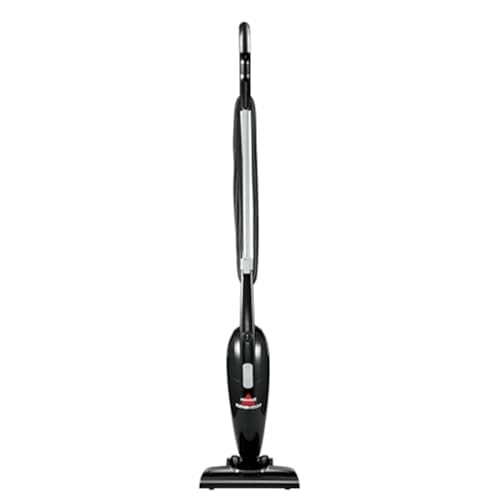
Powerful, convenient, and easy to use.Specific uses:hard floor,carpet,dual action.Form Factor: stickPowerful suction makes it great for quick pick ups with multipurpose versatilityVersatile cleaning three machines in one: a stick vacuum, handle vacuum, and stair vacuumWith a crevice tool for furnitu
Key specs
- Included Attachments
- Ships with a dedicated crevice tool for baseboards and tight gaps, making edge transitions straightforward.
- Dust Collection
- Bagless
Pros:
- Bagless stick build eliminates the need for replacement dust bags
- Included crevice tool helps clear edges and tight baseboard gaps
- Lightweight stick frame makes quick floor cleanups easy to maneuver
Cons:
- Standard stick nozzle lacks the motorized PowerBrush head found on model 2773A
- Cord length and exact dirt cup capacity must be verified before purchase

Powerful, convenient, and easy to usePowerful suction makes it great for quick pick ups with multipurpose versatilityVersatile cleaning three machines in one: A stick vacuum, handle vacuum, and stair vacuumWith a crevice tool for furniture and a floor nozzle for stairsClean hard floors and surface d
Key specs
- Floor Head Configuration
- Operates with a direct suction floor nozzle rather than a motorized brush roll, keeping maintenance simple on hard surfaces.
- Included Attachments
- Crevice tool
Pros:
- Lightweight stick body allows quick pickup across bare hard floors
- Dedicated crevice tool reaches into narrow corners and tight furniture gaps
- Bagless dirt collection avoids ongoing bag replacement chores
Cons:
- Uses a basic suction head without a powered brush roll for deeper carpet agitation
- Exact cord reach and run clearance must be checked on the manufacturer listing

Every Purchase Saves Pets. BISSELL proudly supports BISSELL Pet Foundation and its mission to help save homeless pets.LIGHTWEIGHT (10 LBS). Powerful suction in a lightweight and compact vacuum makes cleaning functional and easily maneuverable.FULL SIZE POWER, COMPACT DESIGN. Powerful suction in a li
Key specs
- Above-Floor Reach
- Features a quick release wand designed to transition instantly from carpet cleaning to dusting trim, furniture, and tight nooks.
- Form Factor
- Compact upright
Pros:
- Upright configuration delivers full size cleaning power in a compact apartment-friendly frame
- Quick release wand extends cleaning reach above floors without moving the base
- Turbo floor head system tackles stubborn debris across dorms and smaller living spaces
Cons:
- Larger upright footprint takes up more storage space than ultra-slim stick models
- Heavier profile than the basic Featherweight stick lineup

Every Purchase Saves Pets. BISSELL proudly supports BISSELL Pet Foundation and its mission to help save homeless pets..Runtime: 20.0 minutesCordless, Lightweight Vacuum. 10.8V lithium-ion battery provides up to 20 minutes of run time and charges in just 4.5 hours.Two-Way Folding Handle. Breaks down
Key specs
- Power Source
- Cordless battery
- Cordless Handling
- Eliminates power cord snags across open living areas, though total operating minutes between charges should be confirmed.
Pros:
- Cordless power source provides total freedom of movement without hunting for outlets
- Featherweight stick design stays easy to carry across stairs and multiple rooms
- Electric blue finish pairs with a streamlined body for easy storage
Cons:
- Battery run time and recharge duration are not listed and need verification
- Cordless battery system requires periodic recharging between cleaning sessions

Every Purchase Saves Pets. BISSELL proudly supports BISSELL Pet Foundation and its mission to help save homeless pets..600.0 wattsPowerful Motorized Brush Roll. Brush roll and powerful suction work great for quick and easy cleaning on multiple surfaces, including carpet, bare floors, stairs and upho
Key specs
- Floor Head Type
- Motorized PowerBrush
- Brush Roll Agitation
- The motorized PowerBrush nozzle agitates surface dirt on rugs and entry mats far better than passive suction floor heads.
Pros:
- Integrated PowerBrush head provides active agitation for area rugs and low carpets
- Maintains the nimble Featherweight stick profile for effortless daily steering
- Purpose-built stick vacuum design handles mixed floor debris without bulky upright weight
Cons:
- Corded stick operation requires staying within reach of an electrical outlet
- Brush roll shutoff capability and cord dimensions must be verified on the product page

Every BISSELL purchase helps save pets. BISSELL proudly supports BISSELL Pet Foundation and its mission to help save homeless pets.Dirt cup capacity - 480 ml. Powerful Cordless Cleaning—powered brush easily cleans hard floors, area rugs, and other hard-to-reach placesBattery lasts for up to 60 minut
Key specs
- Cleaner Type
- Turbo floor sweeper
- Quick Cleanup Utility
- Designed specifically for rapid bare-floor and rug sweeps between deep cleanings, skipping heavy vacuum assemblies entirely.
Pros:
- Turbo sweep mechanism quickly sweeps up crumbs and dry surface debris
- Slim, low-clearance design slides under tables and low furniture with minimal effort
- Lightweight sweeper chassis handles quick daily touchups without heavy suction motor noise
Cons:
- Floor sweeper design lacks suction and hose attachments for deep carpet or upholstery jobs
- Battery runtime and dirt tray capacity vary and must be confirmed prior to purchase
Last update on 2026-08-04 / Affiliate links / Images, Product Titles, and Product Highlights from Amazon Product Advertising API
Bissell Featherweight PowerBrush Stick Vacuum Review
A bulky vacuum can turn a two-minute spill into a chore nobody wants to start. The bissell featherweight powerbrush stick vacuum keyword may suggest a motorized brush model, but the product described here is the Bissell Featherweight 2033M, a straightforward suction-based cleaner built for quick pickups. Its appeal rests on lightweight handling, simple conversion, and enough versatility to cover sealed hard floors, low-pile carpet, stairs, furniture, and countertops. That distinction matters because buyers expecting aggressive carpet agitation may otherwise picture a different type of machine.
Bissell Featherweight 2033M
The Featherweight 2033M keeps the basic cleaning routine refreshingly uncomplicated. Plug it in, guide the floor nozzle across the mess, and empty the bagless dirt cup once the job is done. There’s no battery to charge, no collection bag to replace, and no complicated control panel demanding a manual beside it. For crumbs after breakfast, dry soil near a planter, or grit tracked across an entryway, that simplicity can be the whole ball game.
Its three-in-one layout gives the machine more reach than its slim body initially suggests. Used upright, it behaves like a stick vacuum for open floor areas; remove the handle and it becomes a handheld cleaner; attach the floor nozzle directly for a compact stair vacuum. That modular setup reduces the need to drag separate tools from a closet whenever dirt moves from the floor to a chair cushion. The conversion is practical rather than fancy, and that’s precisely why it feels useful.
The included crevice tool extends the handheld setup into narrow spaces around furniture, baseboards, and countertop edges. Dust tucked beside a sofa arm or crumbs wedged between cushions can be approached without wrestling the entire stick assembly into position. Still, the crevice attachment is a focused tool, not a substitute for a full accessory kit with upholstery brushes and specialized dusting heads. Anyone expecting a closet full of attachments will find the package fairly lean.
Quick Pickup Performance
Hard flooring is where this vacuum’s straightforward design makes the most sense. The floor nozzle can collect loose crumbs, dry cereal, hair, and everyday grit from sealed hard floors without requiring a heavy upright motor housing. Short cleaning passes around kitchen counters or dining areas feel less cumbersome because the machine is built around quick response rather than deep-cleaning theater. It won’t wash the floor or tackle damp debris, so wet plant soil and sticky spills need a different cleanup method.
Low-pile carpet and area rugs are also listed among its intended surfaces, though expectations should stay grounded. The nozzle can lift surface dirt, lint, and loose debris, but the provided description doesn’t mention a powered rotating brush roll. Deeply embedded hair, compacted grit, and thick carpet fibers generally demand stronger agitation than a lightweight suction-only format can provide. In plain English, it tidies the top layer well enough for routine upkeep, but it isn’t built for restorative carpet cleaning.
The product description emphasizes powerful suction for quick pickups, and that phrasing points to the correct use case. A small machine like this earns its keep by handling visible messes before they spread, not by replacing every full-size vacuum in a large home. The corded power supply also keeps performance independent of battery charge, which is handy during back-to-back room cleanups. The tradeoff, naturally, is outlet hopping and cord management as the cleaning path gets longer.
Countertops appear in the listed surface types, but the handheld configuration should be used thoughtfully. Dry crumbs and loose debris are fair targets, while fine powders may require slower passes so they don’t scatter. The hand vacuum mode makes elevated surfaces easier to reach, yet the nozzle and dirt-contact areas should be kept clean before moving from floors to food-preparation zones. A quick wipe between tasks prevents yesterday’s floor grit from hitching a ride onto the counter.
Handling, Storage, And Daily Use
Lightweight construction lowers the physical barrier to starting a small cleanup. Instead of hauling out a wide upright for a handful of crumbs, the slim stick form can be pulled from a narrow storage spot and put to work with little fuss. That matters in apartments, dorm-style rooms, small kitchens, and homes where every closet inch already has a job. The machine’s compact build also makes it easier to maneuver around dining chairs and plant stands.
Stairs often expose the awkward side of traditional vacuums, especially when a large body has to balance on a narrow step. Converting this model into a stair vacuum keeps the cleaning head and motor closer together, reducing the amount of equipment being managed at once. The floor nozzle for stairs offers broader pickup than the crevice tool, while the handheld body avoids a long stick handle bumping into railings. Even so, the power cord still needs attention so it doesn’t snag or trail underfoot.
Storage is another quiet strength. The machine doesn’t need space for replacement bags, a charging dock, or a bulky accessory caddy. Its compact footprint suits a utility corner or slim closet, though the exact storage fit will depend on whether the stick handle remains assembled. Keeping the crevice tool nearby is wise, since small accessories have a habit of vanishing into drawers at the exact moment they’re needed.
Dirt Cup And Maintenance Tradeoffs
The listed dirt cup capacity is 0.67 liter, which is reasonably generous for small pickups but still modest beside a full-size upright bin. Frequent debris collection, pet hair, or dry soil can fill the 0.67-liter dirt cup faster than expected, so emptying it before airflow drops is a sensible habit. Bagless disposal saves the cost of replacement bags, though it also places the user closer to the dust during emptying. Anyone sensitive to airborne debris may prefer to empty it outdoors or directly over a deep trash can.
Regular filter care helps a compact vacuum hold onto its suction. The supplied details don’t specify a maintenance schedule, so the safest approach is to inspect the filter whenever the dirt cup is emptied and follow the manufacturer’s cleaning instructions. A clogged filter can make a small vacuum feel weaker long before the motor itself is the problem. Fine dust, potting mix, and powdery debris deserve extra caution because they can load filtration surfaces quickly.
Hair and fibers can also collect around the floor opening even without a powered brush roll. A brief inspection after cleaning rugs or pet areas keeps the air path clear and prevents strands from building into a stubborn knot. The nozzle’s simple construction makes visual checks less intimidating, but sharp tools shouldn’t be used carelessly near plastic parts. Slow, routine maintenance beats waiting until suction falls off a cliff.
Where The Design Fits And Falls Short
The strongest case for this model is convenience with a clear scope. It handles hard floors, low-pile carpet, area rugs, furniture crevices, stairs, and countertop crumbs through a three-machine configuration. That range is genuinely useful in smaller spaces where storing separate appliances would be a headache. Its design rewards frequent light cleaning rather than occasional heavy-duty sessions.
The biggest limitation is the expectation gap created by the keyword. The bissell featherweight powerbrush stick vacuum wording implies powered brush agitation, while the supplied 2033M description focuses on suction, a floor nozzle, and a crevice tool. Shoppers dealing with thick carpet, embedded pet hair, or heavily trafficked rooms should recognize that difference before making a decision. A lighter cleaner can be easier to use, but easy handling doesn’t magically create deep-carpet muscle.
The cord brings its own mix of benefits and annoyances. Continuous power means no mid-clean charging pause, yet a cord can catch furniture legs, limit range, and require outlet changes. That corded reliability suits short, predictable cleaning routes better than long laps through multiple floors. People who prize grab-and-go freedom above all else may lean toward cordless equipment, while those tired of fading batteries may appreciate the old-school setup.
Some household maintenance questions have nothing to do with vacuuming, and unrelated references shouldn’t be forced into the product discussion. Pool chemistry, for instance, follows a separate set of practical concerns outlined in how to lower ORP level in a pool, rather than anything connected to floor-care performance. Keeping those topics separate avoids pretending one tool solves a problem it was never designed to address. The Featherweight 2033M stays firmly in the lane of dry household pickup.
Practical Buying Perspective
This vacuum makes the most sense when speed and low effort matter more than deep-cleaning force. A small spill can be handled before it gets ground into a rug, and a trail of crumbs can disappear without rearranging half the closet. The quick-pickup focus encourages more frequent cleaning because the setup feels manageable. That everyday usefulness can outweigh a long feature list that rarely leaves storage.
Still, a realistic household plan may include more than one cleaning tool. The Featherweight can cover daily debris, while a stronger upright or canister handles deep carpet, larger rooms, and embedded hair on a less frequent schedule. That division of labor highlights the model’s supporting role rather than treating it as a universal replacement. In the right routine, being the convenient second vacuum isn’t a weakness; it’s the reason the machine gets used.
Value here comes from adaptability rather than luxury touches. The stick, handheld, and stair modes give one compact motor unit several practical jobs, while the included crevice tool reaches places the floor nozzle can’t. The simple bagless design also limits ongoing supply needs, provided the dirt cup and filter receive regular attention. Thick carpet, large debris loads, and deep pet-hair removal remain outside its comfortable zone, but routine dry messes are exactly where this little cleaner earns its shelf space.
Bissell Featherweight Stick Vacuum 2033 Review
Small messes rarely justify dragging a bulky upright across the house, yet leaving crumbs, grit, or dry soil on the floor only gives them more time to spread. The bissell featherweight powerbrush stick vacuum keyword points toward a powered-brush machine, but the product described here is the Bissell Featherweight 2033, a lightweight suction-based vacuum with a floor nozzle and crevice tool. Its real strengths are quick pickup, easy conversion, and a slim body that doesn’t turn a minor cleanup into a wrestling match. That distinction deserves attention because anyone expecting deep brush-roll agitation could otherwise end up with the wrong tool for the job.
Bissell Featherweight 2033
The Bissell Featherweight 2033 keeps the operating routine simple enough to feel almost old-school. Plug it in, move the nozzle over the mess, and empty the bagless dirt cup after the job. There’s no battery gauge to watch, no charging dock taking up floor space, and no collection bag to replace. For quick crumbs, loose hair, and tracked-in grit, that simplicity is a real advantage.
Its three-in-one setup adds more usefulness than the narrow frame might suggest. The full stick configuration handles floors, the shortened body works as a hand vacuum, and the floor nozzle can be attached for stair cleaning. Switching modes helps one compact motor unit cover several routine chores without requiring separate machines. The design isn’t fancy, but it’s practical, and sometimes practical wins by a mile.
The included crevice tool gives the handheld mode a clear job around furniture edges, tight corners, and countertop gaps. Dry crumbs beside a sofa cushion or dust along a baseboard can be reached without forcing the full floor nozzle into an awkward angle. The crevice attachment is useful, though the accessory selection remains limited compared with larger vacuums that include upholstery and dusting tools. Storage is easier as a result, but specialized cleaning options are fewer.
Cleaning Performance On Everyday Surfaces
Sealed hard floors suit this vacuum’s design particularly well. Loose cereal, dry leaves, hair, and everyday dust can be collected without pushing around a heavy cleaning head. The lightweight floor nozzle is easier to guide between chair legs and around narrow kitchen paths, which makes short cleanup sessions feel less annoying. Damp debris, sticky spills, and wet potting soil remain off-limits because this is strictly a dry vacuum.
Low-pile carpet and area rugs are also listed among the intended surfaces, but the machine’s role is surface maintenance rather than deep extraction. The provided details don’t mention a powered rotating brush, so embedded pet hair and compacted grit may stay behind after a quick pass. Surface dirt pickup is the more realistic expectation, especially on flatter rugs where loose debris sits near the top. Thick carpet can expose the limits of a small suction-based cleaner pretty quickly.
The product description emphasizes powerful suction for quick pickups, and that wording fits the machine better than broad claims about whole-house deep cleaning. A compact motor can handle visible debris efficiently when the path is short and the dirt load is moderate. The corded power source also keeps performance from fading as a battery drains, which is handy during repeated room-to-room touchups. On the other hand, the cord can snag furniture and require outlet changes as the cleaning area expands.
Countertops appear in the listed surface types, and the handheld setup can make sense for dry crumbs or loose debris. Still, care is needed before moving a tool from the floor to a food-preparation surface. The removable handheld configuration adds flexibility, but the nozzle should be cleaned between jobs so floor dust doesn’t hitch a ride upward. Fine powder may also scatter if the vacuum is moved too quickly, so slower passes are usually smarter.
Pros That Matter In Daily Use
The biggest strength is how little effort it takes to get started. A slim machine is easier to pull from a closet than a large upright, and that makes quick cleaning more likely to happen before the mess spreads. The lightweight body also reduces strain while moving around furniture or carrying the unit to another floor. Convenience may sound ordinary, but it often determines which vacuum actually gets used.
Three cleaning configurations stretch the usefulness of the motor beyond open flooring. The stick mode covers rooms, the handheld mode handles furniture and counters, and the stair setup keeps the machine compact on narrow steps. This multipurpose design can save storage space in apartments or smaller homes where several separate appliances would be a nuisance. The conversion process also avoids the bulk of hauling a full upright onto a staircase.
The 0.67-liter dirt cup offers more room than a tiny handheld bin while keeping the machine relatively compact. That capacity should handle ordinary crumbs, hair, and dust from short cleaning sessions without constant interruption. The bagless collection system also removes the recurring need to purchase replacement bags. Emptying dust directly into a trash can can be messy, though, especially if fine debris clings to the cup.
Corded operation brings a practical benefit that cordless models can’t always match. The vacuum is ready whenever an outlet is available, even after sitting unused for weeks. There’s no chance of discovering a dead battery halfway through cleaning, and continuous power suits repeated quick pickups throughout the day. The tradeoff is freedom of movement, since the cord remains part of every cleaning route.
Cons And Realistic Limitations
The keyword creates the first potential drawback because it includes the word powerbrush. The supplied 2033 description focuses on suction, a floor nozzle, and a crevice tool rather than a motorized brush roll. That product-name mismatch matters for carpet expectations, since brush agitation is often what loosens deeply embedded debris. Buyers focused on thick rugs or stubborn pet hair may need a different type of vacuum.
The small footprint naturally limits dirt capacity compared with a full-size upright. A 0.67-liter cup is practical for everyday pickup, but larger debris loads or frequent pet-hair cleanup can fill it sooner than expected. Regular emptying helps preserve airflow and suction, yet it adds another maintenance step during bigger jobs. Dust-sensitive households may also dislike the brief cloud that can appear during disposal.
The cord may frustrate anyone accustomed to cordless freedom. It can catch around table legs, drag behind the machine, or force a pause while switching outlets. That limited cleaning radius is manageable in compact rooms but more noticeable across large floor plans. The cord also needs thoughtful placement on stairs so it doesn’t become a tripping hazard.
Accessory coverage is another modest limitation. The crevice tool handles narrow gaps, but the supplied information doesn’t mention a dedicated upholstery brush, soft dusting head, or extension hose. The basic tool package keeps storage tidy, yet fabric surfaces and delicate shelving may require more improvisation. Anyone who enjoys a broad accessory kit may find the setup a little bare-bones.
Maintenance And Long-Term Practicality
Bagless convenience doesn’t eliminate upkeep. The dirt cup should be emptied before packed debris interferes with airflow, and the filter needs inspection according to the manufacturer’s care instructions. A dirty filter can make a compact vacuum seem weaker even when the motor is functioning normally. Fine dust, dry potting mix, and powdery residue can load the filtration area faster than larger crumbs.
Hair may collect around the floor opening or internal air path even without a powered brush roll. A quick visual check after cleaning rugs or pet areas can prevent strands from turning into a dense blockage. Keeping the nozzle path clear is a small chore, but it protects pickup performance and reduces frustration later. Sharp tools should be avoided near plastic parts, since a rushed fix can create a bigger problem than the clog itself.
The machine’s compact shape also makes storage less demanding. It doesn’t need a charging station, bag supply, or bulky accessory rack, so a narrow closet corner may be enough. The slim storage profile is especially useful where cleaning equipment competes with coats, tools, and household supplies. Keeping the crevice tool beside the vacuum is wise because small attachments have a habit of disappearing into junk drawers.
Household maintenance topics can sit side by side without having any practical connection, and forcing them together only muddies the advice. From a practical angle, water-treatment upkeep is discussed separately in how to use Rheem water softener cleaner, while this vacuum remains focused on dry debris across floors, stairs, furniture, and counters. The distinction keeps expectations clear and prevents unrelated care routines from being blended into one recommendation. Each tool has a narrow job, and the Featherweight’s job is fast, uncomplicated pickup.
Where This Vacuum Makes The Most Sense
This model fits best into a routine built around frequent, lightweight cleaning. It can catch breakfast crumbs before they travel down the hall, collect dry soil beside a houseplant, or tidy a low-pile rug between deeper cleaning sessions. The quick-response design reduces the friction between noticing a mess and doing something about it. That practical habit often keeps a room cleaner than relying solely on a stronger machine that rarely leaves storage.
Large homes with thick carpet will probably need more than this one vacuum. A heavier upright or canister can handle embedded debris and wider cleaning paths, while the Featherweight covers the small jobs that don’t justify a full setup. That supporting role isn’t a knock against the machine; it simply reflects what a lightweight stick vacuum can realistically do. Problems start only when compact convenience is mistaken for deep-cleaning muscle.
The blue Bissell Featherweight 2033 offers a straightforward mix of portability, surface-level pickup, and mode conversion. Its main strengths are ease of use, compact storage, and flexible handling across hard floors, low-pile rugs, stairs, furniture gaps, and counters. Its main weaknesses are limited deep-carpet ability, a corded range, modest dirt capacity, and a basic accessory set. Those tradeoffs are easy to live with when the goal is everyday cleanup rather than heavy-duty carpet restoration.

Bissell CleanView Compact Turbo 3437F
Apartment cleaning gets old fast when the vacuum itself feels like another piece of furniture. The bissell featherweight powerbrush stick vacuum keyword points toward a slim stick model, but the product supplied here is the Bissell CleanView Compact Turbo 3437F, a compact upright built around full-size suction in a 10-pound frame. That difference changes the entire cleaning experience because this machine favors stronger floor coverage, a powered upright format, and above-floor reach rather than handheld conversion. Its compact proportions make sense for tighter living spaces, yet the feature set reaches beyond a bare-bones dorm vacuum.
Bissell CleanView Compact Turbo
The 3437F sits in a useful middle ground between a tiny stick cleaner and a bulky full-size upright. At 10 pounds, it should be easier to carry between rooms and steer around cramped layouts than many traditional uprights. The body is still substantial enough to provide a familiar upright cleaning path, so it won’t feel like pushing a narrow handheld on a long pole. That balance is the product’s central pitch, and honestly, it’s a sensible one.
Compact housing also helps where storage space is tight. A vacuum that can tuck into a small closet corner or stand behind a door causes less friction in apartments, dorm rooms, and bedrooms with limited floor space. The compact design doesn’t eliminate the need for storage planning, but it keeps the machine from dominating the utility area. That matters more than flashy extras when every square foot is already pulling double duty.
BISSELL also states that each purchase supports the BISSELL Pet Foundation and its mission to help homeless pets. That program doesn’t alter suction, maneuverability, or cleaning results, yet it adds a clear charitable component to the purchase. The pet foundation support may carry weight for households that care about animal welfare, though it shouldn’t be confused with a technical vacuum feature. Performance still has to stand on its own.
Full-Size Suction In A Smaller Upright
The phrase “full-size power” sets a higher expectation than the language usually attached to lightweight sweepers. The supplied description emphasizes powerful suction despite the smaller frame, which suggests this model is designed for routine whole-room cleaning rather than occasional crumbs alone. That makes it a more serious floor-care tool than the keyword’s stick-vacuum wording might imply. Still, no specific airflow figures or test measurements were provided, so claims beyond the stated suction would be guesswork.
A wider upright cleaning head can cover open flooring faster than many narrow stick designs. Fewer passes matter in a small apartment because furniture already breaks the room into awkward little lanes. The upright floor head should feel most at home in bedrooms, living rooms, and compact common areas where visible debris collects across a broader path. Tight corners may still require the wand rather than repeated attempts to angle the main body into place.
The machine’s lighter weight can also reduce the effort needed to reposition it during cleaning. Pulling an upright backward, turning around chair legs, and carrying it over a threshold can become tiresome with a heavier unit. At 10 pounds, the 3437F has a practical advantage for shorter cleaning sessions and multiroom touchups. Lightweight construction doesn’t guarantee effortless steering, but it lowers one obvious source of strain.
Compact uprights do involve a tradeoff. A smaller body may be easier to store and carry, yet it can feel less planted than a heavier machine during aggressive back-and-forth movement. The size-to-power balance is therefore more important than either specification alone. This model makes the most sense where manageable weight and stronger upright cleaning are both priorities, rather than where maximum capacity or industrial heft is expected.
Scatter-Free Cleaning On Hard Floors
Hard-floor debris has an annoying habit of shooting away from a vacuum head before it gets collected. BISSELL’s Scatter-Free Technology is intended to capture messes with less scattering, which directly addresses crumbs, dry cereal, grit, and other loose particles. That feature can save time around kitchens and entryways because fewer pieces need to be chased across the room. “Less scatter” is the key phrase, though, not an absolute promise that every particle stays put.
Dry plant debris provides a good real-world example. Loose potting mix, brittle leaf pieces, and bits of bark can spread quickly if a floor head pushes air too aggressively across sealed flooring. The controlled hard-floor pickup may help keep those messes closer to the cleaning path instead of sending them under cabinets. Damp soil and wet leaves remain unsuitable because the supplied description identifies a standard dry vacuum, not a wet-dry machine.
Hard floors also reveal whether a vacuum is convenient enough to use frequently. Crumbs under a small dining table or grit beside the front door rarely justify an elaborate setup. The compact upright format keeps the machine more accessible than a large canister system, while Scatter-Free Technology targets the very messes that tend to spread during rushed cleanup. That combination feels practical rather than gimmicky.
Floor compatibility still deserves common sense. The product description confirms hard-floor cleaning but doesn’t provide details about brush-roll controls, height adjustment, or recommendations for delicate finishes. The hard-floor capability should therefore be considered within the manufacturer’s stated guidance rather than stretched into assumptions about every flooring material. Owners of sensitive surfaces should follow the floor maker’s care instructions before regular use.
Quick Release Wand And Above-Floor Reach
Dust doesn’t politely stay on the floor. It gathers on shelves, baseboards, upholstery edges, window tracks, and the tops of furniture where an upright head can’t reach. The Quick Release Extension Wand gives the 3437F a way to handle those areas without turning the whole vacuum into an awkward balancing act. Releasing the wand quickly also matters when the mess moves from carpet to couch in the middle of a cleaning session.
Above-floor cleaning is especially useful in compact rooms because furniture sits closer together. Dust along a bed frame or crumbs behind a desk can be difficult to reach with the main body, even when the vacuum itself is small. The extension wand shifts the cleaning point away from the upright base, allowing more precise work around narrow gaps and elevated surfaces. The supplied details don’t list every attachment, so it would be unfair to promise specialized upholstery or dusting performance beyond the wand itself.
Stairs can also benefit from a removable extension setup, although the product description only states cleaning on and above floors. A lighter 10-pound body should be less cumbersome to reposition near steps than a heavy upright, but the exact stair-cleaning arrangement isn’t described. The quick-release mechanism still reduces interruption by making the wand available without a lengthy conversion process. That convenience is small on paper and noticeable in actual routines.
Cord and hose reach weren’t included in the supplied information, so room coverage can’t be judged precisely. A wand is only as useful as the range provided by the rest of the system, and furniture placement can expose those limits quickly. The above-floor versatility is clearly present, but expectations should stay tied to the details that are actually confirmed. No invented reach measurements are needed to recognize the practical value of a removable wand.
How It Differs From A Featherweight Stick
The product and keyword don’t line up neatly, and that deserves a direct explanation. A bissell featherweight powerbrush stick vacuum usually brings to mind a narrow, highly compact stick format, while the CleanView Compact Turbo 3437F is an upright vacuum with a larger floor head and extension wand. The 3437F is likely to occupy more storage room, but it also offers a more substantial cleaning platform. Treating the two formats as interchangeable would hide the biggest buying difference.
Stick vacuums tend to excel at quick pickups and easy handling in tight spaces. This compact upright appears better suited to broader floor passes, stronger routine suction, and a more traditional vacuuming motion. The upright cleaning style may feel more familiar for carpeted rooms or larger debris fields, while a stick design may remain easier for a single spill. Neither format automatically wins; the daily mess pattern decides which compromise feels smarter.
The 10-pound weight keeps this model from drifting too far into bulky-upright territory. It won’t be as featherlight as the product family named in the keyword, but it’s designed to preserve maneuverability while offering more floor-cleaning substance. That weight-versus-capability tradeoff is arguably the reason this machine exists. It’s for situations where a tiny vacuum feels underpowered but a large upright feels like overkill.
Storage remains the practical dividing line. A stick vacuum can often slide into a narrower gap, while an upright needs room for its base and body. The compact footprint helps the 3437F, yet “compact” is relative to its category, not a promise that it stores like a broom. Measuring the intended closet space before buying would prevent a surprisingly common headache.
Daily Advantages And Friction Points
The most obvious advantage is the combination of low weight and stronger upright-style cleaning. Carrying, turning, and storing a 10-pound vacuum should be less troublesome than managing a much heavier machine. The lightweight maneuverability can make regular cleaning feel less like a weekend project, especially in rooms packed with furniture. That lowered effort often matters more than a long list of secondary features.
Scatter-Free Technology adds another practical strength on hard floors. Loose debris is frustrating because a vacuum can create extra work by pushing particles beyond the head. The reduced-scatter design targets that annoyance directly, giving kitchen and entryway cleanup a better chance of staying contained. It won’t replace careful passes, but it addresses a real problem rather than adding decorative complexity.
The Quick Release Extension Wand expands the vacuum’s usefulness without requiring a separate handheld appliance. Shelves, corners, furniture edges, and other above-floor areas become part of the same cleaning session. The on-and-above-floor reach is valuable in small spaces where owning several machines would create more clutter than convenience. The absence of a detailed attachment list remains a limitation, since wand access and specialized surface care aren’t the same thing.
A relevant flooring reference appears in best Shark vacuum for LVP floors, while the CleanView Compact Turbo discussion here remains tied to BISSELL’s stated hard-floor features and Scatter-Free Technology. The subjects overlap around floor care, but product-specific claims shouldn’t be borrowed across brands or models. That separation keeps the review grounded in the supplied information. It also avoids pretending that one vacuum’s feature set automatically applies to another.
Maintenance And Ownership Expectations
The description doesn’t specify dirt-bin capacity, filtration details, cord length, or a maintenance schedule. Those omissions don’t make the vacuum difficult to own, but they limit how precisely ongoing upkeep can be evaluated. The basic maintenance routine will still involve emptying collected debris, checking airflow paths, and caring for filters according to BISSELL’s instructions. Guessing exact intervals would add confidence without evidence.
Compact vacuums often need more frequent bin attention than large uprights because less body space is available for debris storage. That’s a reasonable category-level tradeoff, though no specific capacity was provided for this model in the prompt. The compact-body compromise may become noticeable in homes with heavy shedding, large debris loads, or infrequent cleaning. Frequent light cleanup should place less pressure on the collection system.
Hair, threads, and rug fibers can also gather around a powered floor head over time. Regular visual checks help preserve consistent pickup and prevent wrapped material from turning into a stubborn maintenance job. The product information doesn’t describe a tangle-free system, so such a feature shouldn’t be assumed. A few minutes of routine inspection is more realistic than expecting a brush area that never needs attention.
The charitable connection through BISSELL Pet Foundation may appeal to homes with pets, but the supplied description doesn’t label this model as a specialized pet-hair vacuum. The pet-support mission and pet-cleaning capability are separate ideas. Hair pickup will depend on suction, floor type, and maintenance rather than the donation program. Keeping that distinction clear leads to more realistic expectations.
Best-Fit Cleaning Scenarios
This machine appears most comfortable in apartments, dorms, smaller houses, and individual rooms where a huge vacuum feels unnecessary. The 10-pound construction supports easy carrying, while the upright head provides broader floor coverage than a tiny handheld. Hard-floor crumbs, everyday dust, and routine carpet debris fit the stated feature set. Large commercial spaces or deeply neglected carpet would push beyond the role described here.
Busy layouts also play to the compact design. A vacuum that can pivot around desks, beds, chairs, and storage bins without feeling like a tank is easier to use in crowded rooms. The maneuverable frame should reduce the hassle of repeated repositioning, though exact steering behavior wasn’t supplied. That’s a fair limitation to acknowledge rather than smoothing it over with vague praise.
Homes with mixed cleaning needs may appreciate the combination of floor power and wand access. Open areas can be handled with the upright head, while elevated dust and narrow edges shift to the extension setup. The multi-surface routine stays centered on one machine, reducing the need to store a separate compact vacuum for every small task. Wet spills, deep carpet restoration, and specialized delicate-surface care still require different tools or clearer manufacturer guidance.
The strongest buying logic rests on a simple tension: more cleaning substance than a basic stick vacuum, less bulk than a conventional upright. The CleanView Compact Turbo 3437F addresses that middle ground with a 10-pound body, powerful suction, Scatter-Free Technology, and a Quick Release Extension Wand. Storage limits, unspecified accessory details, and the difference from the keyword’s stick-vacuum format deserve equal attention. Those tradeoffs don’t sink the design; they define where it makes sense.

BISSELL 3061 Featherweight Cordless Vacuum
A quick floor cleanup can lose its appeal the moment a cord needs untangling or a heavy machine has to be pulled from a packed closet. The bissell featherweight powerbrush stick vacuum concept fits that everyday frustration, and the BISSELL 3061 answers it with cordless operation, a folding handle, and a removable hand vacuum. Its 10.8V lithium-ion battery provides up to 20 minutes of runtime after a stated 4.5-hour charge. That combination favors short, focused cleaning sessions rather than an ambitious top-to-bottom sweep of a large home.
BISSELL 3061 Featherweight Cordless
The 3061 keeps its priorities clear: low weight, cordless movement, and quick access to common messes. There’s no outlet hopping while moving between a kitchen, hallway, and nearby living area, which removes one of the most irritating parts of using a corded stick vacuum. The cordless design also makes it easier to circle furniture or reach a sudden spill without dragging a cable behind the cleaning head. Simple stuff, sure, but convenience often decides whether a vacuum gets used now or ignored until later.
Battery specifications set realistic boundaries around that freedom. BISSELL states that the 10.8V battery runs for up to 20 minutes and requires approximately 4.5 hours to recharge. That ratio works better for quick maintenance than for repeated deep-cleaning passes through several large rooms. Forgetting to recharge after use can leave the machine unavailable at precisely the wrong moment, so a consistent charging habit becomes part of ownership.
The electric blue and black body has a compact, utility-first look rather than the bulk of a conventional upright. Its lightweight stick format should be easier to lift, reposition, and carry to another level than a heavier floor machine. A smaller frame also makes sense where storage space is tight and cleaning gear has to share a closet with coats, tools, or laundry supplies. Still, compact construction usually brings smaller components and less capacity than a full-size vacuum.
Pros Of The Cordless Setup
The absence of a power cord is the most immediate benefit. Fast cleanups stay fast because there’s no need to locate an outlet, unwind a cable, or stop when the cord reaches its limit. That grab-and-go flexibility feels especially useful around dining chairs, narrow hallways, and rooms broken up by furniture. A loose trail of crumbs can be handled without turning the task into a whole production.
Up to 20 minutes of runtime can cover several small jobs when the machine is used with a little discipline. A kitchen pass, an entryway touchup, and a quick sweep beneath a table may fit comfortably into one charge, depending on floor conditions and cleaning pace. The short-session battery encourages targeted work rather than aimless back-and-forth vacuuming. On the flip side, stopping to deal with stubborn debris can eat into the available time faster than expected.
Cordless movement also helps around stair landings and above-floor areas. The removable hand vacuum can be detached without carrying the entire stick assembly into a cramped spot. That portable hand-vac mode gives the 3061 a second personality for furniture, corners, and quick debris pickup away from the floor. It won’t replace a large canister with a long hose, but it offers far more flexibility than a floor-only cleaner.
BISSELL notes that every purchase supports the BISSELL Pet Foundation and its mission to help homeless pets. The charitable connection doesn’t improve suction or extend battery life, so it should remain separate from the performance discussion. Even so, it adds a meaningful company initiative to a purchase that would otherwise be judged only on cleaning practicality. That detail may matter, particularly in homes where animal welfare already carries personal weight.
Folding Handle And Furniture Reach
The two-way folding handle solves two different annoyances with one mechanism. Folded down for storage, it reduces the vertical space needed in a small closet or utility nook. Used in its extended-reach position, the folding handle helps the vacuum move beneath furniture without forcing an uncomfortable bend at the waist. That’s a clever bit of mechanical usefulness rather than a decorative feature.
Low furniture can make an ordinary stick vacuum surprisingly awkward. Beds, couches, and cabinets often have enough clearance for a cleaning head but not enough room for a rigid handle to follow at a natural angle. The under-furniture reach lets the body lower toward the floor, helping the nozzle travel farther into those neglected zones. Dust bunnies don’t care how stylish a room looks, and they tend to settle exactly where rigid vacuums struggle.
Compact storage matters just as much as cleaning reach in apartments, dorm rooms, and crowded utility closets. Breaking down the handle keeps the machine from jutting above shelves or competing with hanging clothes. The space-saving design won’t make the vacuum disappear, but it can turn an unusable corner into a workable storage spot. That practical advantage tends to age well because storage frustration occurs every day, not just during cleaning.
Moving parts do invite a small ownership tradeoff. Folding joints should be handled deliberately rather than snapped open and closed carelessly, since repeated rough treatment can strain any mechanical connection. The provided details don’t describe the joint materials or long-term durability, so stronger claims would be unfounded. Treating the handle mechanism as a convenience feature rather than a fidget toy is the sensible approach.
Removable Hand Vacuum And Tools
The built-in hand vacuum broadens the machine’s usefulness beyond open flooring. Removing it creates a smaller cleaner for crumbs on upholstery, debris along stairs, and dust in spots where the full stick body would feel clumsy. The removable hand vac saves the trouble of storing and charging a completely separate appliance. One power unit serving two formats is a tidy arrangement for smaller homes.
An upholstery brush is included for fabric-covered furniture and other above-floor surfaces. Its bristles can help disturb loose lint, crumbs, and surface hair while the vacuum collects the freed debris. The upholstery attachment is useful for maintenance cleaning, though no specialized pet-hair system or powered miniature brush is listed in the supplied information. Deeply embedded hair may therefore require slower passes or a more specialized tool.
The crevice tool handles the opposite kind of problem: narrow spaces where a wider brush can’t fit. Sofa seams, baseboard gaps, car-seat edges, and corners beside cabinets are natural jobs for the crevice attachment. Pairing it with the detachable hand unit keeps the machine easier to control in tight areas. The accessory set is modest, but both included tools have clear, practical roles.
Above-floor cleaning draws from the same battery used for floor work, so timing matters. Spending several minutes on couch seams leaves less runtime for the rest of the room. The shared battery supply keeps the design compact, yet it prevents simultaneous use or an instant switch to a second charged unit unless another battery arrangement is specifically supported. No removable spare-battery capability was provided, so it shouldn’t be assumed.
Easy Empty Bin And Filter Care
The hand vacuum includes an Easy Empty Dirt Bin, a welcome detail for a machine intended for frequent small messes. Quick disposal helps keep cleanup from ending with a fiddly, dusty struggle over the trash can. The easy-empty design sounds straightforward, though fine dust can still cling to plastic surfaces in any bagless bin. Emptying the container before it becomes packed helps preserve airflow and keeps the process less messy.
A washable filter can reduce the need for frequent replacement purchases, provided it’s maintained correctly. Washing removes accumulated dust, but the filter must be allowed to dry fully before returning to the vacuum. A damp washable filter can interfere with airflow and may create unpleasant odors inside the machine. BISSELL’s care instructions should guide the exact washing and drying procedure rather than guesswork.
Compact cordless vacuums generally depend heavily on clean airflow paths because their motors, bins, and filters occupy limited space. Hair, fine powder, and dry soil can burden the system faster than larger crumbs. Regular inspection of the dirt bin and filter helps keep pickup consistent during the available runtime. Waiting until suction noticeably drops usually makes the cleanup job more tedious than it needed to be.
Bagless disposal also has a downside for anyone sensitive to dust. Emptying collected debris can release a small cloud, particularly after vacuuming fine particles or pet dander. The open-bin tradeoff may be managed by disposing of debris outdoors or deep inside a trash can, but it can’t be eliminated entirely. Convenience and clean handling don’t always travel in the same lane.
Cons And Runtime Limitations
The 20-minute maximum runtime is both a strength and a hard ceiling. It may be plenty for daily touchups, yet larger rooms, repeated carpet passes, and detailed furniture cleaning can push past that window. The limited cleaning time becomes more noticeable as the battery ages or when the machine is used continuously without pauses. Since no alternate runtime modes were supplied, only the stated maximum should be considered.
A 4.5-hour recharge is a substantial wait after the battery is depleted. That’s no big deal overnight, but it can interrupt a second cleaning session on the same day. The charge-to-runtime ratio rewards planning and punishes forgetfulness, especially after a rushed cleanup when returning the vacuum to charge is easy to overlook. Cordless freedom always comes with a battery calendar hiding in the background.
The keyword includes “powerbrush,” but the supplied details don’t explicitly describe the brush-roll design, carpet agitation, or controls on this specific model. That information gap matters because strong carpet performance can’t be inferred from the keyword alone. Thick rugs, deeply embedded grit, and stubborn pet hair may demand more agitation than a lightweight cordless vacuum provides. The 3061 is better judged by its documented portability, tools, runtime, and folding design.
Battery-powered convenience also involves eventual battery wear. Lithium-ion packs lose capacity over time, though no lifespan estimate or replacement procedure was included in the provided information. The long-term battery question deserves consideration because the machine’s usefulness depends on maintaining enough runtime for everyday tasks. Claims about replacement cost or accessibility would be speculation without additional verified details.
Where The 3061 Fits Best
This vacuum makes the strongest case in spaces where messes are small, frequent, and spread across more than one surface. Crumbs beneath a table, lint on a chair, dust under a bed, and debris in a tight corner all fit the supplied feature set. The multi-format cleaning keeps one compact appliance relevant across floors, furniture, and awkward gaps. A sprawling house with thick carpet would likely demand more capacity and uninterrupted runtime.
The folding handle gives the 3061 an edge where storage and furniture clearance compete for attention. A rigid upright may clean well but become a nuisance every time the closet door closes. The compact storage profile makes more sense in rooms where equipment can’t claim a permanent patch of open floor. Meanwhile, extended reach addresses the dust that gathers beneath furniture precisely because it’s annoying to access.
From a practical angle, budget-focused automated floor care is discussed separately in best robot vacuum cleaner under $200, while the BISSELL 3061 remains a manually guided cordless cleaner with a removable hand unit. The two formats solve routine messes differently and shouldn’t be treated as interchangeable. A robot prioritizes scheduled autonomy, while this lightweight cordless vacuum prioritizes direct control and targeted cleanup. Keeping that distinction clear prevents unrelated features from being blended together.
The 3061’s appeal rests on a very specific bargain. It trades long runtime and full-size capacity for cordless mobility, compact storage, under-furniture reach, and a detachable hand vacuum with two useful attachments. Those benefits can smooth out everyday cleaning, provided the 20-minute limit and 4.5-hour charging time fit the routine. Used for the jobs it was designed to handle, it offers a nimble alternative to dragging out heavier equipment for every stray crumb.

Bissell Featherweight PowerBrush 2773A
A few crumbs on the kitchen floor shouldn’t require hauling out a bulky upright, yet a weak sweeper can leave grit sitting in carpet fibers and along baseboards. The bissell featherweight powerbrush stick vacuum addresses that awkward middle ground with a motorized brush roll, 600 watts of power, and a body that weighs less than 4 pounds. It’s built for quick movement across carpet, bare floors, stairs, and upholstery without turning a small cleanup into a full afternoon project. The real appeal isn’t one flashy feature, but the way lightweight handling and powered agitation work together.
Bissell PowerBrush 2773A
The 2773A feels more purposeful than a basic suction-only stick vacuum because its floor head includes a motorized brush roll. That rotating action helps loosen surface debris from carpet while suction carries it into the vacuum, giving the machine a better shot at lint, crumbs, and tracked-in grit than a passive nozzle. On bare floors, the same compact head keeps everyday cleanup quick and direct. It isn’t positioned as a deep-cleaning upright, but it brings more cleaning action than the Featherweight name might suggest.
Power comes from a 600-watt motor, which removes battery limits from the equation. There’s no need to remember a charging schedule or rush through a room before the power fades. The corded operation suits repeated pickups throughout the day, especially in spaces where an outlet is always nearby. Of course, the cable can still snag around furniture legs, so freedom of movement isn’t completely effortless.
Weight is one of the strongest parts of the design. At less than 4 pounds, the vacuum should be easy to lift, carry, and reposition without the arm fatigue that heavier uprights can cause. That sub-4-pound body also makes stairs and above-floor cleaning less awkward because the machine doesn’t feel like dead weight in the hand. Small stature has limits, but for quick work, lightness is a practical advantage rather than a marketing flourish.
Motorized Brush Roll Performance
Carpet pickup benefits most from the powered brush roll. Loose hair, crumbs, and surface grit can cling to fibers even when suction alone passes directly over them. The brush-and-suction combination helps disturb that debris before collecting it, which is exactly what a quick-clean machine needs to feel worthwhile. Deeply embedded dirt may still require a larger upright with more weight and agitation, but routine messes are more realistic territory.
Bare floors bring a different challenge because scattered particles can slide away from the nozzle. The compact cleaning head keeps the pickup path easy to control, and the motorized action may help move debris toward the suction opening. Still, the supplied details don’t mention a brush shutoff, so owners of delicate flooring should follow the floor manufacturer’s care instructions. The multi-surface capability is clearly stated, but that doesn’t mean every surface responds the same way.
Stairs also benefit from the powered head, particularly where carpeted treads collect hair and lint near the edges. A lighter body is easier to manage one step at a time, and the floor head provides broader contact than a narrow hand tool. The powered stair cleaning can save effort compared with rubbing the same patch repeatedly using suction alone. Cord placement remains important, though, since a trailing cable can become a nuisance on narrow steps.
Upholstery is included among the listed cleaning surfaces, but technique matters. The vacuum can be converted for more compact handling, allowing the powered cleaning system or hand-vac setup to approach furniture without dragging the full stick frame across the fabric. The upholstery capability is useful for surface crumbs and loose debris, yet no dedicated motorized furniture attachment is listed. Delicate fabrics should always be treated cautiously.
Three Cleaning Modes In One Body
The standard stick configuration is the obvious choice for floors. It gives the user an upright grip, a direct view of the cleaning path, and enough reach for open areas. The traditional stick mode keeps setup simple because the machine is ready for common messes without rearranging parts. That straightforward format works best for fast passes through kitchens, bedrooms, and entryways.
Removing the foot turns the machine into a high-reach vacuum. That setup can help with corners, shelves, ceiling edges, and other places where a floor head becomes cumbersome. The high-reach configuration extends the usefulness of the motor beyond the ground without requiring a separate canister and wand system. Since the exact reach measurement isn’t supplied, it’s best viewed as added flexibility rather than a promise of reaching every ceiling.
The Quick Release Handle creates the third mode by converting the unit into a hand vacuum. That smaller arrangement suits furniture, stairs, car interiors, and quick countertop debris pickup. The hand-vac conversion reduces bulk and makes close-up cleaning easier to control. One motor serving three jobs also cuts down on the number of separate appliances competing for storage space.
Conversion features only matter when they’re quick enough to use in real life. The product description emphasizes a quick-release design, suggesting that switching modes shouldn’t require tools or a long setup process. The 3-in-1 versatility helps the vacuum follow a mess from floor to couch without forcing a trip back to the closet. That fluidity is especially useful during short cleanup sessions where stopping to assemble equipment would kill the momentum.
Handling And Storage Benefits
A vacuum under 4 pounds is easier to carry from one room to another, plain and simple. That low weight can make a noticeable difference in homes with multiple levels or narrow staircases. The lightweight construction also lowers the effort needed to lift the machine for upholstery or high-reach work. It won’t feel as planted as a heavy upright, but that’s the bargain being made.
Compact stick vacuums generally take up less closet space than full-size floor machines. The 2773A’s narrow body can fit more comfortably beside brooms, mops, or folding laundry racks where storage is tight. Its small storage footprint keeps cleaning gear from taking over a utility area. The exact folded dimensions aren’t provided, so fit should still be judged against the intended storage spot.
Furniture navigation is another practical strength. A light stick vacuum can be pulled back, turned, and repositioned with less resistance than a bulky upright. The easy maneuverability helps around dining chairs, side tables, and plant stands where the cleaning path changes every few seconds. The cord may interrupt that flow occasionally, but the low body weight keeps corrections less tiring.
High-reach use also becomes less demanding because the motor isn’t attached to a heavy canister base. Holding any appliance overhead can tire the wrist, yet less than 4 pounds is a more manageable starting point. The carry-friendly design supports short overhead tasks without making them feel like a workout. Long sessions may still require breaks, especially when the unit is extended away from the body.
Crevice Tool And Detail Cleaning
The included crevice tool gives the hand-vac and high-reach modes a more precise cleaning point. Narrow gaps beside baseboards, sofa cushions, cabinets, and car seats are difficult to address with a floor head. The crevice attachment concentrates suction into those tight spaces and helps capture debris before it gets pushed deeper. It’s a simple tool, but it earns its place quickly.
Furniture seams often trap crumbs and hair beyond the reach of a broad upholstery pass. Attaching the crevice tool allows the vacuum to work directly along those edges without rubbing the entire machine across the fabric. The focused suction path is also useful around window tracks and corners where dust accumulates in thin lines. A dusting brush isn’t listed, so delicate surfaces may need a softer separate tool.
Car cleanup is another natural use for the handheld setup, provided an outlet is accessible. The light body can move between seats, floor mats, and narrow console gaps without the awkwardness of a full upright. The portable hand mode pairs well with the crevice tool for dry debris tucked into seams. Cord reach will determine how convenient that job feels, and no cord length was supplied.
Accessory storage deserves a little planning because small tools are easy to misplace. Keeping the crevice attachment near the vacuum prevents the classic problem of needing it only after it has vanished into a random drawer. The minimal tool set keeps clutter low, though it also means fewer specialized options for dusting or fabric care. That tradeoff suits simple routines better than highly detailed cleaning setups.
Where The PowerBrush Helps Most
Quick floor maintenance is the clearest use case. Breakfast crumbs, dry cereal, lint, and loose hair can be collected before they spread into another room. The powered brush roll gives those short sessions more bite on carpet than a basic lightweight sweeper. That added agitation is the key difference between this model and simpler Featherweight variants.
Pet-related debris can also appear across several surfaces in a single room. Hair may settle on carpet, cling to stairs, and gather along furniture seams, making a one-format cleaner feel limiting. The three-mode design lets the vacuum shift between those areas without requiring a second machine. BISSELL also states that purchases support the BISSELL Pet Foundation and its work helping homeless pets.
Small homes benefit from equipment that can handle more than one chore without becoming bulky. The 2773A covers floor cleaning, high-reach dust pickup, and handheld detail work in one compact body. The multi-role format reduces storage pressure while keeping frequently needed functions close at hand. It still won’t replace specialized deep-cleaning equipment for every surface.
A relevant reference for larger cordless cleaning needs appears in best cordless vacuum for a big house, while the 2773A remains a lightweight corded model built around portability and quick pickup. The two approaches solve different problems and shouldn’t be blended into one expectation. A large cordless system emphasizes roaming range, while this compact corded vacuum emphasizes low weight and uninterrupted power near an outlet. That distinction keeps the buying decision grounded.
Maintenance And Practical Tradeoffs
The product details don’t list dirt-cup capacity, filter type, or a maintenance schedule. Those omissions limit any precise claim about how often the bin or filter will need attention. The basic upkeep will still involve emptying collected debris, inspecting airflow paths, and following BISSELL’s cleaning instructions. Guessing exact intervals would add detail without evidence.
A motorized brush roll usually needs occasional inspection because hair and thread can wrap around rotating components. The supplied information doesn’t mention a tangle-free system, so that convenience shouldn’t be assumed. Keeping the brush roll clear helps preserve agitation and prevents debris from building into a dense knot. Short routine checks are easier than dealing with a heavily wrapped roller later.
The cord supplies continuous power but creates its own friction. It can catch around furniture, limit movement between rooms, and require a nearby outlet during car or stair cleaning. The corded-power tradeoff is straightforward: no charging wait, but less roaming freedom. That arrangement works best where cleaning routes are compact and outlets are easy to access.
Low weight may also come with a lighter-duty feel compared with a full-size upright. The 2773A is designed for portability and quick cleaning, not for pushing deep into thick carpet with the mass of a heavy machine. The lightweight limitation becomes most noticeable on demanding surfaces or large debris loads. Matching the vacuum to the task matters more than expecting one small cleaner to handle every job.
Realistic Strengths And Limitations
The strongest feature is the pairing of a sub-4-pound frame with a motorized cleaning head. Many lightweight vacuums are easy to carry but rely heavily on suction alone. The powered agitation gives the 2773A a more useful role on surface debris across carpet and mixed flooring. That combination makes it feel less like an emergency crumb picker and more like a capable daily maintenance tool.
Its three configurations add genuine flexibility without requiring separate batteries, chargers, or motor units. Floors, stairs, furniture, and high areas can all be approached with the same machine. The conversion versatility is especially valuable where storage space is limited. Switching parts still takes a moment, but the quick-release design keeps the process from becoming a chore.
The limitations are equally clear. The vacuum remains corded, the accessory set is basic, and no detailed filtration or bin specifications were supplied. Its compact scale may struggle with large homes, deep carpet buildup, or long sessions that demand a wider cleaning path and greater debris capacity. Those constraints don’t erase its strengths; they define the jobs it can handle comfortably.
The Bissell Featherweight PowerBrush 2773A makes the most sense as a nimble cleaner for frequent dry messes. Its 600-watt motor, powered brush roll, light body, three cleaning modes, and crevice tool address the daily debris that tends to appear between larger cleaning sessions. Heavy carpet restoration and highly specialized surface care sit outside its stated role. Kept within that lane, the design offers useful cleaning muscle without dragging full-size bulk into every small job.




