Why do flexible dust collector hoses always pop off right in the middle of a cut? Standard worm-gear bands cannot seat evenly over raised spiral wire, leaving tiny gaps where fine dust escapes before vibration rattles the fitting completely loose. Nothing ruins a clean pass faster than a sudden disconnect that spews sawdust across the workshop and forces a search for a screwdriver behind heavy machinery. Cranking down harder on flat metal bands rarely stops the slip; it usually just crimps the ribbed plastic or slices through flexible hose walls, creating permanent leaks that rob suction.
Workshop time is far more productive when every connection stays secure until you choose to move it. Switching to double-wire hose clamps solves the problem directly because twin steel rings straddle the spiral reinforcement, pressing the hose skin tight against the machine port without tearing the material. Selecting styles with large thumbscrew keys also removes the need for hand tools, letting you shift one flexible line between a planer, band saw, and sander in seconds. The options below highlight the best vacuum dust collector hose clamps to keep air moving and fittings locked solid.


The flexible rubber body slips over rigid machine ports to absorb tool vibration and seal connections between dust collection fittings.
Key specs
- Adjustment mechanism
- Built-in turn keys for tool-free tightening
Pros:
- Rubber flex cuff bridges slight diameter differences between 2-1/2 inch machinery ports and dust fittings
- Integrated key handles allow quick clamp tightening without reaching for a separate screwdriver
- Comes as a complete single-port coupler set with rubber sleeve and two matching clamps
Cons:
- Contains only one flexible cuff per package, requiring multiple purchases for whole-shop plumbing
- Restricted to 2-1/2 inch connections and cannot bridge larger 4 inch main lines
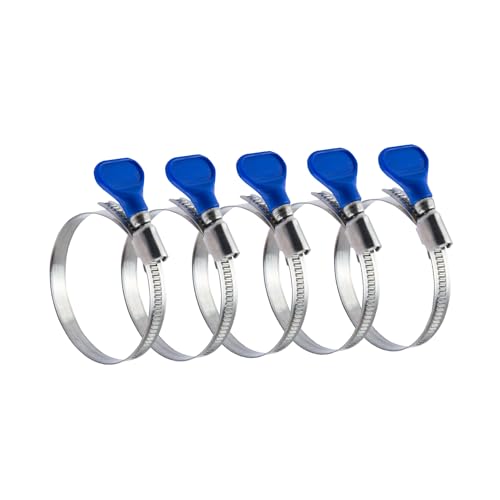
Worm gear drive uses integrated finger keys so you can swap flexible hose lines without carrying hand tools.
Key specs
- Clamp diameter
- 2-1/2 inch nominal fit
Pros:
- Stainless steel band resists shop moisture and corrosion during long-term dust collection use
- Built-in key handles let you tighten or loosen connections by hand without hunting for tools
- Supplied as a 5 pack to secure multiple 2-1/2 inch flexible lines across several machines
Cons:
- Flat band can pinch spiral-ribbed flexible hoses if tightened unevenly over internal wire coils
- Sized for 2-1/2 inch diameter lines and will not stretch over larger 4 inch dust ports

Adjusts from 91 mm to 114 mm to secure 4 inch flexible dust hoses, dryer lines, and machine ports.
Key specs
- Band material
- 304 stainless steel
Pros:
- 304 stainless steel band provides corrosion resistance in damp shops or dusty environments
- 91 to 114 mm adjustment range accommodates standard 4 inch dust collector hoses and rigid fittings
- Key-style thumb screws enable fast tightening by hand without needing flathead drivers
Cons:
- Includes only two clamps per pack, which covers only a single hose run with two connection points
- Worm gear band applies flat pressure that may buckle thin hose walls between spiral wire ribs

Heavy rubber sleeve bridges rigid tool dust ports and 4 inch collector ducting while dampening machine vibration.
Key specs
- Machinery port fit
- Bandsaws
- Planers
- Jointers
- Standard 4 inch dust ports
Pros:
- Two-piece pack equips two separate machine ports like jointers, bandsaws, or planers
- Flexible rubber cuff seals rigid 4 inch ports while isolating running tool vibrations
- Includes matching metal hose clamps in the package to secure both sides of each cuff
Cons:
- Specific clamp style and band width are not detailed, requiring confirmation before purchase
- Limited to 4 inch systems and incompatible with smaller 2-1/2 inch shop-vac attachments

Dual wire loop structure bridges the external spiral wire of flexible hoses without crushing the wall material.
Key specs
- Release mechanism
- Spring-loaded quick release
Pros:
- Double loop spring frame sits naturally on either side of flexible hose spiral wire for uniform clamping
- Quick release spring action allows tool-free attachment and fast hose transfers between machines
- Engineered specifically for 2-1/2 inch dust collection fittings and flexible vacuum lines
Cons:
- Pack includes only two clamps, limiting setup to one short hose segment
- Fixed spring tension cannot be manually tightened further like threaded worm gear screws

Spring action opens and closes with finger pressure, speeding up tool changes during active woodworking.
Key specs
- Port sizing requirement
- 2-1/2 inch nominal ports
Pros:
- Spring-tensioned double loop design snaps onto 2-1/2 inch hose without requiring hand tools
- Straddles the raised spiral helix on flexible hoses to reduce air leaks and port disconnects
- Two-clamp pack offers an immediate solution for connecting a single dust line between tools
Cons:
- Cannot adjust clamping diameter beyond the preset expansion range of the spring steel
- Requires verifying port outer diameter to ensure the 2-1/2 inch tension creates an airtight seal

Double wire loops straddle 4 inch spiral hose coils to provide balanced perimeter pressure without tearing thin vinyl.
Key specs
- Pack quantity
- 4 pack
Pros:
- Four-pack bundle provides enough clamps to secure multiple 4 inch hose drops across the shop
- Dual-wire spring format grips around flexible hose ribs without pinching or creasing the lining
- Tool-free quick release mechanism allows fast hose transfers between large stationary machines
Cons:
- Sized exclusively for 4 inch connections and will not fit smaller 2-1/2 inch vacuum lines
- Clamping force relies entirely on spring tension and cannot be tightened past factory tension

Molded rubber body absorbs machine vibration between stationary tools and rigid ductwork to prevent leaks.
Key specs
- Hardware type
- Steel hose clamps included
Pros:
- Thick rubber coupler seals minor size mismatches between 4 inch machine ports and rigid dust ducting
- Supplied with two matching steel hose clamps to secure both ends straight out of the box
- Isolates operating vibration from stationary tools to stop dust collection fittings from rattling loose
Cons:
- Contains only one coupler assembly per package, requiring more units for larger shop layouts
- Clamps use traditional tightening fasteners that require a tool rather than quick-release handles

Stainless steel continuous band provides adjustable mechanical tension across 2-1/2 inch ports and ducting.
Key specs
- Pack quantity
- 10 pack
Pros:
- Generous 10 pack covers multiple 2-1/2 inch hose drops and blast gates throughout the shop
- Stainless steel construction prevents rust in damp basements and unheated garage workshops
- Adjustable worm gear track allows precise tightening around varied 2-1/2 inch outer diameters
Cons:
- Lacks built-in keys or handles, requiring a screwdriver or nut driver for every adjustment
- Flat band can pinch spiral wire coils if overtightened on thin-walled vacuum hose

Continuous spring steel provides instant tension around 4 inch hoses for fast machine changeovers.
Key specs
- Dust collection size
- 4 inch nominal line
Pros:
- Double wire loop design avoids crushing flexible 4 inch hose walls over internal wire coils
- Quick release spring clamps eliminate the need to carry screwdrivers when moving main dust lines
- 2 pack provides clamps to secure both ends of a standard 4 inch flexible hose segment
Cons:
- Only includes two clamps, which may not suffice for workshops with multiple drop stations
- Spring tension cannot be adjusted for undersized machine ports that require extra clamp pressure

Parallel wire loops grip deep into spiral hose grooves to hold securely against high collector suction.
Key specs
- Fastener style
- Threaded bolt adjustment
Pros:
- Dual-wire frame straddles external spiral ribs to secure corrugated 4 inch dust collection hose
- Threaded bolt fastener lets you dial in precise clamping torque that will not shake loose
- Value 5 pack equips multiple major machinery ports without requiring separate clamp orders
Cons:
- Color finish may vary depending on the manufacturing batch received
- Requires a wrench or nut driver to tighten and loosen the threaded bolt during hose swaps

Formed from spring steel wire that flexes around spiral hose ribs while maintaining firm outward resistance.
Key specs
- Wire frame design
- Spring steel double wire
Pros:
- Spring steel wire construction provides high tensile strength to hold 4 inch hoses securely
- Double wire configuration seats cleanly around hose spiral coils to prevent leaks and slippage
- Convenient 5 pack covers multiple dust ports or blast gates across a stationary workshop
Cons:
- Bolt adjustment requires a hand tool, making frequent tool-to-tool hose swaps slower
- Limited strictly to 4 inch connections and cannot clamp down to 2-1/2 inch vacuum pipes

Six heavy rubber cuffs isolate tool vibrations across an entire shop network of 4 inch dust lines.
Key specs
- Multi-machine setup
- 6 pack with 12 clamps
Pros:
- Multipack of six flex cuffs and twelve steel clamps equips an entire stationary workshop
- Flexible rubber body compensates for slightly mismatched outer diameters on 4 inch machine ports
- Reduces vibration transfer along rigid collection pipe networks to keep seals airtight
Cons:
- Higher upfront investment compared to buying individual cuffs or simple wire clamps
- Bulkier connection profile than standalone clamps when working in tight spaces behind machines
Last update on 2026-10-31 / Affiliate links / Images, Product Titles, and Product Highlights from Amazon Product Advertising API
Which clamp style seals best over flexible spiral dust collector hose?
Double wire hose clamps and double loop spring clamps provide the cleanest seal over ribbed flexible hose. Standard flat metal bands often pinch the hose outer casing or bridge awkwardly across the internal wire coil, leaving small gaps where fine dust escapes. A double wire design straddles the spiral reinforcement wire, pressing the hose wall down on both sides of the coil directly against the fitting.
How do you determine whether to use 2-1/2 inch or 4 inch hose clamps?
Match the clamp size directly to the outer diameter of your machinery port and collection hose. Benchtop machines, router tables, and small shop vacuums typically take 2-1/2 inch fittings, while larger machinery such as planers, bandsaws, and central dust collectors use 4 inch ducting. If you use adjustable worm gear clamps on 4 inch connections, confirm the clamp spans an adjustable size range of 91 to 114mm so it tightens fully over the hose cuff.
How can you swap dust collection hoses between tools without using hand tools?
Key hose clamps and double loop spring clamps allow fast, tool-free hose changes between different woodworking machines. Key-type worm gear clamps feature built-in thumb keys that eliminate the need to fumble with screwdrivers or nut drivers behind equipment. Quick-release double loop spring clamps made of spring steel allow you to simply squeeze the two wire ears together by hand, slide the clamp back, and pull the hose free from any 2-1/2 inch or 4 inch port.
When should you use a rubber flex cuff coupler instead of clamping hose directly?
Use a rubber flex cuff coupler when connecting rigid machine ports, bridging slightly mismatched pipe fittings, or isolating machine vibration. Placing a 2-1/2 inch or 4 inch dust control rubber cuff coupler between your machine outlet and the dust hose creates a flexible bridge secured with steel hose clamps. The flexible rubber absorbs motor vibration from planers and bandsaws, preventing rigid plastic fittings from cracking and keeping hose clamps from shaking loose during heavy cuts.
Can overtightening a flat worm gear clamp damage flexible dust hose?
Yes, overtightening a traditional flat metal band clamp can slice or buckle the flexible plastic wall over the internal spiral wire. Because flat bands exert uneven pressure across the peaks and valleys of a ribbed hose, woodworkers often crank the screw down too hard trying to stop air leaks. Using an adjustable double wire hose clamp with a tightening bolt avoids this issue by directing tension along the wire loops rather than biting into the hose skin.
What should you check if a clamped dust collector hose still leaks or slips off?
Check for excessive backpressure inside the system, worn clamp bands, or smooth plastic ports that lack a retaining ridge. When suction lines clog, built-up pressure can blow hoses off fittings; checking your separator or reviewing how to open a vacuum filter helps you clear packed dust cakes that restrict airflow. If blockages occur near the intake of a shop vacuum or small collector, knowing how to open the bottom of a vacuum allows you to safely clear obstructions before securing your key or spring clamps again.