
Which Dyson Vacuum Works for Your Carpet Type in 2026?

There is no need to worry about buying a machine that bogs down or locks itself to your floor. For deep, wall-to-wall carpeting, a corded upright with adjustable suction vents is the most reliable choice because it never loses steam or seals shut. For smaller spaces with flatter rugs, a lightweight cordless stick offers plenty of cleaning strength while keeping everyday chores quick and easy.
A few practical details will shape your final decision. Dense carpet fibers can choke a tightly sealed floor head, while large rooms can drain a rechargeable battery before you finish the job. Heavy shedding from pets also calls for motorized bristles that clear tangled hair automatically. Knowing your floor depth and room count will point you straight to the right setup for your home.
Pick Between an Upright Cord and a Cordless Stick Based on Room Size
Choosing the right machine starts with how much carpet you have to clean at one time. An upright corded model like the Dyson Ball Animal Total Clean weighs 17.42 pounds. That extra weight puts direct downward pressure on the floor nozzle, which pushes the bristles deep into carpet fibers to shake loose dirt. A corded machine draws continuous power from your wall outlet, so you can clean three large bedrooms without thinking about a battery running dry.
The trade-off with a corded upright is bulk. Carrying a 17-pound machine up carpeted stairs takes genuine effort, and maneuvering around tight furniture legs requires wide turns. You also have to manage the cord as you work across the room, which slows down quick daily cleanups.
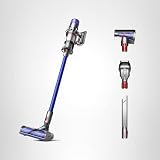
Cordless stick models, such as the Dyson V11 Extra at 6.53 pounds, solve the weight problem. A lightweight stick lets you pivot around dining chairs, sweep under low coffee tables, and lift the machine onto stair treads with one hand. The Dyson V11 Extra also features a battery-saving trigger that only draws power when you press it, helping you stretch your cleaning time between rooms.
Stick vacuums run into limits when you face dense, wall-to-wall carpeting across an entire home. Thick carpet creates friction against the spinning brush roller, which draws extra power from the motor and empties the battery much faster than bare floors do. If your home has mostly low-to-medium rugs or scattered carpeted rooms, a cordless stick gives you all the reach you need. If your home is covered in thick, wall-to-wall carpeting from edge to edge, a corded upright keeps you working without interruptions.
Adjust the Suction Gates on Thick Carpets to Stop the Head from Sticking
If you push your vacuum onto a plush rug and it suddenly feels glued to the floor, you are dealing with suction lock. This happens when the floor nozzle forms an airtight seal against the carpet surface. When air cannot flow under the baseplate, the vacuum pulls itself hard against the floor, making the handle almost impossible to push forward.
Suction lock does more than strain your arms and back. When airflow stops, the spinning brush roller chokes on the dense carpet yarn, causing the safety mechanism to shut off the brush roller to protect the motor from burning out. Many owners assume their machine is broken when the roller stops, but the vacuum is simply starved for air.
To fix this, look at the front of the floor nozzle for an adjustable slider switch. This control opens and closes small bypass gates on the front of the housing. When you slide the switch toward the minus sign or open setting, the vents let fresh air enter from above the carpet line instead of pulling solely through the dense fibers.
Opening these gates breaks the vacuum seal instantly. The machine glides smoothly across the rug surface, and the spinning brush roller continues turning at full speed. Use the fully closed setting only on flat, low-pile carpets or hard flooring where you need maximum sealed lift for fine dust.
Look for Built-in De-tangling Combs to Keep Pet Hair Off the Brush Roller
Pet hair poses a serious challenge for carpet cleaning because it weaves itself into the carpet pile. Standard vacuums often gather hair on the brush roller until it forms a tight, wrapped cylinder. Once hair wraps around the core, the bristles can no longer reach down between carpet strands, leaving embedded dirt behind.
Dyson addresses hair buildup by integrating polycarbonate de-tangling teeth directly into the floor nozzle housing on models equipped with the Motorbar. As the roller spins at high speed, these built-in combs slice through hair strands and clear them away before they can wrap around the spindle. The loosened hair travels straight down the suction channel and into the dust bin.
For stairs, rugs, and fabric cushions, specialized handheld tools make a noticeable difference. The Dyson Ball Animal Total Clean includes eight accessories, featuring the tangle-free turbine tool, a stair tool, and a multi-angle brush. The tangle-free turbine tool uses counter-rotating heads to pull dog and cat hair off carpeted steps without any central axle for hair to wrap around.
While dry vacuuming lifts shed fur and surface dander, liquid accidents require a different approach. When mud, urine, or tracked-in messes seep deep into carpet backing, pulling out a dedicated carpet cleaner for pet messes allows you to flush and extract wet stains that dry vacuum bristles cannot resolve.
Plan Around Real Battery Limits Before Running a Cordless Vacuum on Carpets
Cordless vacuum runtimes listed on packaging describe ideal conditions on low power. The manufacturer lists the Dyson V11 Extra with up to 60 minutes of run time, while the Dyson V9 Motorbar lists up to 40 minutes across its 3 power modes. However, cleaning carpets demands significantly more energy than skimming across hardwood or tile.
The motorized floor nozzle uses its own dedicated motor to drive the spinning brush roller against carpet friction. When you switch to high suction or Boost mode on a thick rug, the heavy electrical draw can empty a full battery in roughly 10 to 12 minutes. Understanding how to manage your power settings prevents your machine from shutting down halfway through a room.
- Use Auto or Medium mode for everyday cleaning: Modern cordless models balance suction and roller speed automatically, giving you enough agitation to pull grit from carpet fibers while preserving battery life.
- Save Boost mode for spot cleanups: Switch to maximum power only for stubborn patches, such as dried mud tracked across an entryway runner or concentrated pet fur on a favorite rug.
- Clear edges with unpowered attachments first: Use a crevice tool or combination nozzle along baseboards before vacuuming the open floor. These smaller tools draw zero power for a motorized brush, leaving full battery capacity for the floor nozzle.
- Check the battery temperature after heavy use: If you run a cordless machine on thick carpet until it drains, the battery casing may feel warm. Let the battery pack sit for 15 minutes to cool down before plugging it into the charger to protect the battery cells.
Match Your Carpet Thickness to the Right Machine Style
Every home has different flooring, and matching the right machine to your carpet thickness prevents frustration. Low-pile carpets, industrial rugs, and flat-woven runners create very little push resistance. Lightweight cordless models like the Dyson V8, Dyson V8 Plus, or Dyson V9 Motorbar handle these spaces easily, lifting surface debris without bogging down.
Medium-pile carpets found in most modern living rooms and bedrooms require stronger suction and stiffer bristle agitation. The Dyson V11 Origin, Dyson V11 Extra, and Dyson V15 Detect provide the extra lift needed to pull fine sand and tracked-in dirt out of carpet valleys. The Dyson V11 Extra provides 60% more suction than earlier stick designs, making it well-suited for family rooms that see steady foot traffic.
High-pile rugs, thick plush carpeting, and deep wool weaves demand high motor power and adjustable nozzle height. A full-size upright like the Dyson Ball Animal 3 Upright Vacuum Cleaner or the Dyson Ball Animal Origin allows you to adjust nozzle clearance so the machine glides instead of anchoring itself to the floor. The corded Dyson Ball Animal Total Clean uses Radial Root Cyclone technology to keep suction consistent, even as the bin fills up with pet hair and fine dust.
If you encounter heavy soil lines near doorways or sticky spills that dry suction cannot lift, using a deep stain removal machine alongside your regular dry vacuum keeps carpet fibers bright and free of ground-in residue.
Choose the Right Floor Nozzle Features Before You Buy
When selecting a vacuum head for carpet care, inspect the underside and front housing of the floor nozzle before making a purchase. A high-performing carpet nozzle needs stiff, spiraled nylon bristles to comb through carpet strands and dislodge deep grit. Soft roller heads designed exclusively for hard floors cannot agitate carpet fibers, leaving heavy dirt trapped near the backing.
Look for a floor nozzle that features mechanical suction release vents or an adjustable height plate. Having a physical slider on the front of the head lets you quickly adjust airflow, preventing the nozzle from sealing itself flat against thick rugs. Without this pressure release, high-powered vacuums become exhausting to push across medium-to-deep carpets.
Check that the floor nozzle includes smooth-rolling support wheels and durable edge seals. Sturdy rubberized wheels keep the head level across uneven carpet surfaces, while internal de-tangling combs ensure that hair drops directly into the dust channel instead of binding the spinning brush roller.

- VC Score9.2
BCP Score is a ranking system developed by bestcleanerproducts.com. BCP Score has no relationship or impact from any manufacturers or sales agent websites. Learn more
- BrandDyson
- VC Score8.8
BCP Score is a ranking system developed by bestcleanerproducts.com. BCP Score has no relationship or impact from any manufacturers or sales agent websites. Learn more
- BrandDyson

- VC Score8.8
BCP Score is a ranking system developed by bestcleanerproducts.com. BCP Score has no relationship or impact from any manufacturers or sales agent websites. Learn more
- BrandDyson

- VC Score8.8
BCP Score is a ranking system developed by bestcleanerproducts.com. BCP Score has no relationship or impact from any manufacturers or sales agent websites. Learn more
- BrandDyson

- VC Score8.4
BCP Score is a ranking system developed by bestcleanerproducts.com. BCP Score has no relationship or impact from any manufacturers or sales agent websites. Learn more
- BrandDyson

- VC Score8.4
BCP Score is a ranking system developed by bestcleanerproducts.com. BCP Score has no relationship or impact from any manufacturers or sales agent websites. Learn more
- BrandDyson

- VC Score8.4
BCP Score is a ranking system developed by bestcleanerproducts.com. BCP Score has no relationship or impact from any manufacturers or sales agent websites. Learn more
- BrandDyson
- VC Score8.4
BCP Score is a ranking system developed by bestcleanerproducts.com. BCP Score has no relationship or impact from any manufacturers or sales agent websites. Learn more
- BrandDyson

- VC Score8.4
BCP Score is a ranking system developed by bestcleanerproducts.com. BCP Score has no relationship or impact from any manufacturers or sales agent websites. Learn more
- BrandDyson

- VC Score8.0
BCP Score is a ranking system developed by bestcleanerproducts.com. BCP Score has no relationship or impact from any manufacturers or sales agent websites. Learn more
- BrandDyson

- VC Score7.6
BCP Score is a ranking system developed by bestcleanerproducts.com. BCP Score has no relationship or impact from any manufacturers or sales agent websites. Learn more
- BrandDyson
Last update on 2026-10-01 / Affiliate links / Images, Product Titles, and Product Highlights from Amazon Product Advertising API
FAQs
Can a cordless stick vacuum fully replace an upright vacuum on carpets?
A cordless stick vacuum can easily replace an upright if your home features low-to-medium pile carpets and area rugs. However, homes with thick, wall-to-wall carpeting throughout multiple rooms benefit from the continuous power and heavier agitation of a corded upright. Cordless models drain their batteries rapidly when dealing with the high friction of dense rugs.
Why does my vacuum brush roller stop spinning on my area rug?
Your brush roller usually stops spinning because the floor nozzle has formed an airtight seal against the rug, causing suction lock. The vacuum motor pulls so hard against the dense fibers that the brush roller cannot rotate, triggering an internal safety shutoff. Opening the suction relief slider on the floor nozzle restores airflow and lets the roller spin freely.
How do I know if my carpet pile is too thick for my vacuum?
Your carpet pile is too thick if the vacuum head feels stuck to the floor, requires two hands to push forward, or leaves deep wheel ruts in the fabric. If opening the suction vents on the nozzle still does not allow smooth movement, the carpet pile is too deep for that specific head clearance, and you need a machine with higher baseplate adjustment.
Can high vacuum suction damage delicate carpet fibers?
Excessive suction combined with an aggressive spinning brush roller can cause fuzzing or fraying on delicate wool, looped Berber, or handmade silk rugs. For these sensitive materials, reduce the suction setting, open the nozzle bypass gates completely, or switch off the brush roller to protect the woven loops from unraveling.


How to Refinish a Fiberglass Pool

How Do You Keep Raccoons Out of Your Pool?

How to Fix Cyanuric Acid in Your Pool

How to Shape a Pool Cue Tip to Stop Miscues

Best Far Infrared Sauna Sauna Heats: Top Picks of 2026

11 Best Far Infrared Sauna Carbon Fiber Heaters of 2026 For Balanced Full-Body Heat

11 Best Carbon Far Infrared Sauna of 2026 For Even Heat

10 Best Bluetooth Speaker For Sauna of 2026 For Heat and Steam


