
How to Open a V8 Vacuum Head and Remove the Roller

Most people assume opening a cordless vacuum head requires a set of tiny screwdrivers or forceful prying that risks snapping the plastic. In reality, you only need to turn the side locking cap a quarter turn with a coin to slide the roller right out. Once the head is detached from the wand, that simple twist releases the rotating bar so you can clear wrapped hair in seconds without damaging the outer casing.
The exact method depends on which attachment rests on your machine. Carpet heads feature a wide coin slot on the side locking cover, while soft fluffy bare-floor heads use a small sliding latch that clicks open with your thumb. The steps also change if you just need to pull the roller for a quick rinse or access the inner motor casing for a deeper repair. Here is how to unlock both styles cleanly without breaking a single clip.
Identifying Your V8 Cleaner Head Style
Before you grab any tools, you need to know which cleaner head is attached to your machine. Cordless vacuums in this series generally come with one of two distinct floor tools, and each opens in a completely different way. Opening the wrong part with the wrong method can snap the plastic tabs, leaving the head loose or unusable.
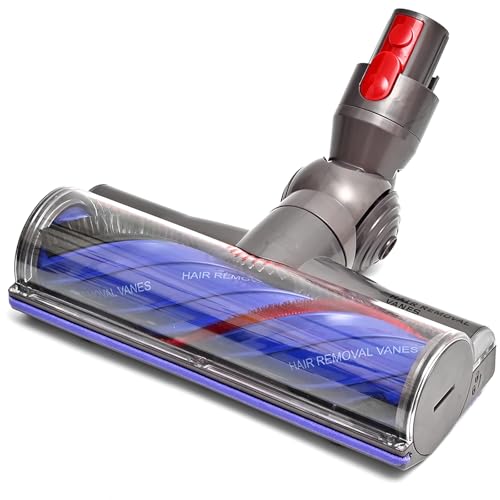
The first common style is the carpet brush head. This tool has stiff nylon bristles arranged in spiral rows around a firm plastic bar. It is designed to dig deep into carpet fibers to lift pet hair and ground-in dirt. You can recognize it immediately by looking at the side edge: you will see a flat, circular side locking cover with a wide groove down the middle made for a coin.
The second common style is the fluffy bare-floor head. This tool features a thick, velvety roller covered in soft nylon felt with colored stripes. It is designed for hard surfaces like hardwood, tile, and laminate to scoop up large debris without scratching the floor. It does not use a coin slot. Instead, it relies on a spring-loaded sliding latch built into the side or rear casing.
Always press the red push button on the neck joint to separate the head from the long metal wand before doing anything else. Working on a detached head prevents you from twisting the flexible neck joint while applying pressure. It also eliminates any risk of accidentally squeezing the power trigger on the vacuum body while your fingers are near the motorized drive.
How to Open the Carpet Brush Head Step by Step
Opening the carpet brush head takes less than a minute when you use the correct leverage. Follow these numbered steps to release the rotating roller without gouging the plastic.
- Lay the head upside down on a flat, stable surface. Working on a workbench or a clean floor prevents the cleaner head from rolling away and stops you from putting twisting pressure on the neck joint.
- Locate the side locking cover on the edge of the housing. Finding the circular plastic plug on the side allows you to see the engraved lock and unlock symbols so you know which way to rotate the latch.
- Slot a wide coin or metal washer firmly into the groove. A thick coin fills the entire width of the slot, spreading the turning force across the soft plastic to prevent stripping the groove edges.
- Rotate the coin a quarter-turn counterclockwise until it clicks. The internal plastic tabs only release at a ninety-degree angle, and stopping at the click prevents snapping the built-in mechanical stops.
- Pull the side locking cover straight away from the housing. Sliding the cover straight outward protects the small retaining lip from bending or cracking against the outer shell.
- Slide the rotating roller out through the open side hole. Pulling the roller straight along its track prevents you from bending the metal drive spindle attached to the internal motor on the opposite side.
Opening the Fluffy Bare-Floor Head with the Slider Latch
The fluffy bare-floor head does not require any coins or turning tools. The entire locking mechanism relies on a sliding clip that releases a hinged end gate. Many people accidentally damage this head by trying to pry the seam open with a butter knife or a flathead screwdriver. You never need to pry this housing.
Start by resting the head upside down with the soft roller facing you. Look at the side of the housing near the roller hinge. You will see a small, textured plastic slider latch, often marked with a small arrow indicating the release direction.
Push the slider switch firmly in the direction of the arrow using your thumb. While holding the slider back against its spring, pivot the side retaining arm upward. The arm swings open on a small hinge, exposing the end of the soft roller.
Once the side gate swings clear, lift the large rotating roller upward and slide it off the central drive core. Some bare-floor models also house a secondary, very small roller strip near the rear wheels. If your model has this mini roller, you can unclip its small plastic retaining clip to slide it out for cleaning as well.
Clearing Tangled Hair and Washing the Roller Safely
Once you pull the rotating roller out of the casing, you can clean out the debris that causes the motor to stall. Use this checklist to clear the assembly without damaging the internal parts:
- Slice hair along the roller channel: Most carpet rollers have a recessed groove running down the length of the cylinder. Slide the tip of a pair of scissors along this channel to cut wrapped threads and hair without snipping the stiff bristles.
- Clear the end spindle: Pull away any hair wrapped tightly around the metal pin at the tip of the roller. Hair gathers behind the end bearing, creating high friction that can melt the surrounding plastic collar during use.
- Wipe the inside housing: Use a dry cloth to wipe out dust bunnies and grit trapped inside the clear plastic cavity and around the internal drive teeth.
- Wash only the soft roller: You can wash the fluffy bare-floor roller under cold running tap water. Gently squeeze out excess water, but never use laundry detergents, dish soap, or hot water.
- Keep the carpet roller dry: Avoid soaking the carpet brush head roller in water. Many carpet rollers contain sealed metal bearings or internal drive assemblies that can rust or trap moisture.
- Never get the motorized housing wet: The plastic outer frame houses an electric motor and sensitive wiring. Never submerge the cleaner head itself or run water into the neck joint.
- Dry completely for 24 hours: If you rinse the soft roller, stand it upright on its end in a warm, well-ventilated room for at least 24 full hours. Inserting a damp roller back into the housing will cause mildew odors and can short-circuit the electric motor.
Putting the Roller Back and Securing the Side Locking Cover
Reassembling the cleaner head is straightforward, but every part must sit completely flush before you lock it. Forcing the lock when the roller is crooked can snap the drive teeth.
First, inspect the drive end of the rotating roller. You will see an indented socket, usually shaped like an octagon or a cross. Look inside the cleaner head housing to spot the matching metal drive spindle. Align these shapes carefully and slide the roller deep into the cavity until it seats firmly against the motor gear.
Second, position the side locking cover over the opening. For the carpet head, press the cap flush against the outer casing. It should sit flat without rocking. Insert your coin into the groove, push gently inward, and turn a quarter-turn clockwise until the line aligns with the locked symbol.
For the fluffy bare-floor head, slide the roller onto its spindle and swing the hinged side arm down flat against the frame. Push the arm down until the spring-loaded slider clicks firmly back into its home position. You should hear and feel a positive snap.
Finally, spin the rotating roller with your fingers before attaching the tool back onto your vacuum. It should turn smoothly with slight resistance from the motor. If it feels stiff, grinds, or catches, remove the side cover and reseat the roller on the spindle.
Why the Rotating Roller Still Jams or Stops Spinning
If you opened the head, removed the hair, locked the cover back in place, and the roller still refuses to spin, the problem usually stems from one of four common issues.
First, inspect the metal connector pins at the neck joint. The vacuum sends electrical current through two small metal prongs where the head clicks onto the wand. If dust or carpet fluff coats these pins, the motor in the head receives no power. Wipe the metal contacts clean with a dry microfiber cloth.
Second, check for hidden hair wound tight beneath the end bearing. Hair can work its way underneath the plastic end cap on the roller itself. When this happens, it forms a solid, felted ring that binds the roller against the side locking cover, acting like a brake shoe.
Third, the vacuum may be triggering an automatic shutoff. Modern cordless vacuums monitor electric current to the head. If the brush roller encounters thick high-pile rug fibers or a stubborn clump of debris, the circuit cuts power instantly to protect the motor from burning out. Turning the vacuum off and back on resets this circuit.
Fourth, heavy electrical load from a struggling motor can expose a fading power pack. If your machine cuts out entirely within seconds of turning on the motorized head, check how much is a new battery for a cordless vacuum to see if your power pack is dropping voltage under load. If you are comparing stick vacuum models to balance cleaning capability with easy handling, understanding what is the lightest cordless vacuum cleaner can help you decide whether a lighter machine fits your daily routine.
When to Replace the Entire Cleaner Head
Routine cleaning solves most clogs, but physical wear and mechanical failure eventually require replacing the entire floor nozzle. When internal drive gears strip, the motor emits a loud, high-pitched screeching noise even when the roller is completely clear of hair. Similarly, if hair friction caused the plastic bearing housing to melt and warp, a new roller will no longer spin freely.
When shopping for a replacement vacuum head, make sure the neck connector features the matching red push button system designed for your specific stick vacuum series. Older designs or slim sub-series use different connector pins and narrower neck diameters that will not click securely onto a standard wand.
You should also decide between an anti-tangle carpet brush head and a dedicated soft roller bare-floor head. Replacement carpet heads often feature integrated comb teeth inside the hood that actively slice through long pet hair before it can wrap around the core. If your home has mostly hardwood or delicate tile, picking a head with a plush roller and smooth front bumper protects your floor finish while sweeping up fine grit.

- VC Score10.0
BCP Score is a ranking system developed by bestcleanerproducts.com. BCP Score has no relationship or impact from any manufacturers or sales agent websites. Learn more
- BrandYOUNGOOD

- VC Score9.0
BCP Score is a ranking system developed by bestcleanerproducts.com. BCP Score has no relationship or impact from any manufacturers or sales agent websites. Learn more
- BrandHather

- VC Score9.0
BCP Score is a ranking system developed by bestcleanerproducts.com. BCP Score has no relationship or impact from any manufacturers or sales agent websites. Learn more
- BrandYeelife

- VC Score8.8
BCP Score is a ranking system developed by bestcleanerproducts.com. BCP Score has no relationship or impact from any manufacturers or sales agent websites. Learn more
- BrandAZYM

- VC Score8.8
BCP Score is a ranking system developed by bestcleanerproducts.com. BCP Score has no relationship or impact from any manufacturers or sales agent websites. Learn more
- BrandOTTWL

- VC Score8.6
BCP Score is a ranking system developed by bestcleanerproducts.com. BCP Score has no relationship or impact from any manufacturers or sales agent websites. Learn more
- BrandOTTWL

- VC Score8.6
BCP Score is a ranking system developed by bestcleanerproducts.com. BCP Score has no relationship or impact from any manufacturers or sales agent websites. Learn more
- BrandLemige
- VC Score8.4
BCP Score is a ranking system developed by bestcleanerproducts.com. BCP Score has no relationship or impact from any manufacturers or sales agent websites. Learn more
- BrandTivcroxs
Last update on 2026-10-23 / Affiliate links / Images, Product Titles, and Product Highlights from Amazon Product Advertising API
FAQs
What tool works best to open the side lock on the carpet head?
A standard US quarter or nickel works best because its thick edge matches the width of the plastic slot. A butter knife or flathead screwdriver is too thin and focuses pressure on a tiny point, which easily gouges or strips the soft plastic slot. If you do not have a coin handy, a thick metal washer or the back edge of a metal spoon works safely.
Can I wash the carpet brush roller with soap and water?
You should avoid submerging or washing the carpet brush roller with water. Water can seep into the internal metal bearings and drive mechanism, leading to corrosion and stiff rotation over time. Instead, use a damp cloth to wipe the plastic core and use scissors to pull off caught threads and pet hair.
Why won't my side locking cover turn back into place?
The side locking cover will not rotate if the rotating roller is not pushed completely onto the internal motor spindle. Pull the cover off, press the roller firmly into the housing while turning it slightly until it drops into its drive socket, and ensure the cover sits completely flush against the housing before turning your coin.
How often should I open the head to clean out hair?
Opening the head once every two to four weeks prevents severe hair clogs, especially in homes with pets or long hair. Catching tangled threads early prevents them from migrating into the drive bearings where friction can melt the surrounding plastic frame.


How to Refinish a Fiberglass Pool

How Do You Keep Raccoons Out of Your Pool?

How to Fix Cyanuric Acid in Your Pool

How to Shape a Pool Cue Tip to Stop Miscues

Best Far Infrared Sauna Sauna Heats: Top Picks of 2026

11 Best Far Infrared Sauna Carbon Fiber Heaters of 2026 For Balanced Full-Body Heat

11 Best Carbon Far Infrared Sauna of 2026 For Even Heat

10 Best Bluetooth Speaker For Sauna of 2026 For Heat and Steam


