
How to Clean a Dyson DC07 Animal to Restore Suction

A sudden loss of suction or a lingering pet smell is rarely a sign of permanent damage. Getting things running again usually comes down to washing the foam pre-motor filter in cold water, cutting tangled pet hair off the roller, and wiping out the clear bin. The main rule is keeping water away from the motor and top cone assembly, since water inside the cyclone chambers can trap moisture and cause foul odors.
What you need to do depends on where the fur is trapped. A stubborn clog can hide inside the flexible hose, stick in the lower duct valve, or wrap tightly around the spinning brush bar. Timing matters too, because the washed filter must air-dry for 24 hours before going back into the machine. In some cases, an old seal or worn filter simply needs replacing rather than another wash. The steps below walk through cleaning each part safely.
What tools do you need before starting?
Cleaning an older upright vacuum does not require special equipment, but having the right basic household items ready will save you time and prevent messes on your clean floors. Set your vacuum on a hard floor, a porch, or over an old sheet or flattened cardboard box. Working over carpet is a bad idea because loose dirt, dried hairballs, and fine dust will spill out as you take the machine apart.
Before you touch any latches or screws, unplug the electrical cord from the wall outlet. Never work on an upright vacuum while it is connected to power. Unplugging the cord removes any risk of the motor or the spinning brush roller accidentally starting up while your hands are near moving parts.
Gather these simple household items before you begin:
- A wide flat-head screwdriver or a coin: You need this to turn the quarter-turn plastic fasteners on the bottom plate that covers the spinning brush roller.
- A pair of sharp scissors or a seam ripper: This lets you cut through tightly wrapped threads, carpet fibers, and pet fur without slicing into the roller bristles.
- A dry microfiber cloth: Great for wiping fine dust off exterior plastic, inner ducts, and the cyclone assembly.
- A stiff, dry paintbrush or clean old toothbrush: Useful for sweeping stubborn pet dander and lint out of the tiny holes in the plastic shroud.
- A large trash can or outdoor garbage bag: You will empty the bin and scrape debris directly into the trash to keep dust from floating back into your living room.
- A sink with running cold water: Needed to wash out the foam filter and rinse the clear plastic bin.
How do you clean the bin and cyclone safely?
The clear dust bin and the cyclone assembly are the first areas to collect pet grime. The cyclone is the top plastic cone unit where dirt spins through high-speed air. Over months of picking up dog or cat hair, fine dander and oily dust coat the interior cones and screen. This reduces suction and leaves a persistent stale animal odor whenever you turn the machine on.
Start by removing the entire bin assembly from the vacuum body. Press the red catch at the top of the carry handle and lift the assembly straight up and away from the spine of the machine. Hold the bin over your trash can and push the red release trigger downward. The hinged bottom flap will drop open, dumping the collected pet hair and heavy debris straight into the garbage. Shake it gently to dislodge stuck clumps.
To separate the clear plastic bin from the cyclone assembly, look for the small plastic release catch where the clear cylinder joins the upper cone housing. Press that catch and slide the clear cylinder straight down. You now have two separate pieces: the hollow clear canister and the inner cyclone with all its small plastic cones.
Here is the most critical rule for this entire cleaning process: never wash the cyclone assembly with water. Do not rinse it under a faucet, do not submerge it in a bucket, and do not spray it with a garden hose. The cyclone contains dozens of tight interior airways and sealed acoustic baffles. If you pour water inside, the fine drywall dust and pet dander trapped in those chambers will turn into thick, muddy paste. That mud dries into concrete-like blockages that choke airflow permanently. Even worse, residual water trapped inside the cyclone can get sucked straight into the vacuum motor the next time you turn it on, causing electrical shorts, motor burnout, or foul mildew smells.
Instead, clean the cyclone completely dry. Take it outdoors and tap it gently against the inside of a trash can to shake loose packed dust. Use a stiff, dry paintbrush or an old toothbrush to flick away pet hair and fuzz clinging to the perforated metal or plastic shroud. Wipe the outside surfaces with a dry microfiber cloth.
You can safely wash the clear plastic bin itself in warm water with a drop of mild dish soap, provided it is fully detached from the cyclone. Sponge away the dusty film on the plastic, rinse it thoroughly with clean water, and wipe it dry with a towel. Let the clear bin sit in an open room until every drop of moisture has evaporated before clipping it back onto the dry cyclone.
How do you wash and dry the filters correctly?
Your DC07 Animal relies on two distinct filters to keep dust from blowing back into your home and into the motor. Cleaning them properly restores strong airflow, but handling them the wrong way can ruin the vacuum motor. Follow these clear steps to clean the washable filter and inspect the secondary filter.
- Remove the pre-motor filter: The pre-motor filter is the washable yellow foam filter in the side housing on the left side of the vacuum. Press the release catch at the top of the blue cylindrical housing door and swing the door open. Pull out the round blue plastic cage that holds the yellow foam pad.
- Separate the foam from the frame: Pull the bright yellow foam sponge out of its blue plastic support frame. Check both the foam and the blue case for any tears, hardening, or crumbling.
- Rinse under cold tap water: Take the yellow foam pad to your sink. Run cold water through it while gently squeezing the sponge with your hands. Do not use warm water, dish detergent, laundry soap, or carpet shampoo. Soap residues cling to the dense foam fibers and attract fine dust faster later on. Keep rinsing and squeezing until the water running out of the bottom of the sponge is completely clear and free of cloudy dirt. You can also rinse the empty blue plastic frame under cold water to wash off trapped lint.
- Squeeze out excess moisture: Press the yellow foam sponge firmly between your hands or roll it inside a clean, dry towel to push out as much standing water as possible. Do not wring or twist the sponge aggressively, which can tear the foam seams.
- Air-dry for at least 24 hours: Lay the yellow foam pad and the blue frame flat in a warm, dry room with good air movement. Allow a minimum of 24 full hours for the foam to dry completely. Do not put the filter in a clothes dryer, on top of a hot radiator, in an oven, or under a direct hair dryer, because high heat will warp and melt the synthetic foam. Touch the very center of the sponge to make sure no dampness remains before reinstalling it. Reinstalling a damp filter pulls moisture straight through the motor fan, which causes rapid bearing corrosion, foul mold smells, and motor failure.
- Inspect the post-motor filter: The post-motor filter is the flat HEPA filter located beneath the bin at the lower front of the vacuum body. Press the lower latch to open the filter lid and lift the cartridge out. On most DC07 Animal uprights, this is a non-washable pleated paper filter designed to trap microscopic pet dander and fine allergens. Never wash this pleated paper filter with water, because wet paper fibers collapse and block airflow completely. Instead, tap the hard plastic edge of the filter against a trash can to knock out loose dust, or look through the pleats. If the filter paper is dark gray, caked with greasy pet dirt, or smells foul, replace it with a fresh unit rather than trying to wash it.
How do you clean tangled hair off the brush roll?
Pet hair easily wraps around the spinning brush roll, which is the spinning bar with bristles under the floor head. When thick hair wraps tightly around the cylinder, the bristles cannot reach deep into carpet fibers to lift embedded dirt. In severe cases, hair wrapped around the end bearings creates heavy friction, which can melt the plastic roller ends or snap the drive belt.
Clear the floor nozzle by following these steps:
- Lay the machine flat: Recline the vacuum body completely so the machine rests flat on the floor with the underside of the floor head facing up toward you.
- Release the soleplate: Look at the bottom plastic plate (the soleplate) that surrounds the brush roller. You will see three plastic turn fasteners. Insert a coin or a flat-head screwdriver into the slots and turn each fastener a quarter-turn counterclockwise. The fasteners stay attached to the plate so they do not get lost. Lift the bottom plate off the floor head and set it aside.
- Examine the brush bar: Inspect the bristles and the drive belt connected to the center or side of the roller. The DC07 Animal uses a clutch system, which means the brush bar is connected by a tough rubber belt to a clutch mechanism that lets you switch between carpet mode and bare floor mode.
- Cut away wrapped pet hair: Locate the long recessed groove running down the length of the brush bar cylinder. Slide the blunt tip of your scissors or a seam ripper along this groove underneath the tangled hair and threads. Cut straight down the line. Once the hair is cut, peel it off the bar with your fingers and drop it into your trash bag. Never pull hard on wrapped hair without cutting it first, as tugging can yank the bristle tufts straight out of the wooden or plastic roller.
- Clear the roller ends and bearings: Hair tends to wind tightly around the end caps where the roller spins inside the housing. Use your fingers or tweezers to pull all hair away from these end caps. If the roller cannot spin smoothly by hand, clean away any lint wedged between the cap and the frame. Wipe the inside of the floor head housing with your dry cloth to remove loose dirt and grit.
- Reinstall the soleplate: Fit the front tabs of the bottom soleplate back into their slots on the cleaner head housing. Push the plate down flat, then use your coin or screwdriver to turn the three fasteners a quarter-turn clockwise until they click securely into place.
How do you find clogs hidden in the airways?
If your vacuum still lacks suction after you have emptied the bin and washed the pre-motor filter, a blockage is almost certainly trapped in one of the internal tubes. Animal fur easily mats together with dropped carpet strings, forming tight plugs that catch on internal corners. Check these four key locations to restore clear airflow:
- The flexible stretch hose: Press the quick-release catch at the top of the hose where it meets the wand handle, then unclip the lower end of the hose from the base of the vacuum. Stretch the hose out straight in a well-lit area and look through it like a telescope. If you cannot see light at the other end, drop a small coin or marble into one side. Where the coin stops tells you exactly where the fur plug is stuck. Squeeze the flexible hose gently with your fingers to break up the clump, or push a smooth, blunt broom handle through the hose to slide the clog out. Never shove sharp wire coat hangers or kitchen knives into the hose, as they will puncture the flexible ribbed plastic and ruin the suction.
- The metal wand and wand handle: Inspect the hollow metal tube and the angled plastic handle. Pet fur and large debris like dry pet kibble often lodge right at the bend of the wand handle. Shine a flashlight through the wand to ensure the metal pipe is clear.
- The lower duct hose: At the lower back of the vacuum, just behind the cleaner head, sits a short, clear plastic U-shaped tube called the lower duct. Pull the release clip on this clear duct and look inside. This is one of the most common spots for heavy clumps of dog hair and dirt to lodge when vacuuming thick carpets. Pull any packed hair out using your fingers or a pair of needle-nose pliers.
- The internal inspection valve: Near the bottom rear corner of the machine sits a small hinged flap door that provides access to the internal airway channel. Pop this inspection door open and inspect the valve flap. Make sure the flap moves freely on its hinge and that dog hair has not collected behind the valve door, which prevents the vacuum from directing suction down to the floor head.
When should you replace worn vacuum parts?
Routine cleaning solves most suction problems, but physical parts wear down over years of heavy household cleaning. When cleaning no longer restores strong pickup, replacing specific wear items will return the vacuum to peak performance without buying an entirely new machine.
If you are weighing the cost of replacement parts against modern cleaning equipment, understanding overall upkeep costs helps you decide. For instance, comparing upkeep on older corded vacuums against how much is a new battery for a cordless vacuum in 2026 shows that simple mechanical parts like belts and brushes are often much cheaper to maintain than battery-powered machines.
Here is what to check when deciding if a part needs replacement rather than cleaning:
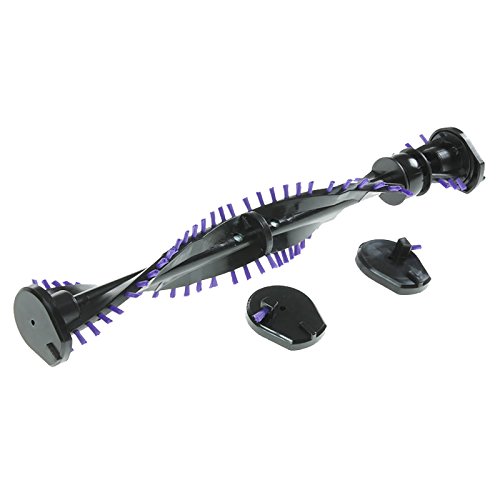
The brush roller: Check the stiffness and height of the bristle tufts. If the bristles are soft, splayed outward like an old toothbrush, or worn down so short that they do not extend past the bottom soleplate, the roller cannot agitate carpet fibers. A worn brush roll simply glides over carpet without pulling up embedded pet hair. When buying a replacement brush roll, verify that it is designed specifically for clutch-equipped models, which have the correct drive cog in the center.
The filters: If your washable yellow pre-motor filter feels stiff, has holes, or has begun crumbling into small yellow flakes, it can no longer protect the motor from fine dust. Similarly, if your post-motor HEPA filter has turned dark gray and smells like stale animal dander even after wiping, replace the pair as a set. Fresh filter media immediately reduces household odors and restores maximum air movement through the motor fan.
The flexible hose: Over time, the flexible ribs of the stretch hose can develop tiny pinholes or hairline splits near the cuffs where the hose bends most frequently. Even a tiny split leaks air and drastically cuts down suction at the floor head and tools. Stretch the hose under a bright light; if you spot cracks or tears in the plastic ridges, replace the hose assembly.
Remember that while a well-maintained vacuum keeps everyday pet hair under control, ground-in pet accidents and deep odors trapped inside carpet padding require wet extraction. Pairing your routine vacuuming with a dedicated carpet cleaner for tough pet stains ensures that deep oils and dried liquid messes are completely washed out of the fibers.

- VC Score9.4
BCP Score is a ranking system developed by bestcleanerproducts.com. BCP Score has no relationship or impact from any manufacturers or sales agent websites. Learn more
- BrandPUREBURG
- VC Score9.0
BCP Score is a ranking system developed by bestcleanerproducts.com. BCP Score has no relationship or impact from any manufacturers or sales agent websites. Learn more
- Brand4YourHome

- VC Score9.0
BCP Score is a ranking system developed by bestcleanerproducts.com. BCP Score has no relationship or impact from any manufacturers or sales agent websites. Learn more
- BrandSealegend

- VC Score9.0
BCP Score is a ranking system developed by bestcleanerproducts.com. BCP Score has no relationship or impact from any manufacturers or sales agent websites. Learn more
- BrandTweruna

- VC Score9.0
BCP Score is a ranking system developed by bestcleanerproducts.com. BCP Score has no relationship or impact from any manufacturers or sales agent websites. Learn more
- BrandDyson

- VC Score9.0
BCP Score is a ranking system developed by bestcleanerproducts.com. BCP Score has no relationship or impact from any manufacturers or sales agent websites. Learn more
- Brand4YourHome

- VC Score8.8
BCP Score is a ranking system developed by bestcleanerproducts.com. BCP Score has no relationship or impact from any manufacturers or sales agent websites. Learn more
- BrandVACEXT

- VC Score8.4
BCP Score is a ranking system developed by bestcleanerproducts.com. BCP Score has no relationship or impact from any manufacturers or sales agent websites. Learn more
- BrandcaSino187

- VC Score8.4
BCP Score is a ranking system developed by bestcleanerproducts.com. BCP Score has no relationship or impact from any manufacturers or sales agent websites. Learn more
- BrandRJMom

- VC Score8.2
BCP Score is a ranking system developed by bestcleanerproducts.com. BCP Score has no relationship or impact from any manufacturers or sales agent websites. Learn more
- BrandDyson

- VC Score8.0
BCP Score is a ranking system developed by bestcleanerproducts.com. BCP Score has no relationship or impact from any manufacturers or sales agent websites. Learn more
- Brand4YourHome
Last update on 2026-10-02 / Affiliate links / Images, Product Titles, and Product Highlights from Amazon Product Advertising API
FAQs
Can I wash the cyclone assembly under running water?
No, you should never wash the cyclone assembly with water. The cyclone contains tight interior cones and baffles where fine dust turns into a thick, sticky mud when wet, permanently choking airflow. Wipe the outside of the cyclone with a dry cloth and brush dust away from the shroud with a clean, dry paintbrush instead.
Why does my DC07 smell bad even after washing the foam filter?
A lingering odor usually means the flat HEPA filter beneath the bin has absorbed stale pet oils and dander over time. Unlike the yellow foam pre-motor filter, the pleated paper HEPA filter cannot be washed with water. If washing the yellow filter does not remove the smell, install a fresh replacement HEPA filter to eliminate the odor.
How long does the washable filter take to dry?
The yellow pre-motor foam filter takes at least 24 full hours to air-dry completely in a warm room with good ventilation. Never reinstall the filter while it feels damp or cool to the touch. Putting a damp filter back into the machine pulls water directly into the electric motor, causing rust, bearing failure, and mildew.
What makes the brush roller stop spinning during use?
The brush roller usually stops because heavy pet hair has wrapped tightly around the end bearings, creating enough friction to trip the internal clutch. Turn the vacuum off, unplug it, and cut away all hair and string wrapped around the roller ends. If the roller spins freely by hand but does not rotate when the machine is on, check that the clutch knob on the side is turned to the carpet position.


How to Refinish a Fiberglass Pool

How Do You Keep Raccoons Out of Your Pool?

How to Fix Cyanuric Acid in Your Pool

How to Shape a Pool Cue Tip to Stop Miscues

Best Far Infrared Sauna Sauna Heats: Top Picks of 2026

11 Best Far Infrared Sauna Carbon Fiber Heaters of 2026 For Balanced Full-Body Heat

11 Best Carbon Far Infrared Sauna of 2026 For Even Heat

10 Best Bluetooth Speaker For Sauna of 2026 For Heat and Steam








