
How to Clean Dyson Ball Animal 2 Vacuum Filters Safely

Most people assume that stubborn vacuum grime requires hot water, dish soap, or a run through the dishwasher. Doing that actually destroys the fine fiber weave, and the proper fix is to rinse both filters under cold tap water until the runoff is clear. Cold water frees the trapped dust safely without degrading the fabric or melting the rubber seals.
The cleaning process changes based on which piece you pull out, since the long stick filter inside the bin handle behaves differently than the round disc filter inside the ball wheel. Drying also depends on the humidity in your room, and both pieces must air-dry for at least 24 hours before going back inside the machine. Any torn or crushed fibers also mean swapping in a fresh part instead of washing. Here is the exact routine to clean each filter without harming your machine.
The Short Version
- Disconnect power: Always unplug your vacuum before taking off latches or covers.
- Locate both filters: Remove the stick filter inside the bin handle and the round disc filter inside the ball wheel.
- Rinse with cold water: Wash both filters under cold tap water with no soap until runoff runs clear.
- Air-dry 24 hours: Let both pieces dry completely in a warm room before reinstalling them.
Finding Both Filters on Your Machine
Dyson Ball Animal 2 upright vacuums rely on a two-part filtration system. Many owners only clean the top filter because it sits in plain sight, completely unaware that a second filter hides inside the lower rolling ball. Running your machine with one clean filter and one clogged filter suffocates the motor, cuts suction in half, and causes hot motor smells.
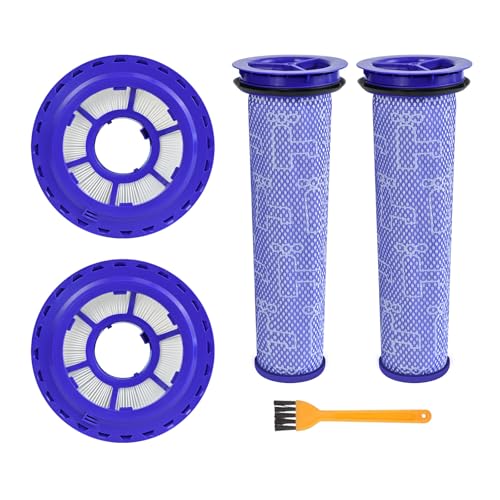
The first filter is the stick filter inside the bin handle. To remove it, press the red release catch on top of the carry handle to detach the clear dirt container from the vacuum body. Once the clear dirt container is off, look at the top rim of the handle assembly. Press the purple release button to open the top cap, then grasp the fabric tab to pull out the stick filter.
The second filter is the round disc filter inside the ball wheel. Look directly at the center hub on the side of the large ball wheel. Twist the central circular dial counterclockwise until it releases, then pull the outer plastic shell off the ball. Turn the circular filter cartridge a quarter turn counterclockwise to unlock it, then lift it straight out.
Step-by-Step Washing Routine for Both Filters
Washing these filters takes less than ten minutes at your sink without tools or chemicals. Plain cold tap water is the only safe way to clean the fibers without damaging their structure.
- Tap out dry dust: Tap the plastic frames gently against the inside of a trash can to knock loose surface dust, pet hair, and lint. Removing loose dirt first keeps water from turning that dust into thick mud that clogs the inner pores.
- Flush the stick filter: Hold the stick filter inside the bin handle under a cold tap. Let cold water run through the open top cone so it flows outward through the fabric. Squeeze the foam body gently with your hands as the water runs through it. Turn the filter over, rinse the outside, and continue squeezing gently for two minutes until the runoff is clear.
- Rinse the round disc filter: Hold the round disc filter inside the ball wheel under cold water. Direct the stream into the center ring so water flows across the pleats from the inside out, washing trapped dust away from the folds. Fill the inner plastic cavity with cold water, cover the opening with your hand, and swirl gently to flush out fine grit.
- Tap away trapped silt: Gently tap the hard plastic edge of the round disc filter against the palm of your hand over the sink basin. This light vibration frees microscopic silt trapped between the pleats. Keep rinsing under the tap until the draining water runs clear.
- Shed excess water: Do not twist or wring the stick filter, because twisting rips the stitched seams. Press it firmly between your flat palms to squeeze out pooled water. For the round ball filter, hold the rigid plastic frame and give it several brisk downward shakes over the sink to dislodge droplets caught in the pleats.
Drying Guidelines and How to Check for Full Dryness
Letting both filters dry until they are completely free of moisture is the most critical step in this entire routine. Trapped water will ruin an upright vacuum motor within seconds. Allow at least 24 hours of natural air-drying time, though humid rooms can require up to 48 hours.
Choose a warm spot with strong air circulation. Stand the stick filter upright on its wide plastic base on a clean towel so air moves through its hollow center. Place the round disc filter flat on the towel with its pleated side facing down, allowing gravity to pull water out of the folds. Setting the parts near an open window or a circulating fan speeds up drying naturally.
Before snapping either part back into your vacuum, use this quick checklist to confirm no moisture remains:
- The seam check: Press your fingers along the thick stitched edge at the top of the stick filter. Seams hold dampness long after the thin outer fabric feels dry.
- The core squeeze check: Squeeze the center of the foam stick filter between your thumb and forefinger. If your skin feels cool or clammy, moisture remains trapped inside the foam cells.
- The paper towel check: Press a dry paper towel firmly into the pleats of the round disc filter. If the paper towel picks up even a tiny damp spot, the filter needs more drying time.
- The sniff check: Smell both filters up close. Dry, clean filters have no odor. If you notice a sour or wet-laundry smell, moisture lingered too long. Rinse the filter again with cold water and dry it in an area with better airflow.
Common Washing Mistakes That Ruin Filters and Motors
Simple cleaning mistakes can permanently destroy your filters or kill your vacuum motor. Knowing what to avoid saves you from costly repairs or having to replace the entire machine.
The most dangerous mistake is reinstalling filters while they are still slightly damp. Suction pulls leftover water droplets directly into the motor housing. Water contacts the electrical wiring and spinning bearings, causing short circuits, motor burnouts, or tripped breakers. Even if the motor survives, wet fibers trap dust instantly, creating a hard crust that suffocates suction.
Never wash either filter with laundry detergent, dish soap, or bleach. Soap leaves behind a sticky film that does not rinse out of dense filter paper or tight foam pores. That residue dries into a tacky coating that glues dust to the fibers, permanently choking airflow. Plain cold tap water washes away dust without leaving residues behind.
Avoid hot water, clothes dryers, hair dryers, and ovens. Hot water warps the plastic ring on the round disc filter, preventing it from sealing properly inside the ball wheel. Direct heat from hair dryers or clothes dryers melts the adhesive holding the paper pleats and shrinks synthetic fibers.
Remember that your upright vacuum is built for dry dirt only. If pets create wet stains on rugs, do not vacuum them up. Using a carpet cleaner for tough stains and odors handles wet pet messes safely without pulling moisture into your vacuum. For older, dried-in spills, a carpet cleaner for stubborn stains removes deep grime while keeping your dry vacuum filters protected.
Washing Versus Replacing: When to Buy New Filters
Both filters on your upright vacuum are washable and reusable, but they do not last forever. Microscopic grit and pet dander slowly wear down the filter fibers over time. Regular washing clears surface dust, but fine particles eventually become trapped deep inside the material.
Inspect and wash your filters at least once every month. Even with regular washing, filters generally need replacement every 6 to 12 months. If you spot any of these warning signs, washing will no longer restore performance, and you should install a fresh set:
- Frayed or thin fabric: If the stick filter shows holes, thinning spots, or unraveled seams, dirty air will bypass the cloth and enter the motor.
- Crushed or separated pleats: If the paper pleats in the round ball filter are torn or pulling away from the plastic frame, fine dust escapes straight into your room.
- Cracked rubber seals: The round disc filter relies on a flexible rubber gasket to maintain an airtight seal against the motor housing. If that gasket cracks or hardens, suction drops.
- Permanent discoloration: If the filter fabric remains dark brown or grey after a thorough rinse, the pores are permanently clogged with fine silt.
- Lingering odors: If your vacuum emits a stale dog odor when running despite completely dry filters, pet oils have saturated the fibers beyond recovery.
Choosing Spare Filters and Upright Vacuum Attachments
Waiting 24 to 48 hours for your filters to air-dry can leave you without a working vacuum when pet hair builds up on your floors. Keeping an extra set of replacement filters in your closet solves this problem. You can install your clean, dry spare set immediately, vacuum your home, and let the washed pair dry on a towel without rushing the process.
When selecting spare filters and replacement parts for your upright vacuum, check these practical features:
- Complete two-piece sets: Ensure the replacement set contains both the stick filter for the bin handle and the round disc filter for the ball wheel to keep both stages of filtration balanced.
- Precise model fit: Confirm that the parts match the Ball Animal 2 series, including related upright models such as DC41, DC65, DC66, UP13, and UP20.
- Pliable rubber gaskets: Make sure the round disc filter includes a flexible rubber rim that forms an airtight seal against the vacuum body so pet dander cannot escape.
- Floor nozzle maintenance: Good filtration works hand-in-hand with an unobstructed intake. While servicing your filters, check your floor nozzle and clear wrapped pet hair from the spinning brush roller so your restored airflow pulls dirt out of carpets efficiently.

- VC Score9.8
BCP Score is a ranking system developed by bestcleanerproducts.com. BCP Score has no relationship or impact from any manufacturers or sales agent websites. Learn more
- Brandisinlive

- VC Score9.4
BCP Score is a ranking system developed by bestcleanerproducts.com. BCP Score has no relationship or impact from any manufacturers or sales agent websites. Learn more
- BrandInnovaty

- VC Score9.4
BCP Score is a ranking system developed by bestcleanerproducts.com. BCP Score has no relationship or impact from any manufacturers or sales agent websites. Learn more
- BrandLemige

- VC Score9.4
BCP Score is a ranking system developed by bestcleanerproducts.com. BCP Score has no relationship or impact from any manufacturers or sales agent websites. Learn more
- BrandSyxtidy

- VC Score9.2
BCP Score is a ranking system developed by bestcleanerproducts.com. BCP Score has no relationship or impact from any manufacturers or sales agent websites. Learn more
- BrandKaulolado

- VC Score9.2
BCP Score is a ranking system developed by bestcleanerproducts.com. BCP Score has no relationship or impact from any manufacturers or sales agent websites. Learn more
- BrandAunifun
- VC Score9.2
BCP Score is a ranking system developed by bestcleanerproducts.com. BCP Score has no relationship or impact from any manufacturers or sales agent websites. Learn more
- BrandFanulter

- VC Score9.2
BCP Score is a ranking system developed by bestcleanerproducts.com. BCP Score has no relationship or impact from any manufacturers or sales agent websites. Learn more
- BrandAryavos

- VC Score9.2
BCP Score is a ranking system developed by bestcleanerproducts.com. BCP Score has no relationship or impact from any manufacturers or sales agent websites. Learn more
- BrandFre.Filtor

- VC Score9.2
BCP Score is a ranking system developed by bestcleanerproducts.com. BCP Score has no relationship or impact from any manufacturers or sales agent websites. Learn more
- BrandEstelife

- VC Score8.6
BCP Score is a ranking system developed by bestcleanerproducts.com. BCP Score has no relationship or impact from any manufacturers or sales agent websites. Learn more
- BrandScienraise
Last update on 2026-10-01 / Affiliate links / Images, Product Titles, and Product Highlights from Amazon Product Advertising API
FAQs
How often should I clean the filters on a Dyson Ball Animal 2?
Wash both filters at least once every month under normal use. If you have multiple pets that shed heavily, vacuum thick carpets daily, or clean up fine construction dust, rinse the stick filter every two to three weeks to maintain strong suction.
Can I wash the clear dirt container with water while the filters dry?
You can wipe the inside of the clear dirt container with a damp cloth, but do not wash the upper cyclone assembly under running water or submerge it in a sink. The cyclone ducts trap water easily, which can enter the motor and cause electrical damage when you turn the machine back on.
What should I do if my vacuum suddenly cuts out while running?
If your vacuum stops unexpectedly, a clogged filter has likely caused the motor to overheat, tripping the built-in thermal safety switch. Unplug the machine immediately and let it cool for at least 60 minutes. While it cools, remove and wash both filters, check the hose and floor nozzle for clogs, and let all parts dry completely before restarting.
Why does my vacuum still smell dusty after washing the filters?
A dusty or stale smell after washing usually indicates the filters were reinstalled before they were completely dry, which allows bacteria to grow in the damp fibers. It can also mean pet dander oils have permanently soaked into the filter material after months of use. Letting the filters dry for another full day or replacing them with a fresh set will resolve the smell.


How to Refinish a Fiberglass Pool

How Do You Keep Raccoons Out of Your Pool?

How to Fix Cyanuric Acid in Your Pool

How to Shape a Pool Cue Tip to Stop Miscues

Best Far Infrared Sauna Sauna Heats: Top Picks of 2026

11 Best Far Infrared Sauna Carbon Fiber Heaters of 2026 For Balanced Full-Body Heat

11 Best Carbon Far Infrared Sauna of 2026 For Even Heat

10 Best Bluetooth Speaker For Sauna of 2026 For Heat and Steam








