
How Much Does a Handheld Vacuum Cost in 2026?

A dependable handheld vacuum is generally an inexpensive household purchase, but specialized features quickly raise the cost. The main difference comes down to whether the chores involve simple daily dusting or lifting stubborn pet hair off upholstery. Light crumb cleanups need very little machinery, but deeper messes demand a lot more pulling power.
Several key parts change what you pay. Motor strength tops the list, since better suction keeps the vacuum from clogging on heavy debris. Battery cleaning time also matters, because a good charge lets you finish an entire vehicle instead of cutting out halfway through the job. Helpful tools like a powered spinning roller make a noticeable difference on fabric, while washable filters keep ongoing maintenance simple. The breakdown below explains what each tier delivers so choosing the right fit feels straightforward.
Most handheld vacuums fall into three clear budget tiers
Shopping for a handheld vacuum in 2026 comes down to three main budget tiers. Each price level provides a distinct combination of motor power, battery cleaning time, and attachment quality. Knowing what each tier offers helps you choose the right tool without paying for features you do not need.
Entry-level vacuums under thirty dollars handle quick surface crumbs
Vacuums priced under thirty dollars focus on simple, lightweight convenience for quick dry cleanups. Weighing around one pound, these compact units are easy to handle across kitchen counters and window sills. They run on basic motors that generate enough airflow to sweep up loose dust, breadcrumbs, and coffee grounds from hard, flat surfaces.
However, these budget models come with clear limits. The suction cannot pull heavy dirt out of thick fabrics or car carpets. Accessories are limited to basic plastic crevice tools and small dusting brushes. The battery cleaning time, also called runtime, usually tops out at ten or twelve minutes, followed by four to six hours on a charger.
Mid-tier models between thirty and sixty dollars balance power and runtime
The thirty to sixty dollar range represents the sweet spot for most car owners and busy households. In this tier, motors deliver around fifteen thousand pascals of suction, a suction measurement shortened to Pa on packaging. This extra pull lifts denser debris like garden soil and driveway sand from vehicle floorboards.
Mid-tier cleaners also include versatile accessories like flexible extension hoses, wider floor nozzles, and washable filters. Many recharge through standard USB ports, and the battery cleaning time extends to fifteen or twenty minutes of continuous use.
Premium options between sixty and eighty dollars tackle stubborn pet hair
Vacuums in the sixty to eighty dollar bracket are built for heavy-duty cleanups and shedding pets. High-speed motors push up to twenty thousand pascals of suction measurement while maintaining steady airflow as the dust cup fills.
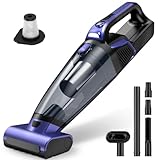
The standout feature in this tier is the motorized brush. This cleaning head houses a powered spinning roller with stiff bristles that beat against fabric to pull out embedded pet fur. You also get digital displays showing remaining battery life, faster charging cycles, and convenient push-button dust cups.
Motor power and motorized tools drive up the cost
Understanding why two handheld vacuums of similar size carry different price tags comes down to internal components. Differences in motor engineering, cleaning head design, battery circuits, and filtration explain why some units cost twice as much as others.
High-speed motors generate stronger suction measurement
The internal electric motor is the single most expensive component in any cordless vacuum. Budget cleaners rely on traditional brushed motors that pull modest suction measurements between nine thousand and twelve thousand pascals. They handle loose surface dust, but they struggle with heavier debris and can overheat if run continuously on thick carpets.
Higher-priced handheld vacuums upgrade to high-speed motors that spin at up to fifty thousand revolutions per minute to generate fifteen thousand to twenty thousand pascals of suction measurement. Building a motor that spins that fast without burning out requires high-grade copper wiring, precision bearings, and thermal protection. Those parts increase production costs, but they give the vacuum the raw pulling force needed to extract sand and heavy crumbs from deep carpet pile.
A powered spinning roller requires dedicated electrical hardware
A standard handheld vacuum relies purely on air movement to lift dirt through a plain plastic nozzle. This setup works on smooth tables, but it fails on pet fur woven into couch cushions or car seats. Fur has microscopic barbs that cling to fabric fibers like Velcro, resisting air suction alone.
To solve that problem, premium models include a motorized brush. This attachment contains a miniature electric motor, drive belt, and spinning brush roller built directly into the floor nozzle. As the roller spins, stiff bristles beat the fabric, sweeping the hair free so the suction can carry it away. Adding this powered roller head requires internal wiring through the attachment neck and safety switches to stop the roller if it jams, driving up the retail price.
Battery management circuits and multi-stage filtration
In low-cost cleaners, basic lithium cells power the motor without advanced circuitry. As the battery drains, suction drops sharply, leaving the cleaner weak during the final minutes. Pricier models incorporate intelligent battery boards that deliver steady, fade-free suction until the battery is empty, alongside digital screens that report exact battery percentages.
Filtration also affects the price. Budget vacuums use thin mesh screens that let microscopic dust blow back into the room. Better vacuums use multi-stage filtration with washable fine dust filters, often called HEPA filters, which capture tiny particles like pollen and pet dander. Airtight canisters with silicone gaskets prevent suction leaks, adding to production costs while keeping your indoor air clean.
Match your cleaning mess to the right budget tier
Choosing the right handheld vacuum means matching your cleanup tasks to the capabilities of each budget tier. Spending top dollar on specialized tools makes little sense for clearing dry crumbs off a counter. Similarly, buying an entry-level model to clean up after heavy-shedding pets leads to frustration.
Quick indoor pickups and light household dusting
If you live in a home without shedding pets, an entry-level vacuum under thirty dollars covers almost all your daily needs. In a typical kitchen or home office, messes consist of dry, loose items resting on smooth surfaces. Examples include dry cereal dropped under the table, coffee grounds near the counter, or dust on a keyboard. A lightweight cleaner with a standard wide floor nozzle clears these messes in seconds, and its small footprint fits easily inside a drawer or cabinet.
Vehicle detailing and automotive floorboards
Cleaning a car interior requires more suction and better attachments than sweeping a kitchen counter. Outdoor dirt, garden mulch, and coarse sand get ground deep into footwells by shoes. Crumbs settle deep into seat cracks, and fine dust gathers along dashboard vents. For vehicle maintenance, a mid-tier model between thirty and sixty dollars is the most effective choice.
The fifteen thousand pascals of suction measurement found in this price range provide the muscle needed to lift heavy dirt particles out of carpet pile. A flexible extension hose lets you maneuver around pedals and under seat adjustment rails where a rigid vacuum body cannot fit. A long crevice nozzle reaches down into door pockets and between the center console and seats. Also, models charging via standard USB ports stay charged right in your vehicle.
Homes with shedding pets and fabric upholstery
Dog and cat hair weaves tightly into fabric couches, carpeted stairs, and car seats. Running a plain plastic suction nozzle over fabric furniture often slides the hair into tight clumps without pulling it off the cloth. Spending sixty to eighty dollars for a unit with a motorized spinning roller is the most practical move because the spinning bristles actively pull the hair out of the fibers.
Remember that dry handheld cleaners are designed strictly for dry debris. If you face wet pet messes, juice spills, or muddy paw prints, running a dry handheld vacuum will draw dirty liquid directly into the motor fan, ruining the appliance. For wet spills and deep carpet stains, using a dedicated carpet cleaner for tough stains and odors is the safe choice because it uses cleaning solution and a wet extraction pump to pull liquid out of the fabric safely.
Watch out for battery wear and filter replacement costs
The purchase price is only the starting point of what a handheld vacuum costs. Over months of use, hidden maintenance requirements and battery degradation can turn an ultra-cheap cleaner into an expensive purchase. Checking a few critical maintenance factors before you buy helps you avoid unnecessary expenses down the road.
- Battery lifespan and replacement availability: Cordless vacuums rely on rechargeable lithium batteries that naturally lose capacity over time. After a couple of years, a battery that once lasted fifteen minutes may only run for three minutes. Many low-cost cleaners seal the battery inside the housing, forcing you to discard the whole unit when it fails. If you want to know what to budget down the road, check how much a new battery costs for a cordless vacuum to decide whether replacing a worn pack or buying a new machine makes sense.
- Washable fine dust filters versus disposable replacements: Every handheld vacuum relies on an internal filter to keep dirt out of the motor. Some bargain models use paper filters that cannot be washed. Once dust clogs the pores, you must throw the filter away. Buying replacement filters can quickly cost more than the vacuum itself. Always confirm that the cleaner includes a washable fine dust filter that can be rinsed under cold water, dried, and reused.
- Charging speed and cable standard: Budget vacuums frequently ship with cheap, proprietary wall chargers that take six to eight hours to fill a small battery. Look for vacuums that feature standard USB charging ports, such as USB-C connectors. Standard ports allow you to use existing phone chargers or vehicle ports while cutting charge times down to two or three hours.
- Dirt cup latches and plastic durability: Latches holding the dirt cup to the motor handle repeated physical stress. On poorly made budget units, these latches are molded from thin plastic that can snap if bumped. Once the latch breaks, the dust cup will not seal against the motor gasket, destroying suction completely. Check that the dirt cup features a solid push-button release or twist-lock mechanism.
Check the cleaning head and attachments before you buy
Selecting the right cleaning head setup ensures your handheld vacuum can handle your actual messes without wasting your time. Look closely at how the intake nozzle connects to the main body. A wide, open floor nozzle works best for gathering scattered dry spills quickly on flat hard surfaces, while a slender crevice attachment is necessary for reaching tight seams along sofa cushions and car seat rails. Check that attachments click securely into the housing with a firm mechanical lock rather than relying on a loose friction fit that can slide off mid-clean.
If you deal with pet hair or textured fabrics, prioritize a cleaning head with a powered spinning roller. Unlike static bristle brushes that simply scrape the surface, a spinning roller uses stiff brush bars to agitate fabric fibers, lifting hair, lint, and dander into the airflow. Make sure the roller head includes an easy-release lever so you can pull the brush out to cut away tangled threads or long hair without needing special tools.
Finally, examine the filter access right behind the cleaning head. A well-designed handheld vacuum lets you detach the dust cup and remove the fine dust filter with a single press, letting you empty dirt into the trash without touching grime. Check that the intake port includes a one-way rubber flap to prevent collected dirt from spilling back out of the nozzle when you turn off the power.
- VC Score9.2
BCP Score is a ranking system developed by bestcleanerproducts.com. BCP Score has no relationship or impact from any manufacturers or sales agent websites. Learn more
- BrandRELIDOL

- VC Score8.8
BCP Score is a ranking system developed by bestcleanerproducts.com. BCP Score has no relationship or impact from any manufacturers or sales agent websites. Learn more
- BrandGxzsk

- VC Score8.8
BCP Score is a ranking system developed by bestcleanerproducts.com. BCP Score has no relationship or impact from any manufacturers or sales agent websites. Learn more
- BrandBLACK+DECKER
- VC Score8.8
BCP Score is a ranking system developed by bestcleanerproducts.com. BCP Score has no relationship or impact from any manufacturers or sales agent websites. Learn more
- BrandBLACK+DECKER

- VC Score8.6
BCP Score is a ranking system developed by bestcleanerproducts.com. BCP Score has no relationship or impact from any manufacturers or sales agent websites. Learn more
- BrandBLACK+DECKER

- VC Score8.6
BCP Score is a ranking system developed by bestcleanerproducts.com. BCP Score has no relationship or impact from any manufacturers or sales agent websites. Learn more
- BrandFanttik

- VC Score8.4
BCP Score is a ranking system developed by bestcleanerproducts.com. BCP Score has no relationship or impact from any manufacturers or sales agent websites. Learn more
- BrandVACFAM

- VC Score8.2
BCP Score is a ranking system developed by bestcleanerproducts.com. BCP Score has no relationship or impact from any manufacturers or sales agent websites. Learn more
- BrandKMM

- VC Score8.0
BCP Score is a ranking system developed by bestcleanerproducts.com. BCP Score has no relationship or impact from any manufacturers or sales agent websites. Learn more
- BrandBELIBUY

- VC Score8.0
BCP Score is a ranking system developed by bestcleanerproducts.com. BCP Score has no relationship or impact from any manufacturers or sales agent websites. Learn more
- BrandLIPUWS
Last update on 2026-10-13 / Affiliate links / Images, Product Titles, and Product Highlights from Amazon Product Advertising API


How to Refinish a Fiberglass Pool

How Do You Keep Raccoons Out of Your Pool?

How to Fix Cyanuric Acid in Your Pool

How to Shape a Pool Cue Tip to Stop Miscues

Best Far Infrared Sauna Sauna Heats: Top Picks of 2026

11 Best Far Infrared Sauna Carbon Fiber Heaters of 2026 For Balanced Full-Body Heat

11 Best Carbon Far Infrared Sauna of 2026 For Even Heat

10 Best Bluetooth Speaker For Sauna of 2026 For Heat and Steam


