Carpet grit has a sneaky habit of settling below the surface, even after the room looks tidy. The bissell powerforce helix bagged upright vacuum takes a traditional, no-fuss approach by pairing upright suction with a bagged collection system. That setup keeps collected dust enclosed instead of dropping it into an open bin that must be tipped over the trash. For anyone tired of seeing a small cloud puff back into the room during emptying, that difference matters more than a flashy display or another electronic mode.
The bagged dirt system is the main attraction, but it also creates an ongoing expense because replacement bags need to stay on hand. Frankly, forgetting to reorder them can bring a cleaning session to a dead stop. The tradeoff is cleaner disposal, less contact with accumulated debris, and fewer dusty bin walls to wipe afterward. That can make routine upkeep feel less messy, especially after vacuuming pet hair, tracked-in soil, crumbs, and the fine powder that gathers near doorways.
The upright design suits broad passes across carpeted bedrooms, hallways, and living areas. A Helix dirt-separation system helps manage debris as it enters the machine, supporting steady airflow while the bag fills. Still, the machine isn't built to float around furniture like a featherweight stick vacuum. Tight turns, steep stairs, and cramped corners may require more patience, so homes packed with low tables or narrow furniture gaps should keep that limitation in mind.
Floor-height adjustment gives the cleaner more flexibility across different carpet piles and compatible bare floors. Setting the nozzle correctly is worth the extra second because a position that's too low can make pushing harder, while one that's too high may leave grit behind. The wide cleaning path helps cover open rooms with fewer passes, which is handy when vacuuming feels like one more chore wedged into a busy afternoon. Along walls, though, deliberate edge passes are still useful because upright nozzles rarely pull every crumb from a baseboard in one casual sweep.
Onboard tools extend the machine beyond open flooring. A crevice tool can reach beside cushions and along trim, while an upholstery attachment helps collect loose hair and crumbs from fabric surfaces. The hose adds reach, yet it won't replace the freedom of a compact handheld unit for quick spot jobs. In plain English, this vacuum makes the most sense as a dependable main cleaner rather than a tiny grab-and-go machine.
Maintenance stays fairly familiar: replace the bag before it becomes packed, clear hair from the brush area, inspect the hose for clogs, and clean or replace filters according to the product instructions. Skipping those steps can weaken pickup and make the motor sound strained. The routine isn't complicated, but it isn't completely hands-off either. A little attention keeps the upright vacuum performance from fading after months of repeated carpet cleaning.
Noise, storage size, cord handling, and bag availability deserve consideration before buying. A full-size upright needs a dedicated closet corner, and the power cord must be managed manually during use. Even so, corded operation avoids battery anxiety and lets longer cleaning sessions continue without a charging break. The result is a practical machine for steady household cleanup, provided contained disposal and carpet coverage matter more than cordless convenience or ultra-light handling.

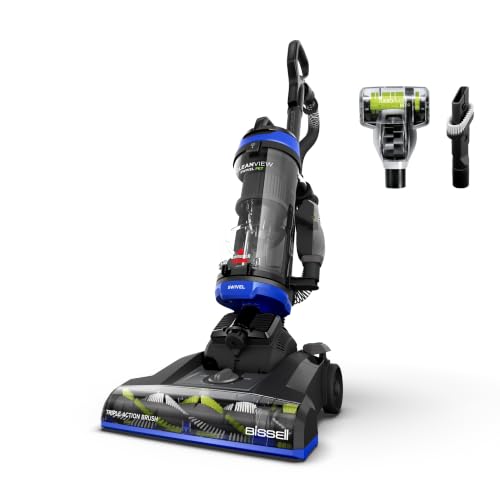
EVERY PURCHASE SAVES PETS. BISSELL proudly supports BISSELL Pet Foundation and its mission to help save homeless pets.NEW 2024 MODEL WITH ACTIVE EXTENSION WAND. Clean hard-to-reach areas quickly and easily.SWIVEL STEERING. Maximize maneuverability to clean around furniture and corners.TRIPLE ACTION
Key specs
- Steering design
- Swivel steering
- Debris containment
- Features an easy-empty bagless dirt tank rather than disposable bagged containment.
Pros:
- Swivel steering allows easier maneuvering around furniture and tight corners
- Multi-cyclonic suction system helps separate dirt inside the upright canister
- Includes an extension wand for above-floor cleaning reach
- Triple Action Brush Roll is engineered to lift and clean debris
Cons:
- Bagless dirt tank requires manual dumping that can release dust into the air
- Cord length and total machine weight are not specified in the listing

POWERFUL SUCTION: Targets dirt, dust, and more for a thorough clean.XL DIRT CONTAINER: Holds up to 2 liters of debris.TURBOPASS BRUSH ROLL: TURBOPASS Brush Roll and a wide cleaning path help provide powerful pet hair pick-up with every pass.SCATTER FREE TECHNOLOGY: Clean hard floors with less effort
Key specs
- Pet hair handling
- Pet hair brush roll and tools
- Dirt containment style
- Employs a large-capacity bagless container instead of a traditional sealed vacuum bag.
Pros:
- Dedicated pet hair brush roll is tailored for lifting stubborn fur from carpets
- Includes specialized pet hair tools for spot cleaning furniture and upholstery
- Large dirt container reduces how often you need to stop and empty debris
Cons:
- Lacks swivel steering for nimble maneuvering around furniture
- Power cord length and machine weight are omitted from product specifications

Every Purchase Saves Pets. BISSELL proudly supports BISSELL Pet Foundation and its mission to help save homeless pets.LIGHTWEIGHT (10 LBS). Powerful suction in a lightweight and compact vacuum makes cleaning functional and easily maneuverable.FULL SIZE POWER, COMPACT DESIGN. Powerful suction in a li
Key specs
- Form factor
- Compact upright
- Above-floor reach
- Includes a quick release wand to reach baseboards and higher surfaces directly.
Pros:
- Compact upright footprint fits comfortably into dorms, apartments, and small closets
- Quick-release wand provides fast access for above-floor dusting and edges
- Engineered to deliver full-size upright power in a smaller profile
Cons:
- Compact design holds less dirt capacity than full-size standard uprights
- Specific weight, cord length, and bin dimensions must be verified by the buyer

13" Cleaning Path Width, Lightweight - 12 lbsIncludes a crevice tool, combination dusting brush/upholstery tool & Extension wand; Attachments store in back of vacuum5 Position height adjustment10 Amp motor with 30' Cord3 Stage Filtration system
Key specs
- Containment type
- Bagged collection
- Build category
- Designed as a commercial-grade upright for high-frequency cleaning tasks.
Pros:
- Bagged containment encloses collected dirt and prevents dust clouds during disposal
- Commercial construction is designed to withstand rigorous daily cleaning routines
- Lightweight build makes carrying between multiple floors and rooms easier
Cons:
- Requires purchasing and replacing disposable vacuum bags over time
- Listing omits nozzle width, cord reach, and onboard attachment details

POWERFUL SUCTION TECHNOLOGY: Features the innovative Helix Dirt Separation System for superior dirt removal and extended cleaning performance on both carpets and hard floors.VERSATILE MULTI-SURFACE CLEANING: 5 adjustable height settings allow seamless transitions between different floor types - from
Key specs
- Height settings
- 5 adjustable positions
- Corded reach
- 23 ft cord
- Floor types supported
- Carpet
- Tile
- Hardwood
Pros:
- Five manual height adjustments adapt cleaning across bare floors and plush carpets
- Scatter-Free Technology prevents debris from flicking across hard surfaces
- 23-foot power cord offers solid operational radius for standard rooms
- 13-pound listed weight remains manageable for an upright cleaner
Cons:
- Helix bagless dirt tank requires manual washing and frequent emptying
- Does not feature swivel steering for turning around tight obstacles
Last update on 2026-07-28 / Affiliate links / Images, Product Titles, and Product Highlights from Amazon Product Advertising API
Bissell CleanView Swivel Upright Vacuum Review
Pet hair pressed into carpet, crumbs scattered around chair legs, and dust hiding beside baseboards can turn a routine cleanup into a stop-and-start hassle. The bissell powerforce helix bagged upright vacuum keyword suggests a traditional bagged cleaner, yet the product described here is the newer Bissell CleanView Swivel, a bagless upright with a dirt tank, swivel steering, and an active extension wand. That difference isn’t a minor technicality because it changes disposal, maintenance, and the way the machine fits into everyday cleaning habits. The Bissell CleanView Swivel upright vacuum is built around easier movement, stronger surface agitation, and practical access to awkward areas rather than sealed bag disposal.
Bissell CleanView Swivel
The shortened name, Bissell CleanView Swivel, fits the machine better than a long string of feature labels. Its design centers on three everyday problems: steering around furniture, lifting embedded debris, and reaching beyond the main floor head. The new 2024 model adds an active extension wand, giving the vacuum more purpose once dust leaves the middle of the room and settles along trim, upholstery, or narrow gaps. That extra reach won’t turn a full-size upright into a tiny handheld, but it makes the machine less limited than a basic carpet-only cleaner.
Swivel steering is the feature most likely to be noticed during the first few minutes of use. A rigid upright often needs to be pulled backward, straightened, and pushed again whenever a table leg blocks the path. This model can pivot more naturally around corners and furniture, reducing the awkward shuffling that makes vacuuming feel slower than it should. The body still has full-size upright bulk, though, so tight stair landings and cramped closets may remain a pain in the neck.
The easy-empty dirt tank removes the need to keep replacement bags in a cabinet. Collected debris stays visible, making it easy to judge when the tank needs attention instead of guessing how full a hidden bag might be. There’s a catch, of course: opening a bagless tank can release fine dust if it’s emptied too quickly or held above the trash. A low, controlled release helps, but anyone who strongly prefers sealed disposal may still favor a true bagged upright.
Triple Action Brush Roll On Everyday Messes
The Triple Action Brush Roll is designed to loosen, lift, and remove embedded dirt and pet hair from multiple surfaces. That sequence matters most on carpet, where hair can cling to fibers while fine grit settles below the visible surface. Loose debris may disappear in one steady pass, while traffic lanes and flattened pet hair often benefit from slower, overlapping movement. The brush roll supplies agitation that suction alone may not provide, especially after dirt has been walked into the pile.
Pet hair rarely behaves like ordinary dust. Short strands cling to upholstery, longer strands wrap around moving parts, and fluffy clumps gather along walls where the main cleaning path can miss them. The embedded pet hair pickup offered by the brush roll addresses the material trapped in carpet, but routine brush inspection is still necessary. Hair wrap can build gradually, so occasional manual removal keeps the roll from turning into a tightly wound spool.
Different surfaces call for different expectations. Medium-pile carpet gives the brush room to agitate fibers, while very thick rugs may require slower movement and extra effort from the person pushing the vacuum. On low-pile flooring, the head should move more freely, though lightweight debris can behave unpredictably near edges. The multi-surface cleaning approach adds flexibility, but it doesn’t guarantee identical results on every rug, carpet, tile pattern, or floor seam.
The listed product details don’t provide measured suction figures, so performance shouldn’t be dressed up with made-up numbers. What can be assessed is the functional pairing of multi-cyclonic suction with the active brush roll. The cyclonic system is intended to separate dirt from the airflow as debris enters the tank, helping the vacuum maintain useful pickup during a cleaning session. Filters, internal passages, and the tank still need regular care because even a well-designed airflow path can weaken when dust and hair accumulate.
Scatter-Free Technology On Hard Floors
Hard-floor messes have an annoying habit of skittering away from a spinning brush. Rice, cereal bits, dry soil, and pet-food crumbs can shoot forward or sideways before the nozzle has a chance to collect them. Scatter-Free Technology is meant to reduce that behavior, allowing the floor head to capture debris with less chasing. It’s a practical addition for mixed-floor homes where an upright must move from carpet to sealed hard surfaces without creating a fresh mess.
The phrase “less scatter” is worth taking literally. It doesn’t promise that every lightweight particle will stay perfectly still, particularly on uneven tile, deep grout lines, or flooring with gaps. A slower pass gives the hard-floor debris control more time to work, while rushing can push crumbs ahead of the nozzle. Edge areas may also need a deliberate second pass because debris tucked against a baseboard doesn’t always enter the main suction path cleanly.
Fine dust presents a different challenge than large crumbs. It can settle into seams, cling through static, or collect beneath furniture where the upright head can’t fully reach. The active extension wand becomes useful here, especially with a suitable attachment for corners and narrow spaces. The wand adds reach, though hose tension may pull against the machine if it’s stretched too far, so positioning the upright securely helps prevent tipping.
Swivel Steering In Crowded Rooms
Furniture-heavy rooms expose the weakness of a stiff vacuum neck almost immediately. Chairs, side tables, plant stands, and coffee-table legs interrupt the cleaning path every few feet. The swivel steering system lets the nozzle change direction with less backtracking, making curved passes feel more natural than repeated straight-line corrections. That benefit is most obvious in living areas and dining spaces where obstacles are part of every route.
Corner access improves, but steering alone can’t solve every edge-cleaning problem. The floor head still has a fixed width, and the upright body needs enough space to follow behind it. Angling the nozzle can bring suction closer to trim, while the extension wand reach handles sharp corners and narrow gaps the main head can’t enter. That two-step method takes a bit longer, yet it avoids leaving a visible line of dust along the wall.
Low furniture creates another limitation. Swivel control helps the nozzle approach at an angle, but the height of the floor head and main body determines how far the machine can slide underneath. Sofas with very little clearance may remain out of reach, so the wand becomes the more realistic tool. The full-size upright design favors broad floor coverage over ultra-low access, a tradeoff worth recognizing before expecting stick-vacuum flexibility.
Stairs are similarly mixed. The wand can handle edges, risers, and corners, but moving the whole machine step by step may feel cumbersome. A stable position, controlled hose reach, and careful cord management matter more here than quick steering. The upright maneuverability shines on flat floors around obstacles, while staircase cleaning remains a job that demands patience.
Active Extension Wand And Above-Floor Reach
The active extension wand is one of the clearest upgrades in the 2024 model description. Dust rarely respects floor level, and a vacuum that only handles carpet leaves shelves, cushions, trim, and elevated corners for another tool. The wand lets the cleaner move into those spaces without disconnecting from the main machine. That added versatility can reduce the number of separate devices needed for a full-room cleanup.
Upholstery often holds pet hair more stubbornly than carpet. Fibers catch along seams, cushion gaps trap crumbs, and armrests collect fine debris that a large floor nozzle can’t address. The above-floor cleaning capability makes those areas more manageable, provided the right attachment is used and the fabric tolerates vacuuming. Gentle, overlapping passes are usually more sensible than pressing hard and dragging aggressively across delicate material.
Baseboards, window tracks, and ceiling edges benefit from reach rather than raw power. The wand allows targeted cleaning where dust builds into visible lines or fuzzy clumps. Hose length and resistance will still set boundaries, so stretching to the absolute limit can make the upright unstable. The extended cleaning reach is genuinely useful, but it works best when the machine is repositioned instead of yanked across the floor from several feet away.
Bagless Dirt Tank And Maintenance Tradeoffs
The product differs sharply from the bissell powerforce helix bagged upright vacuum phrase because the CleanView uses a bagless tank. That setup avoids recurring bag purchases and makes collected debris visible after each cleaning session. The practical upside is simple: no hidden fill level and no last-minute search for the correct replacement bag. The downside is more direct contact with dust during emptying.
A bagless tank rewards careful habits. Holding the container low inside the trash can reduces the distance debris falls and limits the cloud that can rise during release. The easy-empty design simplifies the mechanical step, though “easy” doesn’t mean completely dust-free. Fine particles may cling to the tank walls, so occasional wiping may be needed to keep the container from looking grimy.
Filters play a large role in maintaining airflow. A tank that appears nearly empty can still be paired with a filter coated in fine dust, leading to weaker pickup and a strained motor sound. Regular inspection supports consistent suction performance without relying on exaggerated claims or invented test figures. Cleaning and replacement timing should follow the manufacturer’s instructions because filter materials and care methods can vary.
The brush roll and air pathway deserve the same attention. Long hair can wrap around the roll, while compacted debris can lodge in the hose or internal channels. A quick check after heavy cleaning helps catch clogs and hair buildup before they turn into a noticeable performance drop. Maintenance isn’t complicated, but ignoring it can make any upright feel disappointing well before the machine itself is worn out.
How The CleanView Differs From A Bagged Upright
A true bagged vacuum stores dirt inside a disposable container that can usually be removed with less visible debris exposure. The CleanView instead favors a reusable bagless dirt tank, trading sealed disposal for fewer consumable supplies. That distinction affects more than cost. It also changes how often the collection system is handled, cleaned, and inspected.
The product’s steering and floor-head features also give it a different personality from a basic straight-path bagged upright. Swivel control, Scatter-Free Technology, and the Triple Action Brush Roll emphasize movement and mixed-surface cleaning. A traditional bagged model may appeal more strongly where dust containment is the priority, while this machine leans toward convenience and visible debris collection. Neither approach wins every situation because the better fit depends on which maintenance tradeoff feels less bothersome.
Commercial debris loads require a different category of equipment, and the broader distinction is outlined in industrial floor sweeper options for spaces that deal with larger floor areas and heavier material. The CleanView remains a residential upright intended for household dirt, crumbs, pet hair, and routine flooring care. Treating it like commercial equipment would set the wrong expectation from the start. Its residential cleaning role is defined by maneuverability, brush agitation, and accessible above-floor reach rather than warehouse-scale debris collection.
Practical Strengths And Real Limitations
The most useful combination is swivel steering paired with the active extension wand. One feature improves movement around objects, while the other reaches places the main head can’t enter. Together, they reduce the need to stop, reposition furniture, or bring out a second vacuum for every awkward spot. That doesn’t make the machine weightless, but it does make a full-size upright less rigid in everyday rooms.
The Triple Action Brush Roll is another clear strength because pet hair and embedded dirt need agitation, not just airflow. Its practical value shows up on carpet fibers where surface-only pickup can leave debris behind. The brush-roll cleaning action should help loosen stubborn material, though wrapped hair still needs to be cut or pulled away during maintenance. A self-cleaning brush roll isn’t listed in the supplied details, so no such claim should be assumed.
Scatter-Free Technology gives hard-floor cleaning more control, yet it has reasonable limits. Large crumbs, uneven seams, and debris pressed against walls may still require extra passes or wand work. The reduced-scatter design solves a common annoyance without pretending to eliminate every stray particle. That realistic middle ground is more useful than treating the feature as flawless.
The BISSELL Pet Foundation connection adds a broader dimension to the purchase. BISSELL states that every purchase supports its mission to help save homeless pets, which aligns naturally with a vacuum designed to handle pet hair and household debris. That support is meaningful, but the machine still has to justify itself through daily cleaning practicality, manageable upkeep, and floor-to-furniture versatility. For homes that prefer bagless convenience and easy steering over sealed bag disposal, the feature set has a clear, sensible place.
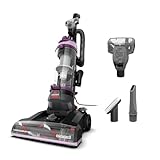
Bissell CleanView 4438 Upright Vacuum Review
Pet hair rarely stays in one polite little pile. It works into carpet fibers, gathers beside furniture legs, and skates across hard flooring the second a vacuum head gets too close. Although the phrase bissell powerforce helix bagged upright vacuum suggests a bagged machine, the product reviewed here is the bagless Bissell CleanView 4438 with a two-liter dirt container, TURBOPASS Brush Roll, and pet-focused tools. That distinction shapes the whole experience, from easier fill-level checks to the dustier reality of emptying a reusable container.
Bissell CleanView 4438
The Bissell CleanView 4438 follows a familiar full-size upright layout, but its feature set leans heavily toward everyday pet messes and broad floor coverage. Strong suction handles loose dust and crumbs, while the powered brush roll tackles debris that has settled deeper into carpet. The design isn’t trying to be tiny, cordless, or delicate. Instead, it aims to cover rooms efficiently without stopping every few minutes to empty a small bin.
A two-liter dirt container is one of the more practical details in the supplied specifications. Larger capacity means fewer interruptions during a whole-home cleaning session, particularly where shedding pets can fill a compact bin surprisingly fast. Of course, more capacity also means the container can become heavier and messier if it’s allowed to pack completely full. Emptying it before debris reaches the maximum line should help preserve airflow and make disposal less awkward.
The product’s upright shape favors open carpet, hallways, and larger rooms over narrow staircases or cramped furniture gaps. Its wide cleaning path covers more floor with each pass, which can trim down the repetitive back-and-forth routine. That width has a downside, though, because a broad floor head won’t slip neatly between tightly spaced chair legs. In crowded areas, slower steering and a little furniture repositioning may still be part of the job.
TurboPass Brush Roll And Pet Hair Pickup
The TURBOPASS Brush Roll is designed to strengthen pet-hair pickup by agitating carpet while the suction pulls loosened debris into the machine. Hair that rests on top of a rug is easy work for many vacuums, but flattened strands and tracked-in grit need more than airflow alone. The rotating brush helps lift that stubborn material from the pile. Several overlapping passes may still be necessary on dense carpet, especially where pets nap or walk repeatedly.
Brush agitation brings a predictable maintenance chore: wrapped hair. Long strands can wind around the roll and gradually interfere with its movement, so routine checks are worth the trouble. The supplied description doesn’t claim a self-cleaning or tangle-free brush, which means manual hair removal should be expected rather than treated as an unusual problem. A small pair of scissors and a careful hand will likely become part of regular upkeep in homes with long-haired pets.
The wide floor head and powered roll work together best on open carpeted spaces where the vacuum can move in steady lines. Quick, rushed passes may collect visible debris, but slower movement gives the pet hair brush roll more time to loosen material below the surface. That’s the practical difference between making a room look cleaner and actually pulling out the dirt that dulls the carpet over time. Thick rugs may require extra effort, while low-pile carpet should feel easier to push across.
Suction And Cyclonic Airflow
The listed powerful suction targets dirt, dust, and general household debris, but no measured airflow or suction figures were provided. That means the machine should be judged by its feature design rather than dressed up with invented numbers. Cyclonic Technology separates debris as air moves through the container, helping reduce the rapid airflow loss that can happen when dirt clogs the system. Even so, no cyclonic vacuum stays strong forever without filter and pathway maintenance.
Fine dust can coat a filter long before the dirt tank looks full. Once airflow becomes restricted, pickup may weaken and the motor can sound more strained, so filter care matters just as much as emptying the container. Cleaning or replacing filters according to the manufacturer’s directions is the sensible approach. Skipping that step can make an otherwise capable vacuum feel tired, and the problem may be maintenance rather than a lack of motor power.
Clogs are another everyday concern, especially when the vacuum collects clumps of fur, paper scraps, or larger crumbs. Inspecting the hose and air channels after a sudden drop in pickup can save a lot of head-scratching. The cyclonic suction system supports consistent performance, but it can’t pull air through a blocked passage. A clear pathway, clean filter, and sensibly filled tank all work together to keep the machine doing its job.
Scatter-Free Cleaning On Hard Floors
Hard flooring exposes a common upright-vacuum flaw: the brush roll can flick lightweight debris away before suction catches it. Scatter Free Technology is intended to reduce that problem, helping the CleanView collect crumbs and dry particles with less chasing. The wording “less scatter” sets a realistic expectation. It should improve control, but it doesn’t promise that every grain of rice or pet-food crumb will stay perfectly still.
Slow, deliberate passes usually give the floor head a better chance to capture loose debris. Fast movement can push particles ahead of the nozzle, particularly across uneven tile or flooring with deep seams. The combination of strong suction and reduced-scatter design should make transitions from carpet to hard flooring less frustrating. Still, debris pressed against baseboards or trapped in grout may call for an attachment rather than another broad pass.
Surface condition matters too. Smooth sealed floors should offer a more predictable path than textured tile, while gaps between boards can hold fine dust beyond the reach of the main head. The CleanView’s multi-surface ability is useful, but it shouldn’t be mistaken for identical performance everywhere. Adjusting pace and using the right tool for edges will often matter more than simply pushing the machine faster.
TurboBrush Tool And Above-Floor Cleaning
The included TurboBrush Tool extends cleaning beyond open floors and gives the vacuum a more useful role around upholstered furniture. Pet hair on cushions, fabric chairs, and carpeted stairs often clings tightly enough that a plain suction nozzle struggles. A compact powered tool adds agitation where the large floor head can’t fit. That makes the attachment especially relevant for recurring fur buildup along couch seams and stair treads.
Small powered attachments can be effective, but they aren’t maintenance-free. Hair may wrap around the tool’s rotating parts, and restricted airflow can weaken its performance. A quick inspection after tackling a heavily furred sofa can prevent tool blockage from becoming a lingering problem. Gentle, overlapping strokes also make more sense than pressing hard, since excessive pressure can slow the rotating brush.
Car interiors, stairs, and upholstery all benefit from a tool that concentrates suction into a smaller working area. Still, hose reach and the weight of the upright body can limit how freely the attachment moves. The TurboBrush advantage is targeted agitation, not cordless mobility. Positioning the vacuum securely before stretching the hose helps reduce tipping and makes the cleaning process less of a wrestling match.
Large Dirt Container And Daily Maintenance
The XL dirt container holds up to two liters of debris, which suits longer sessions and high-shedding periods. Fewer trips to the trash can save time, particularly after cleaning several carpeted rooms in one go. Yet waiting until the container is packed to the brim isn’t wise. Fine dust and fur can compact, making disposal messier and potentially affecting airflow before the tank appears completely full.
Bagless disposal brings both convenience and compromise. There are no replacement bags to buy, and the clear container shows exactly what has been collected. On the other hand, opening the tank can release a dust cloud if it’s held too high over the trash or emptied too aggressively. The bagless cleaning system is economical and easy to monitor, but it won’t provide the same contained disposal as the bagged design suggested by the main keyword.
Routine care should include emptying the tank, checking the filters, clearing the brush roll, and inspecting the hose for blockages. None of those tasks is technically difficult, but they do require consistency. The maintenance tradeoff is straightforward: fewer disposable supplies in exchange for more hands-on cleaning of reusable parts. Letting those chores slide can reduce pickup and make the machine feel less capable than it actually is.
Pros That Matter In Real Cleaning
The strongest advantage is the combination of TURBOPASS agitation and broad floor coverage. Embedded pet hair needs physical loosening, and the powered brush roll addresses that problem more directly than a suction-only floor head. The wide path also reduces the number of passes needed across open rooms. Together, those features make sense for routine carpet cleaning where fur and tracked-in debris return almost as soon as they’re removed.
The two-liter container is another meaningful strength because it cuts down on mid-session emptying. That benefit becomes noticeable during seasonal shedding or after cleaning several rooms back to back. Cyclonic Technology also supports sustained airflow by separating debris within the collection system. The machine still needs maintenance, but its core setup is designed for longer, uninterrupted household cleaning rather than quick spot jobs.
Hard-floor control and the TurboBrush Tool broaden the vacuum’s usefulness beyond carpet. Scatter Free Technology helps limit the irritating spray of lightweight debris, while the powered attachment addresses furniture and stair surfaces. The pet-focused tool set gives the CleanView more flexibility than an upright that only performs well in the middle of a room. BISSELL also states that it is America’s number-one brand in upright vacuums, though the supplied details don’t include the study methodology behind that claim.
Cons And Practical Limitations
The most obvious drawback is that this is not actually a bagged upright vacuum. Anyone searching specifically for sealed bag disposal may be disappointed by the reusable dirt tank and the dust exposure that can happen during emptying. The large capacity reduces disposal frequency but doesn’t eliminate the mess. Dust-sensitive households may view that tradeoff as more significant than the savings on replacement bags.
A full-size upright can also feel bulky in narrow spaces. The wide cleaning path is efficient across open flooring, yet it may struggle between tightly arranged furniture or on compact stair landings. The corded upright design requires outlet changes and cord management during larger cleaning jobs. There’s no battery countdown, which is helpful, but the cord can snag around corners if it isn’t managed carefully.
Brush-roll maintenance is another unavoidable weakness. Pet hair pickup is a central selling point, but the supplied information doesn’t mention a tangle-free mechanism. That means hair wrap may require regular cutting and removal from both the main roll and the TurboBrush Tool. It’s manageable, though hardly glamorous, and skipping it can reduce agitation over time.
The included automotive-cleaner link doesn’t relate directly to household vacuuming, so it’s best treated as a separate maintenance reference rather than forced into the product discussion. From a practical angle, information about using Cataclean catalytic converter cleaner belongs to vehicle upkeep, not carpet or hard-floor care. Keeping those subjects separate prevents misleading connections between unrelated products. The CleanView’s strengths remain rooted in pet hair pickup, broad floor cleaning, and a large reusable dirt container.

Bissell CleanView Compact Turbo 3437F Review
Small rooms can make an ordinary upright vacuum feel like a piece of moving furniture. Tight turns, crowded closets, and narrow gaps quickly expose every extra pound and inch. Although the phrase bissell powerforce helix bagged upright vacuum points toward a traditional bagged machine, the product reviewed here is the bagless Bissell CleanView Compact Turbo 3437F, a 10-pound upright built around compact storage, full-size suction, and easier movement. Its strongest appeal lies in delivering upright cleaning power without forcing a bulky machine into an apartment, dorm room, or similarly limited space.
Bissell CleanView Compact Turbo
The Bissell CleanView Compact Turbo takes a practical middle road between a featherweight stick vacuum and a large conventional upright. At 10 pounds, it should feel less cumbersome during room-to-room cleaning, yet it still uses a full upright floor head rather than a narrow stick-style nozzle. That combination matters in smaller homes where storage is scarce but carpet, rugs, and hard flooring still need regular attention. The compact upright design doesn’t eliminate every handling issue, but it reduces the sense of dragging a heavy appliance through a tight layout.
Its size also changes how often the vacuum is likely to be used. A machine buried behind boxes or wedged into a deep closet tends to stay there until the mess becomes obvious. The lightweight 10-pound body is easier to pull out for routine crumbs, tracked-in grit, and hair that gathers around furniture. That convenience won’t matter much in a wide commercial space, but in a one-bedroom apartment or dorm, it can make frequent cleaning feel less like a production.
Compact construction brings a fair tradeoff. A smaller machine may need more careful positioning around furniture, and its dirt capacity may not match that of the largest full-size uprights. The supplied information doesn’t list the container size, so it would be misleading to claim how often it needs emptying. What can be said is that the space-saving footprint favors easy storage and maneuverability over the oversized capacity found on heavier models.
Full-Size Suction In A Smaller Body
The product description emphasizes full-size power despite the compact frame. That pairing is the heart of the machine’s pitch because small vacuums sometimes sacrifice floor coverage or pickup strength for easier handling. Here, the design aims to keep useful upright suction while trimming weight and bulk. No measured suction figures are provided, so the fairest assessment rests on the intended function rather than invented airflow numbers.
Loose dust, cereal crumbs, dried soil, and everyday debris all place different demands on the floor head. Suction handles lightweight particles, while the upright format helps cover more flooring per pass than a tiny handheld cleaner. The powerful suction system should be most useful during regular maintenance, before dirt becomes heavily packed into thick carpet fibers. Deeply embedded material may still need slower, overlapping passes, because speed rarely does a brush head any favors.
A compact vacuum can feel lively in the hand, which is helpful around chair legs but also encourages rushed movement. Pushing too quickly may leave fine debris behind, particularly along edges or textured carpet. The full-size cleaning approach works better with deliberate passes that give airflow time to pull material into the nozzle. Light weight makes those repeated movements less tiring, though it doesn’t remove the need for sound cleaning technique.
The corded format also avoids the interruption of a depleted battery. Longer sessions can continue as long as an outlet is available, making the machine more dependable for several rooms at once. Of course, the cord must be carried, repositioned, and kept from catching around furniture. That unlimited corded runtime is useful, but it comes with the familiar annoyance of cable management.
Scatter-Free Technology On Hard Floors
Hard flooring can turn lightweight debris into a moving target. A spinning brush or fast-moving nozzle may send crumbs skittering forward, forcing several extra passes across the same area. Scatter-Free Technology is designed to capture messes with less spread, helping the CleanView Compact Turbo behave more predictably on sealed hard surfaces. The wording “less scatter” is sensible because it promises improvement rather than pretending every particle will stay perfectly still.
Floor texture still matters. Smooth laminate or sealed wood should offer a more direct path into the nozzle than tile with deep grout lines or uneven seams. The reduced-scatter design can help control cereal bits, dry pet food, and loose dirt, but debris trapped in a groove may need an attachment or a second pass. Slower movement generally gives suction more time to collect material before the nozzle pushes it aside.
Edges remain another realistic limitation. Crumbs pressed against baseboards don’t always enter the central cleaning path, no matter how well the main nozzle handles open flooring. The Quick Release Extension Wand becomes more useful in those narrow areas, especially where the upright head can’t sit flush against trim. Switching tools adds a step, but it beats repeatedly nudging the same stubborn line of dust.
Quick Release Wand Beyond The Floor
The Quick Release Extension Wand gives this compact upright a broader role than floor-only cleaning. Dust on shelving, crumbs between cushions, hair on upholstery, and debris along baseboards all sit beyond the reach of the main nozzle. Releasing the wand allows those areas to be handled without bringing out a separate handheld machine. That flexibility is especially useful where storage space already makes owning several cleaning devices impractical.
Above-floor cleaning usually exposes hose limitations, so expectations should stay grounded. The wand can improve reach, but stretching too far may pull against the lightweight body or make the vacuum less stable. Repositioning the machine is often smarter than tugging from across the room. The lightweight construction makes that repositioning easier, which softens the inconvenience even if it doesn’t remove it.
Upholstery and narrow furniture gaps benefit from concentrated suction, though the supplied description doesn’t identify every included attachment. It would be inaccurate to promise a specific crevice tool, dusting brush, or powered upholstery head without that information. The confirmed advantage is the quick-release wand system, which moves cleaning above the floor and into spaces the upright nozzle can’t enter. Used carefully, it can handle routine dust and crumbs without turning the job into a full furniture-moving session.
Apartment And Dorm Room Practicality
Limited storage is where the compact vacuum size earns its keep. A narrow closet, shared utility area, or dorm-room corner leaves little room for a bulky cleaner with a wide body and long hose. The CleanView Compact Turbo is designed to occupy less space while still offering an upright cleaning path. That makes it easier to keep accessible instead of dismantling or hiding it after every use.
Noise levels aren’t provided, so no claim should be made about quiet operation. In shared apartments or dorm buildings, cleaning time may still need to be chosen with neighbors and roommates in mind. The 10-pound weight helps with carrying the vacuum between rooms or up a short flight of stairs, but the machine remains a corded upright rather than a silent handheld. Ease of movement is the clear benefit, not guaranteed low noise.
Small rooms also tend to contain more obstacles per square foot. Beds, desks, chairs, storage bins, and compact tables can interrupt every straight cleaning pass. The maneuverable compact body should feel less awkward in that environment than a heavier upright, though the full floor head still needs room to turn. Very tight gaps may require the wand rather than forcing the main nozzle into a space it wasn’t shaped to enter.
Bagless Convenience And Routine Upkeep
The product differs from the bissell powerforce helix bagged upright vacuum concept because it uses a bagless collection system. That means there are no disposable bags to store or reorder, and collected debris can be emptied directly into the trash. The tradeoff is a less contained disposal process. Fine dust may rise when the bin is opened, so holding it low inside the trash can helps keep the mess under control.
Filters and air passages deserve regular attention, even in a compact vacuum. Dust buildup can restrict airflow before the container appears completely full, causing weaker pickup and a more strained motor sound. The supplied details don’t state filter-washing instructions, so maintenance should follow the manufacturer’s guidance rather than guesswork. Consistent airflow maintenance is far more useful than waiting for a noticeable loss of suction.
Hair can also collect around moving brush components. The product information doesn’t mention a tangle-free or self-cleaning roll, so occasional manual removal should be expected. A quick inspection after cleaning hair-heavy carpet can prevent wrapped strands from reducing agitation. That brush-roll maintenance isn’t glamorous, but it’s a normal part of keeping many upright vacuums functioning properly.
Strengths That Solve Everyday Friction
The biggest strength is the balance between low weight and an upright cleaning format. Ten pounds is manageable enough for frequent use, carrying, and closet storage, while the full-size power claim suggests the machine isn’t meant to behave like a weak desk vacuum. That balance suits recurring messes that don’t justify hauling out a bulky cleaner. It also reduces the physical hassle of navigating small rooms where every turn matters.
Scatter-Free Technology adds another practical advantage for mixed flooring. Carpet pickup is only half the story in homes where kitchens, entryways, and living areas use different surfaces. The hard-floor debris control helps keep loose particles from spreading as the nozzle approaches. It won’t replace careful edge cleaning, but it addresses a frustration that can make ordinary upright vacuums feel clumsy on smooth flooring.
The Quick Release Extension Wand rounds out the feature set by addressing dust and debris beyond the main floor path. A compact machine that only cleans open carpet would feel too limited for everyday living. The above-floor reach gives the vacuum more value in rooms where furniture, trim, and shelving collect as much dust as the floor. One separate maintenance topic appears in pool brushes for new plaster, which relates to pool-surface care rather than indoor vacuuming.
Limitations Worth Knowing
Compact dimensions don’t automatically mean effortless access everywhere. The upright head still has a fixed height and width, so it may not slide beneath very low beds, couches, or cabinets. The extension wand helps around edges and elevated surfaces, but it may not fully clean deep spaces beneath broad furniture. A low-profile stick vacuum could be easier in those specific spots.
The bagless setup may also disappoint anyone who prioritizes sealed dirt disposal. Emptying a reusable container is convenient and avoids ongoing bag costs, yet dust contact is more likely than with a well-sealed bagged system. That difference is central because the keyword references a bagged upright vacuum, while the CleanView Compact Turbo is designed around reusable collection. The better approach depends on whether easy monitoring or tidier disposal carries more weight.
Smaller size may involve more frequent emptying than a large-capacity upright, although the exact container volume wasn’t supplied. Heavy shedding, large debris loads, or several carpeted rooms could fill the bin faster than expected. The compact dirt collection is suited to routine household cleaning, not oversized cleanup jobs. Emptying before debris becomes tightly packed should help preserve airflow and make the process less messy.
BISSELL states that every purchase supports the BISSELL Pet Foundation and its mission to help save homeless pets. That connection fits naturally beside a vacuum intended to manage everyday household debris, though it doesn’t change the machine’s practical limits. The CleanView Compact Turbo remains strongest where easy maneuverability, modest storage needs, and mixed-floor cleaning matter more than maximum bin capacity or sealed bag disposal. Its design favors frequent, manageable cleanup rather than turning a small living space into a parking spot for a bulky appliance.

BiSSEll BigGreen Commercial PowerForce BGU1451T
Long hallways, carpeted offices, and busy rooms can make a heavy vacuum feel like dead weight before the job is half finished. The bissell powerforce helix bagged upright vacuum keyword fits the straightforward spirit of this machine, though the product itself is the BiSSEll BigGreen Commercial PowerForce BGU1451T, a 12-pound bagged upright designed around dependable floor coverage and simple controls. Its 13-inch cleaning path, five height settings, onboard tools, and 30-foot cord focus on practical cleaning rather than decorative extras. That stripped-down approach makes sense where a vacuum needs to be easy to move, quick to set up, and ready for repeated use.
BigGreen PowerForce BGU1451T
The BigGreen PowerForce BGU1451T keeps the familiar upright format but trims the weight to 12 pounds. That figure matters during long cleaning sessions because every turn, lift, and trip between rooms adds up. A lighter body can reduce the strain of dragging the machine across carpet or carrying it up a short staircase. It still has the shape and reach of a conventional upright, so it won’t tuck into tiny spaces like a compact stick vacuum.
The 13-inch cleaning path strikes a sensible balance between coverage and maneuverability. A wider nozzle can sweep through open rooms with fewer passes, while this size remains manageable around desks, chairs, and narrow walkways. The cleaning path width is broad enough for routine commercial-style floor care without making the head feel oversized. Tight corners will still require an attachment because no upright nozzle reaches every edge cleanly.
The machine’s design is plain, and that’s part of the appeal. There are no complicated digital controls, battery modes, or app settings to manage before cleaning starts. The straightforward upright layout suits repeated daily use where reliability and speed matter more than novelty. On the flip side, anyone expecting premium steering or a highly flexible neck may find the handling more traditional than modern.
Five Height Settings Across Different Carpets
The five-position height adjustment gives the floor head more flexibility across low-pile carpet, thicker rugs, and other suitable surfaces. Proper height matters because a nozzle set too low can feel difficult to push, while one set too high may leave grit behind. Adjusting the machine to match the flooring helps the brush and suction work together instead of fighting the carpet. That small setup step can make a noticeable difference during longer jobs.
Low commercial carpet usually benefits from a lower setting that keeps the nozzle close to the surface. Thicker pile may need more clearance so the vacuum can move freely without bogging down. The height control isn’t automatic, which means the operator has to pay attention when moving between surfaces. That manual approach is simple and dependable, though it lacks the convenience of a self-adjusting floor head.
Area rugs deserve a careful hand because lightweight edges can lift or bunch beneath an upright nozzle. A higher setting and slower pass may help, but very delicate rugs may not suit a powered upright at all. The manual floor adjustment offers options, not a guarantee that every textile will respond well. Testing a small section first is the sensible move when the material is thin, loose, or prone to snagging.
Bagged Collection And Three-Stage Filtration
A bagged system keeps collected debris enclosed rather than dropping it into an open dirt cup. That can make disposal feel cleaner, especially after vacuuming fine dust, hair, and tracked-in soil. The bagged debris collection also avoids the cloud that sometimes rises from a bagless container during emptying. Replacement bags are an ongoing expense, though, and cleaning stops if no spare is available.
The listed three-stage filtration system adds another layer of debris control as air moves through the vacuum. Three-stage filtration sounds reassuring, but the supplied details don’t identify the exact filter materials or efficiency rating. It would be inaccurate to claim medical-grade or allergen-sealing performance without that information. What can be said is that the design uses multiple filtration steps rather than relying on a single barrier.
Bag replacement timing affects performance. Letting the bag become tightly packed can restrict airflow, reduce pickup, and make the motor work harder. The filtration and airflow system performs best when bags and filters are maintained according to the manufacturer’s instructions. Regular checks are hardly glamorous, but they prevent a simple maintenance issue from masquerading as weak suction.
Ten-Amp Motor And Thirty-Foot Cord
The vacuum uses a 10-amp motor, giving it a corded power source for uninterrupted cleaning. No battery means no recharge break halfway through a hallway or office suite. The machine can continue working as long as an outlet is within reach. Motor amperage alone doesn’t prove cleaning strength, however, so it shouldn’t be treated as a direct suction measurement.
A 30-foot power cord reduces how often the plug needs to be moved. That extra reach is useful in larger rooms, corridors, classrooms, and shared work areas where outlets may be spaced far apart. Fewer interruptions can make repetitive cleaning feel smoother and less fiddly. The tradeoff is cord management, since a long cable can snag around furniture or become a tripping concern if it isn’t handled carefully.
Commercial-style cleaning often rewards consistency more than flashy features. The corded setup supplies steady power while the 12-pound body keeps repositioning manageable. That combination gives the lightweight corded upright a practical rhythm across larger floor areas. It won’t provide cordless freedom, but it also won’t slow down because a battery is fading.
Onboard Tools For Edges And Furniture
The included crevice tool handles spaces the main floor head can’t reach. Baseboard gaps, furniture edges, and narrow corners tend to hold dust long after the center of the room looks clean. The crevice attachment concentrates suction into those tight spots without forcing the upright nozzle into an awkward angle. It adds a little setup time, but the result is more complete cleaning around boundaries.
A combination dusting brush and upholstery tool broadens the machine’s role beyond carpet. The brush side can handle suitable hard surfaces and trim, while the upholstery side is intended for fabric seating and similar areas. The combination attachment keeps the tool kit compact instead of adding several separate pieces. Delicate fabric still deserves care because strong suction or rough movement can distort loose material.
The extension wand improves reach for higher or deeper areas. It can help with vents, shelf edges, curtain tops, or spots behind furniture where the hose alone falls short. All attachments store on the back of the vacuum, which reduces the chance of leaving a tool in another room. The onboard tool storage is convenient, though attachments can sometimes loosen if they aren’t seated firmly during transport.
Strengths In Daily Floor Care
The clearest strength is the balance between 12-pound portability and a full upright cleaning head. The machine is light enough to move between rooms without feeling punishing, yet it still offers a 13-inch path for covering open carpet. That balance suits repeated cleaning where a heavier commercial upright could become tiring. The simple form also means less time learning controls and more time getting the floor done.
The bagged system is another genuine advantage for cleaner disposal. Dust, hair, and debris stay inside the bag instead of tumbling through a reusable container that needs to be washed or wiped. The contained dirt handling can be especially useful in shared spaces where a messy emptying process would create another cleanup job. Keeping spare bags nearby remains essential because the convenience disappears quickly once the last one is gone.
The five height settings, long cord, and stored tools make the vacuum adaptable without overcomplicating it. Each feature solves a clear problem: carpet resistance, limited outlet access, or debris beyond the main nozzle. From a practical angle, lightweight vacuums for under-bed cleaning cover a separate low-clearance need that a traditional upright may not handle as easily. The BigGreen’s everyday versatility is strongest on accessible floors, edges, upholstery, and routine above-floor dusting.
Weaknesses And Realistic Tradeoffs
The traditional upright shape limits access beneath low furniture. A 12-pound body is easier to move, but the floor head and housing still need enough clearance to lie flat. The under-furniture limitation may require a wand or a separate low-profile vacuum in rooms with short bed frames and sofas. Lightweight doesn’t automatically mean slim.
Manual height adjustment can also slow down mixed-surface cleaning. Moving from thin carpet to a thicker rug may require stopping and changing the setting before continuing. The five-position control gives useful flexibility, but it depends on the operator choosing correctly. An incorrect setting can make pushing harder or reduce contact with the floor.
The bagged design brings recurring supply costs and a little planning. Bags need to be purchased, stored, and replaced before they become overfilled. The replacement bag expense may feel inconvenient beside a bagless machine with a reusable container. Still, that cost pays for tidier disposal, so the drawback is tied directly to one of the vacuum’s strongest benefits.
Swivel steering, automatic surface detection, and a self-cleaning brush roll aren’t listed in the supplied product details. That means the machine should be viewed as a basic commercial upright, not a feature-heavy residential model. Its appeal comes from low weight, long cord reach, adjustable height, and simple maintenance. Those priorities work well in practical settings, but anyone seeking polished handling or advanced brush technology may find the design a bit old-school.

BIISSELLLL Power Force Helix Bagless Upright Vacuum
Pet hair wedged into carpet, crumbs scattered across tile, and dust hiding beside furniture can turn a simple cleanup into a slow grind. Although bissell powerforce helix bagged upright vacuum suggests a disposable-bag design, the machine described here uses a reusable dirt tank and a Helix separation system. The Power Force Helix Bagless Upright combines five floor-height settings, Scatter-Free Technology, onboard attachments, and a 23-foot cord for routine whole-room cleaning. Its practical value rests on steady floor coverage and fewer interruptions, though the bagless setup brings its own maintenance tradeoffs.
Power Force Helix Bagless Upright
The Power Force Helix Bagless Upright follows a traditional full-size shape rather than chasing the slim profile of a stick vacuum. That wider body gives the floor head room to cover carpet, tile, and hardwood with a familiar push-and-pull motion. It’s meant for complete room cleaning, not merely grabbing a few crumbs before company arrives. Storage may take more planning, especially in a packed utility closet, but the upright stance keeps the machine ready without needing a wall mount.
The product description centers on powerful suction technology and the Helix Dirt Separation System. That setup separates debris as air travels through the vacuum, helping manage the dirt collected from carpets and hard floors. No measured airflow figures were supplied, so it wouldn’t be honest to attach made-up performance numbers to the claim. The sensible takeaway is that the internal airflow design supports routine pickup while still depending on clean filters and open air passages.
A large-capacity dirt tank reduces the need to stop repeatedly during room-to-room cleaning. That benefit becomes more noticeable when shedding pets, tracked-in soil, and everyday lint fill smaller bins in a hurry. The exact tank volume wasn’t provided, so capacity should be understood as a relative feature rather than a verified measurement. Letting the tank become packed solid may restrict airflow, so emptying before the maximum line remains the smarter habit.
Helix Dirt Separation And Suction
The Helix Dirt Separation System is built to manage debris while maintaining useful suction across an extended cleaning session. Fine dust and larger particles behave differently inside a vacuum, and separating them from the airflow can help prevent rapid performance loss. That doesn’t make the system maintenance-free, though. A clogged hose or dirty filter can still choke airflow no matter how clever the internal path may be.
Carpet cleaning relies on more than suction alone. Dirt often settles below the visible surface, while hair catches around fibers and refuses to budge during a rushed pass. The upright cleaning head works best with steady, overlapping movement that gives the machine time to pull debris upward. Racing across the room may leave grit behind, particularly in traffic lanes where particles have been pressed deeper.
Hard floors present a different challenge because lightweight particles can slide away from the nozzle. Strong airflow helps, but nozzle design and cleaning pace also shape the result. The multi-surface suction is intended to handle both carpets and hard floors without requiring a second machine. Uneven seams, deep grout, and debris wedged against baseboards may still need the crevice tool.
Five Height Settings Across Floor Types
The five adjustable height settings give the floor head more control over how closely it sits against each surface. A low setting can improve contact on short carpet, while thicker pile may need extra clearance to keep the vacuum moving freely. Using the wrong position can make pushing harder or reduce pickup. The adjustment is manual, so switching surfaces takes a quick pause rather than happening automatically.
Deep carpet can grab a nozzle and make a vacuum feel heavier than it really is. Raising the head slightly may reduce that drag while still allowing the cleaning system to reach embedded debris. The carpet-height control offers useful flexibility, but the best setting may require a little trial and error. Too much clearance can leave dirt behind, while too little can make the machine fight the pile.
Tile and hardwood usually call for a lower, controlled approach that keeps suction close to loose debris. Surface protection also matters, so flooring instructions and vacuum guidance should be followed before using a powered upright on delicate finishes. The multi-floor adjustment broadens the machine’s usefulness without promising that every fragile rug or specialty floor will respond the same way. Thin mats and loose rug edges deserve extra caution because they can bunch beneath the nozzle.
Scatter-Free Technology On Hard Floors
Dry cereal, pet food, and gritty soil have a knack for shooting away from an ordinary upright head. Scatter-Free Technology is designed to reduce that annoying spray and keep more debris near the suction path. The wording matters because “scatter-free” describes the feature name, not a guarantee that every particle will remain motionless. Slow passes generally give the nozzle a better chance to capture loose pieces before they skip forward.
Hard-floor texture plays a part in the outcome. Smooth hardwood offers a more direct path than rough tile with recessed grout lines, where fine grit can sit below the main nozzle. The reduced-debris scatter helps with open surface messes, while grooves and corners may call for attachment work. That’s a fair division of labor rather than a flaw unique to this model.
Pet hair on hard floors tends to drift toward walls and collect beneath furniture. The main head can gather broad patches, but narrow edges remain easier to handle with the hose and crevice tool. The hard-floor cleaning design improves control over everyday debris without turning the upright into a low-profile robot. In some cases, robot vacuums for tall rugs represent a separate approach to automated floor maintenance rather than a direct substitute for this corded upright.
Pet Hair Pickup In Everyday Rooms
The product is described as a pet hair specialist, with suction intended to remove embedded fur and dirt. Carpeted areas near beds, couches, and favorite resting spots usually collect the heaviest buildup. Slow, repeated passes make more sense there than one fast sweep. Hair pressed deep into the pile may need agitation and patience, especially during seasonal shedding.
Loose fur also gathers on upholstery, stair edges, and fabric surfaces beyond the floor head’s reach. The included dusting brush and hose give the machine more ways to address those areas. The above-floor pet hair cleaning won’t feel as nimble as a small cordless handheld, but it avoids bringing out an entirely separate appliance. Attachment effectiveness will still depend on the fabric texture and how firmly hair has become embedded.
Long hair can wrap around moving components or form clumps in the hose. The supplied description doesn’t mention a self-cleaning or tangle-free brush roll, so manual hair removal should be expected as routine upkeep. A quick inspection after a hair-heavy cleaning session can prevent buildup from becoming a stubborn collar around the roll. That maintenance isn’t fun, but ignoring it can weaken agitation and airflow.
Onboard Tools And Above-Floor Reach
The included tool set covers more than open flooring. A hose and extension wand improve reach along baseboards, furniture edges, vents, and other areas the upright head can’t enter. That makes the vacuum more useful during complete room cleaning instead of limiting it to the center of the carpet. Stretching the hose too far may pull against the machine, so repositioning the upright is often easier than wrestling with tension.
The dusting brush suits suitable shelves, trim, and hard surfaces where a bare nozzle may feel too harsh. Bristles help loosen settled dust while suction collects it, though delicate finishes still need a gentle touch. The tool also adds flexibility around furniture legs and decorative edges. It won’t replace specialized detailing equipment, but it handles the everyday dust that tends to be skipped.
A crevice tool concentrates airflow into narrow gaps beside cushions, along wall edges, and between fixed furniture pieces. Those are precisely the places where crumbs and hair gather after the main floor looks clean. The narrow opening can clog if it pulls in oversized debris, so larger pieces are better removed first. Used sensibly, it rounds out the vacuum’s ability to clean beyond broad floor passes.
The supplied accessories also include a washable foam pre-motor filter. Washable filtration can reduce replacement frequency, but the filter must be cleaned and dried according to the manufacturer’s instructions. Reinstalling damp foam may cause odor or airflow problems. Proper drying time is part of the maintenance routine, not an optional extra.
Pros That Make A Practical Difference
The first major strength is multi-surface flexibility. Five height settings allow the vacuum to adapt to different carpet depths and hard-floor conditions without relying on a single fixed nozzle position. That control can improve handling and pickup when used correctly. It also gives the machine a broader role in homes where flooring changes from room to room.
The large dirt tank is another useful advantage. Fewer stops mean a smoother cleaning rhythm, particularly during pet-shedding periods or after several rooms have gone too long between vacuuming sessions. A visible tank also makes the fill level easier to monitor than a hidden disposable bag. The tradeoff is dustier emptying, but the convenience of reusable collection remains clear.
Scatter-Free Technology solves a specific hard-floor irritation rather than adding a decorative feature. Crumbs that shoot across the kitchen can double the amount of work, so controlled debris pickup has real day-to-day value. The onboard hose, wand, brush, and crevice tool also broaden the vacuum’s reach. Together, those features create a more complete cleaning setup without requiring separate storage for loose accessories.
The 23-foot power cord supports longer cleaning runs without a battery deadline. It may cover a room and nearby hallway from one outlet, depending on the layout. Corded power also stays consistent throughout the session rather than fading as a battery drains. There’s still a cable underfoot, but uninterrupted runtime is a meaningful strength for whole-room jobs.
Cons And Ownership Tradeoffs
The clearest mismatch is the word bagged in the keyword versus the product’s actual bagless dirt tank. A reusable container eliminates replacement-bag purchases, but it exposes the collected debris during emptying. Fine dust can rise if the tank is opened too quickly or held above the trash. Anyone who prioritizes sealed disposal may prefer a true bagged system despite the ongoing supply cost.
Manual floor-height adjustment adds control but also demands attention. Moving between deep carpet and hardwood may require stopping to change the setting. The five-position system can become frustrating if the home has frequent surface transitions within a small area. Automatic adjustment would be easier, though no such feature appears in the supplied information.
A 23-foot cord offers useful reach, but larger layouts may still require outlet changes. The cable can also catch around table legs, corners, and doorways during back-and-forth cleaning. Cord management is the price paid for steady power without charging breaks. Keeping the cable behind the machine helps, though it never provides the freedom of a cordless model.
The product description doesn’t supply weight, noise level, tank volume, brush-roll design, or measured suction data. Those missing details create realistic buying uncertainty, especially for stairs, compact storage, and noise-sensitive rooms. It would be misleading to fill those gaps with assumptions. The machine’s supported strengths remain its Helix separation system, adjustable height, reduced-scatter floor head, large dirt tank, and complete onboard tool set.