The bissell featherweight vacuum 2033 keeps everyday floor cleanup from turning into a full-blown chore. Its lightweight stick design is easier to grab than a bulky upright, so scattered cereal, tracked-in dirt, loose hair, and crumbs don’t have to sit around until the next deep-cleaning day. Plug it in, pass it over the mess, and put it away without wrestling with a heavy body or waiting for a battery to recharge. That straightforward routine is the real appeal.
Three cleaning configurations give this compact machine more range than its slim frame suggests. It works as a stick vacuum for floors, converts into a handheld unit for counters and furniture, and can handle stairs with the floor nozzle attached to the hand vacuum. The changeover is simple, which matters because fiddly attachments often end up forgotten in a closet. Still, the small build comes with a tradeoff: it’s meant for quick dry pickup rather than thick carpets, wet spills, or demanding whole-house cleaning.
The bagless dirt cup also cuts out the cost and hassle of replacement bags. Dust and debris remain visible, so there’s no guessing about when the cup needs attention. Since the container is compact, frequent emptying is part of the deal, especially after cleaning hair or larger crumbs. Frankly, that’s easier to accept on a vacuum built for speed and convenience than on a machine marketed for marathon cleaning sessions.
Hard floors and low-pile surfaces are where the lightweight vacuum makes the most sense. The slim floor head slips through open areas quickly, while the cord provides steady suction without fading midway through the job. On the flip side, the cord limits roaming distance and may need to be moved between outlets in larger rooms. That’s not a deal breaker, but it’s worth knowing before expecting cordless-style freedom.
Storage is another quiet advantage. The narrow body fits into small closets, laundry corners, dorm rooms, and apartments where every inch counts. It won’t replace a full-size machine for plush carpeting or embedded pet hair, yet it can save plenty of frustration between deeper cleanings. For routine crumbs, dust, and little messes that seem to appear out of thin air, the Bissell Featherweight offers a practical grab-and-go approach without loading the closet with oversized equipment.


Dirt cup capacity -0.67 liters. Ultra-lightweight and compact - easy to use and easy to store.700.0 watts.Specific uses:hard floor,carpet,dual actionEasily converts from stick vacuum to Hand vacuumRemovable floor nozzle - remove for use as Hand vacuum; keep on for floor or stair cleaningGreat for ha
Key specs
- Debris handling
- Bagless
- Storage and footprint
- Lightweight upright stick frame occupies minimal closet space and requires no disposable dust bags.
Pros:
- Bagless system saves on recurring replacement bag costs
- Lightweight stick frame simplifies everyday spot pickups on hard flooring
- Distinct purple finish provides high visibility in utility storage
Cons:
- Does not list an included crevice tool like the 2033 and 2033M models
- Reach is bound to an outlet with unlisted cord length

EVERY PURCHASE SAVES PETS. BISSELL proudly supports BISSELL Pet Foundation and its mission to help save homeless pets.SCATTER-FREE TECHNOLOGY. Captures messes on hard floors with less scatter.POWERFUL SUCTION. Convenient, powerful cleaning in one machine.LIGHTWEIGHT AND MANEUVERABLE. Weighs less tha
Key specs
- Extended reach
- Includes a removable extension wand designed to address above-floor cleaning in small living spaces.
- Form factor
- Compact upright
Pros:
- Removable extension wand expands reach for above-floor dusting and corners
- Upright frame provides dedicated upright stability for compact apartment living
- Compact profile stores neatly in dorm rooms and small closets
- Listed powerful suction handles heavier debris than basic bare stick units
Cons:
- Bulkier upright footprint than ultra-slim Featherweight stick models
- Power cord length and dust container capacity are not listed
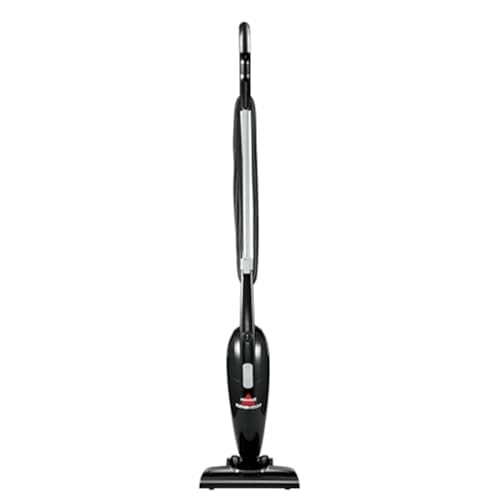
Powerful, convenient, and easy to use.Specific uses:hard floor,carpet,dual action.Form Factor: stickPowerful suction makes it great for quick pick ups with multipurpose versatilityVersatile cleaning three machines in one: a stick vacuum, handle vacuum, and stair vacuumWith a crevice tool for furnitu
Key specs
- Included attachments
- Comes equipped with a crevice tool designed to reach along baseboards, narrow gaps, and tight corners.
- Dust collection style
- Bagless
Pros:
- Dedicated crevice tool included for tight edges and baseboards
- Lightweight stick build makes quick daily floor pickups easy to manage
- Bagless dirt collection eliminates the need to purchase replacement bags
Cons:
- Operating cord length is unlisted and requires verification before purchase
- Lacks the motorized brush roll found on specialized carpet models

NO PET HAIR LEFT BEHIND. Find & capture pet hair everywhere with a powerful 280W motor and our new FurFinder Headlights that illuminate hidden pet hair and fine dust and debris.UP TO 50 MINUTES OF CORDLESS CLEANING POWER. Easily transform from a stick vacuum to a handheld or high-reach vacuum. (Up t
Key specs
- Motor specification
- 280W
- Brush roll technology
- Features a self-cleaning brush roll engineered to minimize tangled fur and hair buildup during use.
- Included accessories
- Removable battery
- Wall mount
- Upholstery tool
- Integrated headlights
Pros:
- Self-cleaning brush roll actively reduces hair wrap during cleaning
- 280W motor design delivers strong suction for demanding pet debris
- Removable battery enables convenient off-unit charging and easy swapping
- Integrated bright headlights illuminate dust and debris in dark corners
- Self-standing cordless build stays upright on its own without leaning against walls
Cons:
- Run time per battery charge is not stated and needs verification
- Higher complexity design requires maintaining both wall mount and charging hardware

Powerful, convenient, and easy to usePowerful suction makes it great for quick pick ups with multipurpose versatilityVersatile cleaning three machines in one: A stick vacuum, handle vacuum, and stair vacuumWith a crevice tool for furniture and a floor nozzle for stairsClean hard floors and surface d
Key specs
- Tool configuration
- Features an included crevice tool paired with a lightweight bagless stick configuration for spot cleaning.
- Finish and format
- Blue stick vacuum
Pros:
- Includes a crevice tool for detailed corner and edge cleaning
- Bagless canister eliminates recurring bag purchases
- Lightweight stick format allows quick spot pickups across hard surfaces
Cons:
- Exact dust bin volume is unstated and must be verified
- Does not include a motorized brush roll for thick carpeting

Every Purchase Saves Pets. BISSELL proudly supports BISSELL Pet Foundation and its mission to help save homeless pets..Runtime: 20.0 minutesCordless, Lightweight Vacuum. 10.8V lithium-ion battery provides up to 20 minutes of run time and charges in just 4.5 hours.Two-Way Folding Handle. Breaks down
Key specs
- Power source
- Cordless battery
- Mobility profile
- Operates without a power cord, offering unrestricted reach across room thresholds and stair landings.
Pros:
- Cordless stick design delivers cord-free mobility between rooms
- Featherweight build keeps overhead and quick floor handling manageable
- Electric blue and black compact styling stores easily in tight spaces
Cons:
- Battery run time per charge is unlisted and must be confirmed
- Recharge time and battery voltage are not specified in the listing

Every Purchase Saves Pets. BISSELL proudly supports BISSELL Pet Foundation and its mission to help save homeless pets..600.0 wattsPowerful Motorized Brush Roll. Brush roll and powerful suction work great for quick and easy cleaning on multiple surfaces, including carpet, bare floors, stairs and upho
Key specs
- Nozzle mechanism
- PowerBrush
- Agitation design
- Features an active PowerBrush nozzle setup to assist with debris pickup compared to bare suction heads.
Pros:
- PowerBrush configuration provides active brush agitation over suction-only heads
- Featherweight design maintains agile handling around furniture legs
- Compact footprint fits easily into narrow utility closets
Cons:
- Power cord length is not specified and requires buyer verification
- Dust cup capacity is omitted from the product specifications
Last update on 2026-08-04 / Affiliate links / Images, Product Titles, and Product Highlights from Amazon Product Advertising API

Bissell Featherweight Vacuum 2033 Review
Dragging out a full-size upright for a trail of cereal or a dusty kitchen corner can feel like using a snowplow to clear a sidewalk. A smaller machine makes more sense for those quick jobs, provided it has enough reach and suction to be genuinely useful. The bissell featherweight vacuum 2033, sold here as the purple Bissell 20334, takes that stripped-down approach with a compact corded body, a removable floor nozzle, and a handheld conversion. It won’t replace a powerful carpet vacuum, but it can make routine cleanup far less irritating.
Bissell 20334 Featherweight Stick Vacuum
The first thing that shapes the experience is the ultra-lightweight construction. Carrying it between rooms, lifting it onto stairs, or pulling it from a narrow closet takes little effort compared with a conventional upright. That low weight matters during quick cleanups because the machine doesn’t feel like a commitment every time crumbs hit the floor. Still, the lightweight shell also signals that this is a basic utility vacuum rather than a heavily built machine for punishing workloads.
A 700-watt corded motor supplies steady power without batteries, charging docks, or runtime anxiety. Plug it in and it’s ready, even after sitting untouched for a week, which is handy in kitchens, entryways, workshops, and guest rooms. The tradeoff is a 15-foot power cord that may require outlet changes in larger spaces. Cord management is old-school, sure, but consistent power has its own appeal when a rechargeable vacuum would otherwise be sitting dead in a closet.
The vacuum’s 0.67-liter dirt cup is reasonably sized for crumbs, surface dust, loose hair, and the small debris generated by everyday living. Its bagless design means there are no disposable bags to buy or remember, and the visible cup makes the fill level easy to judge. Larger cleaning sessions will fill it quickly, especially when hair and lint fluff up inside the chamber. Emptying it frequently is part of the bargain, though the small cup is one reason the overall machine remains compact.
Three Cleaning Modes Keep It Flexible
The stick configuration handles open floor areas with the least fuss. Keeping the removable floor nozzle attached gives the vacuum a familiar upright shape that moves easily across hard floors, area rugs, and short carpet. It’s particularly useful for surface debris that doesn’t justify stronger agitation or a bulky powered brush roll. Thick carpet and deeply embedded grit are another story, since the simple floor head isn’t designed to dig aggressively through dense fibers.
Removing the handle and nozzle turns the unit into a hand vacuum for upholstery, counters, shelves, vehicle interiors, and furniture edges. The conversion is straightforward, so the feature feels practical rather than tacked on. A scattered pile of potting soil beside an indoor planter, for example, can be collected without steering the full stick body around the table legs. The cord follows along, of course, which limits the freedom normally associated with a battery-powered handheld.
Stair cleaning sits between those two modes. The floor nozzle can remain connected to the handheld body, creating a shorter setup that’s less awkward on individual steps. This stair-cleaning configuration reduces the need to balance a tall vacuum while working upward, and the low weight helps keep wrist strain in check. The narrow cleaning path means more passes, but the easier handling may be worth that small loss of speed.
The included crevice tool adds reach around baseboards, couch seams, cabinet gaps, and other slim spaces where the floor nozzle can’t fit. It’s a basic accessory, yet it expands what the vacuum can realistically clean without adding a box full of rarely used parts. Storage is simpler because there aren’t several powered heads or extension tubes to organize. On the flip side, anyone expecting a dusting brush, flexible hose, or specialized pet attachment may find the accessory kit rather bare.
Hard Floors Are Its Strongest Match
Loose debris on tile, laminate, sealed wood, and vinyl is where the Bissell Featherweight feels most at home. Crumbs, tracked-in grit, dry plant soil, and visible dust can be picked up without the heavy push and pull of a full-size upright. The floor head stays close to the surface and slips through uncluttered areas quickly. Large debris may still need a slower pass because a compact intake doesn’t swallow everything in one gulp.
Carpet performance requires more realistic expectations. The vacuum can collect visible lint, hair, crumbs, and surface dirt from low-pile carpet and area rugs, but it lacks a powered rotating brush that can agitate deeper layers. That makes it suitable for touchups rather than serious carpet restoration. Plush rugs, dense carpeting, and heavily trafficked rooms will expose its limits sooner than a bare kitchen floor will.
Indoor plant care creates plenty of small messes that suit this format. Dry potting mix around a stand, fallen leaves near a window, and bits of bark beside a planter are easier to address with a compact stick vacuum than with a large machine. Damp soil shouldn’t go into the dirt cup, since this is a dry vacuum rather than a wet-and-dry model. Waiting until spilled mix has dried helps protect the vacuum and keeps mud from coating the internal path.
Area rugs can also benefit from the vacuum’s light touch, especially if they shift or bunch under heavier equipment. A simple head without aggressive brush action is less likely to grab thin rug edges, though careful movement is still necessary. The dual-surface ability is convenient in rooms where a rug sits over hardwood or laminate. It doesn’t make the vacuum equally capable on every surface, but it reduces the need to swap tools for ordinary surface cleanup.
Everyday Handling And Storage
Compact storage is one of the machine’s clearest strengths. The slim body can fit behind a door, beside a washing machine, or inside a shallow utility closet where a wide upright would be a nuisance. That small storage footprint matters in apartments, dorm rooms, workshops, and homes where cleaning equipment competes with everything else for closet space. The lightweight design also makes overhead hooks or raised shelves more practical, provided the vacuum is secured properly.
Noise and airflow are fairly direct consequences of the simple motor-and-nozzle layout. There’s no insulated premium body or elaborate sound control, so the vacuum can sound more energetic than its dimensions suggest. The corded electric design delivers uninterrupted operation, but the cord needs to be gathered after each use rather than dropped onto a charging dock. Tangled storage can become annoying, so wrapping the cord neatly is a small habit that pays off.
Maintenance remains uncomplicated. The dirt cup needs regular emptying, and the filter should be kept free of packed dust so airflow doesn’t slowly fade. With a bagless collection system, skipping filter care can make a modest vacuum feel weaker than it really is. Let washable components dry completely before reinstalling them, since trapped moisture and fine dust are a lousy combination.
A separate equipment reference, how to adjust a Polaris pool cleaner, covers pool-cleaner setup rather than anything related to this vacuum’s operation. The distinction matters because the Bissell 20334 has no water-handling function and shouldn’t be treated like wet-cleaning equipment. Its job is limited to dry household debris on suitable floors, stairs, upholstery, and similar surfaces. Keeping that boundary clear helps prevent misuse and unrealistic expectations.
Pros That Matter In Daily Use
The biggest advantage is simple accessibility. A lightweight vacuum gets used more often because retrieving it doesn’t feel like the first stage of a workout. Quick passes after cooking, repotting a plant, or tracking dirt through the entryway become easier to tackle before debris spreads. That convenience can matter more than raw power for small, frequent messes.
The convertible layout also earns its keep. Stick, handheld, and stair configurations let one inexpensive machine cover several basic jobs without a complicated attachment system. The removable floor nozzle makes those changes fast enough that switching modes doesn’t break the cleaning rhythm. Fewer moving parts also mean fewer pieces to lose in the back of a cabinet.
Consistent corded operation is another practical plus. There’s no aging battery to replace, no waiting for a recharge, and no sudden shutdown halfway through a room. The 700-watt motor receives steady power as long as an outlet is available. For a vacuum designed around short, straightforward cleaning sessions, that reliability fits the product’s no-nonsense personality.
The bagless cup lowers ongoing supply costs and makes debris disposal immediate. A quick glance shows whether the 0.67-liter container needs emptying, and there’s no bag inventory to manage. The transparent cup can look dusty after repeated use, but that’s more of a cosmetic annoyance than a functional problem. Regular rinsing of approved removable parts keeps the machine from looking neglected.
Cons And Practical Tradeoffs
The vacuum’s strongest limitation is its modest carpet capability. Without a powered brush roll, it can’t loosen embedded hair and grit with the same authority as a traditional upright. The surface-cleaning focus is fine for low-pile rugs and quick pickups, yet homes dominated by thick carpet will need something more aggressive. Expecting deep-cleaning results from this design will only lead to disappointment.
The 15-foot cord can also feel short in open layouts. Moving between outlets interrupts momentum, and the cord may catch around chair legs or doorway corners. That limited cleaning radius is less noticeable in bedrooms and small apartments than in long hallways or large living areas. An extension cord might seem tempting, but electrical equipment should always be used according to the manufacturer’s guidance.
The small dirt cup requires attention during hair-heavy or debris-heavy jobs. Fine dust settles compactly, but lint and pet hair can consume the available space in a hurry. A 0.67-liter capacity is appropriate for the vacuum’s size, not for cleaning an entire busy household in one uninterrupted run. Frequent emptying isn’t difficult, though it can become tedious if the machine is pushed beyond its intended role.
Build quality reflects a lightweight, budget-minded design. Plastic components help keep carrying weight down, but they may not tolerate rough drops, forceful attachment changes, or careless storage as well as heavier equipment. The compact construction deserves a gentler touch, especially around the dirt cup latches and removable nozzle connections. Treated as a quick-cleaning tool rather than workshop-grade machinery, it’s far more likely to remain useful.

Bissell CleanView Compact Upright Vacuum 3508
Small living spaces punish bulky cleaning equipment twice: once while it’s being pushed around furniture, and again when it has to be stored. The bissell featherweight vacuum 2033 search often begins with a desire for something light, but the Bissell CleanView Compact 3508 takes a different route by pairing an upright body with a weight of less than eight pounds. It’s still compact enough for tight rooms, yet its upright format offers a more familiar floor-cleaning experience. That balance makes it an interesting alternative for everyday crumbs, dust, and dry debris without dragging a full-size machine into the mix.
Bissell CleanView Compact 3508
The lightweight build shapes nearly every part of the experience. At under eight pounds, the vacuum is easier to carry between rooms, lift over thresholds, or move into a closet after a quick cleanup. That matters more than it sounds because a machine that feels awkward tends to stay parked while crumbs and tracked-in dirt pile up. The CleanView Compact keeps the upright shape but trims away much of the bulk that makes larger vacuums a chore to handle.
Its size also suits apartments, dorm rooms, guest rooms, and other spaces where storage is always a tug-of-war. A full-width upright can eat up valuable closet room, while a handheld model may feel too limited for regular floor cleaning. The compact upright design lands between those extremes, offering a standing floor head and handle without the oversized footprint of a heavier machine. Still, compact dimensions usually mean fewer premium adjustments and less room for a large dirt container, so expectations should stay grounded.
The vacuum’s maneuverability helps around chair legs, narrow walkways, and furniture clusters that turn cleaning into an obstacle course. A lighter body changes direction with less effort, making quick passes through a cramped room feel less clumsy. The easy transport also helps on stairs, although the upright body won’t be as nimble on individual steps as a small handheld vacuum. That’s the tradeoff: better floor coverage than a hand vac, but less freedom in tight above-floor spots.
Powerful Suction For Routine Dry Messes
Bissell describes the CleanView Compact as providing powerful suction in a convenient machine, and the design is clearly aimed at ordinary household debris rather than specialized deep cleaning. Loose dirt, crumbs, dust, and small dry particles are the jobs that fit its purpose best. The upright floor head gives those messes a direct path into the dirt container without requiring several attachments. Thick carpet, heavy pet-hair buildup, or deeply embedded grit may call for a larger vacuum with more aggressive agitation.
The suction advantage becomes especially useful in small rooms where debris collects quickly around desks, beds, and kitchen edges. One pass may handle scattered crumbs, while a slower second pass can catch lighter dust that shifts with airflow. The concentrated cleaning path feels more practical in confined areas than hauling around a wide, heavy vacuum built for sprawling floor plans. Even so, narrow coverage means larger rooms may take more passes than they would with a full-size upright.
Dry debris is the clear boundary here. The CleanView Compact isn’t described as a wet vacuum, so damp spills, muddy soil, and liquid messes should stay far away from the floor head and dirt container. That distinction is easy to overlook when a compact machine is always within reach, but dry-only cleaning protects the motor and internal airflow path. A towel or mop should handle moisture first, with the vacuum reserved for the dry leftovers.
Consistent pickup also depends on basic maintenance. A dirt container packed beyond a sensible level can restrict airflow, while a neglected filter can make a capable vacuum feel tired. The suction performance benefits from frequent emptying and routine filter care rather than waiting until the machine visibly struggles. That little bit of upkeep isn’t glamorous, but neither is pushing the same crumb across the floor three times.
Scatter-Free Technology On Hard Floors
Hard floors can expose a frustrating weakness in some upright vacuums: the brush and airflow send crumbs skittering ahead of the nozzle. Bissell’s Scatter-Free Technology is intended to capture messes with less of that outward spray. In kitchens and entryways, reduced scatter can mean fewer repeat passes around cabinets and baseboards. It doesn’t promise that every oddly shaped piece of debris disappears instantly, but controlling movement makes cleanup feel less like chasing marbles.
Light particles such as dry cereal flakes, bits of potting mix, and loose dust can behave unpredictably on smooth flooring. A floor head that limits scatter keeps those particles closer to the suction path instead of firing them toward the next room. The hard-floor pickup is particularly helpful where furniture leaves only a narrow lane for the vacuum to follow. Large chunks may still need to be picked up by hand if they’re too tall for the nozzle opening.
Plant shelves and small indoor gardens create the sort of mess this feature can address sensibly. Dry soil around a pot, brittle leaf fragments, and pieces of bark often spread when hit by a strong rush of air. The reduced-scatter design helps contain that debris, provided the material is completely dry before vacuuming. Damp potting mix can smear, clog, or cling inside a dry vacuum, so patience beats turning a small spill into a maintenance headache.
Surface transitions deserve a bit of care. Moving from a hard floor onto a rug changes how the nozzle interacts with debris, especially if the rug edge is thin or loosely anchored. The vacuum’s upright floor head should be guided rather than shoved across delicate edges. That extra attention isn’t unusual for a compact upright, but it’s worth remembering in rooms that mix laminate, tile, and small area rugs.
Removable Wand Adds Useful Reach
The removable extension wand broadens the vacuum’s role beyond open flooring. Dust along baseboards, crumbs behind furniture, and cobwebs in reachable corners become less awkward when the cleaning path extends beyond the upright head. That feature can save the trouble of moving a bed or pulling a heavy cabinet away from the wall for every small mess. The wand’s usefulness will still depend on the supplied attachments and the practical reach of the hose system.
Above-floor cleaning is where compact uprights often reveal both their flexibility and their limitations. A removable wand helps with upholstery seams, ledges, and narrow gaps, but the main vacuum body remains on the floor nearby. The extended cleaning reach is less free-moving than a cordless handheld, yet it provides steady suction without a battery timer hanging over the job. In a small room, that tethered arrangement is usually manageable rather than maddening.
Furniture layout can make or break the convenience. A light vacuum body follows more easily as the wand moves around a sofa or desk, reducing the tugging associated with heavier uprights. Still, pulling too sharply may tip or drag the machine instead of extending the hose smoothly. The lightweight chassis is an advantage for carrying, though it benefits from a steady hand during wand use.
A separate technical reference appears in how to reverse vacuum cleaner airflow on a Shark, but that subject concerns a different vacuum brand and a modification-oriented airflow question. The CleanView Compact 3508 is presented as a standard suction vacuum, not as a blower or reversible-airflow machine. Its intended airflow direction should remain unchanged unless the manufacturer provides specific instructions. Forcing an unrelated modification onto a compact vacuum could damage components or push debris where it doesn’t belong.
Easy-Empty Dirt Container
Emptying collected debris is handled through an easy-empty dirt container designed to release its contents with a button press. That arrangement keeps disposable bags off the shopping list and makes the fill level easier to monitor. A quick empty after a dusty room can also prevent debris from compacting inside the container. The downside is the usual puff of fine dust that can escape if the bin is opened too quickly over a trash can.
Technique matters more than people expect. Lowering the container into the trash before pressing the release button can reduce airborne dust, especially after vacuuming dry soil or powdery debris. The push-button disposal speeds up the process, but it doesn’t make dust behave politely. Anyone sensitive to fine particles may prefer emptying the container outdoors or placing the trash can in a well-ventilated area.
The dirt container’s transparent construction, if consistent with the usual bagless layout, would make debris buildup easy to notice, but the provided description doesn’t specify its material or exact capacity. What is clear is that the machine uses a bagless emptying system focused on convenience. Without a stated capacity, it’s safer to assume frequent emptying fits the compact design better than marathon cleaning. Waiting until airflow drops is usually a poor maintenance strategy.
Internal cleanliness affects odor as well as suction. Hair, dust, and food crumbs can sit inside a dirt container longer than expected, particularly when the vacuum is stored in a warm closet. Regular disposal helps the compact vacuum stay fresher and prevents old debris from becoming a stubborn layer. Approved removable components should be cleaned only according to the manufacturer’s care instructions and dried fully before reassembly.
Practical Strengths In Tight Spaces
The strongest argument for the CleanView Compact is how little friction it adds to routine cleaning. Less than eight pounds, an upright stance, and simple floor-ready operation make it easy to deal with messes before they spread. A kitchen pass after dinner or a quick sweep around a desk doesn’t require hauling a heavy machine from another floor. Convenience won’t replace deep-cleaning power, but it often decides whether cleaning happens today or gets postponed.
Hard-floor behavior is another meaningful strength. Scatter-Free Technology addresses a specific annoyance rather than leaning on a vague promise of better cleaning. The controlled debris pickup can save extra passes on smooth surfaces where crumbs tend to bounce away from traditional upright heads. Results will vary with debris size and floor texture, but the feature has a clear practical purpose.
The removable wand gives the vacuum a wider job description without turning it into an attachment-heavy system. Reaching along trim, around furniture, or into awkward corners adds value in spaces where dust gathers faster than expected. The above-floor flexibility also prevents the main floor head from being forced into places it was never built to reach. That said, wand cleaning remains tethered to the upright body, so it won’t feel as free as a cordless hand vacuum.
Bissell also states that purchases support the BISSELL Pet Foundation and its mission to help homeless pets. That company initiative doesn’t change suction or maneuverability, but it adds context to the brand’s positioning. Buyers should view it as a purchase-related charitable commitment rather than a cleaning feature. The practical decision still rests on weight, floor performance, storage needs, and realistic expectations.
Limitations Worth Knowing
A compact upright can’t escape the compromises created by its size. The machine is easier to carry and store, but it may not match the cleaning depth, dirt capacity, or adjustment range of a heavier model. The small-space design favors speed and convenience over demanding whole-house duty. Large carpeted homes or rooms with persistent embedded pet hair may expose those limits quickly.
The provided specifications don’t mention a specialized pet-hair brush, powered upholstery tool, adjustable height setting, or exact dirt-container capacity. Those omissions matter because they prevent firm claims about advanced carpet care or attachment performance. The known feature set centers on suction, low weight, reduced hard-floor scatter, a removable wand, and easy emptying. Anything beyond those details would be guesswork.
Upright handling may also feel less natural on stairs and furniture than a detachable handheld design. The lightweight body helps with transport, but the wand still works from a base that needs a stable resting point. The wand-based setup is useful for reachable edges and gaps, not a complete substitute for a tiny handheld unit. Tight staircases, vehicle interiors, or high shelves may call for a different form factor.
Scatter-Free Technology is most relevant on hard floors, so it shouldn’t be mistaken for proof of deep carpet agitation. Surface crumbs and loose particles are very different from grit buried at the base of carpet fibers. The hard-floor advantage is specific, while carpet expectations should remain modest unless further manufacturer details confirm stronger agitation features. That distinction keeps the CleanView Compact in its proper lane: light, convenient, and aimed at routine dry cleanup.
Bissell CleanView Compact Upright Vacuum 3508
Small living spaces punish bulky cleaning equipment twice: once while it’s being pushed around furniture, and again when it has to be stored. The bissell featherweight vacuum 2033 search often begins with a desire for something light, but the Bissell CleanView Compact 3508 takes a different route by pairing an upright body with a weight of less than eight pounds. It’s still compact enough for tight rooms, yet its upright format offers a more familiar floor-cleaning experience. That balance makes it an interesting alternative for everyday crumbs, dust, and dry debris without dragging a full-size machine into the mix.
Bissell CleanView Compact 3508
The lightweight build shapes nearly every part of the experience. At under eight pounds, the vacuum is easier to carry between rooms, lift over thresholds, or move into a closet after a quick cleanup. That matters more than it sounds because a machine that feels awkward tends to stay parked while crumbs and tracked-in dirt pile up. The CleanView Compact keeps the upright shape but trims away much of the bulk that makes larger vacuums a chore to handle.
Its size also suits apartments, dorm rooms, guest rooms, and other spaces where storage is always a tug-of-war. A full-width upright can eat up valuable closet room, while a handheld model may feel too limited for regular floor cleaning. The compact upright design lands between those extremes, offering a standing floor head and handle without the oversized footprint of a heavier machine. Still, compact dimensions usually mean fewer premium adjustments and less room for a large dirt container, so expectations should stay grounded.
The vacuum’s maneuverability helps around chair legs, narrow walkways, and furniture clusters that turn cleaning into an obstacle course. A lighter body changes direction with less effort, making quick passes through a cramped room feel less clumsy. The easy transport also helps on stairs, although the upright body won’t be as nimble on individual steps as a small handheld vacuum. That’s the tradeoff: better floor coverage than a hand vac, but less freedom in tight above-floor spots.
Powerful Suction For Routine Dry Messes
Bissell describes the CleanView Compact as providing powerful suction in a convenient machine, and the design is clearly aimed at ordinary household debris rather than specialized deep cleaning. Loose dirt, crumbs, dust, and small dry particles are the jobs that fit its purpose best. The upright floor head gives those messes a direct path into the dirt container without requiring several attachments. Thick carpet, heavy pet-hair buildup, or deeply embedded grit may call for a larger vacuum with more aggressive agitation.
The suction advantage becomes especially useful in small rooms where debris collects quickly around desks, beds, and kitchen edges. One pass may handle scattered crumbs, while a slower second pass can catch lighter dust that shifts with airflow. The concentrated cleaning path feels more practical in confined areas than hauling around a wide, heavy vacuum built for sprawling floor plans. Even so, narrow coverage means larger rooms may take more passes than they would with a full-size upright.
Dry debris is the clear boundary here. The CleanView Compact isn’t described as a wet vacuum, so damp spills, muddy soil, and liquid messes should stay far away from the floor head and dirt container. That distinction is easy to overlook when a compact machine is always within reach, but dry-only cleaning protects the motor and internal airflow path. A towel or mop should handle moisture first, with the vacuum reserved for the dry leftovers.
Consistent pickup also depends on basic maintenance. A dirt container packed beyond a sensible level can restrict airflow, while a neglected filter can make a capable vacuum feel tired. The suction performance benefits from frequent emptying and routine filter care rather than waiting until the machine visibly struggles. That little bit of upkeep isn’t glamorous, but neither is pushing the same crumb across the floor three times.
Scatter-Free Technology On Hard Floors
Hard floors can expose a frustrating weakness in some upright vacuums: the brush and airflow send crumbs skittering ahead of the nozzle. Bissell’s Scatter-Free Technology is intended to capture messes with less of that outward spray. In kitchens and entryways, reduced scatter can mean fewer repeat passes around cabinets and baseboards. It doesn’t promise that every oddly shaped piece of debris disappears instantly, but controlling movement makes cleanup feel less like chasing marbles.
Light particles such as dry cereal flakes, bits of potting mix, and loose dust can behave unpredictably on smooth flooring. A floor head that limits scatter keeps those particles closer to the suction path instead of firing them toward the next room. The hard-floor pickup is particularly helpful where furniture leaves only a narrow lane for the vacuum to follow. Large chunks may still need to be picked up by hand if they’re too tall for the nozzle opening.
Plant shelves and small indoor gardens create the sort of mess this feature can address sensibly. Dry soil around a pot, brittle leaf fragments, and pieces of bark often spread when hit by a strong rush of air. The reduced-scatter design helps contain that debris, provided the material is completely dry before vacuuming. Damp potting mix can smear, clog, or cling inside a dry vacuum, so patience beats turning a small spill into a maintenance headache.
Surface transitions deserve a bit of care. Moving from a hard floor onto a rug changes how the nozzle interacts with debris, especially if the rug edge is thin or loosely anchored. The vacuum’s upright floor head should be guided rather than shoved across delicate edges. That extra attention isn’t unusual for a compact upright, but it’s worth remembering in rooms that mix laminate, tile, and small area rugs.
Removable Wand Adds Useful Reach
The removable extension wand broadens the vacuum’s role beyond open flooring. Dust along baseboards, crumbs behind furniture, and cobwebs in reachable corners become less awkward when the cleaning path extends beyond the upright head. That feature can save the trouble of moving a bed or pulling a heavy cabinet away from the wall for every small mess. The wand’s usefulness will still depend on the supplied attachments and the practical reach of the hose system.
Above-floor cleaning is where compact uprights often reveal both their flexibility and their limitations. A removable wand helps with upholstery seams, ledges, and narrow gaps, but the main vacuum body remains on the floor nearby. The extended cleaning reach is less free-moving than a cordless handheld, yet it provides steady suction without a battery timer hanging over the job. In a small room, that tethered arrangement is usually manageable rather than maddening.
Furniture layout can make or break the convenience. A light vacuum body follows more easily as the wand moves around a sofa or desk, reducing the tugging associated with heavier uprights. Still, pulling too sharply may tip or drag the machine instead of extending the hose smoothly. The lightweight chassis is an advantage for carrying, though it benefits from a steady hand during wand use.
A separate technical reference appears in how to reverse vacuum cleaner airflow on a Shark, but that subject concerns a different vacuum brand and a modification-oriented airflow question. The CleanView Compact 3508 is presented as a standard suction vacuum, not as a blower or reversible-airflow machine. Its intended airflow direction should remain unchanged unless the manufacturer provides specific instructions. Forcing an unrelated modification onto a compact vacuum could damage components or push debris where it doesn’t belong.
Easy-Empty Dirt Container
Emptying collected debris is handled through an easy-empty dirt container designed to release its contents with a button press. That arrangement keeps disposable bags off the shopping list and makes the fill level easier to monitor. A quick empty after a dusty room can also prevent debris from compacting inside the container. The downside is the usual puff of fine dust that can escape if the bin is opened too quickly over a trash can.
Technique matters more than people expect. Lowering the container into the trash before pressing the release button can reduce airborne dust, especially after vacuuming dry soil or powdery debris. The push-button disposal speeds up the process, but it doesn’t make dust behave politely. Anyone sensitive to fine particles may prefer emptying the container outdoors or placing the trash can in a well-ventilated area.
The dirt container’s transparent construction, if consistent with the usual bagless layout, would make debris buildup easy to notice, but the provided description doesn’t specify its material or exact capacity. What is clear is that the machine uses a bagless emptying system focused on convenience. Without a stated capacity, it’s safer to assume frequent emptying fits the compact design better than marathon cleaning. Waiting until airflow drops is usually a poor maintenance strategy.
Internal cleanliness affects odor as well as suction. Hair, dust, and food crumbs can sit inside a dirt container longer than expected, particularly when the vacuum is stored in a warm closet. Regular disposal helps the compact vacuum stay fresher and prevents old debris from becoming a stubborn layer. Approved removable components should be cleaned only according to the manufacturer’s care instructions and dried fully before reassembly.
Practical Strengths In Tight Spaces
The strongest argument for the CleanView Compact is how little friction it adds to routine cleaning. Less than eight pounds, an upright stance, and simple floor-ready operation make it easy to deal with messes before they spread. A kitchen pass after dinner or a quick sweep around a desk doesn’t require hauling a heavy machine from another floor. Convenience won’t replace deep-cleaning power, but it often decides whether cleaning happens today or gets postponed.
Hard-floor behavior is another meaningful strength. Scatter-Free Technology addresses a specific annoyance rather than leaning on a vague promise of better cleaning. The controlled debris pickup can save extra passes on smooth surfaces where crumbs tend to bounce away from traditional upright heads. Results will vary with debris size and floor texture, but the feature has a clear practical purpose.
The removable wand gives the vacuum a wider job description without turning it into an attachment-heavy system. Reaching along trim, around furniture, or into awkward corners adds value in spaces where dust gathers faster than expected. The above-floor flexibility also prevents the main floor head from being forced into places it was never built to reach. That said, wand cleaning remains tethered to the upright body, so it won’t feel as free as a cordless hand vacuum.
Bissell also states that purchases support the BISSELL Pet Foundation and its mission to help homeless pets. That company initiative doesn’t change suction or maneuverability, but it adds context to the brand’s positioning. Buyers should view it as a purchase-related charitable commitment rather than a cleaning feature. The practical decision still rests on weight, floor performance, storage needs, and realistic expectations.
Limitations Worth Knowing
A compact upright can’t escape the compromises created by its size. The machine is easier to carry and store, but it may not match the cleaning depth, dirt capacity, or adjustment range of a heavier model. The small-space design favors speed and convenience over demanding whole-house duty. Large carpeted homes or rooms with persistent embedded pet hair may expose those limits quickly.
The provided specifications don’t mention a specialized pet-hair brush, powered upholstery tool, adjustable height setting, or exact dirt-container capacity. Those omissions matter because they prevent firm claims about advanced carpet care or attachment performance. The known feature set centers on suction, low weight, reduced hard-floor scatter, a removable wand, and easy emptying. Anything beyond those details would be guesswork.
Upright handling may also feel less natural on stairs and furniture than a detachable handheld design. The lightweight body helps with transport, but the wand still works from a base that needs a stable resting point. The wand-based setup is useful for reachable edges and gaps, not a complete substitute for a tiny handheld unit. Tight staircases, vehicle interiors, or high shelves may call for a different form factor.
Scatter-Free Technology is most relevant on hard floors, so it shouldn’t be mistaken for proof of deep carpet agitation. Surface crumbs and loose particles are very different from grit buried at the base of carpet fibers. The hard-floor advantage is specific, while carpet expectations should remain modest unless further manufacturer details confirm stronger agitation features. That distinction keeps the CleanView Compact in its proper lane: light, convenient, and aimed at routine dry cleanup.

Bissell PowerClean FurGuard Cordless Vacuum
Pet hair has a knack for hiding in plain sight, especially along couch seams, stair edges, and the shadowy strips beneath furniture. The bissell featherweight vacuum 2033 keyword usually points toward compact cleanup, but the Bissell PowerClean FurGuard takes a more muscular cordless approach with a 280W motor, specialized lighting, and tools built around stubborn hair. It’s designed for broader cleaning duties than a basic lightweight stick, though that extra capability brings more weight, more components, and a steeper learning curve.
Bissell PowerClean FurGuard 280W
The 280W motor sits at the center of this machine’s appeal. It’s meant to pull up dry debris, fine dust, and pet hair across several household surfaces without being tethered to an outlet. Cordless freedom matters around furniture and stairs because there’s no cable dragging behind or catching on chair legs. Still, stronger suction tends to consume battery faster, so the selected power mode makes a noticeable difference in how long a cleaning session lasts.
Bissell states that the vacuum can run for up to 50 minutes in low mode. That figure suits lighter floor maintenance, dust pickup, and quick passes through open rooms where maximum suction isn’t necessary. Turbo mode drops the stated runtime to up to 13 minutes, which is better reserved for embedded hair, rugs, or concentrated messes. That gap is worth understanding because “up to 50 minutes” doesn’t describe every cleaning situation.
The removable battery adds useful flexibility to the cordless design. A battery that can be detached is easier to replace later than one permanently sealed inside the machine, and it may simplify charging depending on the setup. The supplied details don’t confirm charging time or whether spare batteries are sold separately, so those points shouldn’t be assumed. Even so, removable power is a practical design choice for a vacuum expected to see frequent use.
FurFinder Headlights Reveal Hidden Debris
Bright floor lights aren’t just decoration when fur blends into rugs or collects against dark baseboards. The FurFinder Headlights are intended to illuminate pet hair, fine dust, and debris that ordinary room lighting can miss. That visibility can prevent the familiar annoyance of putting the vacuum away, then spotting a fuzzy strip once sunlight hits the floor. The lights won’t improve suction by themselves, but they can make each pass more deliberate.
Low furniture creates ideal hiding places for dust and hair. A headlight positioned close to the floor can expose debris under beds, sofas, and cabinets before the nozzle rolls over it. The illuminated cleaning path is especially useful on hard floors where pale fur almost disappears against wood grain or tile patterns. Reflective surfaces may exaggerate every speck, though, so the room can look dirtier than expected once those lights switch on.
Visibility also helps with pacing. Rather than making repeated passes across the entire room, the operator can focus on the areas where debris remains visible. That supports more efficient use of the cordless runtime, particularly when turbo mode is needed only in isolated patches. A headlight system still depends on a clear lens, so dust buildup around the floor head should be wiped away periodically.
The feature is most useful close to the vacuum head, not as a substitute for overhead lighting. Hair lodged deep inside textured upholstery or thick carpet may remain hidden until the dedicated tool agitates the material. The FurFinder lighting helps locate surface-level trouble, while suction and brush action do the actual removal. That separation keeps expectations realistic and avoids treating a visual aid like a cleaning mechanism.
FurGuard Brush Roll And Hair Control
Long hair wrapped around a brush roll can turn routine maintenance into a slow, unpleasant chore. The FurGuard self-cleaning brush roll is designed to reduce wrapping and clogging from strands up to 16 inches long. That specification is particularly relevant where shed pet hair mixes with long human hair on carpets and rugs. Reduced wrapping doesn’t mean zero maintenance forever, but it can cut down on frequent scissor work around the roller.
The brush roll is also built to handle debris across multiple surfaces. Hard flooring needs controlled pickup without excessive scatter, while rugs and carpets benefit from enough agitation to loosen material sitting below the surface. The multi-surface brush roll attempts to cover both roles without requiring a head swap between rooms. Delicate rugs, loose fringe, and thin mats still deserve cautious handling because any powered roller can tug at unsecured fibers.
Hair management improves more than convenience. A brush roll packed with strands can restrict rotation, reduce pickup, and strain the drive system over time. By limiting that buildup, the self-cleaning design helps preserve airflow and contact with the floor. Periodic inspection remains sensible, since thread, string, and oddly shaped debris may behave differently from ordinary hair.
A related discussion of hair-focused cleaning appears in the best Shark vacuum for long human hair, though that reference covers a different brand and product range. The connection is the shared problem of long-strand hair wrap, not identical hardware or performance. The PowerClean FurGuard’s stated advantage is its brush roll design for hair up to 16 inches, while other machines may use different anti-wrap systems. Brand-specific parts and maintenance guidance shouldn’t be mixed together.
FurFinder Tool For Upholstery And Stairs
Floor pickup is only half the battle in homes where hair settles into couches, chairs, and fabric-covered stairs. The FurFinder Tool is intended to tackle embedded hair on upholstery, auto interiors, and other smaller surfaces. Bissell states that it removes up to 95 percent of embedded pet hair and does so twice as fast as a competitor under the company’s referenced comparison. Because the provided details don’t identify the exact testing method or competing model, that claim is best treated as manufacturer-supplied performance language rather than a universal result.
Specialized upholstery tools can outperform a bare crevice nozzle because they disturb hair that has worked into fabric fibers. The embedded-hair tool gives suction a better chance to lift material instead of merely gliding over the surface. Couch cushions, padded chairs, and carpeted stairs are logical places to use it. Very delicate fabrics may need a gentler method, so care labels and manufacturer guidance still matter.
Vehicle interiors are another sensible fit. Seats, cargo mats, and narrow carpeted footwells collect hair in spots where a full floor head can’t maneuver. Converting the unit into a handheld vacuum removes the long wand and makes those cramped areas easier to approach. The machine’s overall weight may feel more noticeable in handheld form because the motor and battery are carried at the wrist.
Stair cleaning benefits from the same conversion. A compact tool avoids balancing a long stick vacuum on each step, and cordless operation removes the trip hazard of a trailing power cord. The portable cleaning mode is useful for edges, risers, and corners where hair tends to gather. Battery consumption may rise if turbo mode is used throughout an entire staircase, so targeted bursts make more sense than leaving maximum power engaged continuously.
Three Configurations For More Reach
The PowerClean transforms from a full stick vacuum into a handheld or high-reach vacuum. That three-way configuration broadens the cleaning range without requiring separate machines for floors, furniture, and elevated dust. Removing the wand shortens the unit for upholstery, while keeping the wand attached supports ceiling corners and tall trim. Each conversion adds a little setup time, but the changes are still simpler than dragging out several appliances.
High-reach cleaning has an obvious benefit and an equally obvious drawback. The long wand can reach vents, ceiling edges, and cobwebs without a step stool in some rooms. Yet the motor-and-battery weight remains concentrated near the hand, so extended overhead work may tire the arm. Short sessions are more realistic than holding the vacuum above shoulder height for an entire room.
The integrated crevice tool addresses narrow gaps where the main nozzle can’t fit. Baseboard corners, sofa seams, cabinet edges, and the space beside appliances are natural targets. Integration reduces the chance that the tool disappears into a drawer or gets left in another room. A built-in accessory may be smaller than a dedicated full-length crevice attachment, so depth and reach can still be limited.
Conversion points should be kept free of packed dust and hair. Debris around release buttons or tube joints can make attachments harder to connect and may interfere with airflow. The modular cleaning system works best when each passage remains clear. Forcing a connection that feels misaligned risks damaging the latch, so a quick inspection beats pushing harder.
Self-Standing Design Changes Daily Use
Many cordless stick vacuums need to be leaned against a wall whenever cleaning pauses. The PowerClean’s self-standing design lets it remain upright on its own between passes and while charging. That small convenience becomes useful when moving a chair, picking up a toy, or answering the door midway through a room. No hunt for a safe leaning spot, no slow slide toward the floor.
Self-standing storage also reduces dependence on wall mounting. The included wall mount remains useful for organized storage, but drilling into a wall may not suit renters, dorm rooms, or frequently rearranged spaces. A freestanding cordless vacuum can park in a closet or utility corner without permanent installation. Stability still depends on a level surface, and a standing vacuum should remain away from busy walkways where it can be bumped.
The design supports charging while upright, according to the provided product description. That keeps the machine ready without requiring it to lie across a floor or shelf. The charging convenience encourages a consistent routine: finish cleaning, empty the bin if needed, and return the vacuum to its spot. Battery longevity guidance isn’t included in the supplied details, so charging habits should follow the official manual rather than general assumptions.
Wall mounting remains the tidier option where floor space is scarce. It can keep the vacuum, wand, and attachments off the ground and reduce clutter in a narrow closet. The dual storage approach offers more flexibility than models that can only hang or lean. Installation quality matters, though, because a poorly anchored mount can pull away under the vacuum’s weight.
HEPA Sealed Allergen System
Fine dust becomes a bigger concern when a vacuum collects it successfully but leaks part of it back into the room. The HEPA sealed allergen system is designed to capture dust and allergens inside the vacuum instead of allowing them to escape through gaps in the air path. A sealed system matters because filtration alone can’t do the full job if unfiltered air bypasses the filter. The supplied description doesn’t provide particle-size percentages or certification details, so no extra filtration claims should be added.
Homes with visible dust, dander, and frequent shedding can benefit from better containment. The vacuum still needs regular maintenance because a clogged filter restricts airflow and may reduce pickup. The sealed filtration path works as intended only when the dirt bin, seals, and filter are installed correctly. Rushing reassembly after cleaning can create gaps that undermine the system.
Filter care deserves a careful hand. Fine debris should be removed according to the manufacturer’s instructions, and any washable component must be fully dry before returning to the vacuum. Moisture trapped inside a HEPA filtration system can encourage odor and restrict airflow. Replacement schedules should come from the official manual because usage conditions vary widely.
Emptying the dirt container can still release dust even with a sealed vacuum. Lowering the bin into the trash before opening it helps contain the cloud that sometimes follows fine debris. The allergen containment applies during operation, while disposal remains a separate step that depends on technique. Outdoor emptying may be more comfortable after especially dusty cleaning sessions.
Pros That Stand Out
The strongest advantage is the combination of cordless mobility and focused hair pickup. Floor headlights reveal debris, the self-cleaning roll addresses long strands, and the FurFinder Tool works on upholstered surfaces where a standard nozzle often struggles. Those features form a coherent system rather than a random bundle of accessories. Hair can be located, loosened, collected, and contained without switching to a separate appliance.
Runtime flexibility is another meaningful strength. Low mode supports up to 50 minutes of cordless cleaning, while turbo mode offers stronger short-duration power for tougher patches. That split lets the vacuum handle light maintenance and concentrated cleanup in the same session. The catch is that turbo’s stated 13-minute limit requires some planning in larger carpeted areas.
The self-standing body solves a familiar ergonomic annoyance. Pausing without leaning the vacuum against furniture makes room-by-room cleaning feel less fussy. Add the removable battery and optional wall-mounted storage arrangement, and the machine adapts to more than one household setup. These details don’t increase suction, but they can improve how often the vacuum is actually used.
Filtration rounds out the feature set. A HEPA sealed allergen system aims to keep collected dust inside the machine, which complements the vacuum’s focus on fine debris and pet-related mess. That’s more useful than an exposed filter placed in a leaky body. Proper bin and filter maintenance remains essential, so the benefit isn’t entirely hands-off.
Cons And Realistic Tradeoffs
Battery performance varies sharply by mode. The difference between up to 50 minutes on low and 13 minutes on turbo is substantial, especially if thick rugs or embedded hair demand stronger suction. A large home cleaned mostly in turbo mode could require recharging before the job is finished. The removable battery may ease future replacement, but the supplied information doesn’t confirm an included spare.
The motor, battery, and dirt system sit near the handle, as they do on many cordless sticks. That layout supports easy steering on floors but can make the handheld configuration feel wrist-heavy during long upholstery or overhead sessions. Switching hands and working in shorter intervals can reduce fatigue. People expecting the featherlight feel implied by the main keyword may notice a clear difference.
Specialized pet-hair components require upkeep of their own. The self-cleaning roll reduces wrapping, yet string, thread, and unusual debris can still lodge around moving parts. Headlight lenses, tool openings, and airflow channels also need occasional cleaning. Convenience means less routine frustration, not freedom from maintenance altogether.
The manufacturer’s performance comparison sounds impressive, but the provided description leaves out the competing model, surface conditions, and full test procedure. The stated removal of up to 95 percent of embedded hair, twice as fast, should therefore be read as a specific brand claim rather than a guaranteed result in every home. Fabric type, hair length, battery level, and cleaning technique can all affect pickup. Realistic expectations matter most on tightly woven upholstery and deeply packed carpet.
Bissell Featherweight Stick Vacuum 2033
A few crumbs under the breakfast table shouldn’t require dragging a bulky upright out of storage. Small dry messes call for something quicker, lighter, and less fussy, which is where the bissell featherweight vacuum 2033 earns its keep. The blue Bissell 2033 combines a compact stick body with handheld and stair-cleaning configurations, giving everyday debris fewer places to hide. It’s built around convenience rather than deep-cleaning muscle, and that distinction shapes the entire experience.
Bissell Featherweight 2033 Blue
The lightweight stick design removes much of the friction from routine cleanup. Carrying it from a kitchen to a bedroom doesn’t feel like hauling equipment, and the narrow body is easier to store beside a washer, inside a small closet, or behind a door. That low-effort handling matters because quick messes often get ignored when the vacuum itself feels like a project. The tradeoff is a simpler build that isn’t intended to replace a heavy upright for demanding carpet work.
Its compact form also makes the machine easier to steer through tight layouts. Chair legs, narrow walkways, and furniture-packed rooms become less awkward when the vacuum doesn’t have a wide, heavy base. The easy-to-use format keeps setup minimal, so there’s little standing between the mess and the cleanup. Still, a smaller cleaning head may require extra passes across a wide room.
The bagless system adds another layer of simplicity. Debris collects inside a 0.67-liter dirt cup, removing the need to keep replacement bags on hand. The capacity is sensible for crumbs, surface dust, loose hair, and small patches of dry soil, but it can fill quickly during larger jobs. Frequent emptying is part of the bargain, especially when lightweight lint takes up space faster than its weight suggests.
Three Cleaning Modes In One Machine
The standard stick configuration handles open floors with the least fuss. Keeping the floor nozzle and long handle attached gives the Bissell Featherweight a familiar upright shape for sealed hard floors, area rugs, and low-pile carpet. It moves quickly over surface debris without demanding complicated settings or head changes. Deep grit below dense carpet fibers, though, sits outside the machine’s basic quick-pickup role.
Removing the long handle turns the unit into a hand vacuum for counters, furniture, shelves, and other above-floor surfaces. That conversion gives the machine more flexibility than a fixed stick vacuum, particularly after snack crumbs settle into upholstery seams or dust collects on a countertop edge. The compact body is easier to position in tight spots, although the motor and dirt cup remain in hand during use. Longer handheld sessions may therefore feel less comfortable than a tiny dedicated hand vac.
The third arrangement works as a stair vacuum. Attaching the floor nozzle to the handheld body creates a shorter setup that can sit more naturally on individual steps. That’s less clumsy than balancing a full-length stick along a staircase, and the reduced reach makes each movement easier to control. The cleaning path remains fairly narrow, so patience is needed on wide carpeted stairs.
Each configuration addresses a different kind of nuisance without adding a pile of specialized equipment. The conversion points are simple, but they should still be handled gently to avoid stressing the connections. Dust around the joints can make parts harder to attach or remove over time. A quick wipe around the removable components keeps those changes smoother.
Hard Floor Pickup Feels Most Natural
Sealed hard floors are the machine’s strongest match. Crumbs, dry cereal, loose dust, and tracked-in grit sit on the surface where the direct suction path can reach them without relying on deep brush agitation. Kitchen floors and entryways are obvious places where this design makes sense. Large or oddly shaped debris may need a slower pass because the floor opening isn’t built to swallow everything at once.
Dry plant messes also suit the compact setup. Fallen leaves, bits of bark, and loose potting mix around a planter can be collected before they spread through the room. The surface-cleaning ability works best after the soil has dried completely, since the Bissell 2033 isn’t described as a wet vacuum. Damp dirt can smear through the nozzle and cling inside the dirt cup, turning a quick cleanup into a grimy maintenance job.
Countertops are listed among the suitable surfaces, which is where the handheld mode becomes useful. Dry crumbs around a toaster or coffee station can be removed without lifting the full stick assembly onto the counter. The compact handheld configuration keeps the job controlled, although hygiene matters if the same nozzle has recently touched the floor. Cleaning the attachment before using it near food-preparation areas is a sensible habit.
From a practical angle, related cordless cleaning considerations appear in the best cordless vacuum for a boat, though that reference covers a different environment and power format. The Bissell 2033 is a straightforward household stick vacuum rather than a marine-focused cordless machine. Its corded operating style and multipurpose conversions are better suited to indoor dry cleanup where an outlet is available. Moisture-heavy spaces require equipment specifically designed for those conditions.
Carpet And Area Rug Performance
Low-pile carpet and area rugs fall within the stated surface range, but expectations need to stay realistic. The vacuum can lift surface dirt, visible crumbs, lint, and loose hair sitting near the top of the fibers. That makes it useful between deeper cleaning sessions or after a small spill of dry debris. Embedded grit and heavily packed hair will likely demand a vacuum with stronger agitation.
The absence of a stated powered brush roll shapes the carpet experience. Suction alone can handle material that hasn’t settled deeply, but it won’t scrub through dense fibers the way a motorized head can. The quick-pickup focus is a strength for speed and simplicity, yet it becomes a weakness on thick rugs. Plush carpeting is not where this machine’s compact design shows its best side.
Thin area rugs may actually benefit from a lighter cleaning head. Heavy uprights can drag or bunch smaller rugs, while the Featherweight’s modest body is easier to guide carefully across the surface. The low-weight floor nozzle still needs a gentle hand around loose edges and fringe. Any rug that shifts easily should be steadied before vacuuming.
Surface transitions are straightforward because there’s no complex set of height controls to manage. Moving from sealed flooring onto a low rug takes little preparation, which keeps the cleaning rhythm intact. That simplicity also means there’s less adjustment for unusual carpet thicknesses. The dual-surface convenience works best in rooms with hard floors and modest rugs rather than dense wall-to-wall carpeting.
Crevice Tool Adds Focused Reach
The included crevice tool fills the gaps left by the floor nozzle. Furniture seams, baseboard edges, cabinet corners, and narrow spaces beside appliances often collect more debris than the open floor. A slim attachment can concentrate suction in those spots without requiring the furniture to be moved. It’s a basic accessory, but it directly addresses the places where a broad nozzle fails.
Upholstery cleaning becomes more practical with the handheld body and crevice attachment working together. Crumbs wedged between couch cushions and dry debris along chair seams are easier to target than they would be with the floor head. The focused suction helps in narrow channels, though it lacks the agitation of a specialized upholstery brush. Hair pressed deeply into fabric may need loosening by hand before the vacuum can collect it.
Car interiors are another possible use wherever a suitable outlet is available, but the provided description doesn’t specify cord length or vehicle accessories. The compact handheld configuration can reach seats, floor edges, and storage pockets more easily than a full upright. Still, a corded household vacuum may require an extension setup depending on where the vehicle is parked. Electrical use should remain consistent with the manufacturer’s instructions rather than improvised around unsuitable power sources.
Attachment storage may be less polished than the setups found on larger vacuums. A small crevice tool is easy to misplace if it doesn’t have a secure onboard position. Keeping the single included accessory near the vacuum prevents the usual hunt through drawers and closet shelves. That minor organizational habit preserves much of the machine’s grab-and-go convenience.
Pros That Make Daily Cleanup Easier
The strongest benefit is accessibility. A lightweight vacuum is easier to retrieve for a two-minute job, so crumbs and dust are less likely to sit around until a formal cleaning day. The compact body also fits into storage spaces that would frustrate a standard upright. That combination makes the machine practical in rooms where floor space and patience are both limited.
Three configurations add genuine usefulness rather than decorative complexity. Stick mode covers floors, handheld mode addresses furniture and counters, and stair mode shortens the machine for individual steps. The three-in-one design reduces the need for separate basic appliances. Each mode remains simple enough that switching doesn’t interrupt the job for long.
The bagless dirt cup also keeps ongoing operation straightforward. A 0.67-liter capacity is enough for typical quick pickups, and disposal doesn’t require a fresh bag. Seeing the collected debris makes it easier to judge when emptying is necessary. Regular disposal also prevents old crumbs and dust from sitting inside the vacuum between uses.
Hard-floor performance fits the product’s no-frills personality. Dry debris sits where the nozzle can reach it, and the compact head moves through busy areas without much effort. The multipurpose suction can also address surface dirt on low-pile carpet and area rugs. That range is useful as long as deep carpet cleaning isn’t part of the expectation.
Cons And Everyday Compromises
The most obvious limitation is cleaning depth. Surface crumbs and loose particles are one thing, while embedded carpet dirt is another entirely. The basic suction system isn’t presented as a substitute for a full-size carpet vacuum with aggressive brush action. Homes with thick carpeting or persistent pet hair buildup may outgrow its abilities quickly.
The dirt cup is compact by design. A 0.67-liter container keeps the vacuum light, but hair and fluffy debris can occupy that space in a hurry. Cleaning several rooms may involve stopping to empty the cup before the job is finished. That interruption is manageable during spot cleaning and more irritating during larger sessions.
Handheld use also carries a physical tradeoff. Removing the handle makes the machine shorter, but the vacuum body, motor, and collected debris still sit in the hand. The hand vacuum mode is convenient for brief jobs rather than extended overhead cleaning. Wrist fatigue can creep in if furniture, shelves, and stairs are tackled all at once.
The simple accessory package limits specialized cleaning. A crevice tool and floor nozzle cover common tasks, yet there’s no provided mention of a powered upholstery brush, flexible hose, or dedicated dusting head. The minimal attachment set keeps storage tidy but leaves fewer options for delicate surfaces and deeply embedded hair. That stripped-down approach suits quick household upkeep, not every cleaning challenge under one roof.