
The bissell featherweight bagless vacuum cleaner tackles the small messes that rarely justify dragging a heavy upright from the closet. Crumbs under the breakfast table, dry soil beside a planter, and stray debris near the entryway can be handled without turning cleanup into a whole production. Its lightweight body is easier to carry between rooms, and the slim shape takes up less storage space in apartments, dorm rooms, workshops, or crowded utility closets. Still, it’s built for quick maintenance rather than demanding deep-cleaning sessions.
A three-in-one design gives this compact machine more flexibility than its simple appearance suggests. It works as a stick vacuum for open flooring, converts into a handheld unit for furniture or counters, and can be configured for stair cleaning. That versatility comes in handy around plant shelves, where spilled potting mix often lands in tight corners and on uneven surfaces. Instead of sweeping the same grit around with a broom, the handheld setup lets you lift it directly.
The bagless dirt cup keeps routine ownership straightforward because there are no replacement bags to track down. Emptying the cup is quick, although fine dust can puff upward if it’s dumped too aggressively. Taking it to an outdoor bin and tapping it gently helps keep that little cloud under control. The container is modest in size, so larger rooms or heavy debris may require more frequent emptying.
Hard floors are where this vacuum feels most comfortable. The suction head can collect loose crumbs, pet hair, dry leaves, and bits of soil from tile, vinyl, laminate, and sealed flooring without the resistance of a bulky carpet brush. Low-pile rugs can also receive a surface refresh, but thick carpeting is another story. Without the deep agitation of a powered brush roll, embedded dirt and stubborn hair may remain below the fibers.
The corded setup brings one useful tradeoff: there’s no battery to charge or gradually lose runtime. Plug it in, clean the mess, and put it away. On the flip side, the cord limits movement and may need to be switched between outlets in larger spaces. That’s hardly a deal breaker for spot cleaning, though it can feel fiddly during a full-house pass.
Plant care creates exactly the sort of scattered debris this machine handles well. Dry potting soil beneath a repotting mat, perlite around a shelf, and brittle leaves near a sunny window can be collected before they’re tracked across the floor. Damp soil shouldn’t be vacuumed because this is a dry vacuum, not a wet-dry cleaner. Waiting for moisture to dry protects the machine and makes the mess easier to lift.
Maintenance is basic but shouldn’t be ignored. The reusable filter needs regular cleaning, particularly after vacuuming fine soil or dusty corners, because packed particles can reduce airflow. Letting the filter dry completely before reinstalling it helps prevent musty odors and protects suction. Hair and string should also be removed from the intake whenever airflow begins to feel weaker.
This isn’t a replacement for a powerful upright in a carpet-heavy home, and it won’t swallow workshop-size piles in one pass. Its strength lies in being easy to grab, easy to store, and uncomplicated to operate. For daily crumbs, light floor debris, stair touchups, and the occasional gardening spill, the compact vacuum keeps minor messes from snowballing into bigger chores. Sometimes simple really does win the day.

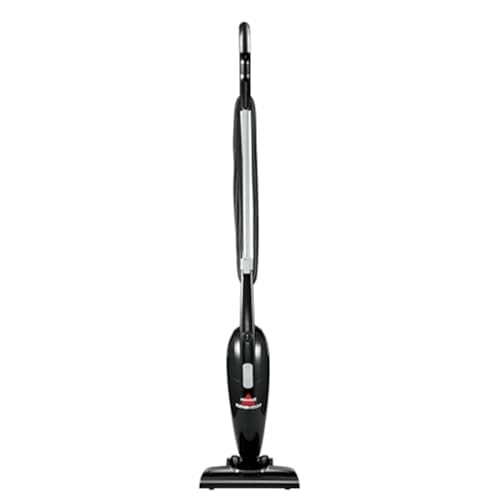
Powerful, convenient, and easy to use.Specific uses:hard floor,carpet,dual action.Form Factor: stickPowerful suction makes it great for quick pick ups with multipurpose versatilityVersatile cleaning three machines in one: a stick vacuum, handle vacuum, and stair vacuumWith a crevice tool for furnitu
Key specs
- Included attachments
- Crevice tool included
- Dust collection
- Uses a bagless dirt cup design to collect debris without replacement bags, though bin volume is unstated and should be confirmed.
Pros:
- Includes a specialized crevice tool for clearing narrow spaces and baseboards
- Bagless canister eliminates the ongoing need to buy disposable filter bags
- Lightweight stick format allows quick pickup across high-traffic floor areas
- Continuous corded power avoids the charging delays of battery-powered units
Cons:
- Corded design limits cleaning radius to the distance from an electrical outlet
- Dust cup capacity is unlisted and requires verification before purchase
- Lacks a motorized PowerBrush nozzle for agitating carpet fibers

Powerful, convenient, and easy to usePowerful suction makes it great for quick pick ups with multipurpose versatilityVersatile cleaning three machines in one: A stick vacuum, handle vacuum, and stair vacuumWith a crevice tool for furniture and a floor nozzle for stairsClean hard floors and surface d
Key specs
- Edge and gap cleaning
- Comes equipped with a dedicated crevice tool for sliding into baseboards, tight corners, and narrow gaps between furniture.
- Power configuration
- Corded stick design
Pros:
- Comes packaged with a crevice tool for getting into tight seams and corners
- Bagless dirt container empties directly to avoid ongoing bag replacements
- Lightweight body simplifies moving between rooms for quick routine cleanups
Cons:
- Needs an accessible wall outlet to operate, limiting reach across large spaces
- Does not incorporate the motorized brush roll found on PowerBrush models
- Specific cord length is not detailed in the listing specifications

Dirt cup capacity -0.67 liters. Ultra-lightweight and compact - easy to use and easy to store.700.0 watts.Specific uses:hard floor,carpet,dual actionEasily converts from stick vacuum to Hand vacuumRemovable floor nozzle - remove for use as Hand vacuum; keep on for floor or stair cleaningGreat for ha
Key specs
- Color and styling
- Purple finish
- Configuration check
- Listing specifies the bagless stick frame, but buyers should confirm whether accessory tools like a crevice nozzle are packaged with model 20334.
Pros:
- Lightweight stick vacuum construction allows effortless handling on floors
- Bagless dirt cup provides quick debris emptying without replacement bags
- Corded connection provides continuous power without waiting for a recharge
Cons:
- Crevice tool is not explicitly listed in the title, requiring buyers to verify included accessories
- Standard suction nozzle lacks a rotating PowerBrush for carpet agitation
- Wall cord requirement restricts movement to available electrical outlets

Every Purchase Saves Pets. BISSELL proudly supports BISSELL Pet Foundation and its mission to help save homeless pets..Runtime: 20.0 minutesCordless, Lightweight Vacuum. 10.8V lithium-ion battery provides up to 20 minutes of run time and charges in just 4.5 hours.Two-Way Folding Handle. Breaks down
Key specs
- Power source
- Cordless operation
- Battery verification
- The cordless build frees cleaning from wall outlets, but exact run time per charge and battery voltage are unlisted and require verification.
Pros:
- Cordless power allows unrestricted movement across rooms without cord snagging
- Lightweight stick frame makes navigating open floors and hallways easy
- Bagless dirt chamber removes the need to store and replace disposable bags
Cons:
- Battery run time and recharge duration are unlisted and must be verified
- Does not explicitly list included accessories like a crevice tool
- Lacks a listed PowerBrush roller for mechanically sweeping carpet piles

Every Purchase Saves Pets. BISSELL proudly supports BISSELL Pet Foundation and its mission to help save homeless pets..600.0 wattsPowerful Motorized Brush Roll. Brush roll and powerful suction work great for quick and easy cleaning on multiple surfaces, including carpet, bare floors, stairs and upho
Key specs
- Floor nozzle design
- PowerBrush nozzle
- Agitation mechanism
- Features a PowerBrush design to help agitate floor debris, unlike the standard suction-only nozzle models in the Featherweight line.
Pros:
- PowerBrush floor head agitates surfaces to loosen embedded dirt and debris
- Bagless dirt bin design saves maintenance overhead by removing disposable bags
- Lightweight profile retains the agile maneuverability of the Featherweight line
Cons:
- Listing does not specify if specialized crevice or upholstery tools are included
- Power source and cord length are unlisted, requiring confirmation prior to purchase
- Rotating brush roll may require extra maintenance to clear wrapped hair
Last update on 2026-08-04 / Affiliate links / Images, Product Titles, and Product Highlights from Amazon Product Advertising API
Bissell Featherweight Bagless Vacuum Cleaner Review
A full-size upright can feel like overkill when breakfast crumbs, tracked-in grit, or a dusting of potting soil is the only problem on the floor. The bissell featherweight bagless vacuum cleaner takes the opposite approach, trimming away bulky hardware and complicated controls in favor of a compact corded design. It’s meant for quick pickups on sealed hard floors, low-pile carpet, area rugs, stairs, and above-floor surfaces. That narrow mission gives it real convenience, though it also creates limits that become obvious once dirt settles deep into thick carpet.
Bissell Featherweight 2033M
The shortened name suits this machine because lightness is central to the experience. The Bissell Featherweight 2033M weighs less than four pounds according to the manufacturer, so carrying it upstairs or moving it around furniture doesn’t turn into an arm workout. Its slim stick form also slips into storage areas where a wide upright would hog valuable floor space. Frankly, that easy handling is a bigger practical benefit than another row of settings would be.
Operation is refreshingly plain. There’s no battery gauge to watch, no charging dock to position, and no menu of floor modes to sort through before cleaning. Plug in the corded stick vacuum, switch it on, and the suction starts immediately. The cord does restrict movement, of course, but it also provides steady power without the fading runtime that can come with an aging rechargeable battery.
The black 2033M model uses a bagless dirt cup with a stated capacity of 0.67 liters. That’s enough room for ordinary crumbs, dust, pet hair, and dry plant debris, yet it isn’t sized for a major cleanup after renovation work or a large shedding session. The transparent cup makes the fill level easy to see, which helps prevent airflow from dropping because the container has been packed too tightly. Emptying it regularly is the sensible play, even if stopping mid-clean feels like a minor nuisance.
Three Cleaning Modes Without Extra Bulk
The most useful design trick is its ability to function as three machines in one. With the handle and floor nozzle attached, it behaves like a lightweight stick vacuum for open flooring. Remove the handle, and the main body becomes a compact hand vacuum for counters, furniture, vehicle interiors, or debris around shelves. Reconfiguring it for stairs gives the machine another job without adding a separate appliance to the closet.
That flexibility pays off in rooms where debris doesn’t stay politely on the floor. Potting mix can land on a shelf, crumbs settle into sofa seams, and dust gathers along baseboards where a wide nozzle can’t reach. The included crevice tool narrows the intake for those awkward gaps, helping pull loose dirt from corners and furniture edges. It won’t replace a long flexible hose for reaching behind heavy appliances, but it handles ordinary tight spots with less fuss.
The floor nozzle works on sealed hard floors, low-pile carpet, and area rugs, though the results differ by surface. Smooth flooring lets the vacuum lift visible debris without fighting thick fibers, making hard-floor cleanup one of its stronger uses. Low-pile rugs can be refreshed at the surface, especially when the mess involves crumbs or dry particles. Dense carpet, embedded grit, and hair tangled below the pile are tougher because the nozzle lacks the aggressive agitation of a powered brush roll.
Stair cleaning feels less clumsy after the long handle is removed. The compact body can be guided over individual steps without balancing a tall upright on the edge, and the floor nozzle provides more coverage than the crevice attachment. Still, the cord may trail across steps and require deliberate placement to avoid tangling around feet. The stair-vacuum mode is practical, but it rewards a slower, more careful pace.
Quick Pickup Performance And Daily Convenience
Quick dry messes sit squarely in this vacuum’s wheelhouse. Cereal under a kitchen chair, dirt beside an entry mat, or loose perlite around a planter can be removed before those particles migrate across the room. The multipurpose suction is useful for visible surface debris, especially on hard floors where there’s little resistance. Bigger pieces may need a second pass if they’re pushed by the nozzle instead of entering the intake cleanly.
The corded setup creates a straightforward tradeoff. Continuous power means there’s no pause for charging and no surprise shutdown halfway through a room. On the other hand, outlet placement controls how far the lightweight vacuum can travel, and switching sockets becomes part of cleaning larger spaces. In a compact apartment or a single-room cleanup, that drawback barely registers; across several floors, it’s harder to ignore.
Noise and airflow are fairly direct because the motor sits close to the hand-vac body. The machine’s compact construction can make its operating sound feel sharper than expected, even though the vacuum itself isn’t physically imposing. That’s worth remembering around sleeping children, skittish pets, or late-night cleanup routines. The upside is that most spot-cleaning jobs are finished quickly, so the sound rarely lingers for long.
Storage is one of the quieter advantages. A narrow closet, pantry corner, or laundry nook can accommodate the stick body without the footprint demanded by a conventional upright. The detachable parts also allow the compact cleaner to be stored in sections, though loose accessories need a dedicated spot or they may wander off. A small basket or shelf keeps the crevice tool from disappearing just when a sofa seam needs attention.
Maintenance, Pros, And Everyday Tradeoffs
The bagless design removes the recurring task of buying replacement bags, but it doesn’t make maintenance disappear. Fine dust collects around the filter and inside the cup, so both areas need routine attention to preserve consistent suction. The filter should be cleaned according to the manufacturer’s instructions and allowed to dry fully before going back into the vacuum. Reinstalling a damp filter can encourage odors and interfere with airflow.
Pros include low weight, simple operation, compact storage, and convertible cleaning modes. The machine is easy to carry, fast to assemble, and convenient for the kind of dry debris that appears between larger cleaning sessions. Its crevice tool adds useful reach around furniture, while the removable handle keeps stairs and counters from feeling awkward. Those strengths make cleanup more immediate because grabbing the vacuum doesn’t feel like starting a major chore.
Cons center on carpet depth, cord management, and limited dirt capacity. Thick carpet demands more agitation than this basic nozzle provides, and the 0.67-liter cup can fill quickly around heavy debris or substantial pet hair. The power cord also needs an available outlet and occasional repositioning. None of these weaknesses is hidden by the design, but they do matter if the vacuum is expected to replace a stronger whole-home machine.
Dry debris is essential here. Damp potting soil, spilled liquid, wet leaves, and muddy footprints don’t belong inside this dry bagless vacuum. Letting soil dry before pickup protects the filter and reduces the chance of residue clinging inside the cup. That little bit of patience also makes cleanup cleaner, since dry particles separate from flooring more readily than sticky, moisture-heavy clumps.
Where The Featherweight Makes Sense
A small footprint and fast setup make the 2033M especially useful where floor space is limited. It can stay close at hand in a kitchen, studio, dorm, office, craft room, or plant-care corner without dominating the room. The slim stick design also suits spaces with mostly hard flooring and only a few low rugs. Keeping it nearby encourages quick maintenance before loose debris gets crushed into corners or tracked through adjoining rooms.
Plant care creates a surprisingly good use case, provided everything being collected is dry. Fallen leaves, bits of bark, perlite, and loose potting mix often scatter under shelves or around containers after watering and pruning. The hand-vac configuration can reach ledges and bench surfaces, while the floor setup handles the spill below. Moisture remains the line that shouldn’t be crossed, so wet soil needs time to dry before the vacuum comes out.
Car interiors are another reasonable fit because the body converts into a handheld unit. Loose crumbs, dry grit, and dust around seat edges can be collected with the crevice tool, although the cord requires a nearby power source. The portable cleaning mode is light enough to maneuver around footwells without dragging a bulky canister behind it. Deeply embedded sand or hair may still call for stronger suction and a specialized upholstery attachment.
The real distinction is convenience rather than brute force. This vacuum reduces the friction surrounding small cleanups, and that’s why it can earn regular use even in a home that already owns a larger machine. Its surface-cleaning focus keeps expectations realistic: visible crumbs, dust, light hair, and dry debris are fair targets, while plush carpet and heavy messes aren’t. Used within those boundaries, the Featherweight stays useful instead of pretending to be something it isn’t.
Bissell Featherweight Bagless Vacuum Cleaner Review
Small floor messes rarely arrive at a convenient time. Crumbs scatter before work, dry soil slips from a planter, and grit appears near the doorway right after the broom has been put away. The bissell featherweight bagless vacuum cleaner is built around those quick interruptions rather than deep, whole-house cleaning. Its lightweight frame, corded power, and convertible layout keep the routine simple, although thick carpet and large debris piles expose its modest design fairly quickly.
Bissell Featherweight 2033
The Bissell Featherweight 2033 uses a slim stick form that feels far less cumbersome than a traditional upright. Carrying it from the kitchen to an upstairs landing doesn’t require much effort, and the narrow body fits into storage spots where bulkier equipment becomes a nuisance. That convenience matters because a vacuum that’s easy to grab tends to handle messes before they spread. Still, the lightweight construction feels more practical than rugged, so rough handling isn’t doing it any favors.
Controls are about as straightforward as they come. There’s no battery meter, suction menu, or floor sensor demanding attention before the first pass. Plug in the corded vacuum, flip the switch, and it’s ready to collect surface debris. The cord removes charging anxiety, but outlet placement becomes part of the job in larger rooms.
The blue finish gives the machine a clean, familiar household look without pretending it belongs in a professional equipment closet. More importantly, the body converts between several cleaning formats without requiring a collection of complicated attachments. The three-in-one design works as a stick vacuum, a handheld vacuum, and a stair vacuum. Each setup serves a distinct purpose, though the conversion points may need occasional checking to make sure every piece remains seated firmly.
A stated 0.67-liter dirt cup provides enough capacity for routine crumbs, dust, hair, and dry plant debris. It isn’t huge, and that’s worth saying plainly. A busy shedding day or a larger floor cleanup may fill it before the room is finished. The transparent cup helps, since the debris level is visible before packed dirt begins interfering with airflow.
Three Cleaning Modes For Everyday Messes
The stick configuration handles open stretches of hard flooring with the least fuss. Its floor nozzle covers more area than the handheld setup, making it useful for kitchen crumbs, hallway dust, or bits of dry soil scattered beneath plant stands. The sealed-hard-floor performance is strongest with loose, visible particles rather than debris stuck to the surface. Large pieces can occasionally get nudged forward, so changing the approach angle may be necessary.
Removing the handle turns the central body into a compact vacuum for counters, upholstery, shelves, and vehicle interiors. The included crevice tool narrows the suction path for sofa seams, baseboard edges, and the awkward strip beside a refrigerator. This setup is easier to maneuver than hauling around a full-size upright with a long hose. On the flip side, the short reach means higher shelves may still call for a step stool or a different tool.
Stairs are where the convertible design earns its keep. Using the floor nozzle with the shortened body reduces the awkward balancing act that comes with dragging a tall vacuum across individual steps. The stair-vacuum mode provides enough coverage for loose dust and surface hair, while the crevice attachment handles corners along the risers. Cord placement needs attention, though, because a trailing cable and narrow steps aren’t exactly a carefree combination.
Countertops are listed among the suitable surfaces, but a little common sense goes a long way. Dry crumbs are fair territory, while liquid spills, damp food, and greasy residue should stay out of this machine. The dry-pickup design isn’t meant to behave like a wet-dry vacuum. Wiping sticky material first protects the intake and keeps the dirt cup from turning into a grimy cleanup project of its own.
Hard Floors, Rugs, And Carpet Limits
Hard flooring gives this vacuum the clearest path to useful results. Dust, dry leaves, cereal, pet hair, and scattered potting material sit on the surface where suction can reach them without fighting dense fibers. The floor nozzle moves easily across sealed wood, tile, laminate, and similar surfaces. It won’t scrub dried residue, so anything stuck down still needs a mop or cloth after loose particles are removed.
Low-pile carpet and area rugs receive more of a surface refresh than a deep extraction. The vacuum can collect visible crumbs and light hair, but it lacks the powered brush agitation associated with heavier carpet machines. That difference becomes obvious with embedded grit, compacted lint, or hair pressed deep into the pile. A few slower passes may improve pickup, yet there’s a ceiling to what suction alone can accomplish.
Thin rugs can shift beneath a lightweight nozzle, especially if they don’t have a nonslip backing. Holding an edge with one foot may keep the material from bunching, but that workaround isn’t always graceful. The lightweight build makes steering easy while providing less downward stability than a heavier vacuum head. Delicate fringes should be kept away from the intake because loose threads can snag or restrict airflow.
Thick carpet isn’t the natural habitat for this model. The nozzle may drag, and the absence of a rotating brush limits how much dirt can be lifted from below the surface. That’s a meaningful performance limitation, not a tiny footnote. Homes dominated by plush carpeting will likely need a stronger primary machine, with the Featherweight serving only as a backup for quick surface cleanup.
Suction, Cord Management, And Storage
The manufacturer describes the suction as powerful for quick pickups, and that wording sets the right expectation. The quick-cleaning suction is suited to fresh, loose debris rather than neglected dirt packed into carpet over time. A narrow intake can feel surprisingly effective around corners and edges, particularly with the crevice tool attached. Airflow drops when the cup or filter becomes clogged, so maintenance directly affects what the motor can deliver.
Corded power brings a give-and-take that’s hard to miss. There’s no charging delay, no fading battery, and no need to wonder whether enough runtime remains for another room. The continuous power supply keeps the machine ready whenever an outlet is nearby. But the cord can catch around furniture legs, and moving between distant rooms may require unplugging more than once.
Storage is pleasantly uncomplicated because the stick body doesn’t claim much floor space. It can fit into a shallow closet, pantry corner, or utility nook without forcing a complete reorganization. The compact footprint is especially helpful where cleaning equipment already competes with mops, buckets, and household supplies. Small accessories need a designated container, however, or the crevice tool may vanish into the same mysterious place as missing socks.
Separately, airborne residue can settle on glass even when the floor itself looks clean. A relevant reference is window cleaner for vape residue, since that film requires a surface-safe cleaning method rather than vacuum suction. The Featherweight’s role remains limited to dry particles on suitable surfaces. Using each cleaner for its intended job prevents unnecessary wear and disappointing results.
Maintenance And Dirt Cup Realities
A bagless cup eliminates the need to keep replacement bags on hand. Emptying the 0.67-liter container is quick, but fine dust can puff upward if the contents are dumped too aggressively. Taking the cup to an outdoor bin and lowering it close to the trash helps contain the mess. Anyone sensitive to dust may still prefer wearing a mask during filter cleaning.
The filter needs regular attention because compact vacuums rely heavily on unobstructed airflow. Fine soil, powdery dust, and pet dander can coat the material faster than larger crumbs do. Cleaning the reusable filter according to the manufacturer’s directions helps maintain suction and reduces stale odors. It must be fully dry before reinstallation, since trapped moisture and electric components are a rotten pairing.
Hair can gather around the nozzle opening even without a traditional spinning brush roll. A quick inspection after cleaning rugs or pet areas keeps strands from building into a restrictive clump. The simple intake design makes visible blockages easier to spot than they might be inside a complicated powered head. Sharp objects, wet debris, ash, and construction dust remain poor choices for this household vacuum.
Dry gardening debris is manageable as long as the mess has no moisture left in it. Perlite, bark fragments, fallen leaves, and loose potting mix can be collected from floors or work surfaces with the right configuration. Damp soil should be allowed to dry before it reaches the bagless dirt cup. Otherwise, it can smear inside the intake, clog the filter, and turn a thirty-second cleanup into a much messier maintenance session.
Practical Strengths And Noticeable Weaknesses
Key strengths include low weight, simple controls, and convertible cleaning. The machine can move from floors to stairs and furniture without requiring another appliance or a bulky attachment kit. Its corded design also means it’s ready after long periods in storage, provided an outlet is available. Those practical details reduce the friction that often causes minor messes to sit around longer than they should.
Another strength is its small storage demand. A full-size upright can crowd a closet, while this narrow stick body slips beside a broom or folded step ladder. That difference is valuable in apartments, small offices, dorm rooms, and secondary cleaning areas. The detachable design can save even more room, although assembling it for every use may become mildly irritating.
The main weaknesses are shallow carpet cleaning and limited capacity. Embedded dirt won’t surrender easily without brush agitation, and the small cup can require frequent emptying during larger jobs. Cord management adds another compromise, particularly around dining tables, hallway corners, and stair rails. These aren’t fatal flaws, but they shape the kind of work the machine can handle without frustration.
Realistic expectations make the biggest difference. This model is a quick-pickup tool for sealed hard floors, counters, low-pile rugs, stairs, and light surface dirt. It isn’t a substitute for a deep-cleaning upright, a wet vacuum, or a shop machine built for heavy debris. Kept within that lane, the Bissell Featherweight 2033 stays easy to reach, easy to operate, and useful for the messes that show up between larger cleaning days.

Bissell Featherweight Bagless Vacuum Cleaner 20334
Dragging a bulky upright out of a packed closet makes little sense for a trail of crumbs, scattered potting mix, or dust gathered beside a baseboard. The bissell featherweight bagless vacuum cleaner takes a leaner approach, pairing a compact body with corded suction for quick cleanup on several household surfaces. Model 20334 converts between stick, handheld, and stair configurations, so one simple machine can cover floors, upholstery, steps, and narrow gaps. That convenience is the main attraction, though its basic floor head and modest dirt cup keep expectations firmly grounded.
Bissell Featherweight 20334
The purple Bissell Featherweight 20334 is built around portability rather than brute force. Its ultra-lightweight frame is easy to carry from a kitchen to an upstairs landing, and the narrow profile doesn’t swallow half a utility closet. Small apartments, craft rooms, offices, and plant corners often leave little room for oversized cleaning equipment. Here, the compact footprint solves a real storage headache without adding complicated hardware.
A 700-watt motor powers the vacuum through a standard electrical outlet. There’s no battery to charge, no runtime countdown, and no gradual loss of power halfway through a room. Plug it in and the machine is ready, plain and simple. The tradeoff is a 15-foot cord that may require outlet changes during broader cleaning sessions.
The controls keep things refreshingly basic. One switch starts the suction, while the removable handle and floor nozzle determine how the machine is used. This straightforward operation cuts down on setup time when a small mess needs attention immediately. It also means there are no adjustable suction levels or specialized carpet settings to fine-tune performance.
Construction feels appropriately light for the job, but it shouldn’t be mistaken for heavy-duty equipment. The body is easier to maneuver because it carries less bulk, yet repeated drops or rough storage could take a toll on plastic connection points. That lightweight build is both a strength and a limitation. Treating it like a quick-pickup household tool makes far more sense than expecting shop-vac toughness.
Three Cleaning Formats In One Compact Body
The stick configuration handles open floor areas with the least fuss. Keeping the handle and floor nozzle attached creates a familiar upright shape for collecting dry crumbs, dust, hair, and loose soil. The stick-vacuum mode moves easily around chair legs and across smaller rooms where a wide cleaning head would feel clumsy. Its narrow path may require extra passes in large spaces, but steering remains light and predictable.
Removing the long handle turns the motor body into a handheld vacuum. This setup is useful for upholstery, counters, shelves, vehicle footwells, and other surfaces that sit above floor level. The included crevice tool concentrates suction around sofa seams, baseboard corners, and the tight strip beside an appliance. Reach is limited by the compact body, though, so deep spaces behind furniture may remain awkward.
The removable floor nozzle gives the handheld configuration another practical role. Leaving the nozzle attached creates a short stair vacuum that covers more surface area than the crevice tool alone. The stair-cleaning setup avoids balancing a tall stick body on narrow steps, which feels far less cumbersome. Cord placement still needs care because a trailing cable can catch around railings or sit across the walking path.
Conversion doesn’t involve a drawer full of oddly shaped accessories. Pieces detach and reconnect with a simple mechanical layout, so changing jobs rarely becomes a puzzle. That multipurpose versatility is handy in homes where debris travels from floors to furniture and stairs. Loose attachments can disappear in storage, however, making a small basket or dedicated shelf worth the effort.
Hard Floor Performance And Carpet Tradeoffs
Sealed hard floors give this vacuum its clearest shot at satisfying pickup. Crumbs, dry leaves, pet hair, perlite, and loose dirt sit exposed on tile, laminate, vinyl, or sealed wood, allowing suction to lift them without fighting deep fibers. The hard-floor performance suits everyday maintenance rather than stuck-on residue. A mop or cloth is still necessary after spills dry into a film.
Low-pile carpet and area rugs are workable, but the cleaning action stays near the surface. The floor nozzle lacks a motorized brush roll, so it doesn’t dig aggressively into carpet fibers. Visible crumbs and light debris may lift with a few deliberate passes, while embedded dirt can remain below the pile. Thick carpeting, matted pet hair, and deeply tracked grit are beyond the machine’s comfortable range.
Light rugs may shift or bunch because the vacuum head doesn’t have much weight holding them down. Slowing the pass and keeping the rug stable can reduce that annoyance, though the process isn’t always graceful. The low-weight nozzle makes movement easier on smooth floors while providing less control over loose textiles. Fringe and dangling threads should stay clear of the intake to prevent snags.
Stairs and upholstery sit somewhere between those two surface experiences. The machine can lift loose hair, crumbs, and visible dust, but fabric texture and deeply lodged debris can slow progress. The surface-cleaning focus remains consistent across every configuration. Fresh messes are its bread and butter; long-neglected buildup asks more than this small vacuum can comfortably provide.
Dirt Cup, Filter Care, And Cord Management
The bagless dirt cup holds a stated 0.67 liters. That capacity is reasonable for spot cleaning, a small room, or several light messes, but it can fill quickly around shedding pets or scattered plant material. Its visible container makes the debris level easy to monitor before airflow becomes restricted. Emptying early usually preserves suction better than packing the cup to its limit.
Fine dust can puff from the container when it’s dumped too quickly. Lowering the cup into a trash bin and releasing debris gently keeps more of that cloud under control. The bagless design saves the trouble of purchasing replacement bags, yet direct contact with dust is the compromise. Anyone sensitive to airborne particles may prefer emptying it outdoors.
Filter maintenance directly affects performance because this compact system depends on clear airflow. Powdery dirt, pet dander, and fine potting material can coat the filter faster than larger crumbs. Cleaning the reusable filter according to the manufacturer’s directions helps prevent weak pickup and stale odors. A washed filter must dry completely before being placed back near the motor.
The 15-foot power cord provides steady electricity without battery downtime. In a single room, that length may be perfectly manageable, but moving through hallways or between floors can involve frequent unplugging. The corded-electric design trades unrestricted movement for dependable readiness. Wrapping the cord neatly after use also matters, since a tangled cable makes the next quick cleanup feel less quick.
Everyday Messes It Handles Best
Kitchen debris suits the Featherweight’s personality nicely. Cereal under a chair, coffee grounds beside the counter, and dry crumbs around a prep area can be collected before they spread under cabinets. The quick-pickup suction removes loose particles without making a small job feel like a weekend project. Sticky food, grease, and liquid spills need wiping first because this is strictly a dry vacuum.
Plant care creates another natural use case. Repotting often leaves bark chips, dry soil, brittle leaves, and perlite scattered across shelves and flooring. The handheld setup can address raised surfaces while the floor-nozzle configuration handles what lands below. Damp potting mix should be allowed to dry, since moisture can smear inside the intake and clog the filter.
Upholstery cleanup benefits from the compact body and crevice attachment. Loose crumbs and surface hair around cushions can be lifted without dragging a heavy canister across the room. The hand-vacuum mode remains easy to maneuver, although its small body places the motor close to the hand and ear. Deep pet hair woven into coarse fabric may require a brush-equipped upholstery machine instead.
Glass residue belongs to a completely different maintenance job. From a practical angle, ear cleaner for bulldogs is also unrelated to floor care and should remain separate from vacuum use. The Featherweight’s intended role is limited to dry household debris on compatible surfaces. Keeping those boundaries clear prevents misuse and protects the motor, filter, and attachments.
Strengths That Make Cleanup Less Annoying
Low weight is the clearest strength. The vacuum can be carried between rooms, lifted onto stairs, or repositioned around furniture without much physical strain. That makes quick cleaning feel less like gearing up for battle. Its slim body also reduces the chance that storage limitations will push it into an inconvenient corner.
Three-way conversion adds practical flexibility. Floors, steps, counters, and furniture don’t require separate machines for light surface debris. Switching configurations takes little time, and the removable nozzle broadens the handheld body’s usefulness. The crevice tool fills a genuine gap around edges, even though its reach isn’t especially long.
Corded power keeps readiness simple. Months in storage won’t leave the vacuum with a dead battery, and a cleaning session doesn’t end because a charge runs out. That reliability works well for unpredictable messes that need immediate attention. The motor receives steady power as long as the outlet and cord remain accessible.
Bagless collection lowers recurring supply needs. The cup can be emptied and reused without tracking down proprietary bags. Its transparent walls show exactly when debris is building up, which makes maintenance less of a guessing game. The downside is a dustier disposal process, but the overall system stays mechanically uncomplicated.
Weaknesses That Set Firm Boundaries
Deep carpet cleaning is the biggest weakness. A basic suction nozzle can remove surface litter, but it doesn’t agitate dense fibers or pull stubborn debris from below. Homes covered in plush carpet will expose that shortcoming quickly. A stronger upright with a powered brush roll remains better suited to those conditions.
The 0.67-liter cup limits larger jobs. Heavy pet hair, widespread soil, or several rooms of debris may require repeated trips to the trash. Frequent emptying isn’t difficult, but it interrupts the rhythm of cleaning. The capacity feels appropriate for a compact vacuum, not for prolonged whole-home sessions.
The 15-foot cord restricts movement. Furniture legs, stair rails, and distant outlets can turn cord management into a minor nuisance. Continuous power is useful, yet the cable won’t disappear simply because the vacuum is light. Larger layouts may demand multiple outlet changes before the work is finished.
Light construction calls for realistic handling. The machine is easy to lift because it doesn’t carry the reinforced body of commercial equipment. Connection points, accessories, and the floor nozzle benefit from careful assembly and storage. Used for dry surface cleanup rather than heavy debris, the Bissell 20334 stays within the kind of work its compact design was built to handle.

Bissell Featherweight Cordless 3061 Review
A trail of crumbs beneath the table shouldn’t require wrestling a heavy vacuum from the back of a closet. Loose pet hair, dry potting soil, and dust under a low sofa are small problems, yet awkward equipment can make them linger. The bissell featherweight bagless vacuum cleaner in its cordless 3061 form aims to remove that friction with a folding handle, removable hand vacuum, and rechargeable 10.8-volt battery. Its freedom from a power cord feels genuinely handy, but the stated 20-minute runtime and 4.5-hour charging period demand a bit of planning.
Bissell Featherweight Cordless 3061
The Bissell Featherweight Cordless 3061 trades continuous wall power for easier movement around furniture, hallways, and stairs. No cord trails behind the floor head, catches a chair leg, or forces an outlet change halfway across the room. That difference sounds small until a quick cleanup involves several tight turns. Still, cordless freedom comes with a clock attached, and the stated maximum runtime is up to 20 minutes.
A 10.8-volt lithium-ion battery supplies the power and requires about 4.5 hours to charge. That ratio makes the vacuum better suited to brief maintenance than long cleaning marathons. A kitchen, entryway, small living area, or set of stairs fits the format better than a large carpeted house tackled in one sweep. Forgetting to recharge after use can leave the machine unavailable precisely when a fresh mess appears.
The electric blue and black body keeps a slim stick-vac profile without loading it down with bulky controls. Its lightweight construction makes lifting, carrying, and turning easier, particularly around table legs and narrow pathways. Less weight also means less downward pressure on carpet, which can limit how deeply the nozzle engages with fibers. That’s the deal on the table: easier handling in exchange for less heavy-duty cleaning force.
BISSELL states that purchases support the BISSELL Pet Foundation and its mission to help homeless pets. That connection doesn’t alter suction, runtime, or maintenance, but it adds a charitable element to the product’s background. The practical value still rests on cordless convenience and convertible cleaning. Those features need to earn their keep every time the vacuum leaves its storage spot.
Folding Handle And Under-Furniture Reach
The two-way folding handle is more than a storage gimmick. Folded one way, it shortens the vacuum so it can fit into a closet, cabinet, or crowded utility corner without demanding full upright height. Adjusted for extended reach, the handle helps the floor head travel beneath beds, couches, and tables. Dust loves those low spaces, and moving furniture every week gets old fast.
Low-clearance cleaning depends on more than handle flexibility, of course. The body and floor head still need enough room to slide beneath the furniture, so extremely tight gaps may remain inaccessible. Even so, the extended-reach position reduces the need to bend sharply or kneel for ordinary under-sofa debris. That can turn an irritating chore into a quick pass rather than a full rearrangement of the room.
Compact storage brings its own little tradeoff. A folding joint adds a moving connection that deserves deliberate handling instead of aggressive twisting. Keeping the mechanism clear of dust and confirming that it locks into place can help the stick feel steadier during use. The space-saving design is useful, but it isn’t an invitation to toss the vacuum into a closet under heavier equipment.
Mobility is where the cordless layout and folding handle work together best. The machine can move from a hard-floor spill to a stair tread without stopping to unwind or relocate a cable. Its light frame also makes quick direction changes less tiring in rooms crowded with stools, plant stands, and side tables. Larger open floors may expose the narrow cleaning path, requiring more passes than a full-size upright.
Removable Hand Vac And Included Tools
The built-in removable hand vacuum gives the 3061 a second life above the floor. Detaching it makes sense for couch cushions, shelves, stairs, car seats, and dry crumbs collected around counters. A separate handheld machine would take up more room and require its own charging routine. Here, the conversion keeps several light cleaning jobs under one battery system.
An included crevice tool concentrates airflow along baseboards, between cushions, and inside narrow corners where the standard floor head can’t fit. It’s especially useful around radiator edges, sliding-door tracks, and the seam beside a refrigerator. The tool doesn’t create more motor power, though, so packed debris may still need loosening before suction can lift it. Fresh, dry particles remain the easiest target.
The upholstery brush adds gentle agitation for fabric surfaces and loose pet hair. It can disturb lint resting on a chair or sofa so the hand vacuum has a better chance of collecting it. Hair woven deeply into coarse upholstery may require repeated passes or a stronger motorized attachment. Fabric should also be checked for delicate loops or loose threads before brushing across it.
The hand vacuum’s Easy Empty Dirt Bin is designed to simplify disposal without requiring replacement bags. That convenience is welcome after collecting crumbs, dry soil, and pet hair, but fine dust can still become airborne when the bin is opened. Emptying it close to the bottom of a trash can helps reduce the puff. A crowded bin should be cleared before debris begins restricting airflow.
Runtime, Charging, And Cleaning Pace
The advertised runtime reaches up to 20 minutes, and the phrase “up to” matters. Tool choice, floor resistance, battery condition, and cleaning habits can influence how long a charge lasts in practice. Short, purposeful passes make better use of the available time than repeatedly circling the same area. A whole-home deep clean isn’t the natural assignment for this battery.
The stated 4.5-hour charging time creates a clear scheduling tradeoff. Once the battery is drained, a quick top-up won’t immediately deliver another full session. Returning the vacuum to its charging spot after use helps keep it ready for the next spill. Leaving it unplugged for several days can turn cordless convenience into a dead-battery annoyance.
Cleaning order matters more with limited runtime. High-traffic areas, visible debris, and spots beneath furniture deserve attention before low-priority touchups. That approach makes the 20-minute battery window feel more useful because the most noticeable problems disappear first. Wandering room to room without a plan can burn time through movement rather than actual pickup.
A corded Featherweight can run as long as an outlet supplies power, while this model favors maneuverability and fast deployment. The cordless difference becomes especially noticeable on stairs, around furniture clusters, and in rooms with inconvenient outlets. Long sessions favor corded equipment; short bursts favor the 3061. Neither format wins every situation, and pretending otherwise would be a stretch.
Floor Cleaning And Realistic Performance
Hard floors give a lightweight cordless vacuum the least resistance. Dry crumbs, dust, loose hair, and bits of potting material sit near the surface where suction can reach them without digging through dense fibers. The bagless floor-cleaning setup is well suited to touchups between sweeping and mopping. Sticky food, damp soil, and liquid spills remain off-limits because this is not a wet vacuum.
Low-pile rugs can receive a useful surface refresh, particularly when the mess is recent. The floor head may collect visible litter and loose hair, but it doesn’t have the weight or aggressive brush action of a larger carpet vacuum. Embedded grit and hair pressed into thick fibers can outmatch the compact design. Slower passes may help, though they also consume more of the limited battery window.
Laminate flooring benefits from equipment that collects dry grit before particles get dragged under shoes or furniture feet. From a practical angle, Shark vacuums for laminate floors represent a separate category for broader floor-care needs and different cleaning demands. The Featherweight 3061 remains centered on lighter cordless pickups rather than extended whole-floor sessions. Its value lies in speed and maneuverability, not in replacing every vacuum in the house.
Plant-care debris is manageable once it has dried completely. Fallen leaves, bark chips, and loose perlite can be collected from the floor or a nearby shelf using the appropriate configuration. The washable filter may clog faster with powdery soil, so inspection after a messy repotting session is sensible. Damp compost or wet potting mix can smear through the intake and create far more work than a broom would have.
Maintenance, Strengths, And Weak Spots
The washable filter lowers the need for frequent disposable replacements, but reusable doesn’t mean maintenance-free. Fine dust can coat the filter and reduce airflow, making the vacuum seem weaker than it really is. Washing should follow the manufacturer’s care directions, and the material needs to dry fully before reinstallation. Moisture trapped near the motor is a problem nobody needs.
Major strengths include cordless movement, compact storage, and handheld conversion. The folding handle helps the vacuum tuck away neatly, while extended reach makes low furniture less of a hiding place for dust. Included tools broaden the cleaning range without turning storage into an accessory pile. The easy-empty bin also keeps routine disposal fairly straightforward.
Weaknesses center on runtime and charging downtime. Twenty minutes may be plenty for several quick messes, but it can feel tight during a larger cleanup involving rugs, stairs, and upholstery. Waiting 4.5 hours for a full charge limits back-to-back use. Battery performance may also change with age, as it can with rechargeable household equipment generally.
Carpet depth is another firm boundary. Loose surface debris is a reasonable assignment, while thick pile, stubborn pet hair, and ground-in dirt may require stronger agitation. The lightweight head simply doesn’t press into carpet like a heavier upright. That limitation is less troublesome in spaces dominated by hard flooring and low rugs.
Dirt-bin and filter care shape everyday performance. An overfilled container or dusty filter can reduce airflow long before the motor itself becomes the issue. Emptying the bin early, clearing the intake, and allowing washed parts to dry keeps the machine operating within its intended range. Skipping those small chores can make a capable quick-cleaning vacuum feel underpowered.

Bissell Featherweight PowerBrush 2773A Review
Loose grit has a bad habit of settling into carpet just as quickly as it scatters across bare flooring. A basic suction-only stick vacuum may collect the obvious crumbs, yet hair and dirt caught between fibers can hang on stubbornly. The bissell featherweight bagless vacuum cleaner takes a more assertive approach in the 2773A by adding a powered brush roll to its lightweight frame. At under four pounds and rated at 600 watts, it balances easy handling with more carpet agitation than the simpler Featherweight models provide.
Bissell Featherweight PowerBrush 2773A
The Bissell Featherweight PowerBrush 2773A looks compact, but its motorized floor head changes the kind of cleaning it can reasonably handle. Suction pulls loose debris inward while the spinning brush roll disturbs dirt resting in carpet fibers. That pairing is particularly useful for quick passes over low-pile carpet and area rugs. It still isn’t a full-size deep-cleaning upright, but it has more bite than a plain nozzle.
A stated weight of less than four pounds keeps carrying and steering pleasantly manageable. Moving from a downstairs rug to an upstairs landing doesn’t feel like hauling a suitcase, and lifting the machine onto individual steps requires little effort. The slim body also threads around chairs and plant stands without much wrestling. Light construction does call for reasonable care, though, especially around the attachment points and quick-release handle.
The 600-watt corded motor provides power without a battery timer hovering in the background. There’s no charging break after a short session and no gradual reduction in runtime as a battery ages. The corded design remains ready whenever an outlet is available, which suits surprise spills and everyday debris. Naturally, the cord can loop around furniture legs or require repositioning as the vacuum moves through a larger layout.
BISSELL also states that each purchase supports the BISSELL Pet Foundation and its mission to help homeless pets. That program sits apart from the machine’s cleaning performance, but it may matter as part of the broader purchase. The practical story still rests on the motorized brush roll, convertible body, and easy portability. Those are the features doing the daily heavy lifting.
Motorized Brush Roll On Carpet And Bare Floors
The brush roll is the defining difference between this model and lighter-duty Featherweight versions that rely primarily on suction. Carpet fibers can trap crumbs, lint, hair, and fine grit below the visible surface, where a stationary nozzle often struggles. The powered agitation helps loosen that material so airflow has a better chance of collecting it. Quick rug maintenance feels less like repeatedly chasing the same specks across the floor.
Low-pile carpeting is the most natural match for this floor head. The vacuum can lift visible debris while the brush roll works through the upper fibers, making it useful between more intensive cleaning sessions. Thick plush carpet presents more resistance and may slow the lightweight head down. The carpet performance is respectable for a compact stick vacuum, not equivalent to the deeper pull of a heavier upright with adjustable height settings.
Bare flooring brings a different tradeoff. Strong suction can collect dust, dry soil, cereal, and pet hair, while the powered brush keeps debris moving toward the intake. Hard particles should be removed promptly because grit dragged beneath any floor head can mark delicate finishes. The bare-floor capability suits routine dry cleanup, though sticky residue and damp spills still need a mop or cloth.
Loose rugs may shift beneath the lightweight nozzle, particularly when they lack a nonslip backing. Slower passes and a stable rug edge can make the process less fussy. Fringe deserves extra caution because long threads can meet a spinning brush roll in a hurry. That motorized head adds useful cleaning action, but it also requires more awareness around delicate textiles than a suction-only tool would.
Three-In-One Cleaning Without Extra Bulk
The traditional stick configuration covers open floors and rugs with the motorized foot attached. It feels familiar, moves easily, and keeps the user upright during ordinary cleaning. Removing the foot turns the machine into a high-reach vacuum for edges, overhead corners, and spaces where a wide floor head won’t fit. That adjustment broadens the cleaning range without adding a separate canister or long hose assembly.
The Quick Release Handle converts the unit into a handheld vacuum for stairs, upholstery, shelves, and compact messes. This hand-vac mode is easier to guide around couch cushions or vehicle seats than the full stick body. The motor remains close to the hand, so its sound and warmth may feel more noticeable during extended use. For short jobs, the compact format keeps movement straightforward.
Stairs benefit from the lower weight and removable components. A full-size upright can feel awkward on narrow treads, especially when the body must be balanced while a hose does the actual cleaning. The portable stair setup puts suction closer to the debris and reduces the amount of machine hanging over an edge. Cord placement still needs attention, since a cable stretched across steps can become an avoidable hazard.
One machine covering floors, upholstery, and raised surfaces sounds convenient because it is. The tradeoff is that every conversion point adds a part that must lock securely and remain free of packed dust. Checking connections before use helps prevent wobbling or accidental separation. The three-in-one versatility works best when the pieces are handled deliberately rather than snapped together in a rush.
Crevice Cleaning And High-Reach Use
The included crevice tool concentrates suction along baseboards, between cushions, and inside narrow gaps beside furniture. Dust often gathers in those spots because a standard floor head simply rolls past them. Attaching the narrow tool gives the vacuum a clearer path into corners and seams. Packed debris may need loosening first, but fresh crumbs and surface dust are fair game.
High-reach cleaning can address cobwebs, ceiling corners, and dust resting along upper trim. Removing the floor foot keeps the end of the vacuum slimmer, while the lightweight body is easier to lift than a bulky upright. Arms can still tire during prolonged overhead work, so short high-reach sessions make more sense than cleaning an entire ceiling at once. The power cord may also limit how far the unit can travel from the outlet.
Plant shelves create a mix of raised and floor-level debris that suits the convertible setup. Dry leaves, bark chips, perlite, and loose potting soil can be collected from nearby surfaces before being tracked through the room. The narrow crevice attachment reaches around pots more neatly than a broad nozzle. Damp soil should stay out of the vacuum because moisture can coat the intake, clog the filter, and make the dirt cup unpleasant to clean.
RV interiors often pose similar space and storage challenges, with tight aisles, fabric seating, and limited room for bulky equipment. From a practical angle, cordless vacuums for RV interiors occupy a separate category where battery mobility may matter more than uninterrupted corded power. The PowerBrush 2773A instead favors steady electricity and stronger brush action within reach of an outlet. Each format solves a different kind of inconvenience.
Maintenance, Dirt Handling, And Daily Friction
A bagless system avoids the recurring need to purchase vacuum bags, but dust still has to go somewhere. Emptying the dirt container slowly and close to the bottom of a trash can helps prevent a cloud of fine particles. The bagless collection system makes the fill level visible, which is useful because an overpacked cup can reduce airflow. Waiting until debris is compressed against the intake only makes the next cleanup more annoying.
The motorized brush roll needs inspection after hair-heavy cleaning. Long strands, thread, and rug fibers can wind around the rotating bar and gradually interfere with movement. Clearing the brush roll buildup before it becomes tightly wrapped takes less effort than cutting through a dense knot later. The vacuum should be unplugged before any material is removed from the floor head.
Filter care matters just as much as brush maintenance. Fine dust, pet dander, and powdery potting soil can coat the filter and make suction feel weaker even when the motor is operating normally. Cleaning the filter and airflow path according to the manufacturer’s instructions helps the machine stay consistent. Any washable component must dry completely before it returns to the vacuum.
The cord introduces a small housekeeping job after every session. A neat wrap makes the vacuum easier to store and prevents tangles from stealing time during the next quick pickup. The compact footprint fits narrow closets and utility corners, but the crevice tool needs a reliable storage spot of its own. Loose accessories have a funny way of disappearing right before they’re needed.
Useful Strengths And Honest Limitations
The motorized brush roll is the standout strength. It gives carpet and area rugs more agitation than suction-only compact vacuums can provide. Hair, lint, and crumbs sitting near the top of the pile have a better chance of being disturbed and collected. That extra action makes the 2773A feel less limited during mixed-floor cleanup.
Low weight and flexible conversion are equally practical. Carrying the machine, cleaning stairs, and switching to handheld work require less effort than handling a conventional upright. The high-reach format also covers corners and raised surfaces without a separate vacuum. These conveniences reduce setup friction, which often matters more during a five-minute cleanup than a long feature list does.
Cord management is the most obvious compromise. Continuous power is dependable, but furniture, stair rails, and room-to-room movement can turn the cable into a nuisance. A cordless machine moves more freely, while this model avoids battery charging and runtime limits. The better arrangement depends on whether unrestricted movement or uninterrupted power causes fewer headaches.
Deep carpet extraction remains outside its lane. The brush roll improves surface pickup, yet the lightweight frame and compact motor aren’t built to pull years of embedded dirt from dense carpet. Large debris piles and heavy whole-house cleaning may also demand more capacity and a wider path. The PowerBrush makes the most sense as an agile everyday cleaner for fresh messes, mixed surfaces, stairs, and upholstery rather than a replacement for heavy-duty equipment.




