
Most folks assume any standard sealer can pack down a table full of fresh venison or bulk beef in a single afternoon. In reality, light grocery sealers overheat after just a few consecutive bags, and raw juices get sucked straight into the vacuum channel. That moisture cools the heat bar too fast, leaving a compromised, leaky seal that fails weeks later inside the freezer. What should be an efficient afternoon turns into hours of frustrating cooldown pauses and expensive cuts ruined by frost.
Packaging a serious haul should move along smoothly, leaving every cut safe from air and moisture for months. Getting there comes down to machines built for continuous work. Chamber models solve liquid issues entirely by keeping atmospheric pressure equal inside and outside the pouch, while rugged external suction units need 12-inch heat bars, deep vacuum draw up to 98 kPa, and extended duty cycles to seal back-to-back. The comparison below lays out which models handle heavy meat packaging without stalling so your food stays pristine.


External suction units can pull liquid across the seal zone on very wet cuts. Verify moisture management before bagging raw roasts.
Key specs
- Vacuum Pressure Rating
- 80 kPa suction rating
Pros:
- 80 kPa suction pulls tight air removal on standard freezer cuts
- Compact external suction design fits easily on crowded butchering counters
- Silver finish provides a clean, neutral kitchen aesthetic
Cons:
- External suction design requires careful pouch placement to avoid drawing meat juices
- Continuous duty cycle and bag cool-down limits are not stated and must be confirmed

The dedicated moist mode helps prevent seal failures when packing cuts with residual surface juices.
Key specs
- Vacuum Pressure Rating
- 95 kPa suction rating
Pros:
- 95 kPa suction provides strong vacuum pressure for dense roasts and steaks
- Dedicated moist mode adjusts sealing behavior for juicy or marinated meats
- Manufacturer lists 2X strength for demanding food packaging tasks
Cons:
- Suction style can still pull heavy liquids if meat is exceptionally wet
- Maximum consecutive sealing cycles before cool-down are not specified

Integrated FreshTrack label printing and mobile app tracking assist in rotating frozen game and bulk meat cuts.
Key specs
- Peak Vacuum Level
- 98 kPa smart suction
Pros:
- 98 kPa suction delivers the highest listed vacuum pressure among suction models
- FreshTrack label printing marks cut dates directly for organized freezer inventory
- Food Manager app integration tracks storage timelines across meat batches
Cons:
- App and printer connectivity introduce extra steps for simple butchering jobs
- Pouch width capacity and seal bar length must be verified on the listing

Premium Vacuum Effect: With a powerful motor boasting a max 1700W power and a max relative vacuum of -100KPa, our chamber vacuum sealer ensures a strong vacuum effect. Featuring a chamber size of 14 x 13.4 x 2.8 in/355 x 340 x 70 mm, 12.6 in/320 mm sealing length (bag), and 320W sealing power, it ke
Key specs
- Chamber Sealing Action
- Chamber evacuation equalizes air pressure inside and outside the pouch, preventing wet meat liquids from escaping during sealing.
- Power Compatibility
- 110V standard electrical configuration
Pros:
- True chamber design equalizes pressure to keep juices inside the pouch
- Built for home and commercial meat packaging without external fluid leaks
- Compatible with standard 110V household outlets for flexible shop placement
Cons:
- Chamber footprint requires substantially more counter space than suction sealers
- Chamber interior dimensions must be checked to confirm maximum roast size
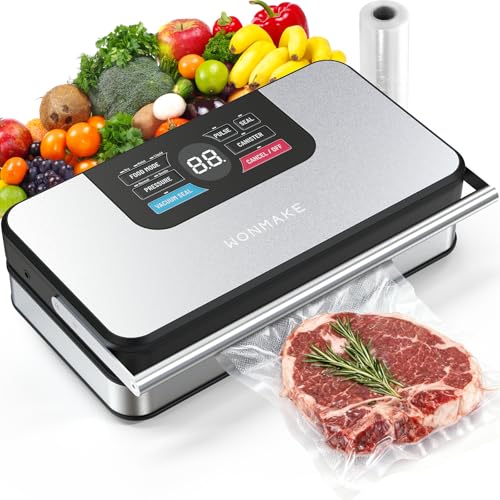
Key specs
- Versatility Features
- 10-in-1 operational modes for diverse preservation jobs
- 95 kPa suction to extract air from freezer pouches
Pros:
- 95 kPa suction strength delivers firm vacuuming for portioned steaks and grinds
- 10-in-1 operational functions provide versatility for different food consistencies
- Suction profile stays compact for easy storage after a meat packaging run
Cons:
- The 10 functions require checking the manual to confirm wet-meat settings
- Seal bar width is not listed and should be verified for broad cuts

Ensures Leak-Free Sealing - Keep your liquid-rich foods fresh for longer with the Avid Armor food vacuum sealer machine. This air sealer machine provides high vacuum pressure to effectively seal soups, sauces, marinades, or even your favorite cocktails.Marinating Made Easy - Unlike regular vacuum se
Key specs
- Seal Bar Width
- 11.5-inch sealing bar
- Wet Food Packaging
- Specifically built for wet foods and raw butchered cuts, maintaining pouch liquid levels without pump contamination.
Pros:
- Chamber system seals wet foods and juicy meats without sucking liquids into pumps
- 11.5-inch vacuum seal bar accommodates broad steaks and large meat portions
- Compact Ultra Series profile minimizes counter space demands for a chamber unit
Cons:
- 11.5-inch bar will not fit extra-wide specialty pouches over eleven inches
- Chamber interior height should be confirmed for large, bone-in roasts

Onboard roll storage and an integrated cutter let you size bags on the fly for varying cut dimensions.
Pros:
- Integrated roll storage keeps bag material contained and ready during packaging
- Built-in sliding cutter creates clean custom pouch lengths for odd-sized meat cuts
- Compact body handles routine portioning without monopolizing butcher table space
Cons:
- Suction rating in kPa is not published and must be checked on the product page
- Moist-food protection mechanisms are not detailed in the product specifications

The oil-less pump configuration removes the chore of checking, changing, and disposing of vacuum pump oil.
Key specs
- Seal Bar Width
- 12-inch wide sealing bar
- Chamber Sealing Action
- Eliminates boiling and liquid draw, keeping all natural juices and brines inside the pouch.
Pros:
- Maintenance-free oil-less pump eliminates messy oil changes after heavy harvest runs
- Wide 12-inch sealing bar handles broad cuts, whole birds, and family-sized roasts
- Large chamber capacity and easy-cleanup interior streamline messy butchering sessions
- Chamber equalization holds marinades and blood inside the bag during the seal
Cons:
- Heavy chamber build limits mobility and requires a dedicated work surface
- Cycle duration per bag varies by chamber volume and needs verification

Mega Reliable: Your satisfaction is our priority! We provide excellent customer service, and our dedicated team is just a click away, ready to help with any questions.Mega Power – 80kPa Suction for Efficient Sealing: Preserve your food effortlessly with our 80kPa powerful suction and high-quality he
Key specs
- Operating Modes
- Dry mode for standard cured and smoked cuts
- Moist mode for juicy fresh steaks and poultry
- Fresh mode for delicate items
- Included Setup
- Starter bags and cutter included
Pros:
- 80 kPa suction power pulls air efficiently on trimmed cuts and ground portions
- Dry, moist, and fresh modes adapt sealing temperature to meat moisture levels
- Includes starter bags and a built-in cutter for immediate packaging readiness
- External vacuum accessory system supports canister sealing for specialty curing
Cons:
- External suction design can draw free liquids if meat cuts are heavily saturated
- Back-to-back sealing cooldown time is not specified in the listing

Precision vacuum control and 95 kPa suction help prevent crushing tender meats while evacuating freezer air.
Key specs
- Suction Profile
- 95 kPa precision suction
Pros:
- 95 kPa vacuum suction removes air pockets around irregular bone-in meat cuts
- Multiple preset modes provide flexibility across wet, dry, and delicate cuts
- Precision sealing mechanism ensures uniform thermal closure across bag edges
Cons:
- External channel design requires wiping bag mouths clean of grease before sealing
- Exact cycle times and duty-cycle cool-down periods must be checked
Last update on 2026-10-07 / Affiliate links / Images, Product Titles, and Product Highlights from Amazon Product Advertising API
Can a vacuum sealer handle wet, juicy cuts without ruining the vacuum pump?
Yes, if you choose a chamber model or a suction machine equipped with dedicated moisture controls. Chamber vacuum sealers keep the atmospheric pressure balanced inside and outside the bag, meaning liquids stay settled inside the pouch rather than climbing toward the seal bar. External suction machines pull air directly from the bag opening, which can draw blood and broth across the heat bar unless you select a unit featuring dry and moist modes or an external liquid catch tray. If raw juices enter an external suction unit, they can coat internal lines, so check whether the model features an accessible drip channel before processing unchilled, wet cuts.
How many bags can you process back-to-back before the sealer needs to cool down?
Continuous sealing capacity varies by machine design and thermal engineering, so you should verify the listed duty cycle in the product manual. External suction sealers frequently require brief pauses between cycles so the heating element does not melt through the bag plastic or trigger internal heat sensors. Chamber packaging machines, such as 110V units designed for high-volume food packaging, handle back-to-back cycles more readily because their heavy-duty sealing bars dissipate heat efficiently. When packaging large batches of meat, check whether the manufacturer rates the unit for continuous operation or specifies a resting interval between pouches.
Do you need a chamber sealer for butchering, or will a suction sealer work?
A suction sealer works well for smaller batches and firm, patted-dry portions, but a chamber sealer is superior for high-volume butchering and heavily marbled, wet cuts. Suction units offering 80 kPa, 95kPa, or 98kPa suction deliver plenty of vacuum force for solid cuts, chops, and ground meat when paired with moist settings. But when you are packaging dozens of pounds of fresh game or stew meat, chamber machines with oil-less pumps prevent juice pull and accommodate smooth pouch loading. If you regularly butcher entire animals, a chamber machine eliminates moisture-related seal failures entirely.
What sealing bar width is necessary for packaging whole roasts and large game cuts?
A sealing bar width of 11.5 inches to 12 inches provides the clearance needed for wide cuts, broad roasts, and large bulk bags. Compact models with shorter bars force you to trim prime cuts into smaller chunks just to fit the opening. Machines offering an 11.5-inch or 12" sealing bar let you lay wide multi-pound roasts flat across the heating element without bunching or wrinkling the pouch edges. Inspect the maximum bag width supported by the machine profile before buying to make sure your largest cuts fit without folding.
How do you prevent bone-in meat cuts from puncturing freezer bags?
Inspect every bone-in cut for sharp edges before bagging, and position protective padding over exposed points. Sharp ribs, shank bones, and saw-cut edges easily pierce standard vacuum bags once strong suction pulls the plastic taut against the meat. You can fold clean butcher paper, silicone bone guards, or scrap pouch material over sharp tips to shield the bag wall from punctures. Choosing heavy-gauge pouches and pairing them with precision suction settings protects the integrity of the airtight barrier and prevents freezer burn over extended storage.
How do you clean and sanitize equipment after processing large batches of meat?
Unplug the machine and wipe down all outer housings, sealing bars, and gaskets with a damp cloth and mild sanitizing cleanser. Units built with easy cleanup features, smooth chamber basins, or removable drip trays allow you to wash away meat drippings and fat buildup quickly. When washing down greasy cutting boards, knives, and meat trays in your prep sink, keep your plumbing clear with a drain cleaner for grease to dissolve trapped fat. If lingering meat debris creates sink odors later on, treat the pipes with a drain cleaner for smell to keep your prep area fresh for the next harvest.




