
Raw horsepower gets all the spotlight, but the easiest mistake to make with a push leaf blower is ignoring how the chassis moves across uneven ground. Trading a sore shoulder for an unwieldy hundred-pound frame often backfires the moment damp turf enters the equation. Without proper wheel articulation, a heavy blower plows straight into soft grass, resists sharp pivots around tree rings, and turns every garden bed into an exhausting wrestling match. The wrong machine simply trades upper-back strain for raw muscle fatigue from forcing a rigid front axle to turn where it refuses to go.
Clearing thick yard debris should feel like a steady, upright walk behind a focused wall of moving air. Pairing a brawny engine capable of rolling wet, matted leaves with a smooth swivel caster and tall rear wheels gives you effortless steering without chewing up turf. Add adjustable directional vanes to funnel windrows cleanly along driveways, and massive leaf blankets finally scatter on the first pass. Here is how the top contenders line up to help keep your lawn clear without the physical exhaustion.


Change your clearing power according to the job at hand with the adjustable throttle controlLarge 12-inch never flat back wheels plus the ability to lock the front wheel in place or swivel 360 degrees make it easy to accommodate various terrainDesigned with a soft grip, the ergonomic handle features
Key specs
- Airflow and Directional Control
- 1200 CFM maximum airflow volume
- 3-position wind vane tilts 15 degrees up or down
- Forward flow attachment diverts side exhaust forward
- Wheel and Chassis Setup
- 12-inch never-flat rear wheels for uneven turf
- Front wheel locks straight or swivels 360 degrees
- Operating weight listed at 104 pounds
Pros:
- Lockable 360-degree swivel front wheel navigates tight turns and straight property lines
- Three-position directional vane and forward attachment aim air where needed
- Adjustable-height soft grip handle adapts to different operator heights
- Large 12-inch never-flat rear wheels roll smoothly over rough ground
Cons:
- Weighs 104 pounds, requiring noticeable physical effort to push uphill
- Air output is capped at 1200 CFM, lower than competing 212cc machines

Industry-leading 48 Newtons blowing performance79.9cc backpack blower with tube throttleLarge top mounted pleated paper main filter plus foam prefilter for use in dusty conditionsMetal ring on blower pipe end reduces wearPosi-loc keeps pipe connection secure for maximum durability
Key specs
- Blowing Force and Filtration
- 48 Newtons of rated blowing performance
- Pleated paper main filter with foam prefilter
- Reinforced tube end with protective metal ring
- Wearable Design Tradeoff
- Backpack setup eliminates rolling resistance over muddy or steep ground, but you must carry the full 31-pound machine on your shoulders.
Pros:
- Delivers 48 Newtons of blowing force to clear heavy, packed debris
- Dual filtration system with pleated paper and foam protects in dusty air
- Posi-loc pipe connections and metal end ring protect against nozzle wear
- Backpack configuration avoids pushing a heavy frame across uneven turf
Cons:
- Worn on the back rather than wheeled, placing 31 pounds directly on shoulders
- Listed with no manufacturer warranty coverage in product specifications

WE REQUIRE YOUR MAKE, MODEL, AND DECK SIZE IN THE ORDER NOTESJRCO 480 Leaf Blade Plow - (MOWER NOT INCLUDED)Can fold up over the deck of many mowers, increasing space on trailersSome assembly requiredAttaches to the JRCO Universal Mounting Bar (REQUIRED, SOLD SEPARATELY) with 2 clevis pins
Key specs
- Mower Attachment Requirement
- Mounts directly to commercial or riding mowers using two clevis pins, but requires a separate JRCO Universal Mounting Bar and your exact deck dimensions.
- Plow Versus Blower Action
- Moves massive piles through physical plowing action instead of air volume, meaning it cannot blow leaves out of tight beds or fence lines.
Pros:
- Pushes large leaf piles using riding mower power without manual walking
- Folds up over the mower deck to conserve space during trailer transport
- Quick-disconnect design secures with two clevis pins once mounted
Cons:
- Requires purchasing a separate JRCO universal mounting bar to install
- Mechanical plow blade rather than an air blower, lacking blowing airflow
- Depends entirely on an existing riding mower to operate

NO-PULL ELECTRIC PUSH START BUTTON: Gas power without the hassle of pulling a cord. Included 7.2V rechargeable battery provides up to 150 starts on a single chargePOWERFUL 31CC ENGINE: 2-cycle full crank with 950mL (0.251 gal.) produces a max air volume of 470 CFM and max air speed 175MPHAUTOMATIC C
Key specs
- Electric Start Mechanism
- Integrated push-button electric start
- Included 7.2V battery delivers up to 150 starts per charge
- Automatic choke eliminates manual lever adjustments
- Output and Fuel Capacity
- 31cc 2-cycle full crank engine
- 470 CFM airflow and 175 MPH air speed
- 950 mL (0.251 gallon) fuel tank capacity
Pros:
- Push-button electric starter eliminates manual pull cord effort
- Anti-vibration mount and padded ventilated harness ease back strain
- Cruise control locks throttle speed during lengthy clearing runs
- Automatic choke simplifies cold-engine starting routines
Cons:
- Airflow maxes out at 470 CFM, which struggles against deep or wet leaf piles
- Two-cycle engine requires regular fuel-to-oil mixing
- Backpack unit weighing 18.5 pounds must be carried rather than rolled

PROFESSIONAL SPECS; This Wheeled Walk Behind Blower has an all-powerful 7Hp 212cc 4 Stroke Single Cylinder OHV Gas Engine, that provides excellent power to weight ratio performance, where it counts; Max Output Power of 4.1 kW, Wind Force Speed of 150-200 MPH/ 1270-2000 CFM, with a High Max Rotation
Key specs
- Blower Output and Impeller
- 1270 to 2000 CFM airflow output
- 150 to 200 MPH wind velocity
- Heavy-duty 13.5-inch metal fan impeller
- Steering and Chassis Build
- 8-inch 360-degree front swivel wheel
- Two 10-inch rear all-terrain wheels
- Rust-resistant steel frame with handle-mounted controls
Pros:
- Moves deep debris piles with high air output reaching up to 2000 CFM
- Front eight-inch swivel wheel turns 360 degrees for smooth maneuvering
- Ninety-degree adjustable discharge angle directs air forward or sideways
- Four-stroke engine runs on unleaded gas without mixing two-cycle oil
Cons:
- Requires engine oil to be added prior to initial startup
- Throttle cable tension may need tightening before use to stop vibration slip
- Manual push design demands leg power across thick grass and slopes

Sold on Amazon
Key specs
- Specification Verification
- Product listing omits engine displacement, CFM, air speed, and wheel dimensions. Confirm exact power source and airflow ratings with the manufacturer prior to purchase.
Pros:
- Walk-behind blower format designed for ground-level leaf pushing
- Wheeled chassis offers an alternative to carrying heavy blowers
- Built under the established Little Wonder line by Mantis
Cons:
- Manufacturer listing lacks CFM, air speed, engine size, and weight specs
- Detailed wheel dimensions and steering capabilities must be verified
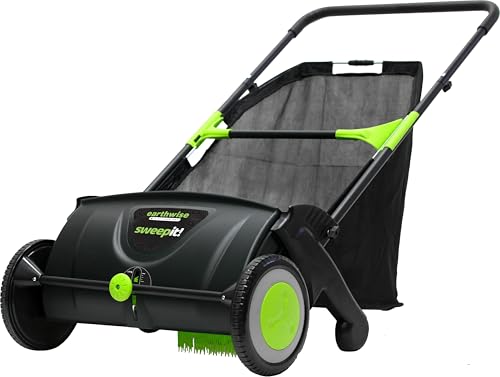
21" brush width yard sweeperLeaf Sweeper with spinning rake-like actionSturdy and lightweight push leaf sweeper with grass catcher design with superb maneuverabilityAdjustable leaf sweeper rake height for easy and efficient collection of debrisLeaf sweeper with 80% pick-up on the first pass; Not ide
Key specs
- Manual Sweeper Function
- Rotates collection brushes through manual pushing to scoop dry leaves into a 2.6-bushel bag without gas engine noise or emissions.
- Surface and Debris Limits
- Intended for short, flat, regularly maintained lawns
- Unsuited for wet leaves, sticks, or heavy matted yard waste
- Often requires multiple passes across the same area
Pros:
- Collects leaves quietly by hand without gas, engine oil, or exhaust fumes
- Lightweight 14-pound frame is easy to maneuver and lift for storage
- Removable 2.6-bushel collection bag gathers debris directly off turf
- Adjustable brush height dials in proper contact on short grass
Cons:
- Mechanical sweeper without an engine or blower air stream
- Requires multiple passes and struggles on wet leaves, tall grass, or sticks
- Frequent bag emptying needed during heavy autumn leaf drops
PROFESSIONAL SPECS - This Wheeled Walk Behind Blower has an all-powerful 7Hp 212cc 4 Stroke Single Cylinder OHV Gas Engine, that provides excellent power-to-weight ratio performance. Max Output Power of 4.1 kW, Wind Force Speed of 150-200 MPH/1270-2000 CFM, with a High Max Rotation Speed of 3600RPMs
Key specs
- Engine and Fuel Specifications
- 7HP 212cc 4-stroke OHV gas engine
- 0.7-gallon fuel tank for 87 octane unleaded gasoline
- Integrated fuel shut-off valve and manual choke
- Airflow and Discharge Angle
- 1270 to 2000 CFM air output at 3600 RPM
- Air velocity rated between 150 and 200 MPH
- 90-degree adjustable discharge flow angle
Pros:
- High volume output reaching 2000 CFM clears wide leaf swaths quickly
- Industrial 13.5-inch metal impeller withstands hard debris impacts
- Front eight-inch 360-degree swivel wheel allows responsive turns
- Two-stage powder-coated steel frame resists rust and outdoor wear
Cons:
- Engine oil is not included in the box and must be added prior to starting
- Throttle cable nut may require manual tensioning to hold maximum RPM
- Manual push operation requires steady user effort on sloping ground

PROFESSIONAL SPECIFICATIONS - This Super Duty Leaf & Debris Wheeled Walk Behind Blower has an all-powerful 7Hp 212cc 4 Stroke Single Cylinder OHV Gas Engine, that provides excellent power to weight ratio performance, where it counts; With a Max Output Power of 4.1 kW, Wind Force Speed of 150-200 MPH
Key specs
- Power Output and Velocity
- 4.1 kW maximum power output from 212cc engine
- Air volume between 1270 and 2000 CFM
- Wind speed ranges from 150 to 200 MPH
- Frame and Wheel Construction
- Heat-treated powder-coated rust-resistant steel frame
- Two 10-inch rear wheels with 8-inch front swivel caster
- Adjustable 90-degree discharge flow deflector
Pros:
- Heavy-duty 13.5-inch metal impeller generates up to 2000 CFM of air volume
- Swiveling eight-inch front wheel turns 360 degrees for responsive maneuvering
- Ninety-degree discharge flow angle redirects air away from cleared zones
- Four-stroke OHV engine operates without requiring two-cycle oil pre-mixing
Cons:
- Requires engine oil to be added before the first engine start
- Push propulsion relies on operator strength to climb hills or wet turf
- Fuel tank capacity is limited to 0.7 gallons between refills

Briggs & Stratton 13.50 Gross Torque engineCast iron sleeveComes with a deflector for high or low airflow and front or side discharge
Key specs
- Engine Build and Torque
- 305cc Briggs and Stratton commercial-grade engine
- 13.50 gross torque rating with cast iron cylinder sleeve
- Manual push design weighing 115 pounds
- Air Discharge Versatility
- Airflow rated at 2000 CFM and 200 MPH
- Adjustable deflector for high or low elevation
- Selectable front or side discharge orientation
Pros:
- Large 305cc Briggs and Stratton engine delivers 13.50 gross torque
- Cast iron cylinder sleeve enhances engine durability for long service life
- Maximum airflow of 2000 CFM and 200 MPH rolls thick, matted leaf layers
- Versatile deflector switches between high, low, front, and side discharge
Cons:
- Substantial 115-pound weight makes pushing up slopes physically demanding
- Listing does not specify front wheel swivel capability or wheel dimensions
Last update on 2026-10-08 / Affiliate links / Images, Product Titles, and Product Highlights from Amazon Product Advertising API
Can a push leaf blower move wet, matted leaves?
Yes, push models deliver the air volume and speed needed to dislodge wet debris. Walk-behind blowers equipped with 212cc or 305cc four-stroke engines produce between 1200 CFM and 2000 CFM, with airflow reaching up to 200 MPH at 3600 RPM. This force lifts soaked, compacted layers that stall handheld tools, rolling heavy leaf piles across wide turf without forcing you to carry any engine weight. If you need commercial power for dense acreage, check our guide to the best professional leaf blower options.
How do you steer a heavy wheeled blower around trees and garden beds?
Steering ease depends on front wheel design. Push blowers weighing 104 pounds to 115 pounds require front maneuverability to navigate curves without scuffing turf. Choosing a machine with a front wheel that swivels 360 degrees allows smooth pivoting around tight tree bases and curved landscaping borders. For long, straight passes down driveways or fence lines, locking the front wheel in place keeps the frame tracking straight so you do not fight the handles.
What wheel size prevents a walk-behind blower from sinking into soft turf?
Rear wheels measuring 10 inches to 12 inches provide the clearance and contact needed to roll across damp, spongy lawns. Never-flat 12-inch rear wheels distribute machine weights of 104 pounds or more across rough ground, preventing the frame from bogging down in soft turf or catching on ruts. If your lawn has wet patches or rough ground, verify the rear wheel diameter and tire construction in the product specifications before deciding.
Why choose a walk-behind leaf blower over a backpack model?
Walk-behind machines take the heavy physical burden off your shoulders and back entirely. Heavy-duty backpack blowers place around 31 pounds directly on your spine, whereas wheeled frames roll their 104-pound to 115-pound weight on durable tires. Wheeled blowers also provide far greater airflow, reaching up to 2000 CFM compared to roughly 470 CFM on compact 31cc backpack units. For steep banks or tight side yards where wheels cannot go, an Echo leaf blower backpack offers a practical alternative.
What type of fuel should you run in a gas push leaf blower?
Most four-stroke walk-behind blowers run on unleaded 87 octane gasoline with 10 percent or less ethanol. Four-stroke overhead valve engines with displacements such as 212cc do not require mixing two-cycle oil into the fuel tank, simplifying refills during large yard cleanups. To protect internal carburetor components and metal fuel passages, confirm the ethanol tolerance in the manufacturer manual and avoid fuel with higher ethanol concentrations.
How do you control the blowing force around gravel driveways and garden mulch?
An adjustable throttle control lets you reduce engine speed to prevent blasting mulch or stones out of place. Running a 212cc engine at full throttle produces air velocities between 150 MPH and 200 MPH, which can easily throw decorative stone into turf. Lowering the throttle output dials back the wind force, providing the gentle control required to sweep stray leaves off gravel borders and out of landscape beds without disturbing the ground cover.



