Why is that pump still struggling to reach a deep vacuum after two hours on a tight system? The bottleneck usually hides in plain sight: standard quarter-inch charging lines are choking the flow and trapping moisture vapor inside the circuit. Narrow hoses drag routine service into grueling waiting games, while rubber that is not vacuum-certified slowly permeates ambient air right through the line. Stacking extra brass adapters to force a mismatched fitting onto a recovery port or valve tool only makes matters worse by adding fragile connection points that leak during decay holds.
Watching the digital gauge plunge below 500 microns in minutes completely changes a workday. Moving that fast requires a dedicated large-bore hose with a 3/8-inch or 1/2-inch internal diameter to clear restrictions. The right setup connects direct flare fittings straight from pump to port without adapters, using reinforced walls rated down to 20 microns so the line never collapses under a heavy pull. Below, see how the leading choices stack up to help speed up your next pump-down.

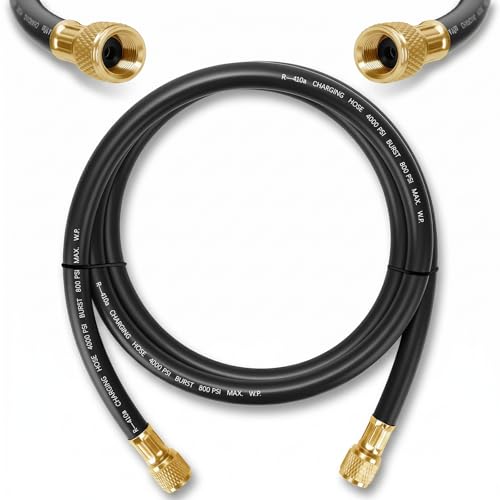
Key specs
- Fittings standard
- 3/8-inch x 3/8-inch flare
- Pressure limits
- 800 PSI working / 4000 PSI burst
Pros:
- 3/8-inch diameter allows faster flow than standard 1/4-inch charging lines
- Matching 3/8-inch by 3/8-inch flare fittings connect directly to matching pump ports
- 4000 PSI burst rating provides a wide safety margin during recovery
- 800 PSI working pressure handles high-pressure system evacuation and charging
Cons:
- Requires 1/4-inch adapters to fit standard service access ports directly
- Specific micron certification level is not stated in the product specifications

Key specs
- End connections
- 3/8-inch to 1/4-inch flare
- Pressure endurance
- 800 PSI working / 4000 PSI burst
Pros:
- 3/8-inch to 1/4-inch fittings connect directly between pump and service ports without extra adapters
- 3/8-inch hose diameter significantly improves flow over standard narrow lines
- 4000 PSI burst resistance handles demanding recovery pressures
- 800 PSI working pressure supports both recovery and system charging
Cons:
- Stepped-down 1/4-inch fitting creates a slight restriction compared to dual 3/8-inch ends
- Deep vacuum micron rating is not specified by the manufacturer

Key specs
- Vacuum certification
- 20 microns
- Bore diameter
- 1/2 inch
Pros:
- Large 1/2-inch diameter maximizes flow rate for significantly faster pull-downs
- Certified 20-micron vacuum rating ensures dependable deep-vacuum performance
- Stepped 1/2-inch to 1/4-inch connections attach directly to standard service ports
- Six-foot length gives ample working room around condensing units
Cons:
- Stepping down to 1/4-inch flare reduces the full CFM potential of the 1/2-inch hose
- Working and burst pressure ratings are not provided in the listing

Key specs
- Burst resistance
- 4000 PSI
- Connection sizes
- 3/8-inch x 1/4-inch
Pros:
- 3/8-inch diameter provides high flow compared to narrow charging lines
- 3/8-inch to 1/4-inch fittings connect vacuum pumps directly to access ports
- 4000 PSI burst pressure provides robust structural integrity
- Generous 6-foot length offers easy reach between equipment and pump
Cons:
- Working pressure specification is omitted from the product data
- Micron vacuum holding depth is not stated by the maker

Key specs
- Fitting specification
- SAE 3/8-inch female flare
Pros:
- 3/8-inch bore size reduces evacuation resistance compared to 1/4-inch hoses
- Dedicated SAE 3/8-inch female flare fittings fit standard 3/8-inch pump intakes
- Uniform end connections eliminate fitting confusion on dual 3/8-inch setups
Cons:
- Working and burst pressure levels are not stated in the listing
- Requires step-down adapters to interface with standard 1/4-inch service ports
- Micron rating and hose length are not specified in the data
Key specs
- Refrigerant compatibility
- R410A
- R22
- R134a
- Rated pressure
- 800 PSI working / 4000 PSI burst
Pros:
- High 800 PSI working and 4000 PSI burst ratings withstand modern refrigerants like R410A
- 3/8-inch to 1/4-inch flare ends eliminate the need for port adapters on standard valves
- 3/8-inch internal diameter enables faster evacuation than conventional 1/4-inch lines
- 6-foot span accommodates varied pump and manifold arrangements
Cons:
- Vacuum micron rating is not documented in the listing
- 1/4-inch end creates a minor flow restriction relative to full 3/8-inch connections

Key specs
- Micron threshold
- 20 microns
- Hose size
- 1/2-inch diameter, 6-foot length
Pros:
- 1/2-inch hose body provides massive internal volume for rapid vapor removal
- Rated down to 20 microns for leak-free deep evacuation work
- 6-foot length gives flexible placement options around residential condensing units
Cons:
- 3/8-inch to 1/4-inch fittings neck down the 1/2-inch hose, limiting peak evacuation speed
- Working pressure and burst pressure ratings are not specified

Key specs
- Vacuum capability
- 20 microns
- Hose color
- Yellow
Pros:
- Certified to 20 microns for dependable vacuum decay checks
- Standard 3/8-inch by 3/8-inch flare fittings provide full flow into 3/8-inch pump ports
- High-visibility yellow casing is easy to spot on cluttered job sites
- 72-inch reach provides sufficient length for complex service hookups
Cons:
- Requires 1/4-inch adapters to hook up to standard 1/4-inch service valve ports
- Specific PSI working and burst pressure ratings are not detailed

Key specs
- Internal diameter
- 1/2-inch ID
- Operating range
- 640 to 3200 PSI
Pros:
- Wide 1/2-inch internal diameter with dual 1/2-inch fittings delivers maximum CFM throughput
- Certified 20-micron vacuum rating prevents permeation during deep pull-downs
- 640 PSI working and 3200 PSI burst ratings support heavy-duty field duty
- Six-foot span allows flexible positioning between vacuum pump and recovery gear
Cons:
- Requires step-down adapters for pumps or equipment lacking 1/2-inch flare ports
- 640 PSI working pressure is lower than the 800 PSI rating found on competing lines

Key specs
- Hose dimensions
- 1/2-inch diameter, 6 ft
- Flare configuration
- 3/8-inch to 1/4-inch
Pros:
- Wide 1/2-inch diameter body minimizes vapor flow resistance
- 3/8-inch to 1/4-inch fitting configuration fits standard pump and valve setups
- 6-foot hose length provides convenient reach during field evacuations
Cons:
- Working pressure, burst pressure, and micron rating are not provided
- Fitting step-down restricts flow compared to full-bore 1/2-inch connections

Key specs
- Hose length
- 5 feet
- Safety margin
- 4000 PSI burst
Pros:
- 4000 PSI burst and 800 PSI working ratings provide high pressure resistance
- 3/8-inch to 1/4-inch SAE fittings attach straight to standard system ports without adapters
- Compact 5-foot length reduces excess line clutter on tight jobs
Cons:
- Shorter 5-foot length provides less reach than standard 6-foot hoses
- Certified micron vacuum limit is not stated in the product details

Key specs
- Temperature rating
- -22F to 176F
- Fitting interface
- SAE 3/8-inch to 1/4-inch female flare
Pros:
- Operating temperature range from -22 to 176 degrees Fahrenheit covers extreme weather
- High-pressure ratings of 800 PSI working and 4000 PSI burst handle rigorous recovery
- Direct SAE 3/8-inch to 1/4-inch female flare fittings eliminate extra leak points
- 3/8-inch internal diameter speeds up evacuation times over narrow 1/4-inch hoses
Cons:
- Deep vacuum micron rating is not specified by the manufacturer
- Flow is slightly choked compared to hoses with matching 3/8-inch ends

High-performance Hvac Hose:Introducing our versatile 1/2" internal diameter refrigerant Hose - the ultimate solution for all your refrigeration needs.With wide compatibility spanning R410a, R134a, R407C, R502, R12, R22, and more, this 1/2" internal diameter refrigerant hose is your trusted partner f
Key specs
- Warranty period
- 3-year warranty
- Vacuum limit
- 20 microns
Pros:
- Backed by an extensive 3-year warranty for lasting peace of mind
- 1/2-inch diameter provides unrestricted vapor flow during initial pull-down
- 20-micron vacuum certification helps maintain deep vacuum holds
- Direct 1/2-inch to 1/4-inch flare ends eliminate external adapters on standard access valves
Cons:
- 1/4-inch fitting size limits the theoretical flow capacity of the 1/2-inch line
- Working and burst pressure ratings are absent from the product description

Key specs
- System fit
- Designed to match Fieldpiece hoses and standard AC refrigeration equipment.
- Rupture threshold
- 4000 PSI
Pros:
- Dual 3/8-inch fittings maintain consistent flow from pump to recovery tool
- Rated for 4000 PSI burst pressure to prevent hose rupture under high stress
- Designed to fit Fieldpiece hoses and standard commercial AC units
- 3/8-inch diameter significantly accelerates evacuation speeds
Cons:
- Needs an adapter to connect to standard 1/4-inch service valve cores
- Continuous working pressure and micron ratings are not documented

Key specs
- Coupler pairing
- 3/8-inch x 3/8-inch fittings
- Burst limit
- 4000 PSI
Pros:
- Dual 3/8-inch flare fittings provide an unrestricted path for 3/8-inch pump inlets
- 4000 PSI burst rating ensures high physical durability under sudden pressure surges
- 6-foot length gives technicians sufficient clearance around outdoor condenser units
Cons:
- Requires step-down adapters to mate with 1/4-inch service ports
- Specific continuous working pressure and micron depth are omitted

Key specs
- Valve integration
- Includes a compact ball valve for isolation during evacuation and charging.
- Anti-reflux feature
- Engineered to prevent backflow during HVAC service operations.
Pros:
- Built-in compact ball valve enables swift isolation to check for decay leaks
- Anti-reflux design prevents oil and refrigerant backflow during servicing
- Standard 1/4-inch flare fittings match traditional manifold and access port threads
- Compatible with R410A and all standard HVAC refrigerants
Cons:
- 1/4-inch diameter restricts flow rate compared to wider 3/8-inch or 1/2-inch vacuum hoses
- Working pressure, burst pressure, and micron ratings are not listed
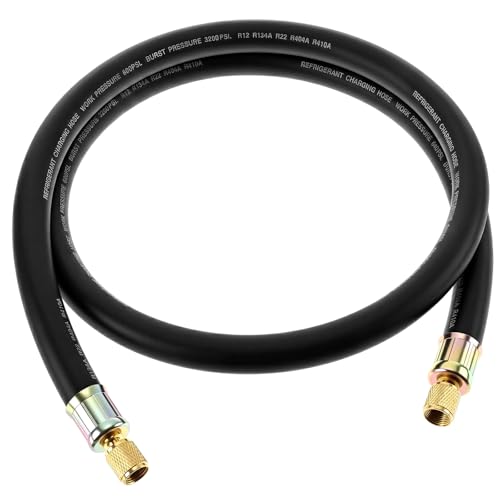
Key specs
- Vacuum rating
- 20 microns
- Pressure capacity
- 800 PSI working / 4000 PSI burst
Pros:
- 20-micron vacuum rating ensures the line holds deep vacuum without permeation
- 800 PSI working pressure and 4000 PSI burst rating deliver high safety margins
- Matching 3/8-inch to 3/8-inch connections maximize throughput on large pump ports
- 6-foot length provides ample range between pump and recovery gear
Cons:
- Requires 1/4-inch adapters to hook onto standard residential service ports
- Stiffer heavy-duty build may require more effort to coil and pack away

Key specs
- Hose profile
- 1/2-inch heavy-duty, 6 ft
Pros:
- Wide 1/2-inch bore facilitates high CFM transfer during deep system evacuations
- 6-foot length offers good working radius around HVAC equipment
- Heavy-duty design suited for both evacuation and refrigerant recovery cycles
Cons:
- End fitting sizes are not specified and must be verified before purchase
- Working pressure, burst pressure, and micron certifications are not stated

Key specs
- Bore and fitting combo
- 1/2-inch ID hose with 3/8-inch fittings
- Pressure thresholds
- 640 PSI working / 3200 PSI burst
Pros:
- 1/2-inch internal diameter maintains low internal drag for faster pull-downs
- 3/8-inch to 3/8-inch fittings connect smoothly to popular 3/8-inch pump intakes
- 640 PSI working and 3200 PSI burst ratings provide dependable recovery strength
- 6-foot reach easily spans between system ports and vacuum pumps
Cons:
- 3/8-inch end fittings partially restrict the full flow of the 1/2-inch hose body
- Certified micron vacuum limit is not disclosed in the product data

Key specs
- Hardware material
- Brass fittings
- Working pressure
- 600 PSI
Pros:
- Durable brass fittings resist thread stripping during repeated connections
- 3/8-inch flare fittings offer greater flow capacity than standard 1/4-inch lines
- 600 PSI working pressure accommodates standard evacuation and charging tasks
- 72-inch line length gives technicians ample reach on elevated condensing units
Cons:
- 600 PSI working rating is lower than 800 PSI heavy-duty alternatives
- Burst pressure and micron vacuum depth are not provided in the specifications
Last update on 2026-11-03 / Affiliate links / Images, Product Titles, and Product Highlights from Amazon Product Advertising API
Will a 1/2-inch or 3/8-inch vacuum hose evacuate faster on air conditioning systems?
A 1/2-inch internal diameter hose provides lower flow resistance than a 3/8-inch line, enabling faster evacuation and recovery on air conditioning systems. While both large-bore sizes remove the severe flow restriction of standard 1/4-inch charging lines, 1/2-inch lines move vapor at higher flow rates during deep vacuum. Models in both 3/8-inch and 1/2-inch diameters come in standard 6-foot lengths, with select 3/8-inch hoses also available in 5-foot options. If your vacuum pump and valve core removal tools accommodate larger connections, a 1/2-inch line delivers the quickest pull-down times.
Should you select 3/8-to-1/4-inch or 3/8-to-3/8-inch flare fittings for your pump setup?
Your vacuum pump intake and core removal tool port sizes determine whether you need 3/8-to-1/4-inch or 3/8-to-3/8-inch female flare fittings. If your pump intake has a 3/8-inch port but you are connecting straight to a standard 1/4-inch service port or core tool side port, a 3/8-inch to 1/4-inch SAE flare configuration eliminates the need for extra brass adapters. When both your pump intake and recovery tools feature matching 3/8-inch threads, a standard 3/8-inch by 3/8-inch flare hose maintains a full-flow connection without narrowing the passage. Matching the hose threads directly to your ports prevents extra connection joints that could leak during deep vacuum holds.
Are HVAC vacuum hoses rated to hold down to 20 microns without permeating?
Yes, multiple high-flow 3/8-inch and 1/2-inch HVAC evacuation hoses carry a dedicated 20 microns vacuum rating. Standard charging lines can allow minute amounts of air and moisture to permeate through the rubber wall during deep vacuum operations, whereas 20-micron certified hoses are manufactured to hold deep evacuation levels. Upgraded 2026 lines, including 6-foot 1/2-inch models and heavy-duty 3/8-inch hoses, provide this 20-micron capability. To protect your evacuation procedure from permeation leaks, confirm that the hose specifications explicitly state a 20 microns rating rather than only listing general pressure numbers.
What working pressure and burst pressure ratings do evacuation hoses require?
Evacuation and recovery hoses handle working pressures ranging between 600 PSI, 640 PSI, and 800 PSI, paired with burst pressure ratings of 3200 PSI or 4000 PSI. Heavy-duty 3/8-inch hoses frequently feature an 800 PSI working pressure and a 4000 PSI burst rating, making them compatible with R410A, R22, and R134a systems. Some 1/2-inch internal diameter lines list a 640 PSI working limit and a 3200 PSI burst rating, while specific 3/8-inch lines feature a 600 PSI working pressure. Always verify the stamped pressure ratings on the hose collar or packaging before connecting lines to pressurized refrigerant circuits.
Can a 1/4-inch charging line with a ball valve pull a vacuum as fast as a large-bore hose?
No, a 1/4-inch line restricts vapor flow substantially compared to 3/8-inch or 1/2-inch evacuation lines, resulting in much longer pull-down periods. A 72-inch 1/4-inch anti-reflux hose with standard 1/4-inch flare fittings and a compact ball valve offers convenient shutoff control for charging R410A and common refrigerants, but its narrow internal bore chokes high-volume evacuation. Stepping up to a 3/8-inch or 1/2-inch hose provides the wide opening needed for rapid recovery and low micron pull-downs. If you rely on a 1/4-inch line with an integrated valve, inspect the valve seal to ensure it holds tight during micron checks.
Can workshop utility lines be used in place of certified HVAC vacuum hoses?
No, utility extraction lines cannot withstand the pressure levels or maintain the airtight seal demanded by refrigeration circuits. While rigid vacuum dust collector ducts and flexible vacuum dust collector hoses move ambient air and sawdust in workshops, they are unsealed against atmospheric intrusion under sub-atmospheric conditions. HVAC vacuum hoses require specialized construction rated down to 20 microns alongside burst thresholds of 3200 PSI to 4000 PSI to handle refrigerant exposure safely. Connecting an unrated utility hose to an air conditioner will cause the line to collapse under pump suction and pull moisture into the system.