A dual-tank wet-dry machine works best. These tools wash floors with clean water while instantly vacuuming the dirty liquid into a separate chamber. That rapid suction keeps moisture from pooling over wood planks or seeping into laminate seams. You clear away dry crumbs and sticky spills at the exact same time without dragging a dirty mop around.
The right option depends on your floor type and daily routine. Sensitive hardwood needs strict water control, whereas glazed tile or vinyl can handle extra fluid. Heavy pet hair and kitchen grease require a motorized scrubbing roller, while light dust might only need a spray vac with a flat pad. Every wet machine also requires a quick rinse of the dirty tank after use to stop sour smells. Here is how to pick the right method for your floors so you can clean without causing water damage.

The Short Version
- A dual-tank wet-dry machine protects sensitive floors because it dispenses clean wash liquid while instantly vacuuming up the dirty fluid in the same pass.
- Sealed hardwood and laminate need strict moisture control, so you should never allow water to pool or use harsh chemicals that can break down protective topcoats.
- Motorized brush rollers tackle sticky spills, dried kitchen messes, and pet hair across large rooms, while pad-style spray vacuums work best for quick, light dry debris pickup in compact areas.
- Emptying the dirty water tank and rinsing the brush roller right after you finish cleaning prevents foul mildew odors from developing inside the machine.
How Suction-Assisted Mopping Protects Floors from Standing Water
Traditional mopping often causes problems on wood floors because of how water moves across the surface. When you use a regular string mop or a sponge mop with a bucket, you dunk the mop head into soapy water, squeeze it out, and drag it across the planks. That action spreads dissolved dirt across the room, leaving behind puddles that settle into tiny seams between boards. If moisture stays trapped in those joints for more than a few minutes, wood fibers expand, edges curl upward, and laminate flooring swells permanently.
A wet-dry vacuum mop works on a completely different system. Instead of recycling dirty liquid, it relies on two separate bins: a clean liquid reservoir and a dirty water tank. Clean water mixed with specialized floor soap flows directly onto a soft brush roller (a motorized spinning cylinder that scrubs the floor surface). As that roller turns, it loosens dried spills, kitchen grease, and surface dirt without scratching the floor.
The key protection comes from the built-in vacuum suction. Right behind the brush roller sits a rubber squeegee blade connected to a powerful suction channel. The moment the wet roller washes the floor, the vacuum pulls the dirty moisture and loose debris off the planks and carries them straight into the recovery tank. Your boards are never left swimming in standing puddles.
Because the suction removes almost all the liquid in real time, the floor stays barely damp. Air drying takes only two to three minutes instead of twenty. That rapid drying stops moisture from creeping past the finish and seeping down into the porous wood core underneath.
Floor Safety Checklist: Sealed Hardwood, Laminate, and Tile
Different hard floors react to moisture in very different ways. Before running a wet cleaning cycle, verify what type of flooring you have and follow these specific moisture rules.
- Sealed Hardwood: Solid wood expands when wet and contracts when dry. Inspect your floor to make sure the protective clear coat is intact. Place a single drop of water on a high-traffic spot: if it beads up, the seal is working; if it soaks in and darkens the wood, do not use water on that floor. Keep the machine moving at a steady walking pace so liquid never gathers over plank seams.
- Laminate Planks: Laminate consists of a photographic paper layer glued over dense, pressed wood fiber. While the top surface resists water spills easily, the raw fiberboard inside the locking click-joints is highly vulnerable to swelling. Keep your liquid trigger pulls short, never let the roller spin in one spot while wet, and make an extra dry pass with the suction running to pull every stray droplet out of bevels.
- Luxury Vinyl Plank (LVP) and Sheet Vinyl: Modern vinyl is made of synthetic plastic, so it handles surface moisture without swelling or rotting. You still need active vacuum suction to lift the dirty liquid out of textured wood-grain patterns. Without suction, dirty wash water dries inside the fake grain lines, creating a cloudy film that dulls the original sheen.
- Ceramic, Porcelain, and Natural Stone Tile: Glazed tile is impervious to moisture, but unsealed grout lines absorb dirty water like a sponge. Using a wet vacuum lifts dirty liquid out of low grout channels instead of packing muddy sludge into them. If your home has natural stone such as travertine, slate, or marble, use only pH-neutral cleaning formulas to avoid etching the minerals.
Motorized Roller Washers Versus Pad-Style Spray Vacuums
Shopping for a floor cleaner reveals two primary designs. Each handles messes differently, and understanding the differences helps you choose the right tool for your home layout.
Motorized roller washers feature a rotating microfiber roller driven by an internal motor, paired with separate clean and dirty water tanks. These units wash and vacuum at the exact same moment. They can lift wet oatmeal, pet hair, spilled milk, and dry cereal in a single pass. The constant flow of fresh fluid keeps the brush clean while it scrubs sticky spots off the floor. These machines are heavier to push and require maintenance after every use, but they provide the deep scrubbing needed for family kitchens, dining rooms, and high-traffic pet areas.
Pad-style spray vacuums take a simpler approach. These cleaners use a front dry-suction nozzle paired with a disposable, pad-style cleaning sheet mounted underneath the head. You guide the front nozzle over dry crumbs, then press a spray trigger on the handle to mist liquid directly onto the floor ahead of the pad. As you push forward, the disposable pad wipes up the damp spot.
Pad-style spray models are lightweight, compact, and quick to grab for a ten-second spill. You never have to flush a dirty recovery bin because you simply toss the dirty pad into the trash. However, disposable pads saturate rapidly, meaning they drag dirty moisture across the floor once they become soaked. They cannot suck up wet puddles or thick food spills without clogging the dry suction chamber. Use pad-style models for quick spot cleanups in small spaces, and rely on dual-tank motorized rollers for whole-home washing.
How to Wash and Dry Floors in One Pass Without Streaks
Getting a streak-free, clean floor without excess moisture requires proper machine technique. Follow these steps to clean thoroughly while protecting your hard surfaces.
- Clear large obstacles and inspect the roller: Pick up hard objects like coins, loose screws, or small plastic toys that could dent the floor or jam the spinning head. Check that your roller is seated firmly in its bracket and that the rubber squeegee blade is free of trapped pet hair.
- Mix the right solution ratio: Fill the clean reservoir with lukewarm tap water. Add only the specified measure of low-foaming hard floor cleaning liquid. Never pour standard dish soap, sudsy pine cleaner, or bleach into the reservoir. Excessive soap bubbles trick the machine's internal sensors into shutting off suction and leave a sticky residue that dries into cloudy footprints.
- Move with steady, overlapping strokes: Turn the machine on and pull the handle back to engage the brush. Squeeze the liquid trigger as you push the machine forward at a steady walking speed, laying down a thin, even layer of moisture. Release the spray trigger as you pull the machine backward over that exact same path. The vacuum squeegee collects the dirty wash water on the return stroke. Overlap each cleaning lane by roughly two inches.
- Finish with a dry suction pass over seams: When washing moisture-sensitive wood or laminate floors, walk back over the damp area a second time with the spray trigger completely released. The motor suction acts as a squeegee, pulling up lingering droplets that might hide in plank grooves or beveled edges.
- Provide airflow for quick evaporation: Open an interior door or run a ceiling fan while cleaning. Your floors should feel dry to the touch within three minutes. If moisture stays visible longer than five minutes, you are moving too fast for the squeegee or releasing too much liquid on your forward stroke.
Daily Tank Flushing and Roller Care to Stop Sour Mildew Smells
The most common complaint with wet-dry machines is a foul, sour odor that smells like rotting swamp water. This smell does not come from machine failure; it happens when organic waste sits trapped in a dark, airtight container. The dirty recovery tank collects pet hair, crumbs, dead skin cells, and dirty wash water. Within twelve hours, bacteria feast on that damp mix and produce pungent odors.
Preventing these smells takes less than three minutes right after you finish cleaning. Unlatch the dirty recovery tank as soon as you turn the machine off. Pour the dirty water directly down the toilet to keep pet hair and heavy sludge out of your kitchen sink plumbing. Rinse the inside of the tank under warm tap water until no residue clings to the plastic walls.
Remove the air filter seated above the dirty tank. Most machines feature a pleated foam or paper-style filter that stops moisture from entering the vacuum motor. Tap loose debris into the trash and rinse the filter under cool water if needed. Always place the filter on a counter to dry thoroughly before reinstalling it. Running the machine with a damp, clogged filter reduces suction power and blows musty air into your living spaces.
Next, clean the brush roller. If your machine features an automated self-cleaning cycle (a dock-based cycle that flushes fresh water through the internal tubes while spinning the roller at top speed), place the machine in its base and push the clean button. Once the cycle finishes, take the roller cover off, unclip the brush roller, and pull away any long hair wrapped around the drive spindle. Set the roller upright in a well-ventilated spot to air dry. Never leave a damp roller enclosed under the plastic hood on the machine, or mildew will develop overnight.
What to Look for in a Hard Floor Vacuum Mop
Finding the right machine comes down to matching its features to your specific flooring materials and your cleaning habits. You need a design that gives you full control over liquid output so you never risk warping sensitive floorboards.
Focus first on moisture regulation. Look for a model that allows you to manage liquid release directly, either through a manual trigger or an automated sensor that adjusts water volume based on floor mess. On delicate hardwood and laminate, having the power to cut off the water flow and run pure suction is necessary for pulling moisture out of plank seams.
Next, check the machine's weight and steering feel. Wet-dry vacuums carry the weight of motors, batteries, and two full water containers. A model with swivel steering and motorized brush assist pulls itself forward, reducing strain on your wrist and lower back as you maneuver around kitchen islands and dining sets.
Consider your home size and power preference. Cordless models offer total freedom to move across open floor plans without snagging wires around chair legs, but you must check the listed run time to confirm the battery lasts through your whole cleaning routine. Corded models eliminate battery worries and deliver constant suction, making them dependable for large homes with extensive hard surface areas.
Finally, examine the roller head design. Cleaners with an edge-to-edge roller setup allow the brush fibers to scrub flush against baseboards, kitchen cabinets, and wall corners. A centered roller bracket that leaves wide plastic gaps on both sides forces you to sweep edges by hand before you wash.
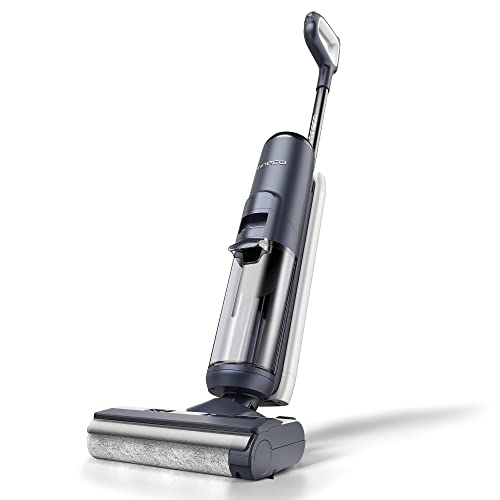
SMART VACUUM & MOP TWO-IN-ONE – Clean wet or dry messes and tackle tough and sticky messes on hard floors with ease. Featuring Tineco’s proprietary iLoop Smart Sensor Technology, it automatically adjusts suction, water flow, and brush roller speed to clean any and all messes.CUTTING-EDGE CLEANING PE
Key specs
- Power format
- Cordless battery operation
- Status tracking
- Integrated digital display
Pros:
- Cordless wet-dry operation moves freely across hard floors without snagging on furniture
- Built-in digital display provides direct operational updates during floor washing
- Upright space-saving design minimizes storage footprint in tight closets
- Configured to tackle sticky spills and pet hair simultaneously on hard floors
Cons:
- Listing does not state exact battery runtime in minutes, which varies by power level
- Not specified for area rugs or carpeted surfaces, restricting use to hard floors

EVERY PURCHASE SAVES PETS. BISSELL proudly supports BISSELL Pet Foundation and its mission to help save homeless pets.VACUUM AND WASH AT THE SAME TIME. Makes everyday pet mess cleaning quick and easy.MULTI-SURFACE CLEANING. Safe and effective for use on tile, sealed wood floors, laminate, linoleum,
Key specs
- Surface coverage
- Cleans sealed hard floors and refreshes area rugs without swapping machines.
Pros:
- All-in-one design washes hard floors while vacuuming loose debris in a single pass
- Multi-surface cleaning transitions between hard floor areas and area rugs
- Pet Pro setup is tailored for pet messes and shed fur across indoor surfaces
Cons:
- Corded power source requires an open outlet and limits cleaning distance to cord length
- Water tank capacities are not specified in the listing and must be checked on the unit

COMPLETE CLEAN: Powerful suction plus spray mopping - a complete clean in one pad..Voltage:110 volts. Wattage : 85 wattsDISPOSABLE PADS: Disposable VACMOP Pads vacuum up what other pads push around.POWERFUL SUCTION: Pulls in dirt and debris to be locked away directly in the disposable VACMOP Pad.12
Key specs
- Floor visibility
- LED headlights
- Pad attachment style
- Uses disposable dirt-trapping pads that lock away wet spills and vacuumed dry debris.
Pros:
- Cordless lightweight frame maneuvers easily between rooms without a trailing cord
- Front LED headlights expose fine dust and hidden debris along baseboards
- Includes 4 disposable pads and 12 oz of cleaning solution for immediate start
Cons:
- Requires recurring purchases of disposable pads rather than reusable washable pads
- Not designed for cleaning area rugs or carpets, limiting duty strictly to hard floors

EVERY PURCHASE SAVES PETS. BISSELL proudly supports BISSELL Pet Foundation and its mission to help save homeless pets.VACUUM and WASH AT THE SAME TIME. BISSELL CrossWave multi-surface floor cleaner cleans better than a sponge mop and bucket, and in less time.2MULTI-SURFACE CLEANING. Safe and effecti
Key specs
- Surface coverage
- Handles routine transitions between hard floor surfaces and area rugs.
Pros:
- Simultaneous wet washing and dry vacuuming clears mixed messes without sweeping first
- Dual-surface versatility cleans sealed hard floor planks and area rugs
- Turbo wet-and-dry vacuum combo handles both liquid spills and solid household dirt
Cons:
- Exact power cord length and clean tank capacity are omitted from product data
- Lacks the digital screen display available on cordless smart vacuum mops
Last update on 2026-11-04 / Affiliate links / Images, Product Titles, and Product Highlights from Amazon Product Advertising API
FAQs
Can I use regular floor soap or vinegar in a wet-dry vacuum mop?
You should only use low-foaming cleaning solutions formulated specifically for wet-dry vacuum mops. Regular dish soaps, pine cleaners, and all-purpose sprays generate excessive foam inside the recovery tank. That sudsy lather can bypass the internal float valve, leak into the vacuum motor, and ruin the machine. Vinegar can also degrade soft rubber seals and internal valves over time.
Can a vacuum mop pick up both dry dust and wet messes together?
A dual-tank motorized vacuum mop handles dry crumbs, pet hair, and wet spills in the exact same pass. The spinning brush roller loosens dry dust while scrubbing wet patches, and the strong suction pulls both solids and liquids straight into the dirty recovery chamber. Only pad-style spray vacuums require sweeping first, as their suction channels cannot process wet goop without clogging.
Will a motorized brush roller scratch my hardwood floors?
The brush rollers on modern hard floor cleaners use soft microfiber textiles blended with gentle nylon bristles designed specifically to polish without scratching. Scratches happen only when coarse sand or small gravel particles get trapped beneath the roller or drag along the rubber squeegee. Checking the bottom of the cleaning head before each use keeps your protective finish safe.
How long should my hard floors take to dry after vacuum mopping?
A properly operating vacuum mop leaves only a very light film of moisture that should evaporate completely within two to four minutes. Because the motor pulls the dirty wash water off the boards immediately, your floors dry much faster than with a traditional bucket mop. If your floors remain wet after five minutes, release the liquid trigger and make an extra dry suction pass.