The critical distinction between stripping coffee oils and clearing mineral scale is the single detail that saves an espresso routine from disaster. Pouring an acid descaler into a group head to fix bitter shots does nothing to loosen the sticky, rancid coffee fats baked onto the shower screen. Over time, that dark buildup chokes water dispersion, glues itself to silicone gaskets, and leaches a harsh, acrid bite into fresh beans. Worse, dropping an improperly sized or stubborn tablet into the portafilter risks clogging the three-way solenoid valve, turning a routine clean into a frustrating mechanical repair.
Restoring bright, syrupy clarity to morning extractions simply requires targeted alkaline detergents formulated to emulsify hardened organic grease without leaving perfumed residues. Fast-dissolving tablets clear internal delivery pathways during a blind backflush without leaving gritty sediment, while bulk powders dissolve baked-on oils from soaked portafilters and brass dispersion blocks. Once old fats rinse cleanly away, water flows evenly across the puck again to let the true flavor notes of your roast shine through. Here is how the most dependable options compare on residue-free rinsing, material safety, and oil-cutting power.


Targets built-up coffee oils and residues in group heads and valves, but does not replace periodic acid descaling for mineral scale.
Key specs
- Cleaner format
- Pre-measured backflush tablet
Pros:
- Pre-dosed tablet design eliminates messy measuring during backflush cycles
- Formulated to dissolve rancid coffee oils from brew groups and valves
- 100-count supply supports regular maintenance schedules over many months
Cons:
- Not formulated to dissolve mineral scale inside machine boilers
- Requires verifying tablet dimensions match smaller portafilter blind baskets

Provides 16 oz of liquid descaling solution, planned for 4 individual cleaning cycles across a one-year maintenance routine.
Key specs
- Descaling focus
- Mineral scale removal
Pros:
- Liquid descaling formula targets mineral scale buildup inside water lines and heating blocks
- 16 oz bottle provides 4 separate uses for scheduled maintenance
- Formulated specifically for compatibility with Breville espresso machines
Cons:
- Does not remove baked-on coffee oils or clean dirty portafilters
- Requires measuring from the 16 oz bottle rather than using pre-portioned packs

Pre-portioned tablets drop directly into a blind filter basket, avoiding the measuring errors common with loose cleaning powders.
Key specs
- Tablet quantity
- 100 tablets
Pros:
- Pre-measured 100-count supply engineered for group head backflushing
- Professional formulation cuts through stubborn, baked-on coffee grease
- Rinses away to leave brew components free of bitter coffee residue
Cons:
- Lacks descaling properties for clearing calcium scale from internal boilers
- Dissolution rate depends on machine water group temperature

The 566-gram powder format easily dissolves into hot water bowls to strip baked-on oils from portafilter heads, dispersion blocks, and baskets.
Key specs
- Cleaner format
- Loose backflush and soak powder
Pros:
- 566 g bulk powder offers customizable dosing for backflushing and parts soaking
- Breaks down hardened coffee oils on portafilters, shower screens, and filter baskets
- Allows flexible preparation of soaking baths for metal espresso accessories
Cons:
- Requires manual measuring with a scoop or spoon for backflushing
- Does not eliminate internal boiler mineral deposits

Supplied as 120 tablets designed for oil removal and backflushing routines across automatic and manual espresso models.
Key specs
- Machine brand compatibility
- Breville Barista Express
- Gaggia machines
- Delonghi and Jura units
- Philips espresso makers
Pros:
- Generous 120-tablet count offers an extensive supply for frequent cleaning cycles
- Listed compatibility across Breville, Gaggia, Delonghi, Jura, and Philips
- Formulated to tackle coffee oil removal during machine backflush routines
Cons:
- Formula marketing combines oil and scale terms, so check boiler descaling needs with your manual
- Tablet diameter should be verified against narrow or shallow cleaning discs

An 8-tablet pack offers an accessible option for owners running periodic monthly maintenance without storing a 100-count bottle.
Key specs
- Tablet quantity
- 8 tablets
Pros:
- Compact 8-count blister pack prevents excess storage clutter around coffee bars
- Pre-formed tablets drop straight into blind baskets for clean group flushing
- Convenient entry count for espresso owners establishing a new cleaning schedule
Cons:
- Small 8-tablet supply requires frequent repurchasing for regular backflushing
- Ineffective against internal boiler limescale deposits

Cafetto Evo brings an organic powder formula designed specifically to dissolve coffee oils from group heads and portafilters while meeting organic standards.
Key specs
- Formulation type
- Organic cleaning powder
Pros:
- Certified organic formulation caters to eco-conscious espresso maintenance
- 500-gram container provides ample powder for group backflushes and basket soaks
- Engineered to remove stubborn coffee oils and residues without synthetic harshness
Cons:
- Loose powder requires careful scooping to avoid spilling on coffee bars
- Does not descale machine boilers or heating circuits

Formulated for 4 complete descaling procedures across Keurig, Nespresso, Delonghi, and Breville automatic and espresso machines.
Key specs
- Descaling focus
- Universal mineral scale remover
Pros:
- Universal liquid descaler removes hard water mineral scale from heating elements
- Listed compatibility for Delonghi, Keurig, Breville, and Nespresso systems
- 4-use bottle supports regular seasonal descaling routines
Cons:
- Does not dissolve organic coffee grease or unclog dirty shower screens
- Acidic formula must not be used as a portafilter backflush detergent

Sized specifically for Breville espresso machines to run automated cleaning cycles when the clean or descale light illuminates.
Key specs
- OEM brand match
- Authentic Breville factory part
Pros:
- Official Breville OEM tablet ensures exact fit in Breville silicone cleaning discs
- 8-tablet pack satisfies standard clean light indicator cycles
- Dissolves built-up coffee solids and oils trapped inside the three-way valve
Cons:
- 8-pack provides fewer cycles compared to commercial 100-tablet bottles
- Not formulated to descale mineral scale from the thermocoil or boiler

A triple-pack bulk format suited for busy coffee stations where regular group backflushing and deep accessory soaking baths are performed daily.
Key specs
- Multi-pack volume
- 3 x 566 g containers (1,698 g total)
Pros:
- Three 566-gram containers provide heavy-duty bulk volume for high-volume use
- Powder format lets users adjust strength for heavy portafilter and screen soaking
- Powerful alkaline action breaks down baked coffee oils and bitter residues
Cons:
- Significant storage footprint with three large powder containers
- Requires a measuring tool and does not treat boiler scale
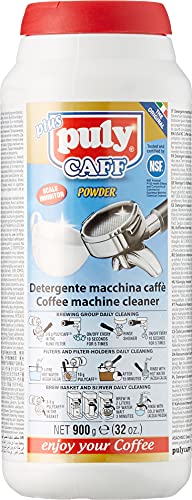
Puly Caff Plus provides a high-capacity powder format that handles both blind basket group backflushing and hot water soaking for metal parts.
Key specs
- Bulk powder weight
- 32 oz container
Pros:
- Substantial 32 oz container provides long-lasting powder supply
- Rapidly dissolves to flush away burnt coffee oils and rancid deposits
- Highly versatile for soaking stained portafilters, dispersion screens, and cups
Cons:
- Large jar opening can lead to accidental over-pouring without a dedicated scoop
- Does not dissolve limescale or mineral buildup in boilers

Formulated to backflush espresso machine valves while also effectively removing stubborn coffee stains and odors from thermal airpots.
Key specs
- Vessel maintenance
- Groups and airpots
Pros:
- 20-ounce powder container delivers multiple cycles of backflush and soaking action
- Explicitly designed to clean both espresso machine groups and commercial airpots
- Clears stale coffee oil buildup to eliminate sour and bitter flavor taints
Cons:
- Loose powder requires measuring before adding to blind filter baskets
- Not an acid-based formula for boiler descaling
Last update on 2026-10-08 / Affiliate links / Images, Product Titles, and Product Highlights from Amazon Product Advertising API
Do I need a backflush tablet, loose cleaning powder, or a liquid descaler?
You need a detergent tablet or powder for coffee oils, and a separate liquid descaler for mineral buildup. Backflush detergents, available in formats like 566 grams Cafiza powder or 100 Count Cafiza tablets, dissolve rancid coffee grease and baked-on residue inside the brew group. A liquid descaler, such as a 16 oz Breville compatible formula or Essential Values 4 Uses universal solution, circulates through the boiler and internal water lines to dissolve calcium scale. Never substitute a descaler for an oil cleaner, as acid descalers do not strip coffee oils from the shower screen or dispersion block.
Are espresso machine cleaners safe for every brand and portafilter material?
It depends on your group head design and portafilter material, so always verify equipment specifications before choosing a cleaner. Dedicated formulas like ACTIVE tablets list compatibility with Breville Barista Express, Gaggia, Delonghi, Jura, and Philips, but harsh detergents can pit bare aluminum portafilters or dull unplated metal finishes. Stainless steel portafilters and brass groups handle standard backflushing compounds easily, while Cafetto offers organic Evo powder in 500 Gram containers for alternative care. Check your portafilter metal and confirm whether your machine features a three-way solenoid valve before running a backflush routine.
How thoroughly should I rinse the group head before brewing espresso again?
Rinse the machine until discharge water runs clear of foam, then brew and discard a sacrificial shot. After running backflush cycles with detergents such as Puly Caff Plus 32 oz or Puro Caff 20 Ounce, flush the group head thoroughly with fresh water using a blind basket. Purge clean water directly through the bare shower screen to dislodge loosened particles from the gasket and delivery channels. Pulling and discarding an initial espresso shot re-seasons the metal surfaces and guarantees that zero detergent flavor enters your daily drink.
Can espresso cleaning powder be used to soak removable metal components?
Yes, loose cleaning powder dissolves in hot water to create a soak bath for removable metal components. Formulations like Puro Caff 20 Ounce powder explicitly serve to back flush espresso machines and clean airpots, making them suitable for soaking filter baskets and shower screens. Submerge only stainless steel parts in the wash basin, keeping rubber handles and bare aluminum components out of the solution to prevent surface discoloration. When emptying the oily soak water down your sink, using a dedicated drain cleaner for grease helps keep domestic plumbing free of congealed coffee fats.
How do I prevent undissolved cleaning tablets from clogging internal machine valves?
Confirm that your espresso machine features a three-way solenoid valve and reaches proper brewing temperature before using solid tablets. Pre-formed tablets from options like Cino Cleano in an 8 Count pack or Breville BEC250 8 Pack are designed for controlled dissolution during pressurized clean cycles. Machines without a dedicated pressure-release valve cannot backflush, meaning solid tablet fragments could lodge inside tight internal pathways. If your machine manual advises against dense tablets, switch to a fast-dissolving option like Cafetto Evo Powder 500 Gram dissolved in warm water.
How often should I run a cleaning cycle compared to descaling?
Cleaning intervals depend on your brewing volume, while descaling intervals depend on water hardness and manufacturer recommendations. For descaling cycles, a 16 oz Breville compatible solution provides 4 Uses as a listed 1 Year Supply, and Essential Values universal descaler also provides 4 Uses per container. For coffee oil removal, machine alert lights signal when detergent is required, or you can run tablets like Urnex Cafiza 100 Count to clear bitter residues. Check your machine manual to follow the designated maintenance cycle rather than treating oil washing and mineral descaling as the same task.